• 'The National' visited mission control at Dubai's Mohammed bin Rashid Space Centre to learn how engineers are preparing for Hope probe's Mars orbit insertion, set for February 9. All photos by Chris Whiteoak / The National
    'The National' visited mission control at Dubai's Mohammed bin Rashid Space Centre to learn how engineers are preparing for Hope probe's Mars orbit insertion, set for February 9. All photos by Chris Whiteoak / The National
  • Omar Abdelrahman Hussain, mission design and navigation lead, said mission team will mostly be observers on the day. There is an 11-minute communication delay because of the distance between the two planets, so live commands will not be sent
    Omar Abdelrahman Hussain, mission design and navigation lead, said mission team will mostly be observers on the day. There is an 11-minute communication delay because of the distance between the two planets, so live commands will not be sent
  • The Hope probe is close to completing a distance of 493.5 million kilometres. It launched on July 20, 2020 aboard a Japanese rocket and will study the upper and lower atmosphere of the Red Planet. Emirates Mars Mission
    The Hope probe is close to completing a distance of 493.5 million kilometres. It launched on July 20, 2020 aboard a Japanese rocket and will study the upper and lower atmosphere of the Red Planet. Emirates Mars Mission
  • Pre-programmed manoeuvers have been set into the spacecraft so it can perform an automated entry into orbit
    Pre-programmed manoeuvers have been set into the spacecraft so it can perform an automated entry into orbit
  • The programming includes firing the probe's six thrusters for 28 minutes to slow it down from about 100,000 kph to 18,000 kph to get captured into Mars' orbit
    The programming includes firing the probe's six thrusters for 28 minutes to slow it down from about 100,000 kph to 18,000 kph to get captured into Mars' orbit
  • There will also be a brief period when communication is lost when the spacecraft travels behind Mars, blocking the signal. Engineers will do a full evaluation of how orbit entry went once contact is restored
    There will also be a brief period when communication is lost when the spacecraft travels behind Mars, blocking the signal. Engineers will do a full evaluation of how orbit entry went once contact is restored
  • Khalid Mohammad Badri, instrument science engineer, said the scientific instruments aboard the spacecraft will remain safe during orbit entry and will be tested after completion of this critical stage
    Khalid Mohammad Badri, instrument science engineer, said the scientific instruments aboard the spacecraft will remain safe during orbit entry and will be tested after completion of this critical stage
  • All communication with the probe has been made possible through Nasa's Deep Space Network. Their massive ground radio arrays in California, Spain and Australia are the first to send and receive telemetry from the spacecraft. The antenna in Madrid will be the first to know how orbit entry went
    All communication with the probe has been made possible through Nasa's Deep Space Network. Their massive ground radio arrays in California, Spain and Australia are the first to send and receive telemetry from the spacecraft. The antenna in Madrid will be the first to know how orbit entry went
  • Mahmood Abdulaziz AlNasser, mission operations control development lead, said the team remains confident the orbit entry will go as planned. This stage is equally challenging as the rocket launch stage
    Mahmood Abdulaziz AlNasser, mission operations control development lead, said the team remains confident the orbit entry will go as planned. This stage is equally challenging as the rocket launch stage
  • The probe will spend 40 hours in the capture orbit and then be transferred into the science orbit, where it will spend two years gathering data on the planet's dynamic weather conditions. It is the first time a spacecraft will be positioned so high above the Red Planet, allowing it to capture different weather patterns throughout a single day. Nasa
    The probe will spend 40 hours in the capture orbit and then be transferred into the science orbit, where it will spend two years gathering data on the planet's dynamic weather conditions. It is the first time a spacecraft will be positioned so high above the Red Planet, allowing it to capture different weather patterns throughout a single day. Nasa
  • If orbit entry is successful, the UAE will become the fifth nation worlwide to reach Mars
    If orbit entry is successful, the UAE will become the fifth nation worlwide to reach Mars

Hope probe: Mars mission will help create future ‘Elon Musk and Bill Gates of UAE’


Sarwat Nasir
  • English
  • Arabic

The UAE’s mission to Mars will help the country find its “own version of Elon Musk and Bill Gates” even if the nation fails to reach Mars, a senior official has said.

Omran Sharaf, mission director, told The National that the goal of the Hope probe was to create a disruptive change in society that would inspire young people to pursue careers in Stem (science, technology, engineering and maths).

The spacecraft is less than a week away from attempting to enter the Martian orbit, a process that has only a 50 per cent success rate.

“There was a vision and goals we wanted to achieve – based on that the team designed a programme within this mission to create an impact,” Mr Sharaf said.

“The mission was launched in 2014 and, in that timeframe, you see the language of a whole generation and priorities change. Instead of pupils wanting to work in real estate or in finance sector, they talk about being entrepreneurs and innovators – being the future Elon Musk and Bill Gates of the UAE.”

Space is a relatively new sector in the UAE, but the country has already invested more than Dh22 billion in it.

Several key milestones have been achieved, including sending the first Emirati into space, building satellites in-house, launching the first Arab mission to Mars and now engineers are working on a lunar mission.

The nation’s space strategy has included collaborating with more experienced space agencies, like US’ Nasa, European Space Agency and Russia’s Roscosmos, to build on the UAE’s own capabilities.

Omran Sharaf, director of UAE Mars Mission. Reem Mohammed / The National

For the Mars mission, for example, the Mohammed bin Rashid Space Centre worked with three American universities to help build the science instruments for the Hope probe.

To train its astronaut corps, Emirati astronauts are being sent to Nasa’s Johnson Space Centre for intensive training, which will help them qualify for Nasa-led missions in future.

However, to make the sector more sustainable, there has been a major push for space-focused subjects and degrees across UAE schools and universities.

Now, Mr Sharaf thinks other countries can use the UAE’s model as an example for building their own space sector.

“When we started, nobody was interested,” he said. “But, now, to see the way the Ministry of Education have change their curriculums and how schools and universities reacted, it’s amazing.

“I don't think any nation took a similar approach as the UAE when it comes to actually creating an impact and creating a disruptive change so fast.”

If the Hope probe manages to enter the Martian orbit, it will make the UAE the fifth nation worldwide to reach the Red Planet.

The data that will be retrieved from the mission will further boost Stem-related fields across the country, Mr Sharaf believes.

The spacecraft will attempt to enter orbit on February 9, at 7.42pm Gulf Standard Time.

Pupils watch Hazza Al Mansouri's launch into space - in pictures 

  • Children wore astronaut jumpsuits during the live screening of Maj Al Mansouri's launch to space in September, 2019. Chris Whiteoak / The National
    Children wore astronaut jumpsuits during the live screening of Maj Al Mansouri's launch to space in September, 2019. Chris Whiteoak / The National
  • Maj Hazza Al Mansouri launched into space on September 25, 2019
    Maj Hazza Al Mansouri launched into space on September 25, 2019
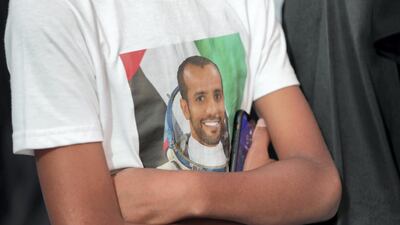
  • A pupil wearing UAE astronaut inspired t-shirt while attending the live screening of Maj Al Mansouri's launch. Chris Whiteoak / The National
    A pupil wearing UAE astronaut inspired t-shirt while attending the live screening of Maj Al Mansouri's launch. Chris Whiteoak / The National
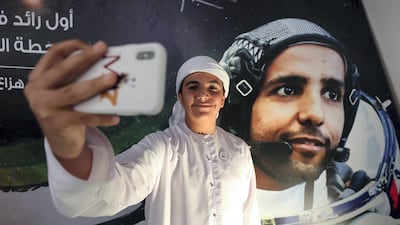
  • Another pupil at the live screening of Maj Al Mansouri's launch to the International Space Station. Chris Whiteoak / The National
    Another pupil at the live screening of Maj Al Mansouri's launch to the International Space Station. Chris Whiteoak / The National
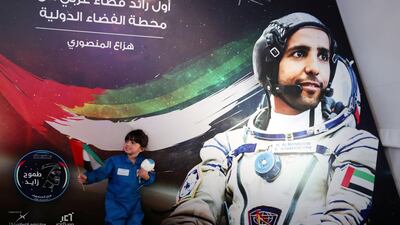
  • Another child wears an astronaut jumpsuit during the live screening. Chris Whiteoak / The National
    Another child wears an astronaut jumpsuit during the live screening. Chris Whiteoak / The National
2021 World Triathlon Championship Series

May 15: Yokohama, Japan
June 5: Leeds, UK
June 24: Montreal, Canada
July 10: Hamburg, Germany
Aug 17-22: Edmonton, Canada (World Triathlon Championship Final)
Nov 5-6 : Abu Dhabi, UAE
Date TBC: Chengdu, China

A cryptocurrency primer for beginners

Cryptocurrency Investing  for Dummies – by Kiana Danial 

There are several primers for investing in cryptocurrencies available online, including e-books written by people whose credentials fall apart on the second page of your preferred search engine. 

Ms Danial is a finance coach and former currency analyst who writes for Nasdaq. Her broad-strokes primer (2019) breaks down investing in cryptocurrency into baby steps, while explaining the terms and technologies involved.

Although cryptocurrencies are a fast evolving world, this  book offers a good insight into the game as well as providing some basic tips, strategies and warning signs.

Begin your cryptocurrency journey here. 

Available at Magrudy’s , Dh104