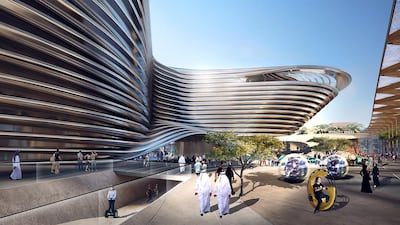
• The unusual architecture of the Luxembourg pavilion at Expo 2020 Dubai will make visitors think of an object with no boundaries. Courtesy: All photos by Luxembourg pavilion at Expo 2020 Dubai
    The unusual architecture of the Luxembourg pavilion at Expo 2020 Dubai will make visitors think of an object with no boundaries. Courtesy: All photos by Luxembourg pavilion at Expo 2020 Dubai
  • Luxembourg's pavilion at Expo 2020 Dubai will feature a giant slide. Courtesy: Luxembourg pavilion at Expo 2020 Dubai
    Luxembourg's pavilion at Expo 2020 Dubai will feature a giant slide. Courtesy: Luxembourg pavilion at Expo 2020 Dubai
  • Luxembourg was the first country to sign up to participate in the World Expo in Dubai. Courtesy: Luxembourg pavilion at Expo 2020 Dubai
    Luxembourg was the first country to sign up to participate in the World Expo in Dubai. Courtesy: Luxembourg pavilion at Expo 2020 Dubai
  • The main construction work is complete on the pavilion of Luxembourg, one of the world’s smallest countries. Courtesy: Luxembourg pavilion at Expo 2020 Dubai
    The main construction work is complete on the pavilion of Luxembourg, one of the world’s smallest countries. Courtesy: Luxembourg pavilion at Expo 2020 Dubai
  • Maggy Nagel, commissioner general of Luxembourg at Expo 2020 Dubai, says the experience will capture all the senses of the visitors. Leslie Pableo / The National
    Maggy Nagel, commissioner general of Luxembourg at Expo 2020 Dubai, says the experience will capture all the senses of the visitors. Leslie Pableo / The National
  • Maggy Nagel, commissioner general of Luxembourg at Expo 2020 Dubai, says the experience will capture all the senses of the visitors. Leslie Pableo / The National
    Maggy Nagel, commissioner general of Luxembourg at Expo 2020 Dubai, says the experience will capture all the senses of the visitors. Leslie Pableo / The National
  • Workers fix a membrane to provide shade and cover to the steel construction of the Luxembourg pavilion. Visitors can walk down the stairs or chose to zip down a giant slide, a reference to the popular Schueberfouer, a traditional fair that dates back to 1340. Courtesy: Luxembourg pavilion at Expo 2020
    Workers fix a membrane to provide shade and cover to the steel construction of the Luxembourg pavilion. Visitors can walk down the stairs or chose to zip down a giant slide, a reference to the popular Schueberfouer, a traditional fair that dates back to 1340. Courtesy: Luxembourg pavilion at Expo 2020
  • Early construction photos showing the progress of work on the Luxembourg pavilion at the Expo 2020 Dubai site: Courtesy: Luxembourg pavilion at Expo 2020
    Early construction photos showing the progress of work on the Luxembourg pavilion at the Expo 2020 Dubai site: Courtesy: Luxembourg pavilion at Expo 2020
  • Early construction photos show the work carried out as engineers and workers complete the Luxembourg pavilion at the Expo 2020 Dubai site. Courtesy: Luxembourg pavilion at Expo 2020
    Early construction photos show the work carried out as engineers and workers complete the Luxembourg pavilion at the Expo 2020 Dubai site. Courtesy: Luxembourg pavilion at Expo 2020
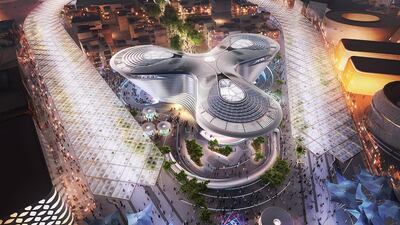
  • A rendering of the Luxembourg pavilion at the Dubai World Fair. Courtesy Luxembourg Pavilion Expo 2020 Dubai
    A rendering of the Luxembourg pavilion at the Dubai World Fair. Courtesy Luxembourg Pavilion Expo 2020 Dubai
  • Luxembourg pavilion will hire culinary students to cater to Expo 2020 Dubai visitors. Courtesy Expo 2020 Dubai
    Luxembourg pavilion will hire culinary students to cater to Expo 2020 Dubai visitors. Courtesy Expo 2020 Dubai
  • The architecture of the Luxembourg pavilion is based on the Mobius strip or a one-sided surface that runs in a continuous loop and has captured the imagination of artists and engineers after it was discovered in 1858 by a German mathematician. Courtesy: Luxembourg pavilion at Expo 2020 Dubai
    The architecture of the Luxembourg pavilion is based on the Mobius strip or a one-sided surface that runs in a continuous loop and has captured the imagination of artists and engineers after it was discovered in 1858 by a German mathematician. Courtesy: Luxembourg pavilion at Expo 2020 Dubai

Expo 2020 Dubai: Luxembourg pavilion echoes old World Fairs with giant fun slide


Ramola Talwar Badam
  • English
  • Arabic

One of the world’s smallest countries is adding the finishing touches to a giant slide inside its Expo 2020 Dubai pavilion to remind visitors of traditional funfair rides.

When visitors go down the three-storey slide, made of stainless steel and plexiglass, they will see trees and plants across an atrium, recreating Luxembourg's lush green woodlands.

The main construction work was completed this month.

It will give you a good feel of the valleys and gorges that you can find in Luxembourg

Maggy Nagel, commissioner general of Luxembourg at Expo 2020 Dubai, said she would take the stairs and go down the 21-metre high slide when the World Fair opens in October.

"I will, of course, use the slide as it will be quite a thrill to just slide down through the atrium," she told The National.

“But I will also use the stairs as there are different scenes from Luxembourg to be seen in spheres that we have positioned over the handrail.

“The greenery representing typical landscapes of Luxembourg will be in the atrium. Due to security reasons, we will not be able to make it as luscious as in reality but it will give you a good feel of the valleys and gorges that you can find in Luxembourg.

"The fragrance that we have developed is a beautiful interpretation of the scents of the woods and plants that we have in Luxembourg.”

Organisers are keen to recreate the fun element of fairs such as Luxembourg's popular Schueberfouer. The annual event has more than 200 rides that attract more than two million visitors every summer.

The $32 million pavilion also boasts unusual architecture that will make visitors step back and consider the concept of an object with no boundaries.

The outer curved steel structure that runs in a continuous loop resembles a broad ribbon with no end.

The form is based on the Mobius strip, or one-sided surface, discovered by a German mathematician in 1858.

Organisers aim to convey a circular and dynamic economy through a thought-provoking structure that will draw people in.

Ms Nagel promises an experience to capture “all of your senses”.

A quiz before entry will provide visitors with unusual facts about the country and its people.

They will be greeted with a virtual message from the Grand Duke Henri of Luxembourg, the country’s head of State.

Another highlight is a short animation film about the nation’s commitment to sustainability.

Ms Nagel said the six-month expo will send out a message of hope.

“The pandemic, tragic as it is for so many people, has shown us how essential it is to stay connected and to be resourceful in order to overcome crises and to create a better future,” she said.

“The theme of this Expo has become even more meaningful and discussing these issues together is ever more urgent. We are thankful to Dubai and the UAE for their determination and resilience that will make this Expo happen. This is indeed a very timely event that sends an important positive message.”

A Michelin-star chef has planned the dishes that will be served in the Schengen Lounge where students from the Ecole d'Hotellerie et de Tourisme du Luxembourg, a hotel and tourism school, will work.

Ms Nagel said guests will be surprised with modern food and classic Luxembourg fare, such as ginger fish sauce drizzled on pan-seared river trout with dill oil and roasted fennel.

“There will be so many other dishes that people should try and you will also find international flavors that are a reflection of Luxembourg’s heritage and its diversity,” she said.

The organisers are also working on a digital tour for people who cannot visit the pavilion.

Luxembourg was the first country in June 2016 to officially confirm its participation with a national pavilion.

The expo is expected to attract 25 million visits.

Renderings of Expo Pavilions

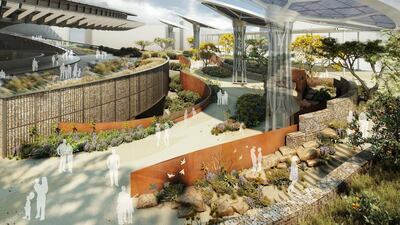
  • The Sustainability pavilion. The 130-metre wide canopy, called Terra, features 1,055 solar panels which will generate 4GWh of alternative energy per year, enough electricity to charge more than 900,000 mobile phones.
    The Sustainability pavilion. The 130-metre wide canopy, called Terra, features 1,055 solar panels which will generate 4GWh of alternative energy per year, enough electricity to charge more than 900,000 mobile phones.
  • The Sustainability pavilion. It will offer visitors the chance to explore humankind’s relationship with nature, excessive consumerism, and how we can change our everyday choices to reduce our carbon footprint and environmental impact.
    The Sustainability pavilion. It will offer visitors the chance to explore humankind’s relationship with nature, excessive consumerism, and how we can change our everyday choices to reduce our carbon footprint and environmental impact.
  • The Sustainability Pavilion. It features irrigation techniques such as a greywater recycling system, which aim to reduce water use by 75 per cent.
    The Sustainability Pavilion. It features irrigation techniques such as a greywater recycling system, which aim to reduce water use by 75 per cent.
  • The Expo 2020 Mobility Pavilion features the world’s largest passenger lift, which will transport more than 160 people at a time. It also has a 340-metre track, which is partly underground and partly in the open-air, to showcase cutting-edge mobility devices in action.
    The Expo 2020 Mobility Pavilion features the world’s largest passenger lift, which will transport more than 160 people at a time. It also has a 340-metre track, which is partly underground and partly in the open-air, to showcase cutting-edge mobility devices in action.
  • The Expo 2020 Mobility Pavilion will also display a hyperloop capsule in action.
    The Expo 2020 Mobility Pavilion will also display a hyperloop capsule in action.
  • Organisers say the Expo 2020 Mobility Pavilion will showcase how mobility will continue to transform the way we live, connect with people, understand different cultures, and exchange knowledge and ideas.
    Organisers say the Expo 2020 Mobility Pavilion will showcase how mobility will continue to transform the way we live, connect with people, understand different cultures, and exchange knowledge and ideas.
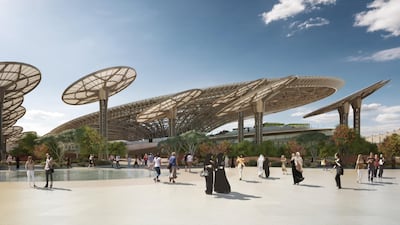
  • Al Wasl Pavilion. Meaning ‘connection’ in English, Al Wasl is also the historical name for Dubai. The steel trellis is the centrepiece of the site, where all roads meet, and reflects the world fair’s aim to bring people together.
    Al Wasl Pavilion. Meaning ‘connection’ in English, Al Wasl is also the historical name for Dubai. The steel trellis is the centrepiece of the site, where all roads meet, and reflects the world fair’s aim to bring people together.
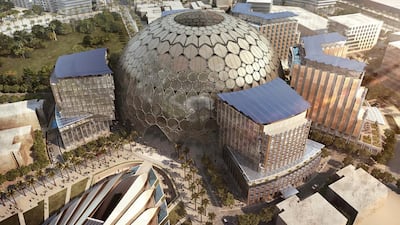
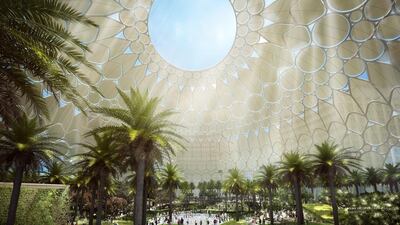
  • The Al Wasl pavillion. The moulded steel dome is 130-metres wide, 67-metres tall and weighs more than 500 tonnes. Taller than the leaning tower of Pisa and one of the largest single structures on the site, Al Wasl will be a permanent installation that will remain after the world fair ends in April 2021.
    The Al Wasl pavillion. The moulded steel dome is 130-metres wide, 67-metres tall and weighs more than 500 tonnes. Taller than the leaning tower of Pisa and one of the largest single structures on the site, Al Wasl will be a permanent installation that will remain after the world fair ends in April 2021.
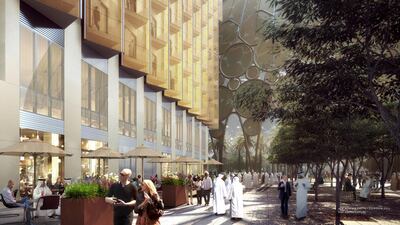
  • A rendering of Al Wasl pavillion. Fountains, parks and restaurants have also been planned across the plaza area.
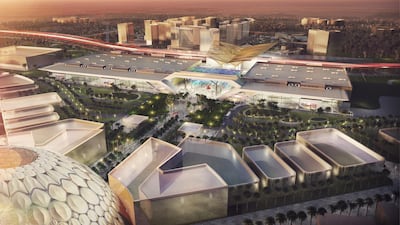
    A rendering of Al Wasl pavillion. Fountains, parks and restaurants have also been planned across the plaza area.
  • Al Wasl pavillion. Al Wasl Plaza’s trellis design was inspired by an ancient golden ring found in the Saruq Al Hadid site by Sheikh Mohammed bin Rashid, Vice President and Ruler of Dubai. It also reflects the intertwined logo of the Expo 2020.
    Al Wasl pavillion. Al Wasl Plaza’s trellis design was inspired by an ancient golden ring found in the Saruq Al Hadid site by Sheikh Mohammed bin Rashid, Vice President and Ruler of Dubai. It also reflects the intertwined logo of the Expo 2020.
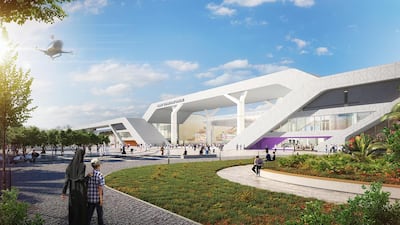
  • Dubai Exhibition Centre. It offers 45,000 square metres of event space. It is just 300m from the heart of the Expo site and is adjacent to the Dubai Metro Route Station 2020.
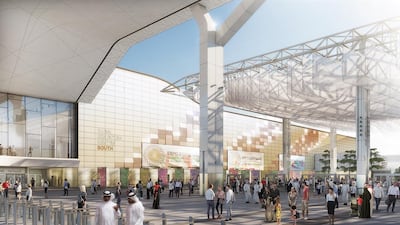
    Dubai Exhibition Centre. It offers 45,000 square metres of event space. It is just 300m from the heart of the Expo site and is adjacent to the Dubai Metro Route Station 2020.
  • Dubai Exhibition Centre.The 28,000 sqm South Complex is divided into nine halls that can host 300 to 20,000 people, while the 17,000 sqm North Complex has five halls that can accoodate 200 to 11,000 people.
    Dubai Exhibition Centre.The 28,000 sqm South Complex is divided into nine halls that can host 300 to 20,000 people, while the 17,000 sqm North Complex has five halls that can accoodate 200 to 11,000 people.
  • Dubai Exhibition Centre. It also has 24 meeting rooms and four suites for workshops, seminars and gala dinners.
    Dubai Exhibition Centre. It also has 24 meeting rooms and four suites for workshops, seminars and gala dinners.
What is blockchain?

Blockchain is a form of distributed ledger technology, a digital system in which data is recorded across multiple places at the same time. Unlike traditional databases, DLTs have no central administrator or centralised data storage. They are transparent because the data is visible and, because they are automatically replicated and impossible to be tampered with, they are secure.

The main difference between blockchain and other forms of DLT is the way data is stored as ‘blocks’ – new transactions are added to the existing ‘chain’ of past transactions, hence the name ‘blockchain’. It is impossible to delete or modify information on the chain due to the replication of blocks across various locations.

Blockchain is mostly associated with cryptocurrency Bitcoin. Due to the inability to tamper with transactions, advocates say this makes the currency more secure and safer than traditional systems. It is maintained by a network of people referred to as ‘miners’, who receive rewards for solving complex mathematical equations that enable transactions to go through.

However, one of the major problems that has come to light has been the presence of illicit material buried in the Bitcoin blockchain, linking it to the dark web.

Other blockchain platforms can offer things like smart contracts, which are automatically implemented when specific conditions from all interested parties are reached, cutting the time involved and the risk of mistakes. Another use could be storing medical records, as patients can be confident their information cannot be changed. The technology can also be used in supply chains, voting and has the potential to used for storing property records.