

A new project will document and preserve modernist structures that were built in Dubai's economic boom of the 1970s and 1980s.
From brutalist facades to the Arab world's unique take on modernist architecture, the arrival of tower blocks and public monuments marked the transformation from a pearl diving town to a global trade hub.
Deira Clock Tower and Dubai World Trade Centre were the first to be added to the list, Dubai Municipality said on Sunday.
Officials will look at how the buildings are maintained and be made to last.
“Preserving our urban heritage and culture that we have inherited through generations, and the intellectual and creative legacy it has presented to us, is an historic responsibility that we will carry today and our children and grandchildren in future,” said Dawoud Al Hajri, director general of the municipality.
“Modernity is only complete by absorbing history, learning from its lessons, and celebrating what it has given us as evidence that conveys to us a picture of the past that our forefathers and grandfathers lived and how they made the first beginnings of our modern renaissance.”
Deira Clock Tower was among the first, built in 1963. Historians said the structure - on a busy roundabout - was gifted to Sheikh Rashid bin Saeed, then the Vice President and Ruler of Dubai, to mark the country's first oil exports.
British author David Heard, who has lived in the UAE since 1963, said the discovery of oil and the decision to become a free trade port hub marked the start of huge economic growth.
-
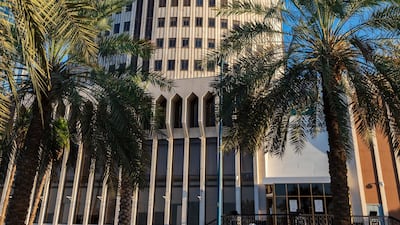
As part of the Cultural Heritage Law, modern heritage sites in Abu Dhabi are viewed to be on par with archaeological and historical sites. Such an example is found here, the Abu Dhabi Chamber of Commerce & Industry. Photo: Department of Culture and Tourism - Abu Dhabi -

The Abu Dhabi Chamber of Commerce & Industry. Photo: Department of Culture and Tourism - Abu Dhabi -

Experts consider the Al Ibrahimi Building on Zayed The First Street (popularly known as Electra Street) unique in this part of the world. Built in the 1980s, it stands 16 storeys tall and was designed by Egyptian architect Farouk El Gohary. Fatima Al Marzooqi / The National -
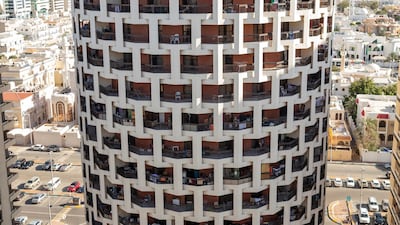
The Al Ibrahimi Building (Saeed Al Kalili) was built in the metabolist style, a fusion of nature and technology found in many Japanese cities. Photo: Department of Culture and Tourism - Abu Dhabi -

The Al Ibrahimi Building (Saeed Al Kalili). Photo: Department of Culture and Tourism - Abu Dhabi -
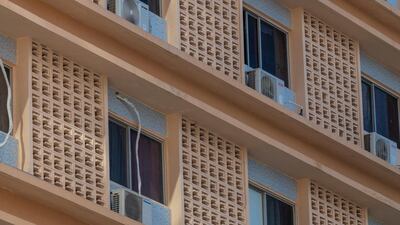
The Iran Bank has also been protected to provide physical evidence of the city’s continued development. Photo: Department of Culture and Tourism - Abu Dhabi -

Madinat Zayed Gold Souq is also part of the initiative. Photo: Department of Culture and Tourism - Abu Dhabi -
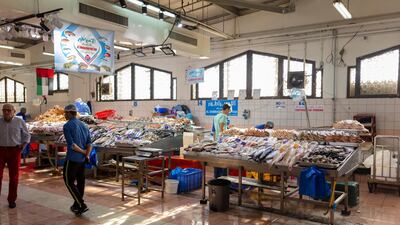
Fishermen’s Wharf at Mina Zayed. Photo: Department of Culture and Tourism - Abu Dhabi -

Al Qasimiyah School serves as the headquarters of Sharjah Architecture Triennial and the main venue for its programmes. The building's design is based on a mid-1970s prototype by regional architectural firm Khatib & Alami. Photo: Sharjah Architecture Triennial -
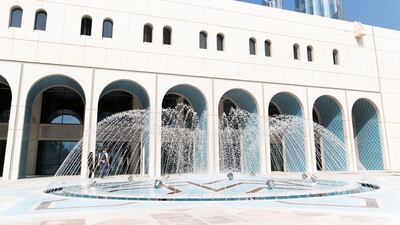
Abu Dhabi's Cultural Foundation was established in 1981. Reem Mohammed / The National -
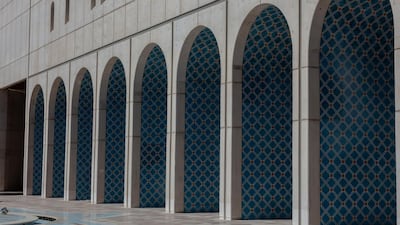
The Cultural Foundation. Photo: Department of Culture and Tourism - Abu Dhabi -
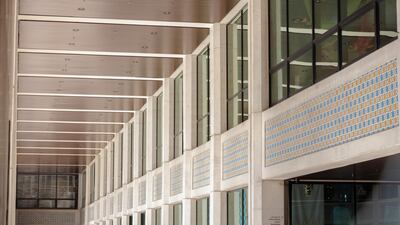
The Cultural Foundation. Courtesy Department of Culture and Tourism - Abu Dhabi -
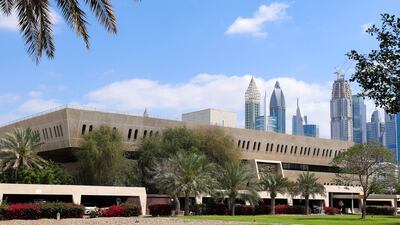
The Dubai Petroleum building. The National -
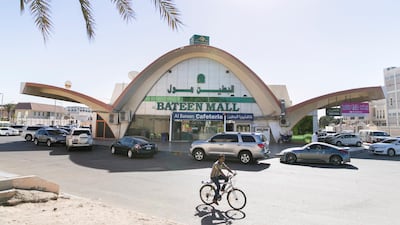
Al Bateen Mall, with its dramatic flying canopies, is one of Abu Dhabi's most unique structures. Designed by Bulgarian architects Technoexportstroy, it was completed in 1986. Reem Mohammed / The National -

Completed in 1987, King Faisal Mosque in Sharjah was the largest in the country until Sheikh Zayed Grand Mosque opened in 2007. It can accommodate about 16,000 worshippers and was designed by Saudi architect Abdul Rahman Al Junaidi. Antonie Robertson / The National -
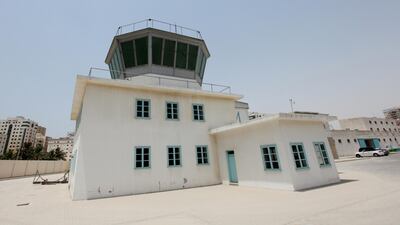
The old Sharjah airport tower is now Al Mahatta Museum in Sharjah. Paulo Vecina / The National -

A marvel of brutalist architecture, Abu Dhabi bus station has barely changed since its completion in 1989. It was designed by Bulgarian Georgi Kolarovis, who worked for Al Bateen Mall designer Technoexportstroy. Victor Besa / The National -
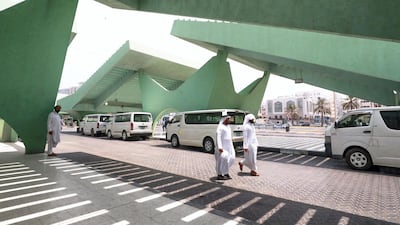
The building has a control tower at one end and four prongs that extend outward, providing shade for passengers. Victor Besa / The National -
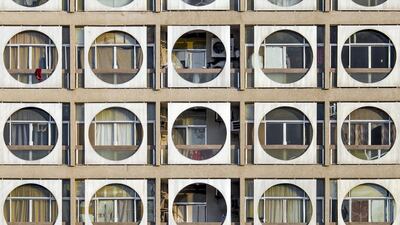
The Obeid Al Mazroui building (spellings vary) on Electra Street is a spectacle of modernist architecture. The circular design frames tenants' windows and prevents direct sunlight beating down onto them. It has been dubbed the Connect Four building by some long-time residents in reference to the game. Hussain AlMoosawi / The National -

An aerial view of Dubai's World Trade Centre. Rabih Moghrabi / AFP -
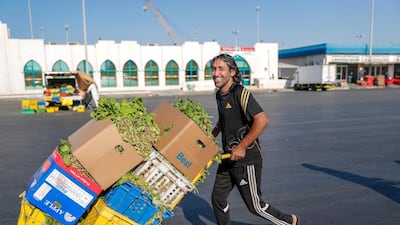
The Abu Dhabi Fruit and Vegetable market. Victor Besa / The National


"When the first oil export from the country happened, Dubai was a very different place and that's when the Clock Tower was built," he told The National.
“As you came into Dubai from almost any direction, the Clock Tower was the first landmark you’d see, along with the Creek and Maktoum Bridge.
"The Clock Tower was essential to orientate yourself and say ‘that way is Sharjah and that way is the Bustan Hotel."
Mr Heard, who wrote From Pearls to Oil: How the Oil Industry Came to the United Arab Emirates, recalled the construction of the Trade Centre and its opening by Queen Elizabeth in 1979.
At 149-metres tall it was the tallest structure in the Arab world until Burj Al Arab opened in 1999. Today, the building houses offices and is linked to a much larger modern exhibition complex.
“The building stood alone. It was a very tall and you’d be able to spot it easily,” Mr Heard said.
“These landmarks may have little commercial value and some people might want to knock them down and put up something grander, but if you do that, then you are destroying memories and history that go back a long time," he said.
"It’s part of understanding what the place grew from. It’s absolutely essential to keep certain landmarks so people are reminded of the old days. People, nowadays, often get too carried with these wonderful new buildings.”
The municipality said it was in talks with Unesco about future entries to the sought-after World Heritage List, which recognises buildings and places with 'outstanding universal value'.
The UAE has submitted entries for consideration in the past, including Dubai Creek, Abu Dhabi Sabkha, Al Bidya Mosque, Sir Bu Nair Island and the Ed-Dur Site.
At present, the country's sole Unesco World Heritage site is the oases of Al Ain.

