



Laboratory detective work involving animal fat and plant oil residues on ceramics has helped researchers shed fascinating light on societies that existed thousands of years ago in what is now the UAE.
Dairy products may have been included in the diet of residents of Hili 8, part of the Hili complex of archaeological sites in Al Ain, a Bronze Age area dating to the third millennium BC.
Researchers carried out complex laboratory analysis of lipid (fat and oil) samples on pottery to draw their conclusions.
Dr Akshyeta Suryanarayan, the lead author of a new study detailing the findings, said the investigations identified animal fats in most vessels, highlighting “the importance of the pastoral economy at Hili 8”.
Previous work has shown that most animal remains at the site were from domestic creatures such as cattle, sheep or goats, while residents also kept dogs.
The latest findings “fit well” with this evidence and show “the role that meat and/or milk played in the domestic life of the site’s inhabitants”.
“Analyses are currently continuing that will help detect if dairy products were in the vessels, which will provide more insight into how the animal economy was managed,” said Dr Suryanarayan, who is part of a team of researchers from the French National Centre for Scientific Research in Nice, Rennes and Nanterre who carried out the work.
In an arid environment like the UAE, a dairy economy — which typically requires animals to have access to abundant water supplies — would have been difficult to sustain, so it is possible, but not yet confirmed, that dairy products were imported.
Further analysis of samples is unlikely to determine where animal fats came from, as there is no “geographic signature”, as Dr Suryanarayan describes it, to pinpoint their origins.

“It will also be interesting to compare these results with pottery from sites along the coast where fish and aquatic products played a bigger role in the diet,” Dr Suryanarayan said.
The results are detailed in a paper, Foodstuffs and Organic Products in Ancient South-East Arabia, co-written with three other researchers from Cote d'Azur University and the French National Centre for Scientific Research, and published in Proceedings of the Seminar for Arabian Studies.
To identify what the lipid samples consisted of, researchers used a chemical technique called gas chromatography mass spectrometry, which involves separating out chemical components and determining what they are by looking at their mass.
Gas chromatography mass spectrometry is used for a variety of other purposes, ranging from developing pharmaceuticals to drug testing athletes’ urine samples.
Trade relations of Bronze Age societies in the UAE
It was already known that Bronze Age societies in the UAE traded with civilisations in Mesopotamia, in present-day Iraq, and the Indus Valley, in and around today’s Pakistan. The new study involves pottery imported from these two and other locations, and produced locally.
While most samples analysed were animal fats, there were traces of plant oils on some vessels from Oman and the Indus Valley.
The arid climate and environment of the region would, Dr Suryanarayan said, have limited the number of plants available locally, making imports important. Also, producing seed oil is a laborious process that requires large volumes of seeds.
“All these factors suggest it’s more likely that plant or seed oils would be imported, but I’m still exploring other options, such as other native wild plants from which oil could be produced,” Dr Suryanarayan said.
With the plant oils, the researchers may be able to trace their origins if analysis indicates that they are not from species native to the UAE or Oman.
However, given that the fats and oils are “very degraded”, Dr Suryanarayan said achieving this level of specificity would be difficult.
Another recent study, published in Arabian Archaeology and Epigraphy, looked at the Tell Abraq archaeological site in Umm Al Quwain. It too highlighted the importance of trading links.
Two jars from the area, which was occupied from about 2,500BC to about 1,700 years ago, bear the imprints of cylinder seals, which are tiny engraved cylinders used to create impressions on wet clay.
The researchers behind the study, based at the Polish Academy of Sciences, said that these seals “strongly indicate a foreign provenance for the jars”.
As reported in The National, a recent study found that people living at Kalba 4, an east coast site in present-day Sharjah, swapped copper for ceramic vessels, possibly containing fragrant oils or other important liquids, with ancient Mesopotamia.
Unesco World Heritage sites in Al Ain — in pictures
-
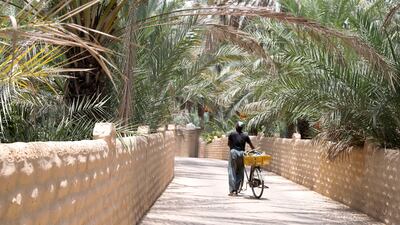
Al Ain Oasis, a Unesco World Heritage site since 2011, is open to the public who can learn about the area’s history of farming and its irrigation system. All photos: Khushnum Bhandari / The National -
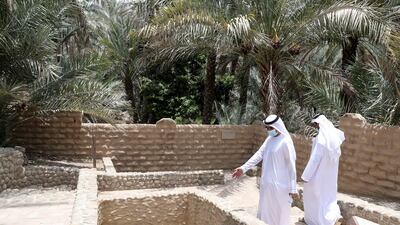
Upkeep at Al Ain Oasis. -
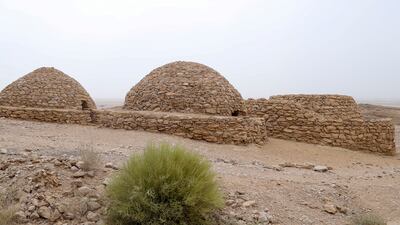
Al Ain’s 5,000-year-old, beehive-shaped Jebel Hafeet Tombs were awarded World Heritage status in 2011. -
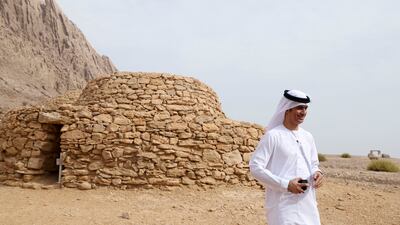
Abdullah Al Kaabi, Unit Head & Archaeological Survey at the Department of Cultural & Tourism Abu Dhabi, is proud of the tombs' heritage status. -
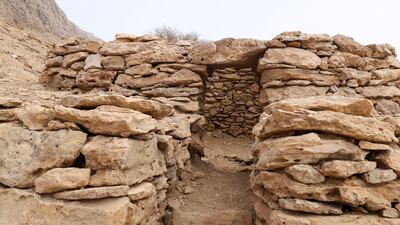
The domes at Jebel Hafeet Tombs are made solely of stone, no plaster was used in their construction. -
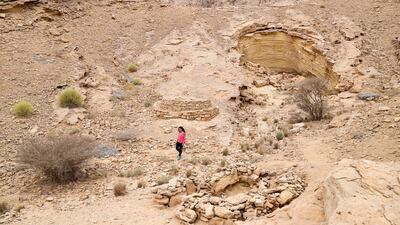
The tombs sit at the foot of Jebel Hafeet mountain in Al Ain. -
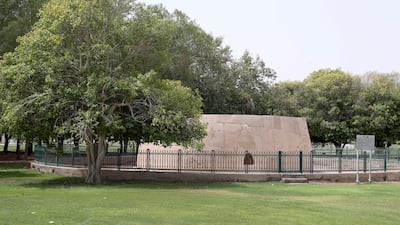
The Great Tomb at Hili Archaeological Park, Al Ain, is more than 4,000 years old and is 12 metres across. -
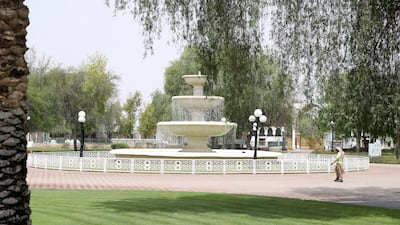
The Hili Archaeological grounds are rich in UAE history. -
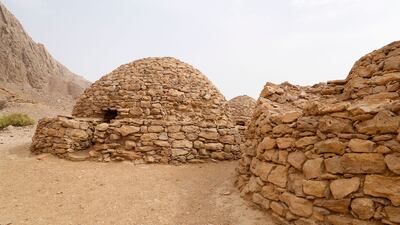
Jebel Hafeet Tombs. -
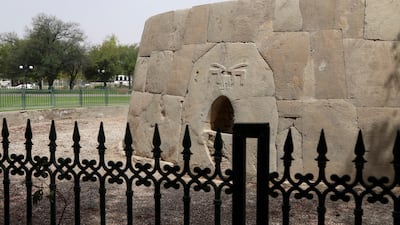
Another view of the Great Tomb. -

The tombs are a tourist attraction, part of an initiative to preserve UAE history. -
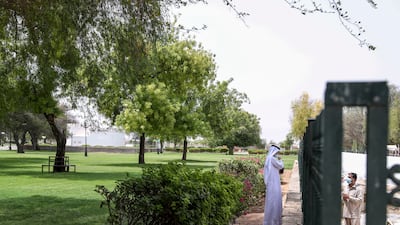
Hili Archaeological Park was recognised by Unesco, which awards World Heritage status to preserve cultural history across the world. -

Al Ain Oasis consists of palm plantations, many of which are still working farms, and a falaj irrigation water system.



