



The plane buzzed over the hotel, so close people inside could hear the engines.
It then circled back over the town before landing at a rudimentary airstrip lined by oil drums.
This was how people called a “taxi” in 1960s Abu Dhabi.
“The pilot used to ‘beat up’ the hotel, flying low … to ‘tell’ them he had arrived,” said David Riley, a British national who lived in Abu Dhabi in the early 1960s, with a chuckle. “So the hotel would know to send a car out to collect him.”
The Beach Hotel was Abu Dhabi’s first. Completed by a Lebanese firm, Construction and Trading Company, in 1962, it was a striking blue and cream building on the shore. It had more than 20 rooms, a bar, air-conditioning and even live music — unthinkable luxuries just a few years earlier.
“The 25-room hotel … was considered a significant achievement of which Abu Dhabians were very proud,” wrote Mohammed Al Fahim, in From Rags to Riches: A Story of Abu Dhabi. “It even had electricity provided by a generator.”

First hotel signals change
Abu Dhabi was now at the tipping point. It still did not have proper roads, a port or a reliable water supply. Electricity shortages were common. But a stream of oilmen, diplomats, business people, adventure seekers and pioneers were arriving on the back of the 1958 oil discovery. Change was coming.
“Most important of all, of course, was the change in Abu Dhabi,” wrote British journalist, David Holden, in his 1966 book, Farewell to Arabia, that detailed his travels in the region as oil upturned the old order. “Outwardly it was only a small and hesitant change,” said Holden. “There was a new hotel, with a Greek manager from Alexandria and a chef paid 300 pounds a month.”
Small and hesitant it may have been but Holden instinctively grasped what the arrival of Beach Hotel meant. Now suited visitors checked the latest mail and newspapers that arrived on the daily plane from Bahrain, while freewheeling aviators working on the oilfields caught up on the latest gossip in the lobby. The era of barasti huts was over.
“It was cool and dark inside the reception,” said Michael Stokes, who visited the hotel with his father, a pilot for Gulf Aviation, in the mid-1960s. “There were vinyl covered armchairs and settees with low coffee tables. Windows had net coverings to deflect the glare of the sun.”
The hotel’s Dh10 Friday curry lunches became legendary. And the other food?
“Desserts were mostly tinned,” said Mr Stokes. “However, the chefs would love to do battered, deep fried bananas drowned in condensed sweet milk.
“I also recall canned beef sausages. But there were weevils in the cereals that floated out when drowned in the milk.”
A glimpse into the past
Remarkable photographs taken of him then show an Abu Dhabi frozen in time. It was a lost world of coral stone homes, palm frond huts and sand roads. One striking picture shows Mr Stokes, then just 8, standing outside the hotel surrounded by nothing but sand and sea. Others show him on the hotel’s roof, with unobstructed views to Qasr Al Hosn and Saadiyat Island.
Beach Hotel also played host to some unusual events and characters. Mr Riley recalls the same pilot who buzzed the hotel helping to save the life of an injured oil worker in one of the desert camps, who was then brought to Abu Dhabi in the dark. But Abu Dhabi’s airstrip was not floodlit.
“He reckoned he could take off with Land Rovers lighting the strip,” said Mr Riley. “Very quickly about six people drove to the strip, turned on their lights and he took off. He flew straight to Bahrain. It saved the guy’s life.”

The hotel, however, remained out of reach for many Emiratis both because of the cost and distance from the town. “A soft drink at the hotel cost three rupees, four times the price we paid for a drink at the souq,” wrote Mr Al Fahim. “A four-wheel drive vehicle was required to get there, making it less accessible to the locals, many of whom still did not have motorised transportation.”
Business booms in 'paradise'
After Sheikh Zayed took over as Ruler of Abu Dhabi in 1966, this all changed, the pace of development stepped up and the effect on the Beach Hotel was instant. The manager had to add beds in the corridors and dining room to cope with the incessant demand.
“Nevertheless, the visitors actively cultivated his friendship,” wrote Mr Al Fahim. “They feared being put on his blacklist. Having to spend the night in the back seat of a taxi parked on a secluded area of the beach was a fate they all wished to avoid.”
The hotel, which cost about Dh150 a night, grew in reputation. A new Lebanese manager modernised the service and food and it was a firm favourite for residents in the city — particularly the restaurant.
“The restaurant was the Zuma of the 1970s,” said Selim El Zyr, the co-founder of Rotana Hotels who remembers going there then, referring to the popular Japanese eatery of today's UAE. “It was the place to go if you wanted paradise as it had air-conditioning and entertainment.”
Competition heats up
But the Beach Hotel’s supremacy was not to last. The Al Ain Palace was completed in 1967 and the city’s first five star, Hilton Abu Dhabi, in 1973. Sheikh Zayed personally opened the Hilton and the crowds drifted there.
“Only a row of villas, thorn trees and ornamental palms separates the Al Ain [Palace] from the older Beach Hotel,” wrote Michael Tomkinson in his 1975 book, The United Arab Emirates: An Insight and a Guide. “This is the doyen of Abu Dhabi.”
The hotel closed in the mid-1970s with larger plans in place for the area. For a few years it stood abandoned on the sea front and its floors echoed to the sounds of long departed guests.
“The place was in a state of disarray,” said Ibrahim Al Alawi, who grew up in Abu Dhabi and recalls playing as a 10-year-old around the abandoned hotel in the mid-1970s. “The windows and doors had already been removed but they hadn't started tearing it down yet.”
Beach Hotel was demolished soon after and Sheraton Abu Dhabi opened close to the same spot in 1979. It is still there, ensuring a degree of continuity with old Abu Dhabi. Today five-star hotels from Rotana, Jumeirah and the landmark Emirates Palace have turned Abu Dhabi into a major tourist destination. But Beach Hotel started it all.
Abu Dhabi's first shipment of oil in 1962 — in pictures
-
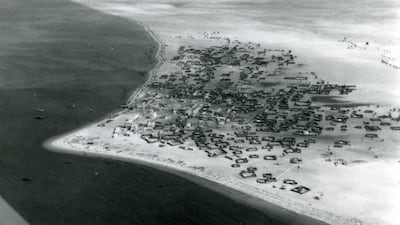
Abu Dhabi, then part of the Trucial States, pictured from above in the late 1950s / early 1960s. The emirate's coastline and palm dwellings can be seen. Photo: BP Archive -
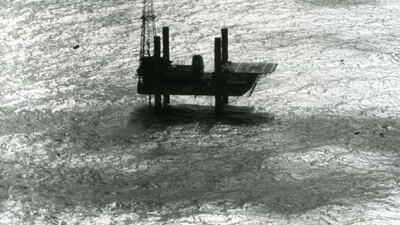
The oil rig Adman Enterprise off Das Island in 1958. Oil was struck on March 28, 1958. Photo: BP Archives -
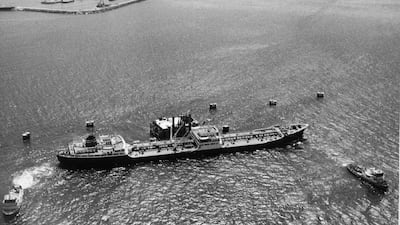
The tanker 'British Signal' moves away from the Das Island after loading with crude oil on July 4, 1962. Photo: BP Archive -
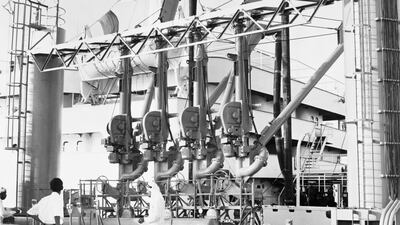
A loading berth off Das Island with BO Tanker Company's 35,000-tonne 'British Signal' loading crude in July 1962. -
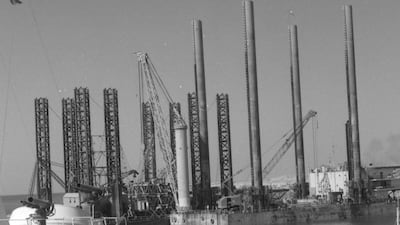
The harbour at Das Island from the deck of the ADMA tug 'Arzanah' showing the work barge 'ADMA Constructor' and the drilling barge 'Offshore 55' at berth in 1962. Photo: BP Archive -
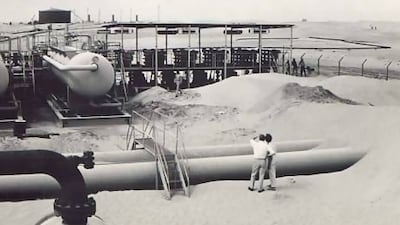
Abu Dhabi Petroleum Company production at Bu Hasa, an Empty Quarter oilfield for which a concession was granted in 1939. Photo: Total -
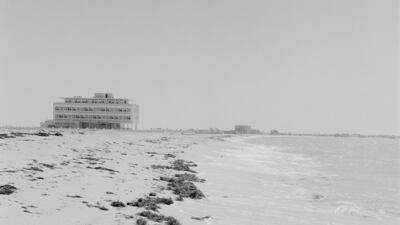
The Beach Hotel along Abu Dhabi's coast, pictured in 1962 - the year the emirate exported its first shipment of oil. Photo: BP Archive. -
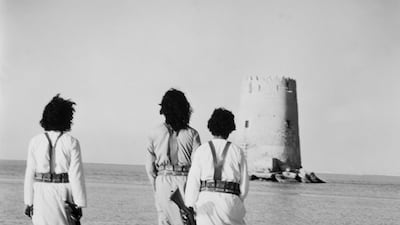
Crossing from the mainland to Abu Dhabi island in the 1950s beside the Maqta Tower, now overshadowed by the Maqta and Sheikh Zayed bridges. Photo: BP Archive -
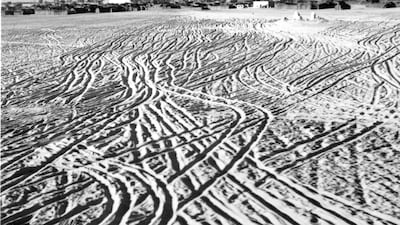
Abu Dhabi in the late 1950s or early 1960s, the view of the town from the home of a British family working in the oil industry. Photo: BP Archive -
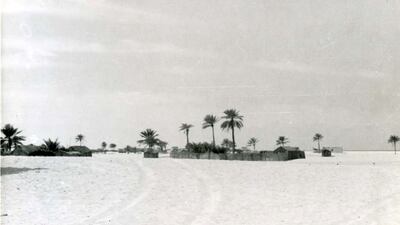
The town of Abu Dhabi in 1953. Photo: BP Archives -
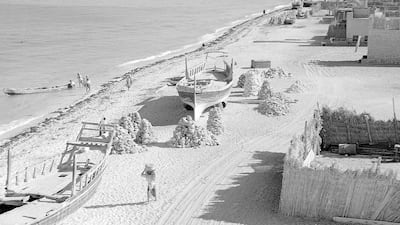
Stacks of coral dry on the beach in Abu Dhabi in the mid-20th century. Coral stone was used in the construction of many of the country's historic buildings, including Qasr Al Hosn. Photo: BP Archive -
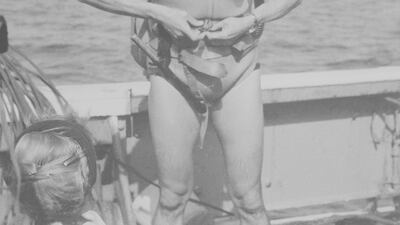
Jacques Cousteau on board 'Calypso' in the Gulf in 1954. Photo: BP Archive -
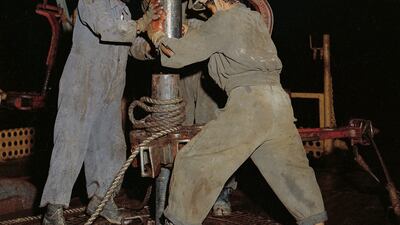
Three local workers prepare the drilling bit for an exploration well at Shuweihat on the Abu Dhabi coast in 1956. Despite reaching a depth of more than 4,000 meters, the well was dry, prompting a return to the Murban Bab field, where commercial quantities of oil were discovered four years later. Photo: Adnoc -
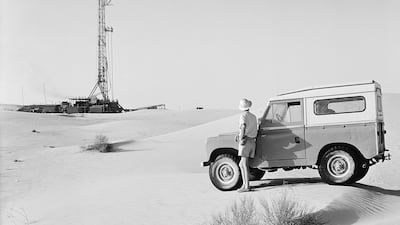
Deep in the desert, a worker with his Land Rover watches a drilling rig at the Murban Bab oil field in 1964. Photo: Adnoc -
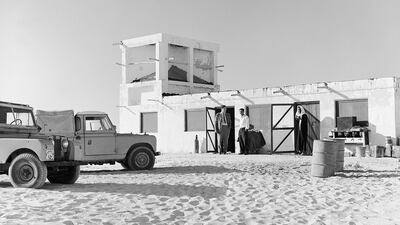
The oil company guest house in Abu Dhabi informally known as Henderson's Folly, after the UK's political officer Edward Henderson who had it built, in 1961. The building was later handed over to residents for social use to start The Club. Photo: Adnoc -
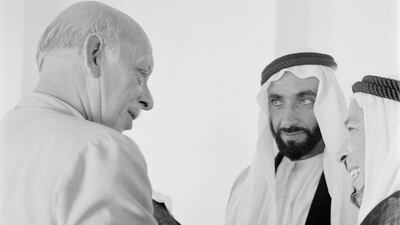
Sheikh Zayed meets with a senior official from BP in late 1957, as the concession prepares to begin drilling for oil. Photo: BP Archives -
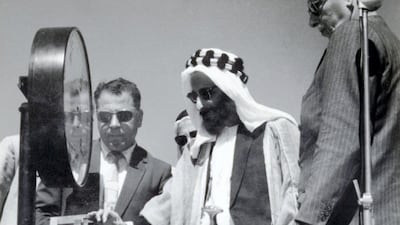
Sheikh Shakhbut, Ruler of Abu Dhabi, at the inauguration of Abu Dhabi Marine Areas Ltd's Umm Shaif oilfield October 1962. Photo: Abu Dhabi Department of Culture and Tourism -
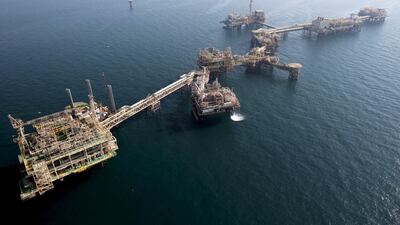
The supercomplex at Umm Shaif field in modern times. Located 150km offshore of Abu Dhabi, the oilfield is operated by Adnoc's Adma-Opco unit. Photo: Adnoc



