
Today, life in the Emirates moves in the fast lane. In a regular series to mark the 50th anniversary of the UAE, we take a trip back in time to see how much the country has changed.
Saadiyat Island – which translates as the “island of happiness” – has a history almost as old as Abu Dhabi.
Archaeologists have found the remains of old fishing communities and in the 1970s it was the base of the Sea Pearl, a huge hoverbarge used to carry prefabricated sections of a liquid gas plant to Das Island.
During this time it was also used for experimental hydroponic vegetable greenhouses, famously inspected by Muhammad Ali when the boxer visited Abu Dhabi in 1974.

Today the island is the heart of the city's Cultural District, announced in 2007 with a proposal to build three world-class museums – a branch of the Guggenheim, the Zayed National Museum and Louvre Abu Dhabi.
The global financial crisis a year later led to the suspension of construction projects worldwide – the Louvre Abu Dhabi among them – but work restarted on the site in 2013.
The older photograph here was taken in July 2014. It shows the structure of Jean Nouvel’s dome almost complete, but before it was covered with a final layer of interlocking aluminium stars.
Still to be completed at that time were the tidal pools that now surround the museum. You can also see the two massive mobile cranes used to lift roof elements into place and, to the right, part of the base of a “pyramid” used to test the construction materials against the rigours of Gulf summers.
Also just visible on the right are a series of concrete towers that are actually nearly a kilometre away in the port, but foreshortened by the photographer’s lens.
The museum was completed in 2017, and opened on November 8 by Sheikh Mohammed bin Rashid, Prime Minister and Ruler of Dubai; Sheikh Mohamed bin Zayed, Crown Prince of Abu Dhabi and Deputy Supreme Commander of the Armed Forces, and Emmanuel Macron, President of France.
Today, Louvre Abu Dhabi is one of the UAE’s top attractions and, with a design life measured in centuries, is likely to stay that way for some time to come.
-
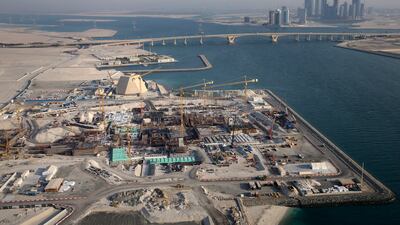
Aerial view of the Louvre Abu Dhabi construction site on Saadiyat Island in October 2013. Silvia Razgova / The National -
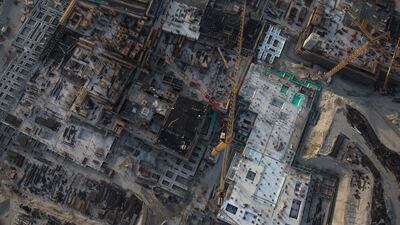
A section of the Louvre Abu Dhabi construction site seen from above in October 2013. Silvia Razgova / The National -
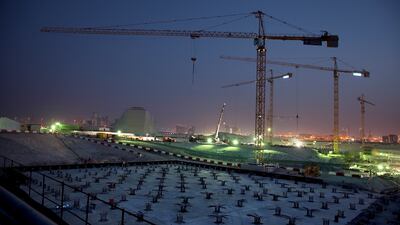
Construction continues into the evening at Louvre Abu Dhabi in May 2013. Silvia Razgova / The National -
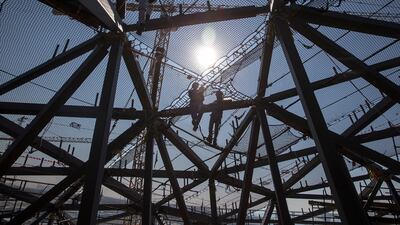
Men work on Louvre Abu Dhabi's dome in January 2015. Silvia Razgova / The National -
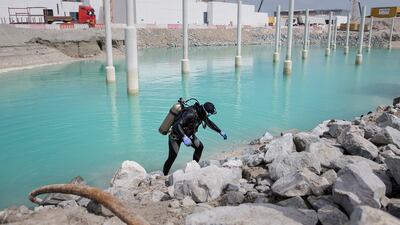
Diver Neerag Kumar, 27, works on installing marine piles around Louvre Abu Dhabi in March 2015. Silvia Razgova / The National -
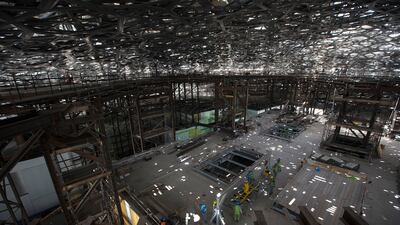
Inside Louvre Abu Dhabi's dome in May 2015. Silvia Razgova / The National -
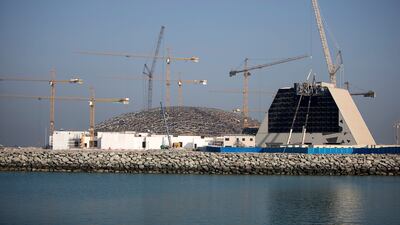
The skeleton of the Rain of Light mockup sits next to Louvre Abu Dhabi in September 2014. Silvia Razgova / The National -
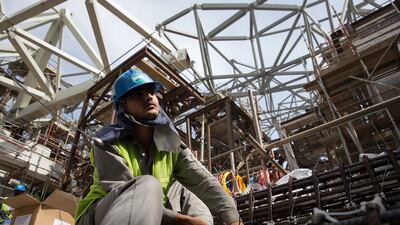
A man works on the cathodic protection system at Louvre Abu Dhabi in March 2014. Silvia Razgova / The National -
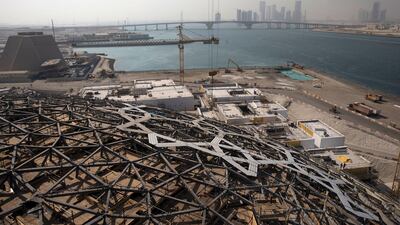
A view of Louvre Abu Dhabi's dome and the beginning stages of cladding work, as workers prepare to lift the last super-sized elements into place in September 2014. Silvia Razgova / The National -
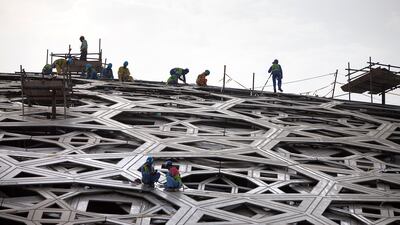
Men work on adding star-shaped elements to the dome in July 2015. Silvia Razgova / The National -
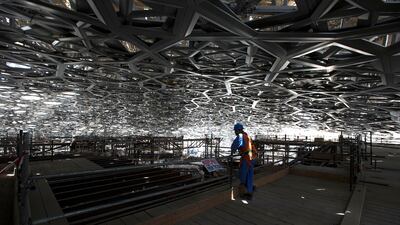
Inside the Louvre Abu Dhabi dome in May 2015. Silvia Razgova / The National -
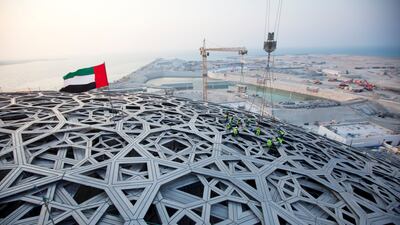
The final piece of the roof is put into place in September 2016. Christopher Pike / The National -
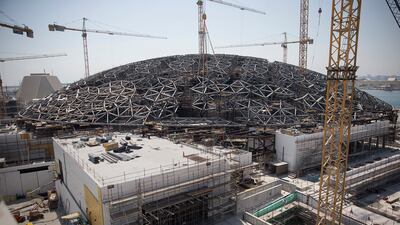
Construction of Louvre Abu Dhabi's dome in September 2014. Silvia Razgova / The National -
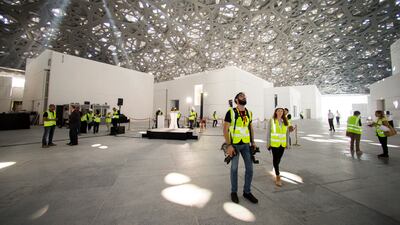
Workers inside Louvre Abu Dhabi, beneath the Rain of Light dome, in 2017. Christopher Pike / The National -
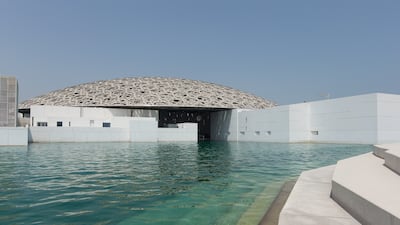
General view of Louvre Abu Dhabi in January 2017. Christopher Pike / The National -
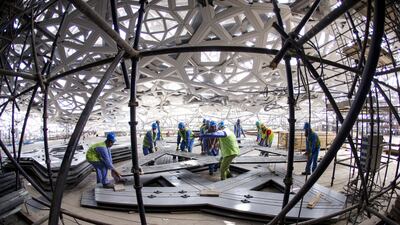
Men work on the ceiling for Louvre Abu Dhabi in May 2015. Christopher Pike / The National



