• Dr Mohamad Karima, who works at Al Zahra Hospital, Sharjah. All those pictured have recovered and all photos by Chris Whiteoak / The National
    Dr Mohamad Karima, who works at Al Zahra Hospital, Sharjah. All those pictured have recovered and all photos by Chris Whiteoak / The National
  • Dr Ashar Jamal, from Al Zahra Hospital, was in hospital for a week after his health deteriorated because of Covid-19.
    Dr Ashar Jamal, from Al Zahra Hospital, was in hospital for a week after his health deteriorated because of Covid-19.
  • Renu Venugopal, who is a nurse at Al Zahra Hospital. The frontline staff at hospitals bore the brunt of the pandemic.
    Renu Venugopal, who is a nurse at Al Zahra Hospital. The frontline staff at hospitals bore the brunt of the pandemic.
  • Seema Mary, a nurse at Medcare hospital, Sharjah. Her Covid-19 ordeal helped patients believe they too could recover, she said.
    Seema Mary, a nurse at Medcare hospital, Sharjah. Her Covid-19 ordeal helped patients believe they too could recover, she said.
  • Dr Davinder Singh a cardiologist at the NMC Royal Hospital in Dubai. The first few days after being diagnosed were scary, he said.
    Dr Davinder Singh a cardiologist at the NMC Royal Hospital in Dubai. The first few days after being diagnosed were scary, he said.
  • Joslin Coelho, who is a nurse at the NMC Royal Hospital in Dubai Investments Park.
    Joslin Coelho, who is a nurse at the NMC Royal Hospital in Dubai Investments Park.
  • Silpa Suresh also a nurse at the NMC Royal Hospital. She has returned to work.
    Silpa Suresh also a nurse at the NMC Royal Hospital. She has returned to work.
  • Keshar Bahadur a laboratory ward assistant at the NMC Royal Hospital, DIP. Hospitals filled with patients during the peak of the pandemic.
    Keshar Bahadur a laboratory ward assistant at the NMC Royal Hospital, DIP. Hospitals filled with patients during the peak of the pandemic.
  • Dr Iffat Sultana, an internal medicine specialist at the NMC Royal Hospital, Dubai Investments Park. There was a lot of anxiety among hospital staff, she said.
    Dr Iffat Sultana, an internal medicine specialist at the NMC Royal Hospital, Dubai Investments Park. There was a lot of anxiety among hospital staff, she said.
  • Aldrian Tomas, a customer care representative at the NMC Royal Hospital, Dubai Investments Park.
    Aldrian Tomas, a customer care representative at the NMC Royal Hospital, Dubai Investments Park.
  • Jephy Antony, who also works as a nurse at the NMC Royal Hospital. Like his colleagues, Mr Antony has also gone back to work.
    Jephy Antony, who also works as a nurse at the NMC Royal Hospital. Like his colleagues, Mr Antony has also gone back to work.
  • Jomon Joy, a ward attendant at the NMC Royal Hospital. Hospitals have since seen a reduction in the number of patients.
    Jomon Joy, a ward attendant at the NMC Royal Hospital. Hospitals have since seen a reduction in the number of patients.
  • Biji Mathew, nursing supervisor at the NMC Royal Hospital. Staff knew early in the year the virus had a good chance of reaching the UAE.
    Biji Mathew, nursing supervisor at the NMC Royal Hospital. Staff knew early in the year the virus had a good chance of reaching the UAE.
  • Ruth Kiruba, a nurse at the NMC Royal Hospital. She is back to work treating patients and expecting a child.
    Ruth Kiruba, a nurse at the NMC Royal Hospital. She is back to work treating patients and expecting a child.

Pandemic could affect mental health of frontline staff and patients for years, Abu Dhabi study warns


Nick Webster
  • English
  • Arabic

Related: Stressed out medics and patients at risk of developing dementia later in life, study says

Frontline health workers could take years to recover from mental scars suffered from treating seriously ill patients during the coronavirus pandemic, UAE officials said.

The warning came from Seha, the Abu Dhabi Health Services Company, which is responsible for operating Covid-19 testing centres and hospitals across the country.

Patients with long-term symptoms or who spent several weeks in hospital recovering from the virus are also likely to suffer some form of post traumatic stress disorder, psychologists said.

Past studies from similar outbreaks have shown symptoms of post-traumatic stress can be experienced for as long as 18 months after the outbreak ceases to exist

The UAE’s behavioural health council - operated by Seha - conducted dual studies to evaluate the mental heath impact on care staff and patients.

The number of medics and patients who have been surveyed as part of the ongoing study was not disclosed.

“Our preliminary data analysis from healthcare workers’ surveys completed since the start of the pandemic shows young, single, female expatriates working in healthcare are the most affected,” said Dr Nahida Nayaz Ahmed, a consultant physician involved in the analysis at the Al Maqta Healthcare Centre in Abu Dhabi.

“In the general population, the study is ongoing, but results so far have shown middle-aged men and women with pre-existing conditions are most likely to suffer from stress and anxiety.”

Doctors said psychological symptoms vary depending on the severity of infection.

Some signs are clear, such as anxiety and insomnia whereas other more longer lasting symptoms like depression have also been noted in patients.

'A conundrum on a scale never experienced'

“We will be able to define demographic details further when the analysis is completed,” Dr Ahmed said.

“It is hard to predict the timeline of the psychological impact caused by this pandemic, it is a conundrum on a scale never experienced before.

Dubai, United Arab Emirates - Reporter: N/A. Standalone. Covid-19/Coronavirus. People get tested for the coronavirus at the Mina Rashid screening center. Wednesday, September 2nd, 2020. Dubai. Chris Whiteoak / The National

“However, past studies from similar outbreaks have shown symptoms of post-traumatic stress can be experienced for as long as 18 months after the outbreak ceases to exist.”

Treatment varies between cases, but proactive screening and subsequent counselling has proven to prevent conditions worsening.

Self-help, counselling and medication

“At Seha, we have tried to be proactive from the very beginning of the pandemic,” said Dr Ahmed. 

“For staff dealing with Covid-19 patients, we rolled out psychological support through a telephone helpline, series of educational webinars on dealing with emotional impact from pandemic and group support.

“In the case of our patients, we have proactively distributed self-help booklets when they entered isolation, screened them actively for symptoms of depression, anxiety and stress.

“We also provided proactive counselling and medication intervention when necessary.”

Recovering patients received follow up care after leaving hospital in the form of home visits and consultations via telephone and online meetings.

  • Hand sanitisers set up across the facilities at the Ramada by Wyndham Downtown Dubai. Antonie Robertson / The National
    Hand sanitisers set up across the facilities at the Ramada by Wyndham Downtown Dubai. Antonie Robertson / The National
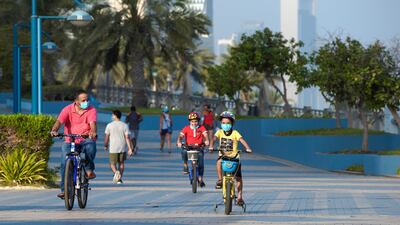
  • A father and his son enjoy a bike ride along the Corniche in Abu Dhabi. Victor Besa / The National
    A father and his son enjoy a bike ride along the Corniche in Abu Dhabi. Victor Besa / The National
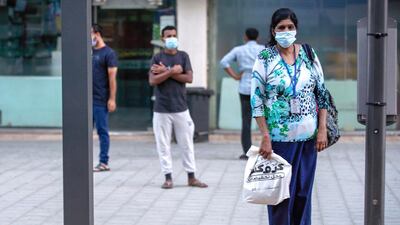
  • Abu Dhabi residents wait for their bus. Victor Besa / The National
    Abu Dhabi residents wait for their bus. Victor Besa / The National
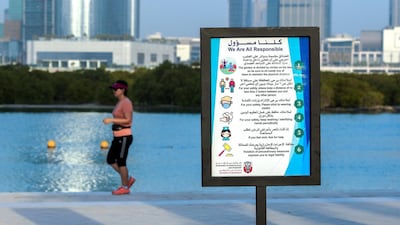
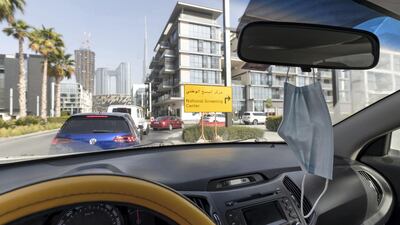
  • A Covid-19 sign along Reem Beach reminds residents exercising to be responsible. Victor Besa / The National
    A Covid-19 sign along Reem Beach reminds residents exercising to be responsible. Victor Besa / The National
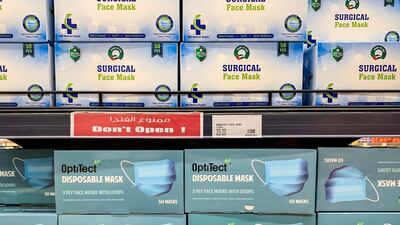
  • Face masks on Union Coop’s shelves in Al Barsha Mall in Dubai. Reem Mohammed / The National
    Face masks on Union Coop’s shelves in Al Barsha Mall in Dubai. Reem Mohammed / The National
  • People wait in a queue to get tested for Covid-19 in City Walk. Chris Whiteoak / The National
    People wait in a queue to get tested for Covid-19 in City Walk. Chris Whiteoak / The National
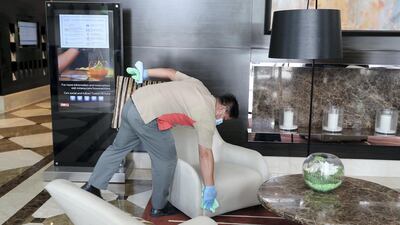
  • Cleaning staff disinfect the sitting area at the Towers Rotana hotel on Sheikh Zayed road in Dubai. Pawan Singh / The National
    Cleaning staff disinfect the sitting area at the Towers Rotana hotel on Sheikh Zayed road in Dubai. Pawan Singh / The National
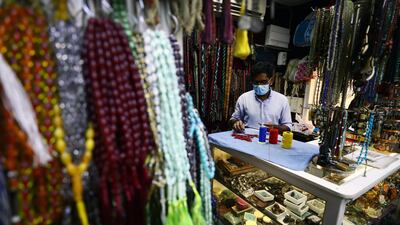
  • A man makes prayer beads in his shop at Central Souq in Sharjah. Getty
    A man makes prayer beads in his shop at Central Souq in Sharjah. Getty
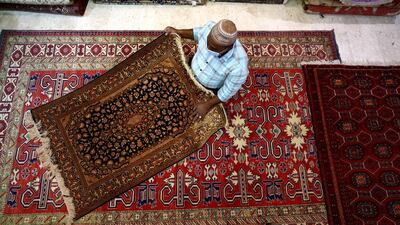
  • A vendor arranges carpets in his shop at Central Souq in Sharjah. Getty Images
    A vendor arranges carpets in his shop at Central Souq in Sharjah. Getty Images
  • Tourists arrive at Dubai airport as the emirate reopened its doors to international visitors. AFP
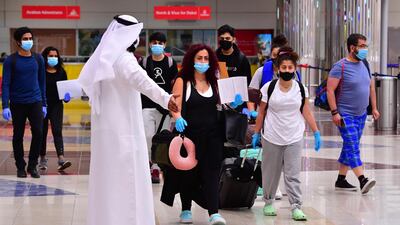
    Tourists arrive at Dubai airport as the emirate reopened its doors to international visitors. AFP

Doctors and nurses working with high-risk patients on Covid wards at the height of the pandemic were most vulnerable to mental trauma, experts said.

Infection rates have been on the rise in recent weeks, hitting a new high of 1,007 on September 12.

Authorities have stressed the need to to support healthcare workers key to the fight against Covid-19.

More than 80,000 frontline workers have been identified for a new nationwide programme.

The project, overseen by the Frontline Heroes Office, will ensure there is a support system in place and benefits for their families.

This is expected to include help with mental health services and schooling, where needed, and extend to benefits and discounts.

The economic impact of the pandemic with lost jobs, isolation and business closures is predicted to have a lasting impact on rates of depression and anxiety.

Isolated patients struggling to move on

Dr Adel Mohamed Yasin Alsisi, a critical care consultant at Prime Hospital in Dubai, was working long shifts on a ward dedicated to treating the most seriously ill covid patients.

“Patients admitted to ICU for a long period of time were under different circumstances to other patients,” he said.

“They often lost track of time and could not differentiate between day and night.

“Visitors were restricted so they had to come to terms with the effects of isolation.”

Other signs of stress were triggered by minimal contact with the outside world, as patients in ICU only saw staff in full protection suits or scrubs for weeks at a time.

Those attached to ventilators for long periods also suffered mentally, Dr Alsisi said.

“We tried to educate them to make them aware the outside world was still there and that life would carry on, but some showed early signs of psychosis,” he said.

“There were many unknowns with the virus in the early days, so of course that attracted some degree of fear.

“When these patients returned to other wards their mental health improved.

“It was a temporary experience for them, but at the time it felt severe.”

UAE%20FIXTURES
%3Cp%3EWednesday%2019%20April%20%E2%80%93%20UAE%20v%20Kuwait%3Cbr%3EFriday%2021%20April%20%E2%80%93%20UAE%20v%20Hong%20Kong%3Cbr%3ESunday%2023%20April%20%E2%80%93%20UAE%20v%20Singapore%3Cbr%3EWednesday%2026%20April%20%E2%80%93%20UAE%20v%20Bahrain%3Cbr%3ESaturday%2029%20April%20%E2%80%93%20Semi-finals%3Cbr%3ESunday%2030%20April%20%E2%80%93%20Third%20position%20match%3Cbr%3EMonday%201%20May%20%E2%80%93%20Final%3C%2Fp%3E%0A

Mercer, the investment consulting arm of US services company Marsh & McLennan, expects its wealth division to at least double its assets under management (AUM) in the Middle East as wealth in the region continues to grow despite economic headwinds, a company official said.

Mercer Wealth, which globally has $160 billion in AUM, plans to boost its AUM in the region to $2-$3bn in the next 2-3 years from the present $1bn, said Yasir AbuShaban, a Dubai-based principal with Mercer Wealth.

Within the next two to three years, we are looking at reaching $2 to $3 billion as a conservative estimate and we do see an opportunity to do so,” said Mr AbuShaban.

Mercer does not directly make investments, but allocates clients’ money they have discretion to, to professional asset managers. They also provide advice to clients.

“We have buying power. We can negotiate on their (client’s) behalf with asset managers to provide them lower fees than they otherwise would have to get on their own,” he added.

Mercer Wealth’s clients include sovereign wealth funds, family offices, and insurance companies among others.

From its office in Dubai, Mercer also looks after Africa, India and Turkey, where they also see opportunity for growth.

Wealth creation in Middle East and Africa (MEA) grew 8.5 per cent to $8.1 trillion last year from $7.5tn in 2015, higher than last year’s global average of 6 per cent and the second-highest growth in a region after Asia-Pacific which grew 9.9 per cent, according to consultancy Boston Consulting Group (BCG). In the region, where wealth grew just 1.9 per cent in 2015 compared with 2014, a pickup in oil prices has helped in wealth generation.

BCG is forecasting MEA wealth will rise to $12tn by 2021, growing at an annual average of 8 per cent.

Drivers of wealth generation in the region will be split evenly between new wealth creation and growth of performance of existing assets, according to BCG.

Another general trend in the region is clients’ looking for a comprehensive approach to investing, according to Mr AbuShaban.

“Institutional investors or some of the families are seeing a slowdown in the available capital they have to invest and in that sense they are looking at optimizing the way they manage their portfolios and making sure they are not investing haphazardly and different parts of their investment are working together,” said Mr AbuShaban.

Some clients also have a higher appetite for risk, given the low interest-rate environment that does not provide enough yield for some institutional investors. These clients are keen to invest in illiquid assets, such as private equity and infrastructure.

“What we have seen is a desire for higher returns in what has been a low-return environment specifically in various fixed income or bonds,” he said.

“In this environment, we have seen a de facto increase in the risk that clients are taking in things like illiquid investments, private equity investments, infrastructure and private debt, those kind of investments were higher illiquidity results in incrementally higher returns.”

The Abu Dhabi Investment Authority, one of the largest sovereign wealth funds, said in its 2016 report that has gradually increased its exposure in direct private equity and private credit transactions, mainly in Asian markets and especially in China and India. The authority’s private equity department focused on structured equities owing to “their defensive characteristics.”