
I have just spent fourteen days sat at home in Abu Dhabi with a tracker device attached to my wrist. Such a previously unlikely scenario has been made not uncommon now by the realities of the Covid-19 pandemic.
Spending 14 days in self-isolation and wearing a tracker is something currently required in Abu Dhabi if you have travelled outside the UAE and return to the capital. Although the procedures can differ if you land in another emirate.
Overall, I found the experience of wearing a tracker during the self-isolation period to be multidimensional. The practical aspects were straightforward; I landed in Abu Dhabi airport on a Friday and after collecting my bags and proceeding to the arrivals area, I waited for about 20 minutes for my turn to sit at one of seven desks manned by health officials in full PPE.
One official, at a computer, took my details and examined my passport, while the other attached the tracker – which is basically a watch with a sim card in it – to my left wrist. A small square copper plate covered the place where the two sides of the strap meet, creating a physical barrier to me trying to take it off.
The ladies who processed me were friendly and efficient. They reminded me not to try to take the watch off because the police would be alerted. I don’t know if they meant literally an alarm would go off in the police station but the message was clear – the bracelet could not be removed by me without the risk of penalties.
Although, I wasn’t told (and didn’t want to ask) exactly what those penalties were when they put it on. I had no intention of finding out anyway. I was done in a matter of minutes and was allowed to exit the building.

While at that point I understood what would be required, I didn’t quite know what to expect from the experience as I went straight home in taxi and settled into the rooms where I would be spending the next two weeks.
The tracker itself is relatively lightweight and slim. You can shower with it on. Twice a day I had to attach a charging device to it, that made it bulkier, but this only had to be kept on for about 20 minutes at a time to keep the watch adequately charged.
Receiving a negative Covid-19 result for my airport test the day after landing was a helpful, early milestone but emotionally I was up and down (more than usual) throughout the fortnight.
I found the psychological effect on me interesting. There was an ever-present stress, caused by the certain knowledge that I was being specifically tracked by some unseen authority.
There were times I felt lonely. Generally, I was overtired and my sleeps were fitful. Anger, fear and sadness were intermittent feelings. There were times when I felt calm and relaxed too. After all, I couldn’t do anything but wait. Work helped pass the time of course. The weekends were harder when there was less to do.
-
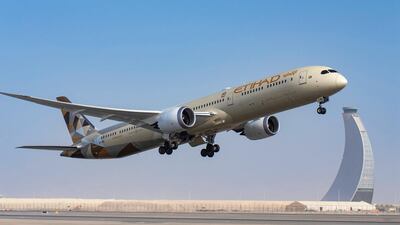
The rules on how long visitors to Abu Dhabi spend in quarantine depend on where they are travelling from. Getty. -
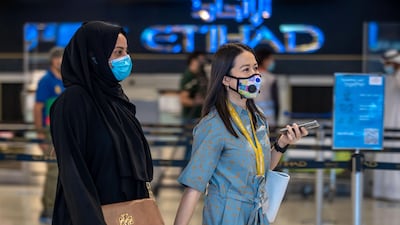
An airport worker escorts a passenger through Abu Dhabi International Airport. All photos by Victor Besa / The National -
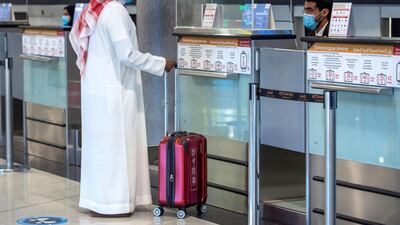
A passenger wearing a face mask checks in at the Etihad counter -
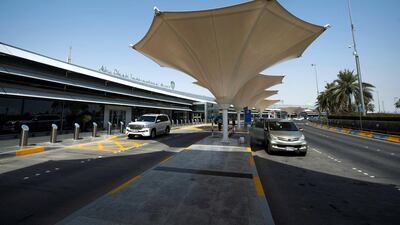
The drop-off area at Abu Dhabi airport's main departures concourse -
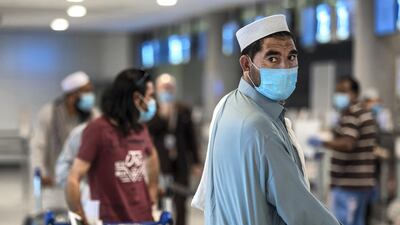
Passengers queue for check-in for repatriation flights -
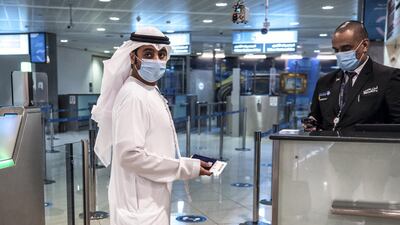
A traveller has his passport checked by security in the departures area -
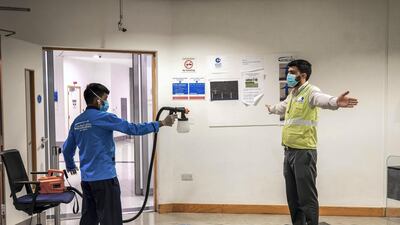
Staff are hosed down with a mild disinfectant before entering public areas -
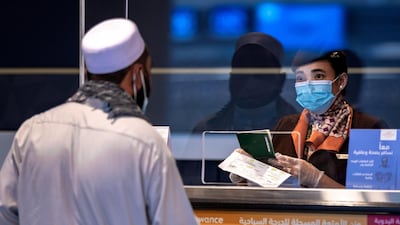
Etihad staff check passengers in during a media tour for The National in July -
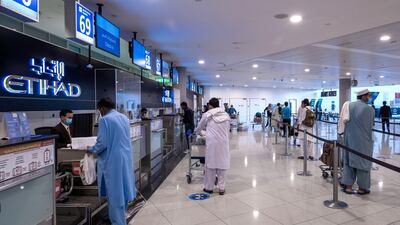
Etihad staff check passengers in during a media tour for The National in July -

The airport has handled hundreds of flights in recent months but tourists have not been able to secure a visa since the borders closed in March -
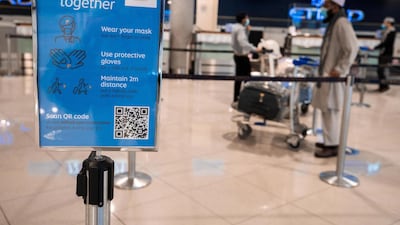
The airport has handled hundreds of flights in recent months but tourists have not been able to secure a visa since the borders closed in March -
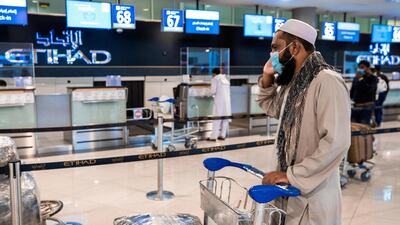
Passengers at the Etihad check-in desk -
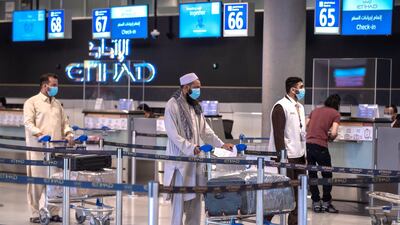
Arrivals can expect strict hygiene measures and must quarantine for 14 days on arrival -
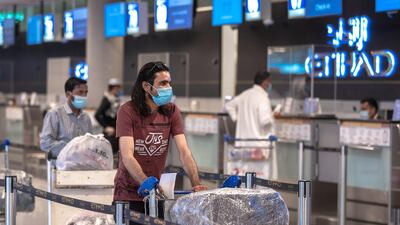
Passengers at the Etihad Check-In area at Abu Dhabi International Airport


Waiting for any symptoms to potentially hit during the first week also added to my stress – my fear was there for two reasons. Firstly, this is a constructed scenario that encourages you to think you may have Covid – why else the need for isolation and a tracker? Secondly, I had flown across continents and had been on four aircraft and been through four different airports.
By the seventh day however, I had turned a corner in my mind and began to feel less worried that any symptoms would begin to present themselves. Still it was a difficult first week.
Keeping a physical distance from my wife and kids was very hard. It was confusing and frustrating for my young boys certainly and also meant my wife was overburdened with parenting and household responsibilities. The dog probably wondered what had become of me during her daily walks. I am lucky though. I have a support network of friends, family and colleagues so even if I felt alone, and was physically by myself, I was never truly isolated from others.
The day 12 Covid-19 test was something I looked forward to. I saw it as an objective which once reached and cleared would help me feel that the experience was almost over. The Abu Dhabi National Exhibition Centre is where all people with trackers in the capital must go for testing and processing.
Leaving the house was a little bit nerve inducing at first. My worries that I would be triggering an emirate-wide manhunt was not helped by the alarm on my tracker going off in the car just before I got to the exhibition centre. At any rate, I never saw any flashing blue and red lights behind me.

Anyway, the system is set up to provide permission retrospectively to leave my isolation spot for testing or tracker removal. Take your passport and Emirates ID with you to Adnec. You will need to show which date your arrived back in Abu Dhabi to confirm you have come to Adnec on the correct day. The Emirates ID is needed for the testing. Also have a credit card handy to pay for the test. They will ultimately take cash but that will take longer to process. On the day I went the test cost Dh180.
After finishing my test, having arrived at 8am when it opened, I had to then line up to get the permission recorded in the system, also using my Emirates ID. The whole thing took an hour from when I got there to when I left. Pretty fast. Still, the alarm on the tracker would periodically burst into life until about half an hour after I got back home. There was no sign of the police, thankfully.
Visiting Adnec provided a first-hand glimpse of the industrial scale of Abu Dhabi’s response to the health crisis.
I was there only twice for a total of about three hours but there were hundreds of people being processed during that time. If I extrapolate and estimate, the tracker device initiative could be handling thousands of people a day in Abu Dhabi and Al Ain. This is just one part of the massive effort to keep us as safe as possible from the coronavirus.
The last of my anxiety was dispelled after I received my negative Covid result on the morning of day 13. This meant I would be able to have the tracker removed the next day. I could begin to relax.
Friday, day 14, was busy at Adnec, even at 9am. It took two hours in total of waiting and being processed for the tracker to be removed (it actually takes seconds to take off) but once it was gone from my wrist, I was elated. It felt as if I had accomplished something.
There is a sacrifice you see and a kind of duty being performed when you are part of a programme like this. In a public health crisis, by doing this I sensed I was contributing to nationwide efforts to mitigate the spread of the coronavirus. It is a tiny role for sure but it is not nothing either.

