
Abu Dhabi’s main maternity hospital has been tasked with caring for all pregnant women who have contracted Covid-19.
About 6,000 babies are born each year at Corniche Hospital, which health authorities have said would be the only maternity facility to deliver the children of women with the virus.
The hospital, which opened 40 years ago, will continue to receive patients who do not have the virus in separate wings.
“During this pandemic, Corniche Hospital has stepped up as the designated leading tertiary maternity hospital to take over the specialised care for all pregnant women diagnosed with Covid-19 in Abu Dhabi, said Dr Paul Bosio, the hospital’s chief medical officer.
He said the hospital would “continue to safely provide normal and advanced care for all its regular patients”.

The facility cared for the youngest patient to have Covid-19 diagnosed in the UAE, when a newborn, Jad, and his mother, Raven Abu Zaher, were found to be positive for the virus.
All patients are tested for the virus on admission to the hospital.
Last month, another woman, aged 27, tested positive for the virus as she was being admitted to the hospital to deliver her son.
The boy was clear of the virus and, using the recommended measures from doctors, was able to breastfeed her son without putting him at risk.
The mother, named Sara, said doctors put her at ease, reassuring her that she would be treated like any other patient. They said she would be able to see her newborn but had to wear a mask and regularly sanitise her hands.
Mothers who test positive for Covid-19 are kept in an isolated room and are not allowed to receive visitors. Only medical and nursing staff are allowed into the room.
Sara was unaware she had the virus because she had no symptoms.
“During my pregnancy, I set the goal to exclusively breastfeed my baby," she said.
“However, as a first time mum and despite all the preparation, I found it not as easy and natural as I thought it would be.
“Adding Covid-19 to the equation leaves you with … no family support. In such a stressful situation, if it was not for the amazing lactation consultants, I do not think I would have been able to breastfeed my baby."

Sara said learning to breastfeed her child kept her going.
“By having my baby dependent on me for his nutrition, it meant I needed to be strong for him,” she said.
Dr Bosio said mothers who contract the virus are able to breastfeed, provided they adhere to certain precautions.
“Mothers who are well enough to breastfeed, should … wear a mask while feeding, wash hands with soap and water before and after touching the baby, wipe and disinfect surfaces regularly with disinfecting solution and keep the baby’s cot or crib two meters away from the mother’s bed,” he said.
Having Covid-19 also meant Sara’s husband could not spend much time in hospital with her.
“It was just me and baby. I vividly remember how I felt when I was taken to my post delivery room: overwhelmed, scared, helpless, exhausted, and angry at the same time," he said.
She was discharged a week after her delivery, after testing negative for the virus twice. Her family have also all been tested and were clear of the disease.
“It was a very emotionally tough few days, but what helped me get through was being grateful,” Sara said.
“Despite all of the uncertainty and fear there was so many things I was grateful for. I was grateful I was just blessed with a healthy baby.
“I was grateful I was asymptomatic. I was grateful I was receiving good medical care. That shift of mindset and perspective along with having trust in and gratitude for Allah was what helped me cope in this difficult time.”
_____________
In pictures: How Covid-19 patients are treated at Abu Dhabi assessment centre
-
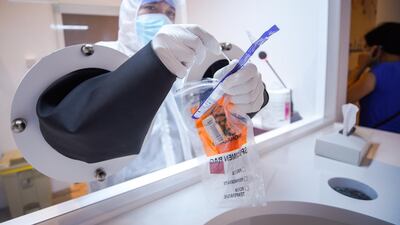
A worker handles a sample at a testing centre in Abu Dhabi. Victor Besa / The National -

The new Covid-19 Prime Assessment Centre at ADNEC. Victor Besa / The National -

The new Covid-19 Prime Assessment Centre at ADNEC. Victor Besa / The National -
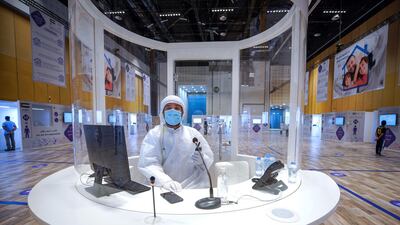
An information officer at the hall. Victor Besa / The National -
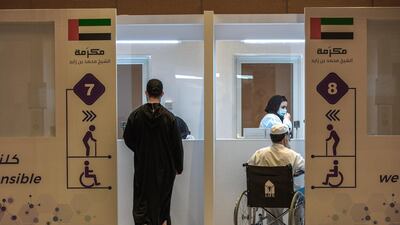
Patients at a kiosk. Victor Besa / The National -
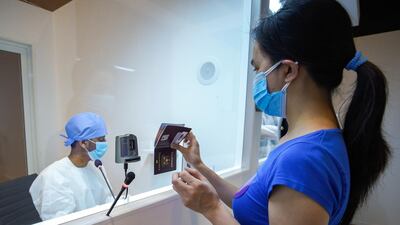
A woman is screened by a healthworker. Victor Besa / The National -
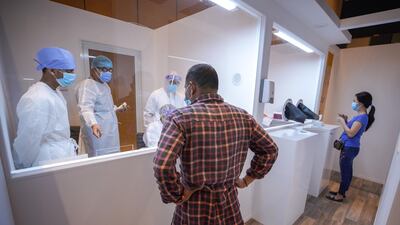
Patients are screened by healthworkers Victor Besa / The National -
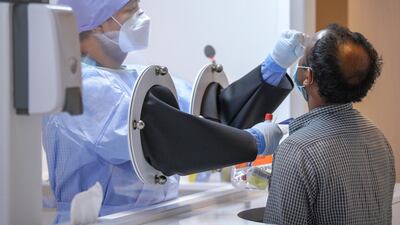
A worker gives a swab test to a man. Victor Besa / The National -
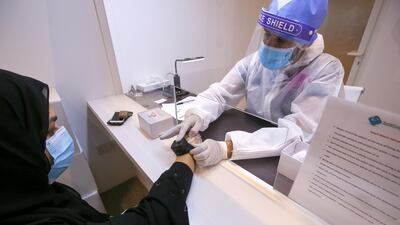
An electronic wristband is installed on a patient. Victor Besa / The National -
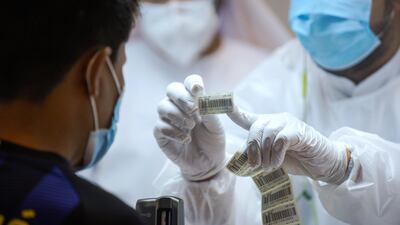
A healthcare worker double checks if the patients control number is correct. Victor Besa / The National -
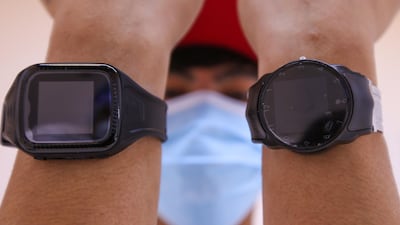
An electronic wristband is installed on a patient at the new Covid-19 Prime Assessment Center at ADNEC. Victor Besa / The National -
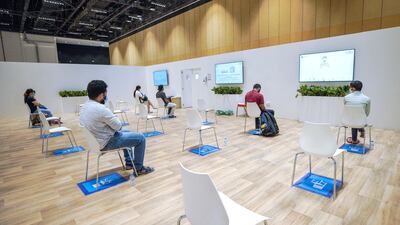
Covid-19 positive residents at the waiting room. Victor Besa / The National -
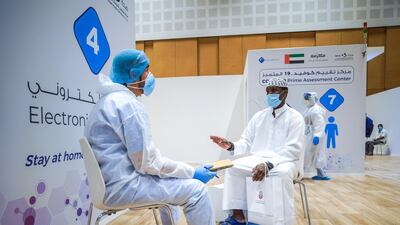
A patient is interviewed by a healthcare worker. Victor Besa / The National -

Magham Shrike with fellow healthcare worker at the new Covid-19 Prime Assessment Centre at Adnec. Victor Besa / The National -

Covid-19 positive residents inside the waiting room. Victor Besa / The National



