
With the world in the grip of the Covid-19 pandemic, a sole case of hantavirus has sparked fear online.
The body of man who died on a bus travelling to Shandong Province on Monday later tested positive, China's Global Times newspaper reported, and all 32 other passengers were screened for the disease.
But what is hantavirus – and should we be worried?
What is hantavirus?
Hantaviruses are a family of viruses spread mainly by rodent urine, faeces and saliva that has become airborne.
They can cause various disease syndromes in humans, says the Centres for Disease Control and Prevention in the US.
“New World” hantaviruses found in the Americas can lead to hantavirus pulmonary syndrome, a severe, sometimes fatal, respiratory disease.
The mortality rate is 38 per cent, reports the Centres for Disease Control and Prevention. That compares with about 3.5 per cent for the new coronavirus that causes Covid-19.
“Old World” variants are found mostly in Europe and Asia, and may cause haemorrhagic fever with pulmonary-renal syndrome and damage the lungs and kidneys.
The group of illnesses in Old World hantaviruses can cause a variety of symptoms, from the mild to the severe, and are fatal in up to 15 per cent of cases, depending on the virus transmitted.
Should I be worried?
News of the death in China caused panic among some online, with comparisons being drawn to the new coronavirus, which originated in the country.
But unlike the virus that causes Covid-19, hantaviruses are not new. They have been known about for decades.
Human-to-human transmission is possible, but scientists say such cases are very rare. Of course, it is wise to keep a distance from rodents and to deal with infestations if they occur, but hantavirus is not the next coronavirus.
“It spreads from rat/mice if humans ingest their body fluids,” Swedish scientist Dr Sumaiya Shaikh tweeted.
“Human-human transmission is rare. Please do not panic, unless you plan to eat rats.”
UAE’s empty malls and deserted streets – in pictures
-

A woman walks by a closed shop in Dubai amid measures to curb the spread of coronavirus. AFP -
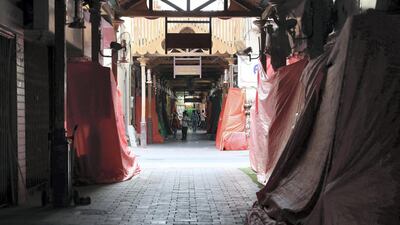
Closed shops at the Utensil Souq in Deira, Dubai. Pawan Singh / The National -
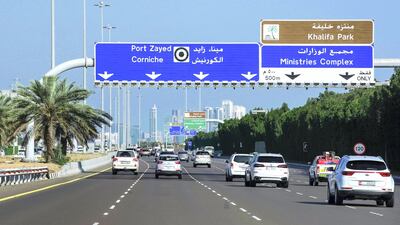
Clear skies and light traffic are seen in Abu Dhabi. Victor Besa / The National -
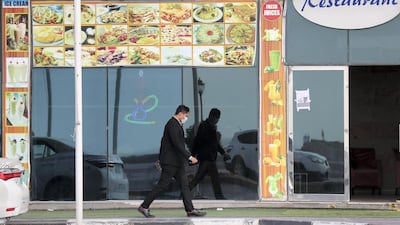
A man wearing a face mask walks past a closed restaurant in Ajman. Chris Whiteoak / The National -
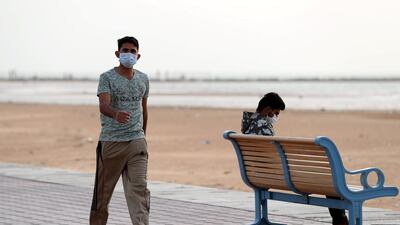
Men wear a face masks on the beach front in Ajman. Chris Whiteoak / The National -

The China Court section of Ibn Battuta Mall in Dubai stands almost empty. Pawan Singh / The National



