



Nurses, ambulance workers and frontline staff who helped protect the country during the Covid-19 pandemic were surprised and delighted to find their residency automatically upgraded to the golden visa.
Healthcare workers who cared for critically-ill Covid-19 patients in UAE hospitals said they were astonished to find two-year validity Emirates ID cards updated to 10 years after checking their status on the Federal Authority for Identity and Citizenship app.
This is in line with government announcements last year that frontline workers and their families would be issued with golden visas for extraordinary efforts to protect the nation.
The National spoke to nurses in Dubai and Abu Dhabi who were among the first batch of nursing staff whose visas were updated without them applying for golden visas.
The process is expected to be rolled out to staff in hospitals across the country as part of government initiatives to acknowledge the work of medics and provide stability to frontline heroes and their families.
Proud moment
Silpa Suresh, a nurse with the NMC Royal Hospital in Dubai, and Jephy Antony, her husband and head emergency room nurse, received golden visas on Thursday.
“I heard the news from other nurses and then we found that we too got a golden visa,” said the 32-year-old.
Ms Suresh’s work visa was valid until next year, but the new papers give her an extension until 2032.
“All the nurses are talking about it. At first, I thought it was not true because I have not applied for a golden visa,” said Ms Suresh who works in NMC’s out-patient department.
“Then I checked and confirmed this and I’m so happy.
“It makes such a difference because we don’t need to keep renewing visas of our children every two years.
“I feel blessed to receive such a great honour from the UAE government for being part of a healthcare team. It’s a proud moment for both of us that the hard work put in by frontline workers has been recognised.”

Covid heroes
Authorities said earlier this year that the Emirates ID – the nation’s identification card system – would contain details of residents’ visa status.
Government departments were informed they could verify residency through the Emirates ID card and would no longer have residency visa stickers on passports.
Healthcare provider NMC confirmed nurses, ambulance drivers and an IT staffer in the health and safety department had received golden visas recently without applying for them.
There is a feeling of elation among them,” Michael Davis, chief executive NMC Healthcare told The National.
“They are Covid heroes and these roles are considered critical for the country.
“Education and health care are pillars for any country’s growth and crucial roles to run the nation effectively and efficiently.
“There is also gratitude and optimism that the hard work, service to the community has been recognised.”
The total number of golden visas in all categories in NMC for nurses, doctors, pharmacists, laboratory, dialysis and anaesthesia technicians, radiographers, physiotherapists is about 1,000.
Surviving the pandemic
The news has prompted a change in long-term plans for many healthcare workers.
Smitha Bhavanam, an emergency nurse at Abu Dhabi’s Sheikh Shakhbout Medical City, has decided her teenage son will go to college in the UAE instead of India.
Watching patients struggle during the early days of 2020 when the pandemic swept through the country was distressing for Ms Bhavanam who has worked in the country for 19 years.
“It has been a painful three years,” said the 43-year-old who lost a cousin to Covid-19.
“We have survived but it has not been easy to see people suffer.”
News about her golden visa ends anxiety about the visa status of her 17-year-old son after he completed high school.
Under earlier rules, 18-year-old male children needed to be studying in a university to qualify for UAE residency.
“We heard that nurses could apply for the golden visa but thought it would take time,” she said.

“We are really thankful for this. I have told my son to choose a university here instead of studying overseas. I really love this country when I compare it with any other country.”
Ajas Aliyar, an intensive care unit nurse at Sheikh Shakhbout, said he cannot forget the fight to keep Covid-19 patients alive.
Patients were intubated when unable to breathe, staff cared for them, weaned them off the ventilator and continued to check on their progress when they moved out to general wards.
“Those were horrible nights when we saw patients struggle and had to respond quickly,” he said.
“We stayed strong to fight the infection and the country; the government supported us a lot.”
His residence visa was until 2024 and on Wednesday he was surprised to find it renewed until 2032.
“This is true appreciation for the ICU and clinical staff,” Mr Aliyar said.
Saving lives
Joslin Coelho, a nurse who works with Mediclinic in Abu Dhabi, was delighted to find out on Thursday that her visa had been extended.
“The N95 masks, gowns, breathing and working with full PPE for the entire day was very difficult,” she said.
“It was suffocating and a challenge for all of us.
“This news about the golden visa brings happiness to everyone.”
Dr Anupuma Wazir, the head of emergency at NMC Speciality hospital in Dubai’s Al Nahda, described the pride her colleagues felt in being recognised for their efforts.
“So many of us have been working with Covid patients for more than two years and it means a lot to be given this preference in visa by the government,” said Dr Wazir.
“We have seen patients almost dying, put them on the ventilator and then seen them leave with a smile on their face.
“Our teams have saved the lives of so many.
“I used to cry inside my PPE when we lost patients.
“This is satisfying for us as the importance of medical staff has shone through during the pandemic.”
UAE frontline workers from 10 countries talk about the challenges of the job – in pictures
-
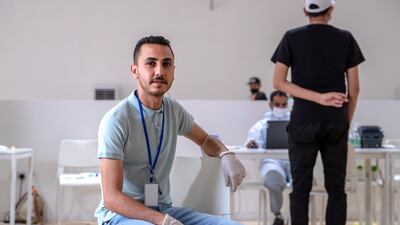
Name: Mohammed Kaloub. Age: 30. Nationality: Palestinian. Work: PCR technician at Tamouh tent in Mussaffah for five months. Past work: Hotel manager. Question: What has been the biggest challenge you've faced while being a PCR frontline worker? Answer: "The biggest challenge so far is the day-by-day interaction with thousands of people who are both negative and positive. I and my colleagues are always in danger of being infected." Photos: Victor Besa / The National -
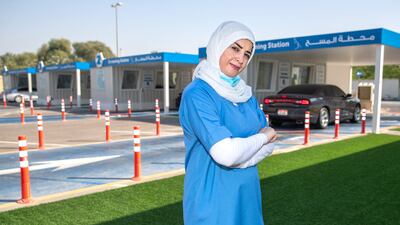
Name: Batool Hayek Age: 40 Nationality: Syrian. Work: PCR Technician at SEHA Covid-19 Drive-Through at Al Manhal in Abu Dhabi for 18 months Past work: Nurse at Mafraq Hospital. Question: What has been the biggest challenge you've faced while being a PCR frontline worker? Answer: "A big challenge was working as a nurse with positive corona patients from inside you feel scared and at the same time you have to help those patients." -
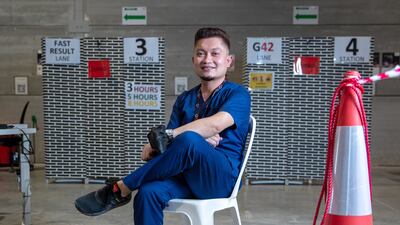
Name: Loui Royo Age: 33 Nationality: Filipino. Work: Manager of PCR operations at Biogenix Labs for one year. Past Work: MOPH-Manticao OT/ER/DR Nurse. Question: What has been the biggest challenge you've faced while being a PCR frontline worker? Answer: "The biggest challenge I face as a frontliner was to stand up to the expectation of keeping everyone safe, with regular testing. We are grateful to have received well-structured training in order to deliver quality care to our clients with the proper techniques and knowledge to lower the discomfort levels during testing procedures." -

Name: Yusra Al Antari Age: 38 Nationality: Emirati. Work: PCR technician at Seha Covid-19 drive-through centre, Al Manhal, Abu Dhabi, for 13 months. Past work: Charge nurse at School Health. Question: What has been the biggest challenge you've faced while being a PCR frontline worker? Answer: "Nurses will remain key players in stopping the pandemic with adequate assistance, as they have a direct exposure with the patients which put them at high risk of infection, therefore as a charge nurse I have to make sure that we have appropriate infection control procedures and sufficient personal protective equipment all the time. Thus, they must be provided with a healthy work environment (such as free to comment to reports of abuse or infection control risks) to empower their efforts to control and manage the outbreak." All photos by Victor Besa / The National -
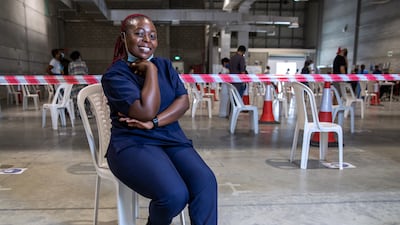
Name: Bagob Fonyuy Age: 26 Nationality: Cameroonian. Work: PCR technician at Biogenix Labs for eight months. Past work: Labour and delivery nurse. Question: What has been the biggest challenge you've faced while being a PCR frontline worker? Answer: "Being a part of the PCR frontliner team is a challenging yet rewarding experience. One of the many challenges I face is having to protect myself from the highly infectious Covid-19 virus. Nevertheless, I am doing everything possible to help screen large crowds by carrying out swab tests for quick identification and isolation. I am always mindful of the fact that the well-being of the community depends on my levels of efficiency, so I try and work as hard as possible. The satisfaction of helping the UAE outweighs everything else." -
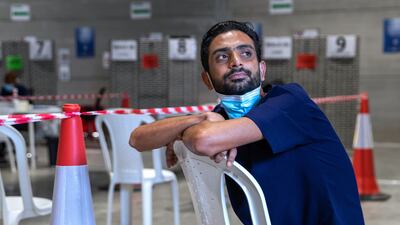
Name: Ravikant Rajpoot Age: 31 Nationality: Indian. Work: PCR technician at Biogenix Labs for four months. Past work: Staff nurse in India. Question: What has been the biggest challenge you've faced while being a PCR frontline worker? Answer: "I understand the stress everyone is experiencing as a result of the pandemic, so I try to be as polite and kind as possible. I worry about my health but the support I receive from the Biogenix Labs and G42 Healthcare team motivates me to face any challenge with a positive attitude." -

Name: Sanaa Shebl Shoker Age: 45 Nationality: Egyptian. Work: PCR technician at Seha Covid-19 drive-through centre, in Al Manhal, Abu Dhabi for nine months. Past Work: Charge nurse at Al Mushrif Children's Specialty Centre. Question: What has been the biggest challenge you've faced while being a PCR frontline worker? Answer: "As frontline worker, I had been dealing with the pandemic head-on for almost a year. That’s a year of face masks. A year of dealing with angry customers. A year of health uncertainty. We all know that people have every right to be tired." -
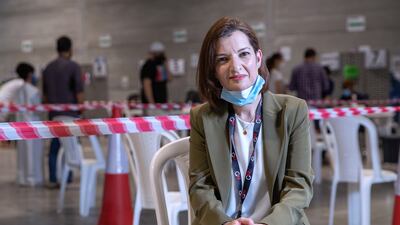
Name: Safaa Bissar Age: 44 Nationality: Lebanese. Work: Senior lab technician at Biogenix Labs for 13 months. Past work: Lab technician in Lebanon. Question: What has been the biggest challenge you've faced while being a PCR frontline worker? Answer: "Being on the front line of this battle as a laboratory technologist takes a lot of courage to endure our current challenges. The hardest part has been to fight the virus efficiently so that we are able to return to our normal lives. There is always the anxiety of falling ill and bringing the virus home to your loved ones. But we have to keep on fighting to win this battle. We are in this together." -
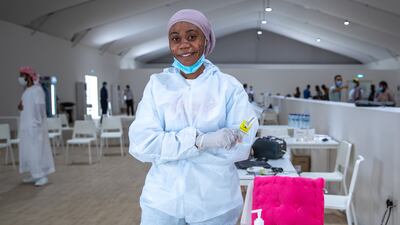
Name: Rabiatu Mannan Age: 27 Nationality: Ghanaian Work: PCR technician at Tamouh tent in Mussaffah for six months. Past work: Organic Goods Company. Question: What has been the biggest challenge you've faced while being a PCR frontline worker? Answer: "One of the challenges so far is the stress, due to the number of people being swabbed daily. Just when you think the day will slow down, another busload of workers come in the tent to get tested." -
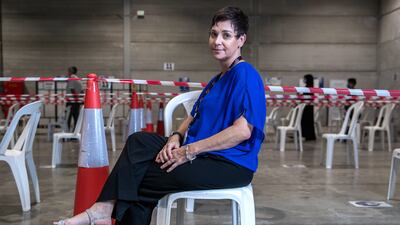
Name: Carlien Grabe Age: 45 Nationality: British. Work: Head of PCR operations at Biogenix Labs for eight months. Past work: Nurse manager, ICU and OPD, Al Rahba Hospital; clinical lead, Mafraq Covid Hospital; senior charge nurse, London. Question: What has been the biggest challenge you've faced while being a PCR frontline worker? Answer: "As nurses, we always have the fear of taking the virus back home to our kids, immunocompromised parents and elderly family members. Although wearing the personal protective equipment kit is beneficial, wearing it for long hours can be uncomfortable as it gets too hot, even with regular breaks. In hindsight, these challenges are dwarfed in comparison to safeguarding public health in our fight against the pandemic."



