


All public sector workers in the UAE will return to their offices by Sunday, July 5, authorities announced on Monday.
Capacity limits at government workplaces across all emirates but Dubai were set at 50 per cent from June 7, after months of employees working from home to prevent the spread of Covid-19.
All government workers in Dubai returned to their offices in late May.
On Monday, the Federal Authority for Government Human Resources said exceptions would be made for employees who have chronic illnesses. These employees must submit a certified medical report to continue working from home.
No other category of worker will be exempt from returning to the office, the authority said.
The Authority said the move represented "an important step that contributes to achieving the UAE strategy for a post-Covid-19 situation."
Safety measures will also be in place to ensure staff are protected, including social distancing and flexible working hours to avoid gatherings.
A remote work system, approved by the federal government, will also be used to ensure productivity and uninterrupted workflow.
Some of the measures in place to protect staff in offices include the mandatory use of face masks and gloves, and a ban on handshakes.
Prayer rooms and shared areas will be closed. Video conferences should replace meetings and everyone should wash or sanitise their hands regularly.
Glass barriers should be installed to separate employees and customers, and people should always remain two metres apart.
Before leaving home, Abu Dhabi government employees should check their temperature and travel in their own car, avoiding public transport where possible.
When they arrive at work they will have their temperature taken and a QR code scanned on their phone.
No more than two people will be allowed to use a lift at a time.
Everyone will be encouraged to download the government's AlHosn app, which helps trace people who have been in contact with a coronavirus carrier.
On Monday, Ajman separately announced that 75 per cent of its government employees would return to offices from Wednesday, July 1.
__________
Coronavirus: what restrictions are still in place in the UAE?
-
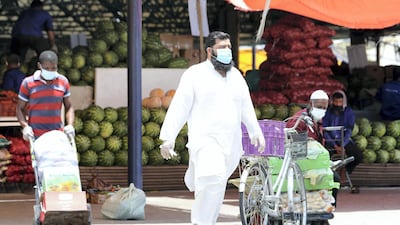
People wearing face mask buy fruits and vegetables at the Al Awir fruit and vegetable market during a hot and humid day in Dubai. Pawan Singh / The National -
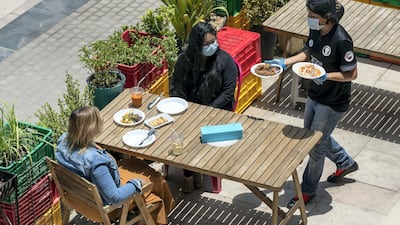
People have lunch at Cafe Isan in JLT on a sunny day in Dubai. Chris Whiteoak / The National -
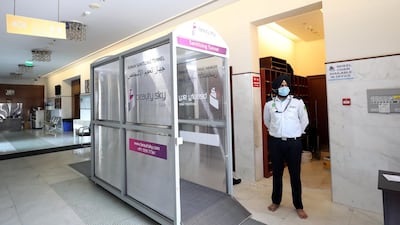
Safety measures put in place at Guru Nanak Darbar Sikh temple in Dubai as places of worship hope to reopen soon. Chris Whiteoak / The National -
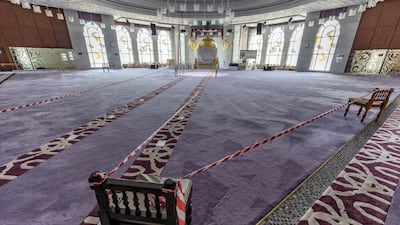
Guru Nanak Darbar Sikh temple in Dubai has put in place safety measures awaiting instructions from authorities to reopen. Chris Whiteoak / The National -
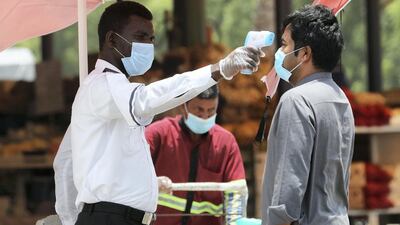
Security guard checks the temperature of a visitor at the Al Awir fruit and vegetable market during a hot and humid day in Dubai. Pawan Singh / The National -
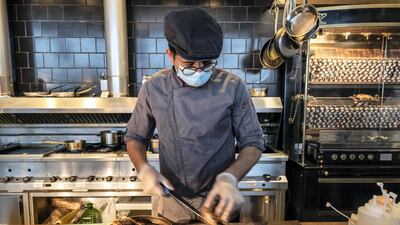
A chef prepares freshly roasted chicken wearing a face mask and gloves at Nightjar Coffee in Al Serkal Avenue, Al Quoz, to comply with health and safety measures put in place by Dubai Municipality. Antonie Robertson / The National -
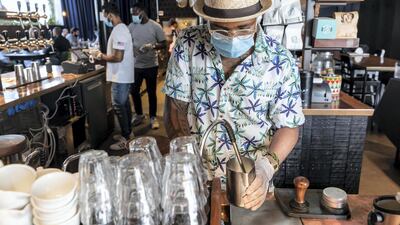
A staff at Nightjar Coffee in Al Serkal Avenue, Al Quoz, makes coffee as restaurants are allowed to open after complying with strict procedures put in place by Dubai Municipality. Antonie Robertson / The National -
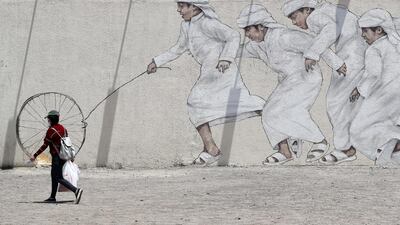
A woman wearing a face mask walks past art work depicting Emirati boys playing in Al Satwa area in Dubai. Pawan Singh / The National -
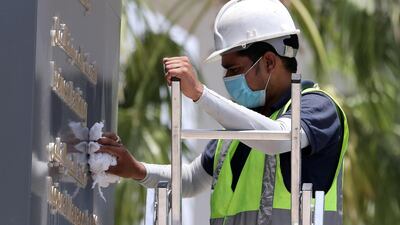
A worker cleans signs outside an Emirates NBD branch on Al Wasl road in Dubai. Pawan Singh / The National -
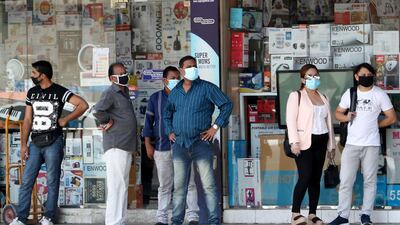
People wear protective face masks while waiting for the bus in Al Satwa area of Dubai. Pawan Singh / The National -
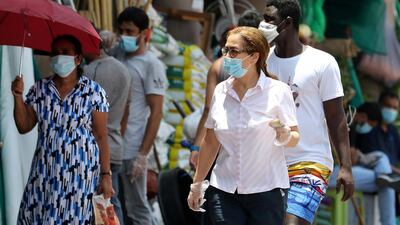
Pedestrians wear protective face masks in Dubai's Al Satwa area. Pawan Singh / The National -
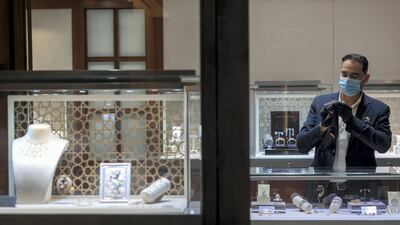
Rami, a jeweller, cleans a ring in a Dubai store. Chris Whiteoak / The National -
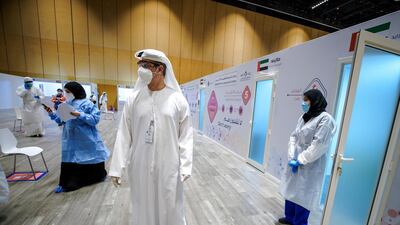
Mohamed Hawas Al Sadid, chief executive of the Ambulatory Healthcare Services checks the Covid-19 assessment center at ADNEC in Abu Dhabi. Victor Besa / The National -
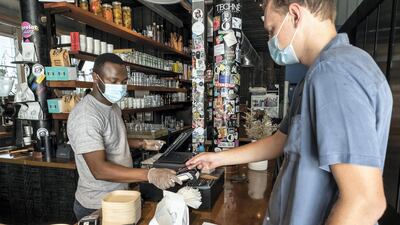
Staff at the Nightjar Coffee cafe in Al Serkal Avenue, Dubai follow strict procedures to ensure health and safety measures put in place by Dubai Municipality. Antonie Robertson / The National



