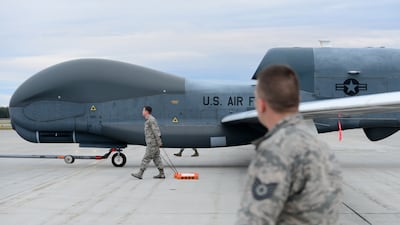
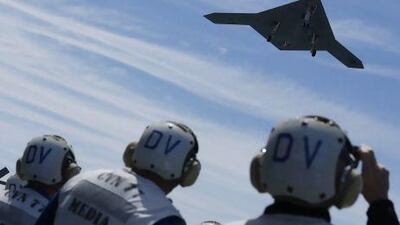
Governments and organisations must develop more effective counter-drone management to combat a surge in aerial security incidents around the globe, an expert has said.
Shaun Ryles, counter-drone team lead at British consultancy Global Security and Disaster Management, said attacks in Saudi Arabia and other incidents, such as the infamous 2018 drone episode at the UK's Gatwick Airport, showed how dangerous and disruptive they could be.
Speaking at the World Police Summit in Dubai on Monday, Mr Ryles said tighter regulation of recreational drone use and new legislation to tackle criminal activity would help address the issue.
“Devastating fixed-wing drone attacks on Middle East oil refinery facilities, oil tankers and airports has unfortunately highlighted the need to be more robustly prepared,” he said.
Devastating fixed-wing drone attacks on Middle East oil refinery facilities, oil tankers and airports has unfortunately highlighted the need to be more robustly prepared.
Shaun Ryles,
Global Security and Disaster Management
“The common thread will be one of the organisation thriving and surviving in the face of that disruption.
“Highly resilient organisations are more likely to secure more successful strategic and operational outcomes in the face of severe disruptions, [causing less impact] on the economy.”
Mr Ryles said governments, policing authorities and private sector players will be needed to counter drone attacks.
Mr Ryles said better resilience planning meant organisations could anticipate, prepare for and respond and adapt to everything from minor everyday events, brought on by drone hobbyists, to larger threats and attacks by criminals.
To stay ahead of threats, companies need to regularly review their systems, processes, training, equipment needs, he said.
He referred to the drone incident at Gatwick Airport that resulted in the airport being shut down for two days. More than 1,000 flights were disrupted, affecting close to 140,000 passengers.
The Gatwick incident was the first time a major airport had been shut down by drone activity.
Mr Ryles said better management would have significantly decreased the disruption that was caused.
“There are many external security protocols that can significantly add to a mitigation plan,” said Mr Ryles.
“A resilient approach will by its nature also address the key components of crisis communication, and aftermath management which technology alone will not address.
“This was certainly a very dear lesson that was learnt at Gatwick years ago.
“Whatever the outcome of the drone incursion, there will always be a need to justify actions or restraints in the aftermath.
“One of the most striking and recurring themes that I've encountered working in the front line of counter drone activities has been the disproportionate benefits to be had from relatively modest investment in counter-drone education, training and awareness of the counter-drone technology landscape.”
He said investment in this area creates “more informed and less reactive procurement decision making” when dealing with drone attacks, which in turn instils a better understanding of the threat and risk landscape.
The World Police Summit continues until Thursday.
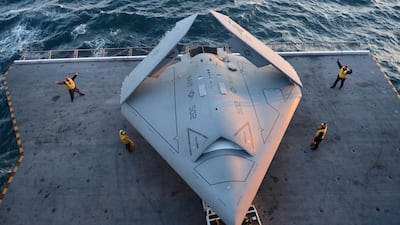
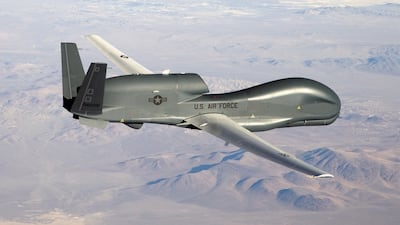
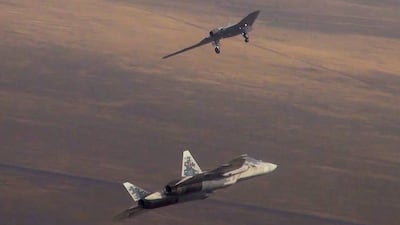
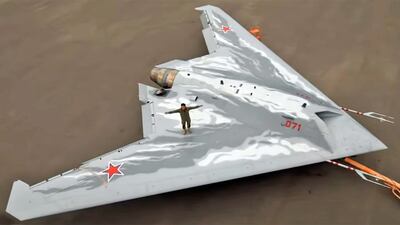
World's biggest drones - in pictures
Mercer, the investment consulting arm of US services company Marsh & McLennan, expects its wealth division to at least double its assets under management (AUM) in the Middle East as wealth in the region continues to grow despite economic headwinds, a company official said.
Mercer Wealth, which globally has $160 billion in AUM, plans to boost its AUM in the region to $2-$3bn in the next 2-3 years from the present $1bn, said Yasir AbuShaban, a Dubai-based principal with Mercer Wealth.
“Within the next two to three years, we are looking at reaching $2 to $3 billion as a conservative estimate and we do see an opportunity to do so,” said Mr AbuShaban.
Mercer does not directly make investments, but allocates clients’ money they have discretion to, to professional asset managers. They also provide advice to clients.
“We have buying power. We can negotiate on their (client’s) behalf with asset managers to provide them lower fees than they otherwise would have to get on their own,” he added.
Mercer Wealth’s clients include sovereign wealth funds, family offices, and insurance companies among others.
From its office in Dubai, Mercer also looks after Africa, India and Turkey, where they also see opportunity for growth.
Wealth creation in Middle East and Africa (MEA) grew 8.5 per cent to $8.1 trillion last year from $7.5tn in 2015, higher than last year’s global average of 6 per cent and the second-highest growth in a region after Asia-Pacific which grew 9.9 per cent, according to consultancy Boston Consulting Group (BCG). In the region, where wealth grew just 1.9 per cent in 2015 compared with 2014, a pickup in oil prices has helped in wealth generation.
BCG is forecasting MEA wealth will rise to $12tn by 2021, growing at an annual average of 8 per cent.
Drivers of wealth generation in the region will be split evenly between new wealth creation and growth of performance of existing assets, according to BCG.
Another general trend in the region is clients’ looking for a comprehensive approach to investing, according to Mr AbuShaban.
“Institutional investors or some of the families are seeing a slowdown in the available capital they have to invest and in that sense they are looking at optimizing the way they manage their portfolios and making sure they are not investing haphazardly and different parts of their investment are working together,” said Mr AbuShaban.
Some clients also have a higher appetite for risk, given the low interest-rate environment that does not provide enough yield for some institutional investors. These clients are keen to invest in illiquid assets, such as private equity and infrastructure.
“What we have seen is a desire for higher returns in what has been a low-return environment specifically in various fixed income or bonds,” he said.
“In this environment, we have seen a de facto increase in the risk that clients are taking in things like illiquid investments, private equity investments, infrastructure and private debt, those kind of investments were higher illiquidity results in incrementally higher returns.”
The Abu Dhabi Investment Authority, one of the largest sovereign wealth funds, said in its 2016 report that has gradually increased its exposure in direct private equity and private credit transactions, mainly in Asian markets and especially in China and India. The authority’s private equity department focused on structured equities owing to “their defensive characteristics.”
How to wear a kandura
Dos
- Wear the right fabric for the right season and occasion
- Always ask for the dress code if you don’t know
- Wear a white kandura, white ghutra / shemagh (headwear) and black shoes for work
- Wear 100 per cent cotton under the kandura as most fabrics are polyester
Don’ts
- Wear hamdania for work, always wear a ghutra and agal
- Buy a kandura only based on how it feels; ask questions about the fabric and understand what you are buying
UAE v IRELAND
All matches start at 10am, and will be played in Abu Dhabi
1st ODI, Friday, January 8
2nd ODI, Sunday, January 10
3rd ODI, Tuesday, January 12
4th ODI, Thursday, January 14
UAE v Gibraltar
What: International friendly
When: 7pm kick off
Where: Rugby Park, Dubai Sports City
Admission: Free
Online: The match will be broadcast live on Dubai Exiles’ Facebook page
UAE squad: Lucas Waddington (Dubai Exiles), Gio Fourie (Exiles), Craig Nutt (Abu Dhabi Harlequins), Phil Brady (Harlequins), Daniel Perry (Dubai Hurricanes), Esekaia Dranibota (Harlequins), Matt Mills (Exiles), Jaen Botes (Exiles), Kristian Stinson (Exiles), Murray Reason (Abu Dhabi Saracens), Dave Knight (Hurricanes), Ross Samson (Jebel Ali Dragons), DuRandt Gerber (Exiles), Saki Naisau (Dragons), Andrew Powell (Hurricanes), Emosi Vacanau (Harlequins), Niko Volavola (Dragons), Matt Richards (Dragons), Luke Stevenson (Harlequins), Josh Ives (Dubai Sports City Eagles), Sean Stevens (Saracens), Thinus Steyn (Exiles)
World%20Food%20Day%20
%3Cp%3ECelebrated%20on%20October%2016%2C%20to%20coincide%20with%20the%20founding%20date%20of%20the%20United%20Nations%20Food%20and%20Agriculture%20Organisation%2C%20World%20Food%20Day%20aims%20to%20tackle%20issues%20such%20as%20hunger%2C%20food%20security%2C%20food%20waste%20and%20the%20environmental%20impact%20of%20food%20production.%20%0D%3C%2Fp%3E%0A
Company%C2%A0profile
%3Cp%3E%3Cstrong%3ECompany%20name%3A%20%3C%2Fstrong%3Eamana%3Cbr%3E%3Cstrong%3EStarted%3A%20%3C%2Fstrong%3E2010%3Cbr%3E%3Cstrong%3EFounders%3A%3C%2Fstrong%3E%20Karim%20Farra%20and%20Ziad%20Aboujeb%3Cbr%3E%3Cstrong%3EBased%3A%20%3C%2Fstrong%3EUAE%3Cbr%3E%3Cstrong%3ERegulator%3A%20%3C%2Fstrong%3EDFSA%3Cbr%3E%3Cstrong%3ESector%3A%20%3C%2Fstrong%3EFinancial%20services%3Cbr%3E%3Cstrong%3ECurrent%20number%20of%20staff%3A%20%3C%2Fstrong%3E85%3Cbr%3E%3Cstrong%3EInvestment%20stage%3A%20%3C%2Fstrong%3ESelf-funded%3Cbr%3E%3C%2Fp%3E%0A
Global state-owned investor ranking by size
|
1.
|
United States
|
|
2.
|
China
|
|
3.
|
UAE
|
|
4.
|
Japan
|
|
5
|
Norway
|
|
6.
|
Canada
|
|
7.
|
Singapore
|
|
8.
|
Australia
|
|
9.
|
Saudi Arabia
|
|
10.
|
South Korea
|