


A senior Facebook chief has vowed to fight Russia's ban to ensure its citizens are not deprived of “valid and real” information on the country's war in Ukraine.
Sheryl Sandberg, chief operating officer of Meta, the company that owns Facebook, said that before the onset of social media countries such as Russia were “controlled by one voice".
Speaking at Expo 2020 Dubai, Ms Sandberg said Facebook had been seeking to counter misinformation from the Russian government before it was blocked.
Russia imposed a ban on Facebook on Friday, as its invasion of Ukraine continued.
Access to Twitter was also restricted.
Russia's communication regulator said the move was in response to restrictions placed on its media by Facebook, citing 26 cases of “discrimination” against Russian media by the platform since October 2020.
“Social media is bad for dictators — that's why Putin took us down,” said Ms Sandberg in a talk moderated by CNBC’s Hadley Gamble for International Women’s Day.
“Before social media, in a country like Russia, the media was completely controlled by one voice.
“Social media changes the ability of people to post and to speak … But, the scariest part of all of this is the lack of access.
-
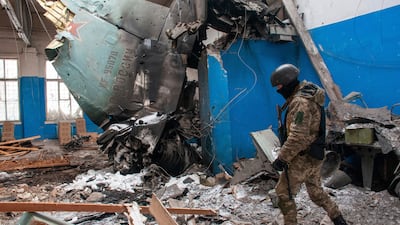
A Ukrainian serviceman walks past the vertical tail fin of a Russian Su-34 bomber lying in a damaged building in Kharkiv, Ukraine. AP Photo -
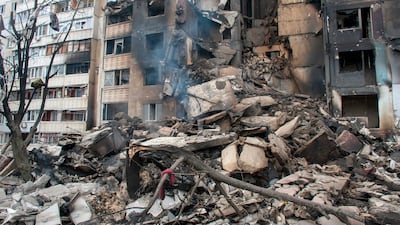
An apartment building damaged after shelling in Kharkiv, Ukraine. AP Photo -
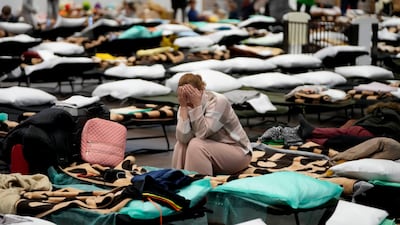
A woman puts her head in her hands as she sits on a cot in a shelter, set up for displaced persons fleeing Ukraine, inside a school gymnasium in Przemysl, Poland. AP Photo -
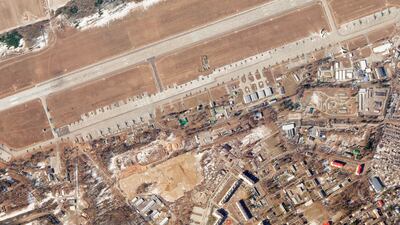
Belarussian and suspected Russian helicopters on the flight line at Machulishchy Air Base outside Minsk, Belarus. AP Photo -
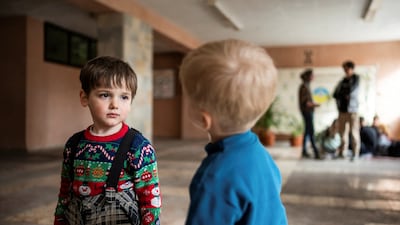
Children look on as people fleeing Russia's invasion of Ukraine shelter in a school, in Drohobych, Ukraine. Reuters -
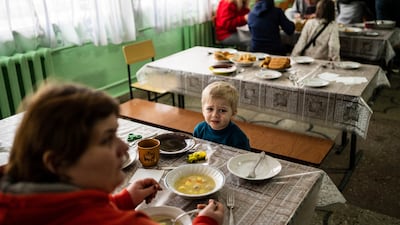
Families eat in the shelter. Reuters -
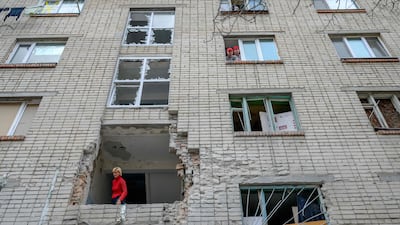
A woman looks out from a building damaged by Russian shelling in Mykolaiv, 100 kilometres away from Odesa, western Ukraine. AFP -
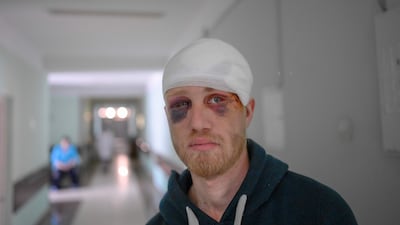
A wounded Ukrainian man waits in the corridor of the central hospital of Mykolaiv. AFP -
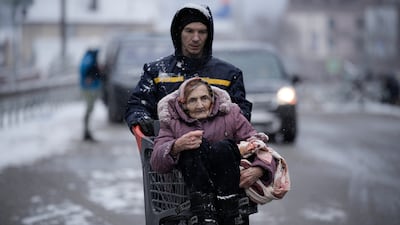
An elderly woman is carried in a shopping cart after being rescued from Irpin, on the outskirts of Kyiv, Ukraine. AP -
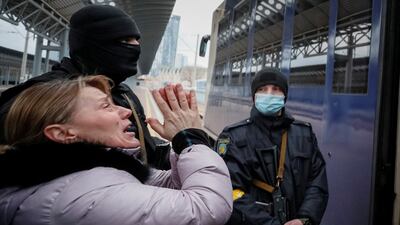
A woman reacts as a train carrying children from Kyiv's Central Children's Hospital leaves the Ukrainian capital on its way to Lviv. Reuters -
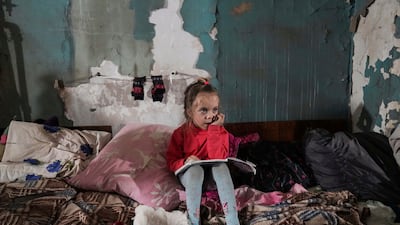
A girl sits in an improvised bomb shelter in Mariupol, Ukraine. AP -
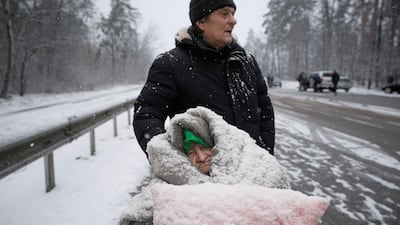
An elderly woman is coated in snow as she sits in a wheelchair after being rescued from Irpin. AP -
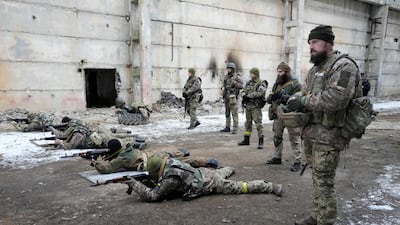
Belarusian volunteers take part in military exercises at the Belarusian Company base in Kyiv. AP -
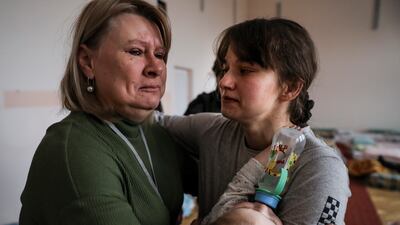
Lessa, left, director of a nursery school turned into a refugee shelter, cries as she hugs Olega, who arrived from Kyiv with her baby, near Lviv. EPA -
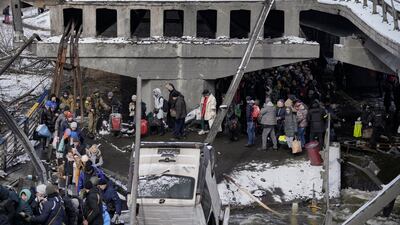
Ukrainians pass a damaged bridge as they flee from Irpin. AP -
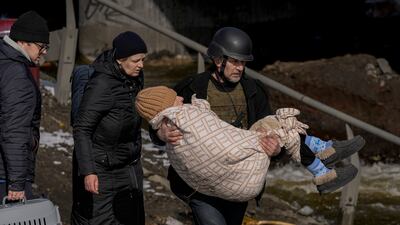
A man carries an elderly woman as people continue to leave Irpin. AP -
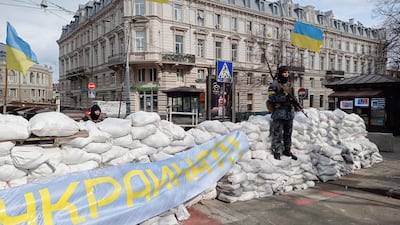
A soldier stands on a barricade made of sandbags in central Odesa, Ukraine. Reuters -
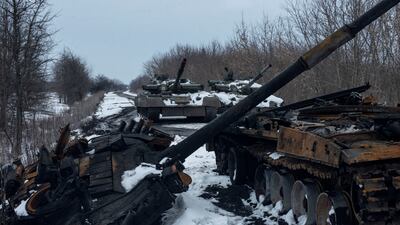
A charred Russian tank and captured tanks in the Sumy region. Reuters -
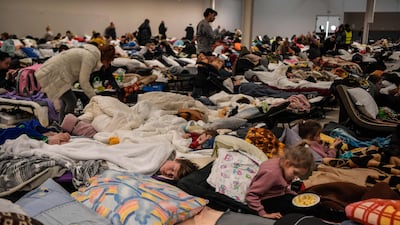
People rest at a temporary shelter for Ukrainian refugees in Przemysl, Poland. AFP -
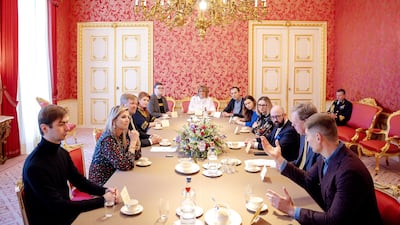
Ukraine's ambassador to the Netherlands, Maksym Kononenko, third right, and his wife Tetiana Doroshenko, fourth left, attend a meeting of members of the Ukrainian community with Dutch King Willem-Alexander, third left, and Queen Maxima, second left, to discuss the situation in Ukraine, in The Hague. EPA -
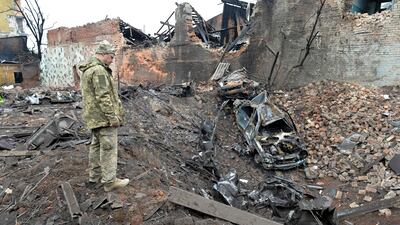
A Ukrainian soldier looks at the destruction after shelling in Ukraine's second-largest city of Kharkiv. AFP -
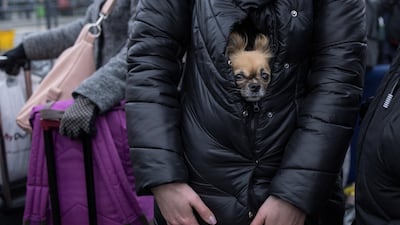
A refugee holds her dog as they wait for trains to Poland in Lviv, Ukraine. Reuters -
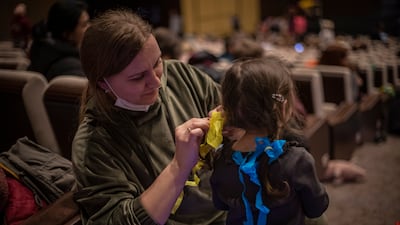
A woman ties ribbons in Ukrainian national flag colours in a girl's hair as people wait at a refugee assistance centre in Prague, Czech Republic. EPA -
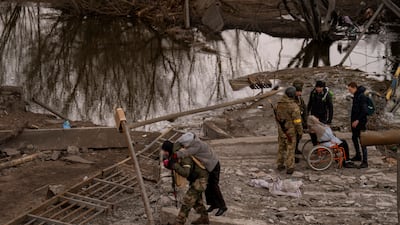
A Ukrainian soldier carries an elderly woman crossing the Irpin river on the outskirts of Kyiv. AP -
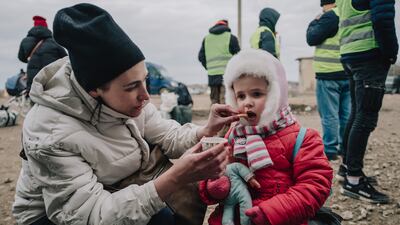
Lena, who had never left Ukraine before fleeing into Moldova, feeds Dasha, 3, soon after crossing the border. Erin Clare Brown for The National -
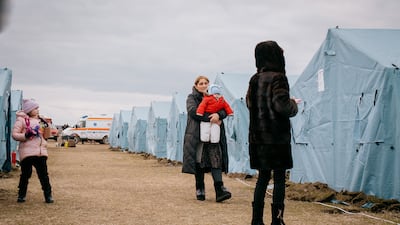
Refugees without immediate plans to move further inland can stay the night in tents set up on Moldova's side of the border. Erin Clare Brown for The National -
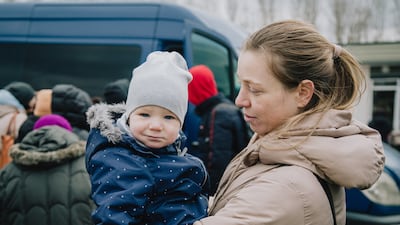
Tatiana and her son wait for a van that will carry them from the Moldovan border to Chisinau. Erin Clare Brown for The National -
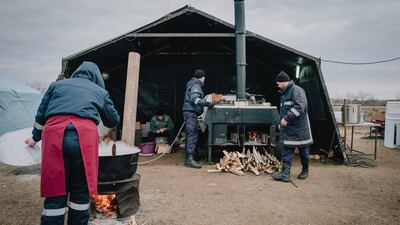
Each night, the Palanca refugee camp in Moldova feeds up to 300 people who arrive with no onward plans. Erin Clare Brown for The National -
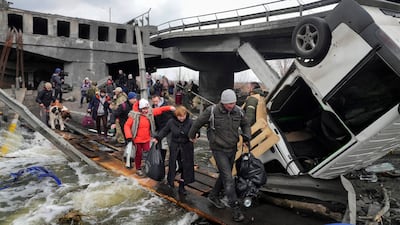
People pass a damaged bridge while fleeing the town of Irpin, close to the Ukrainian capital of Kyiv. AP -
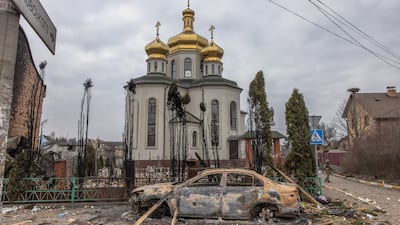
A Ukrainian soldier stands guard next to a church in Irpin. EPA -
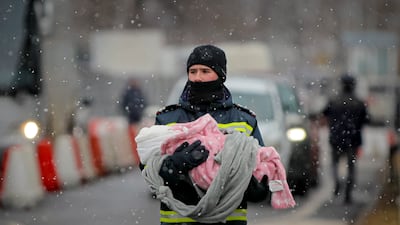
A firefighter holds the baby of a Ukrainian refugee at the border in Romania. AP -
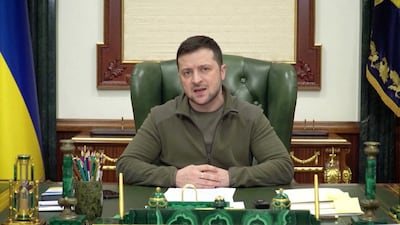
Ukrainian President Volodymyr Zelenskyy speaks in Kyiv. Reuters -
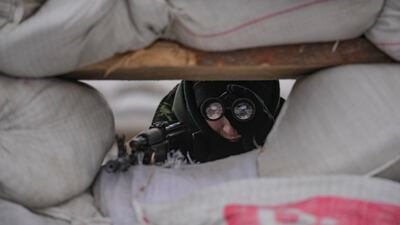
A Ukrainian soldier at a checkpoint in Kyiv. AP -
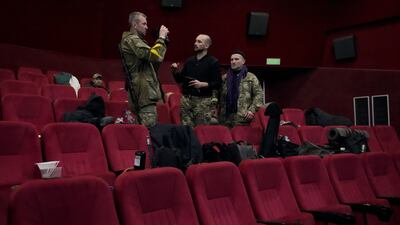
Ukrainian activist Ihor Mazur, left, a veteran of the war in the country's east, looks at a night-vision device in Kyiv. AP -
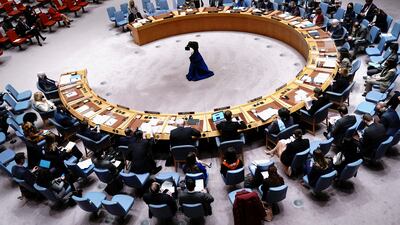
Ambassadors attend a UN Security Council meeting on threats to international security after Russia's invasion of Ukraine, in New York. Reuters -
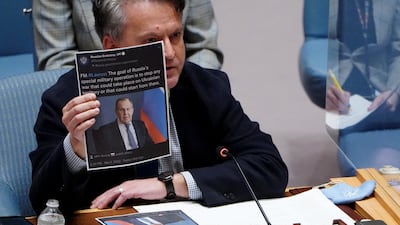
Ukraine's UN ambassador Sergey Kyslytsya holds a paper with an image of Russia's Foreign Minister Sergey Lavrov as he addresses the Security Council in New York. Reuters -
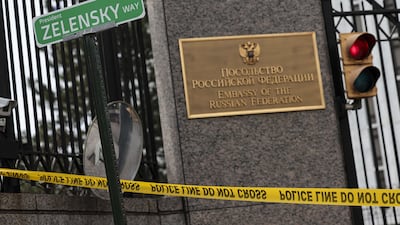
A road sign put up in support of Mr Zelenskyy outside Russia's embassy in Washington. AFP -
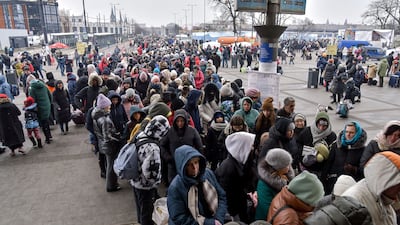
Ukrainian refugees at the train station in Lviv, western Ukraine. EPA -
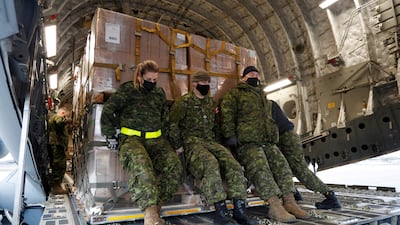
Lethal and non-lethal Ukrainian aid is loaded on to a plane bound for Poland by Canadian soldiers in Trenton, Ontario. Reuters -
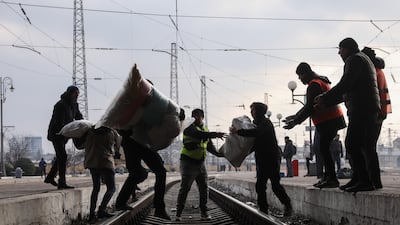
Volunteers carry medical aid and necessities at a train station in Lviv. EPA -
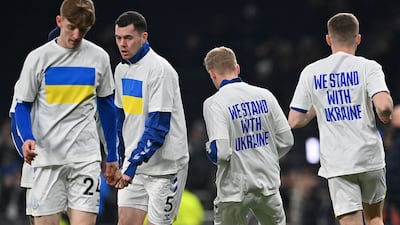
Everton players wear T-shirts in support of Ukraine as they warm up for an English Premier League football match against Tottenham Hotspur. AP -
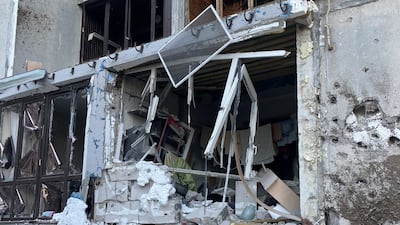
A residential building damaged by Russian shelling in Chernihiv, Ukraine. Reuters -
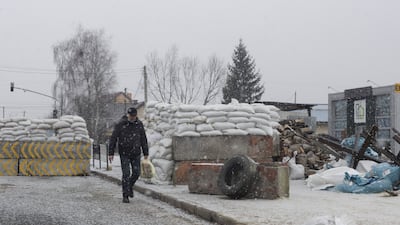
A man walks past a checkpoint in heavy snow in Lviv. Getty -
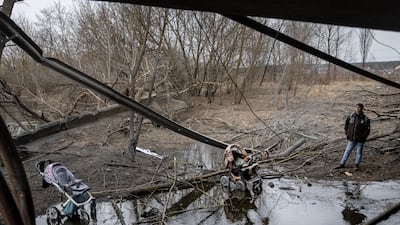
A man fleeing fighting in Irpin waits to cross a river after Russian forces entered the city. Getty -
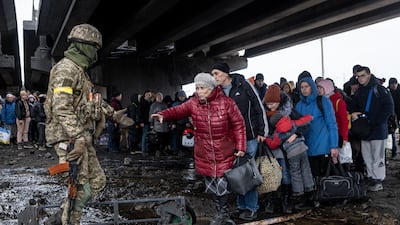
Soldiers assist Irpin residents underneath a damaged bridge as they flee. Getty -
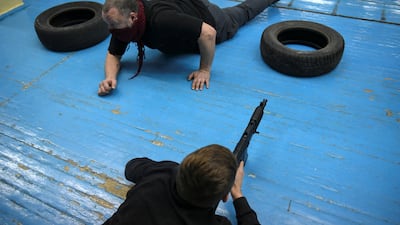
Ukrainian civilians who volunteered to join the Territorial Defence Forces take part in a training exercise in Odesa after Russia's invasion. Reuters -
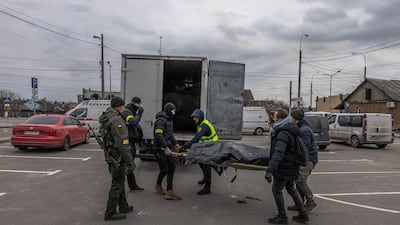
Men carry a body to a lorry as people flee from the frontline town of Irpin. EPA -
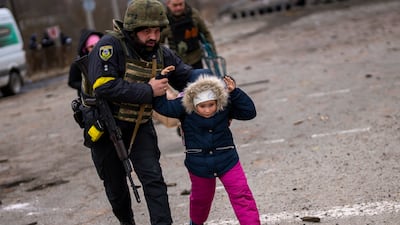
A Ukrainian police officer runs with a child as the sound of shelling echoes nearby in Irpin. AP -
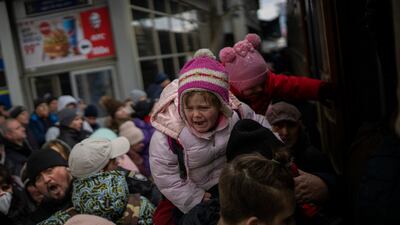
Parents and children struggle to board a train in Lviv. AP


“When we go down in Russia, people are losing their ability to actually understand what's happening. So, I think we need to fight for access and make sure that social media exists so that people do get information from all over the world, and that information is valid and real.”
Meta has been working on removing misinformation posted by Russian groups, including labelling posts that may be false.
Ms Sandberg said that Russia had asked Facebook to stop labelling its posts as misinformation, a request the company refused.
“We have been labelling things that the government says as invalid and misinformation and we were doing it in Russia,” she said.
“In fact, one of the reasons they took us down is because they asked us to stop labelling those posts as misinformation and we refused.
“So again, because we are not controlled by Russia, we were labelling the things they were saying that were false as ‘false’.”
“I think it is a real shame that we're down and other services are down because we now don't know what kind of information is available there. It’s much more restrictive.”
Meta's head of global affairs, Nick Clegg, said the company would continue to do everything it could to restore its services.
“Soon, millions of ordinary Russian will find themselves cut off from reliable information, deprived of their everyday ways of connecting with family and friends and silenced from speaking out,” he said in a statement on Twitter.
Major tech and social media companies have faced pressure to respond to Russia's invasion of Ukraine, which has led to economic sanctions against Moscow by governments around the world.
Russia calls its actions in Ukraine a “special operation".
The White House said it was “deeply concerned” by Russia's decision to block the US firm, and said it was part of a wider effort to cut off information.
The ban came after Russia's parliament passed a new law imposing jail terms of up to 15 years for spreading what it called intentionally “fake” news about the military.
The BBC said it would temporarily suspend the work of all its journalists and support staff in Russia following the introduction of the law.

