



Latest news: UAE school week to change in line with new weekend | Friday prayers moved permanently to 1.15pm
Federal government departments in the UAE are to change their working week from January 1, 2022, with much of the country expected to follow suit.
Public sector workers at the ministerial level will adopt a four and a half day working week, with employees working Monday to Thursday. There will be a half day on Fridays.
Saturday and Sunday will be the new weekend for government workers.
The Dubai and Abu Dhabi governments said their employees would adopt the same hours. The National understands all schools will move to the same working week on the first day of term, with hours expected to be announced soon.
The decision "will better align the Emirates with global markets, reflecting the country’s strategic status on the global economic map", the UAE Government Media Office said.
The new long weekend will "boost productivity and improve work-life balance".
No specific instructions or guidance was made relating to the private sector, but companies do not require the government's permission to set their working week.
Speaking to The National, Abdulrahman Al Awar, Minister of Human Resources and Emiratisation, said private sector employers would not be told to fall in line with the new working week.
"Private sector companies are smart and they have been operating in a very competitive market ... they will make their decision based on what they feel will improve their position," he said.
"This decision will allow the UAE economy to be more competitive.
"It will eliminate the weekend gap – and it was much longer gap in the past. It will allow more business and exchange of trade with the world economy."
Minister of Human Resources and Emiratisation
It will be for companies to decide whether they want to give employees a shorter working week.
"They can choose to have the shorter working hours if that's company's wish, but they cannot exceed [the 48-hour working week maximum]," Dr Al Awar added.
Public holidays that were set out recently for 2022 will not change, officials said. In fact, the public will get an extra day's holiday on January 2, 2022, which falls on a Sunday.
Nabil Alyousuf, chief executive officer of Dubai-based International Advisory Group, said the decision will benefit the business community over time.
“This will increase the number of days we do business with the rest of the world, which will boost trade," he said.
Landmark change to mosque timings
The new system will mean federal and many local government workers will work from 7.30am to 3.30pm - 90 minutes longer than at present - on Monday to Thursday and from 7.30am to noon on Friday. There is the possibility of flexible working and work-from-home options on Fridays, officials said.
Friday sermons and prayers will be held at 1.15pm throughout the year.
The country's working week last changed in 2006, when it was moved from Thursday-Friday to the current Friday-Saturday pattern. The move brought the Emirates in line with global markets at a time when the economy was growing rapidly.
The private sector, and public and private schools, shifted their working pattern on the same day in September 2006.
Between 1971 and 1999, the country had an official six-day working week, with just Friday as a government-mandated day off.
Thursday was added to create a two-day weekend in 1999.
UAE ushers in next 50 years with National Day show - in pictures
-
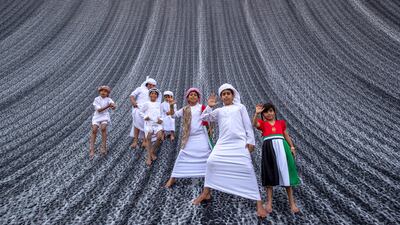
Children enjoy the water feature at Expo 2020 Dubai. Victor Besa / The National -
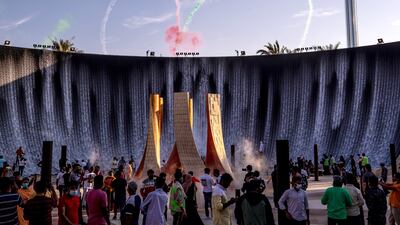
An air display by the Al Fursan team wows the crowds at Expo 2020 Dubai. Victor Besa / The National -
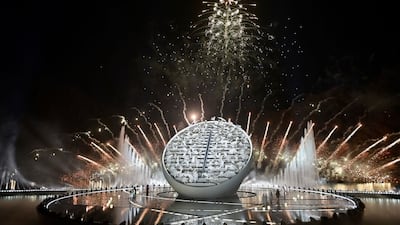
The UAE's 50th National Day show in Hatta. Photo: Dubai Media Office -

Hatta's Golden Jubilee show reflected the country's 'early dreamers' who began the story of the Emirates. Victor Besa / The National -
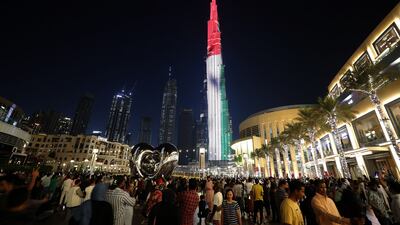
Burj Khalifa in Dubai illuminated in the colours of the national flag. Pawan Singh / The National -
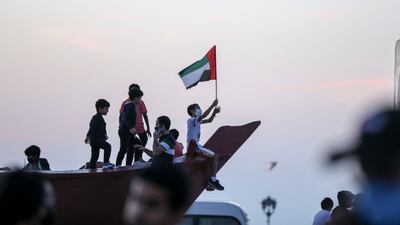
A group of children celebrate National Day at the dhow monument on the Corniche in Abu Dhabi. Khushnum Bhandari / The National -
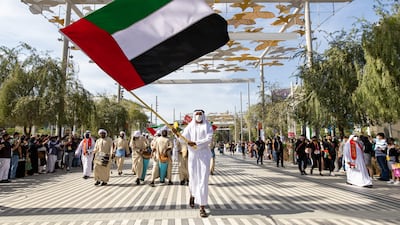
Colours of the World Parade during Golden Jubilee celebrations at Expo 2020 Dubai. Photo: Expo 2020 Dubai -

A visitor to Al Wasl Plaza, Expo 2020 Dubai. Photo: Expo 2020 Dubai -
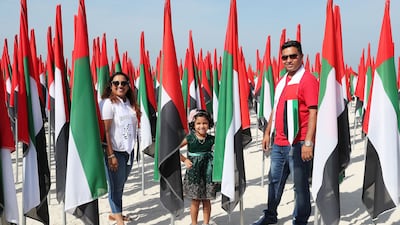
(L-R) Anju Jacob, Evelyn and Sebin Dcruz in the flag garden near Kite Beach, Dubai. Pawan Singh / The National -
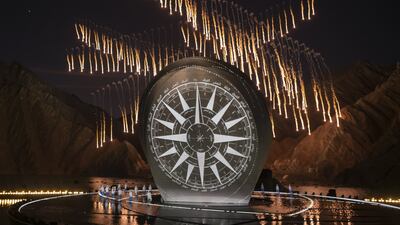
Fireworks light up the night sky at the UAE's 50th National Day celebrations in Hatta. Photo: Ministry of Presidential Affairs -
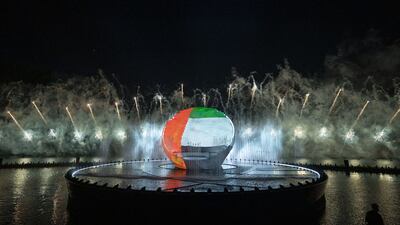
The UAE flag is illuminated in Hatta. Photo: Ministry of Presidential Affairs -
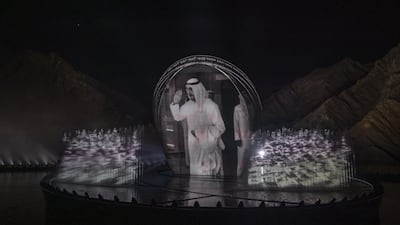
Part of the UAE's 50th National Day extravaganza in Hatta. Photo: Ministry of Presidential Affairs -
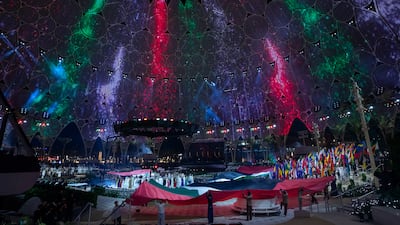
Golden Jubilee show which reflects on the country's "early dreamers" who began the story of the Emirates. Victor Besa / The National -
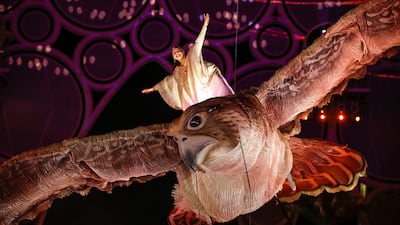
Artists perform during the celebration of the 50th UAE National Day at Expo 2020 Dubai. EPA -

Adnoc's headquarters in Abu Dhabi displays an image of the UAE's Founding Father, Sheikh Zayed. Khushnum Bhandari / The National -
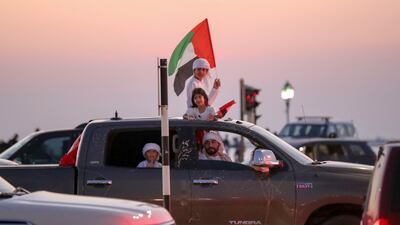
Proud Emirati children wave the UAE flag from a sunroof in Abu Dhabi. Khushnum Bhandari/ The National -
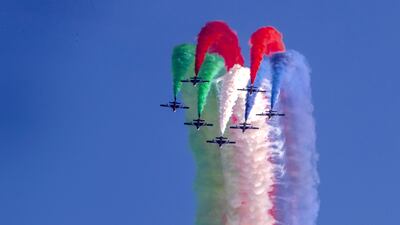
The Al Fursan team put on a dazzling display. Victor Besa / The National. -
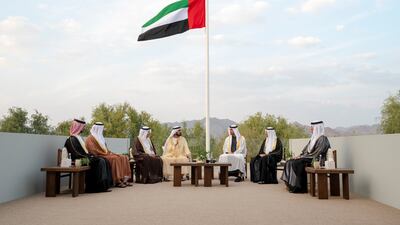
From left: Sheikh Ammar bin Humaid Al Nuaimi, Crown Prince of Ajman, Sheikh Sultan bin Mohammed Al Qasimi, Crown Prince and Deputy Ruler of Sharjah, Sheikh Saud bin Rashid Al Mualla, Ruler of Umm Al Quwain, Sheikh Mohammed bin Rashid, Vice President and Ruler of Dubai, Sheikh Mohamed bin Zayed, Crown Prince of Abu Dhabi and Deputy Supreme Commander of the Armed Forces, Sheikh Hamad bin Mohammed Al Sharqi, Ruler of Fujairah and Sheikh Saud bin Saqr Al Qasimi, Ruler of Ras Al Khaimah, attend the Federal Supreme Council meeting, at the Sheikh Rashid Palace in Hatta, Dubai, on Thursday. Photo: Mohamed Al Hammadi / Ministry of Presidential Affairs -
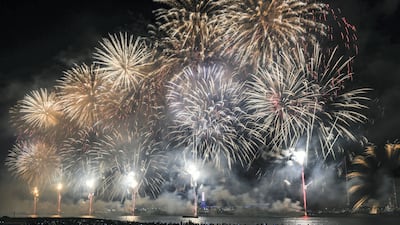
A lerge crowd watched a spectacular fireworks display over the Abu Dhabi Corniche. Khushnum Bhandari / The National -
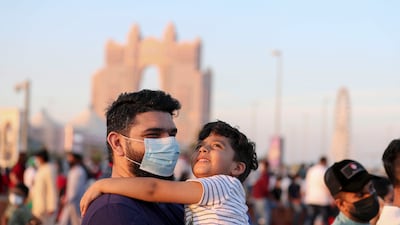
People soaking up the atmosphere on the Abu Dhabi Corniche on National Day. Khushnum Bhandari/ The National



