

Abu Dhabi has set out its strategy for sustainable hunting as part of efforts to preserve the Emirati tradition of falconry while safeguarding wildlife and the environment.
The Executive Council of Abu Dhabi has amended its laws regulating hunting in the emirate to ensure the beloved pastime continues to thrive in line with legal and environmental practices.
The directives, overseen by Environment Agency Abu Dhabi, bar hunting within the borders of protected areas, rangelands and near restricted areas.
They state that only Houbara birds are to be used as prey, with hunting permitted using falcons licensed and registered with the Ministry of Climate Change and Environment, and that proof of their registration is submitted if requested.
Traditional hunting is restricted to open areas, while avoiding prohibited places such as nature reserves, forests, residential, military and petroleum production areas, by a distance of at least 2 kilometres.
EAD called on licence holders to abide by the specified hunting period, with permits issued for one season only.
The agency is to start licensing wild hunting for the season, which runs until February 28.
It warned it is prohibited to hunt any kind of wild animal and cause its disturbance.
"It is also forbidden to drive vehicles over and cause damage to vegetation. Furthermore, it is prohibited to transfer a hunting permit to another person. The permit must be carried while hunting and presented upon request," an EAD statement said.
Those seeking to obtain a wildlife hunting permit must be citizens of the UAE and be 18 or older. Applications can be made at customerhappiness@ead.gov.ae.
The legislation seeks to set down a legal framework for hunting activities and ensure they are in keeping with the emirate's conservation and environmental policies.
"The law contributes to protecting the heritage of falconry, protecting wild animals, preserving hunting areas and optimising wildlife resources and developing them according to an integrated vision that meets environmental sustainability standards," the EAD statement said.
"The law is in line with other local and federal environmental laws to ensure effective protection of biodiversity while maintaining local culture and traditions, directly or indirectly dependent on the natural resources."
Falconry in the UAE
-

Falconry in the desert. All photos: AFP -
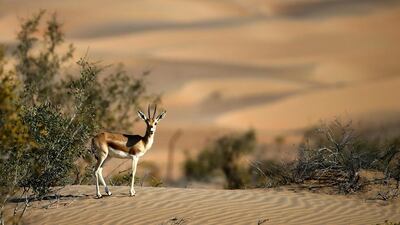
A sand gazelle at Al Marzoom Hunting Reserve, 150km west of Abu Dhabi. -
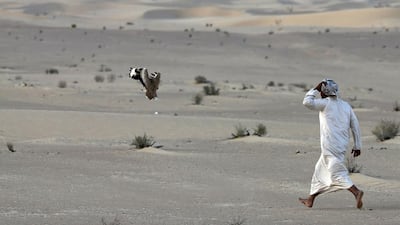
A falconer follows a Houbara bustard. -
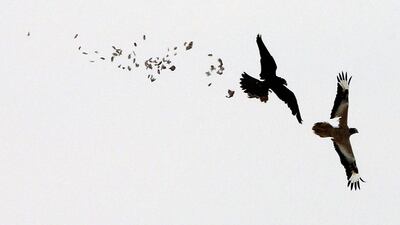
A hunting falcon preys on a Houbara bustard. -

Falconers in their vehicle follow a hunting falcon. -

An Emirati falconer checks a hunting falcon at Al Marzoom. -
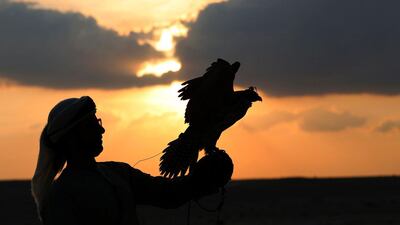
An Emirati falconer releases a hunting falcon. -

A Houbara bustard takes flight at Al Marzoom Hunting Reserve. -
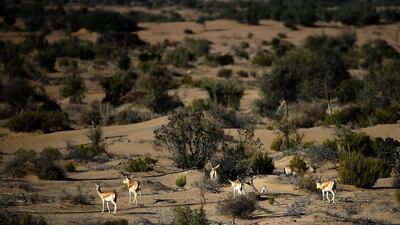
Sand gazelles at Al Marzoom Hunting Reserve.



