• The Hatta Beach Project will create new investment opportunities for the region's private sector.
    The Hatta Beach Project will create new investment opportunities for the region's private sector.
  • The Hatta Beach Project aims to transform the area into a year-round tourist destination.
    The Hatta Beach Project aims to transform the area into a year-round tourist destination.
  • The development plan includes a five-year plan (2022-2026) to construct tracks for bicycles and scooters in a 120 km network.
    The development plan includes a five-year plan (2022-2026) to construct tracks for bicycles and scooters in a 120 km network.
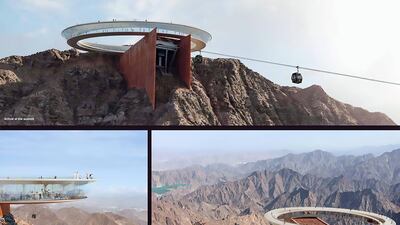
  • A waterfall and mountain viewing platform also feature in the development plan. Photo: Dubai Media Office
    A waterfall and mountain viewing platform also feature in the development plan. Photo: Dubai Media Office
  • Hatta has in recent years been transformed into an adventure getaway, with mountain biking and kayaking among the most popular activities. Photo: Dubai Media Office
    Hatta has in recent years been transformed into an adventure getaway, with mountain biking and kayaking among the most popular activities. Photo: Dubai Media Office
  • The Hatta Master Development Plan aims to turn the area into an attractive local and international destination for business, investment and tourism. Photo: WAM
    The Hatta Master Development Plan aims to turn the area into an attractive local and international destination for business, investment and tourism. Photo: WAM
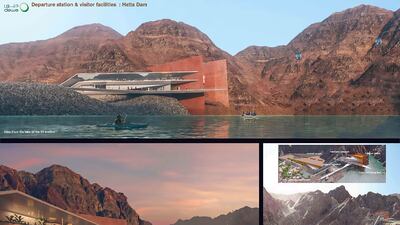
  • The project will create investment spaces and facilities, services, and activities for tourists in waterfront areas that will contribute to increasing visitor numbers for Hatta.
    The project will create investment spaces and facilities, services, and activities for tourists in waterfront areas that will contribute to increasing visitor numbers for Hatta.
  • A mountainside health resort will be built as part of the development plan.
    A mountainside health resort will be built as part of the development plan.
  • The resort will provide tourists opportunities to practise sports and activities that are suitable to Hatta’s terrain.
    The resort will provide tourists opportunities to practise sports and activities that are suitable to Hatta’s terrain.
  • Sheikh Mohammed bin Rashid, Vice President and Ruler of Dubai, approved the Hatta Master Development Plan. Photo: WAM
    Sheikh Mohammed bin Rashid, Vice President and Ruler of Dubai, approved the Hatta Master Development Plan. Photo: WAM
  • A lake and cable-driven mountain railway are also slated for the mountain town. Photo: Dubai Media Office
    A lake and cable-driven mountain railway are also slated for the mountain town. Photo: Dubai Media Office
  • Hatta Master Development Plan includes a cable-driven mountain railway
    Hatta Master Development Plan includes a cable-driven mountain railway
  • The first-of-its-kind funicular (cable railway) transport system for tourists will connect the Hatta dam site with its car parking area.
    The first-of-its-kind funicular (cable railway) transport system for tourists will connect the Hatta dam site with its car parking area.
  • The plan includes tracks for bicycles and scooters in a 120 km network connecting key attractions and residential areas.
    The plan includes tracks for bicycles and scooters in a 120 km network connecting key attractions and residential areas.
  • Sheikh Mohammed bin Rashid, Vice President and Ruler of Dubai, pictured with Sheikh Hamdan bin Mohammed, Crown Prince of Dubai, in Hatta. Photo: WAM
    Sheikh Mohammed bin Rashid, Vice President and Ruler of Dubai, pictured with Sheikh Hamdan bin Mohammed, Crown Prince of Dubai, in Hatta. Photo: WAM
  • The Hatta plan aims to turn the area into an attractive local and international destination for business, investment and tourism. Photo: WAM
    The Hatta plan aims to turn the area into an attractive local and international destination for business, investment and tourism. Photo: WAM
  • Sheikh Mohammed bin Rashid, Vice President and Ruler of Dubai, with notables including Sheikh Maktoum bin Mohammed, Deputy Prime Minister and Deputy Ruler of Dubai, and Sheikh Hamdan bin Mohammed, Crown Prince of Dubai, at Hatta. Photo: WAM
    Sheikh Mohammed bin Rashid, Vice President and Ruler of Dubai, with notables including Sheikh Maktoum bin Mohammed, Deputy Prime Minister and Deputy Ruler of Dubai, and Sheikh Hamdan bin Mohammed, Crown Prince of Dubai, at Hatta. Photo: WAM

Ruler of Dubai unveils tourism plan for Hatta, including beach and mountain railway


  • English
  • Arabic

The town of Hatta is to be transformed into a major tourism destination, with an inland beach, lake and cable-driven mountain railway.

Sheikh Mohammed bin Rashid, Vice President and Ruler of Dubai, unveiled the latest vision for the town on Saturday.

Hatta, near the border with Oman, has in recent years been transformed into an adventure getaway, with mountain biking and kayaking popular activities.

Now it will be the subject of major investment to turn it into an even bigger destination for residents and tourists.

“Today, we launched a comprehensive development plan in Hatta, which includes the construction of a beach and a new lake, and transport systems for the mountain slopes – a funicular [cable railway]," he said, “and the longest mountain walk in the Emirates".

In addition, there will be new “hotel facilities, and 120 kilometres of bicycle paths … we have approved a permanent committee to oversee the development of Hatta,” Sheikh Mohammed said.

The projects were unveiled as part of a 20-year Hatta Master Development Plan, which forms an integral part of the Dubai 2040 Urban Master Plan, launched earlier this year.

A major part of the plan will develop Hatta Beach Project, a year-round tourist destination, while at the same time conserving the heritage and natural environment of the area.

The plan will develop a mountainside health resort and the first tourist funicular system of its kind in the region that will transport visitors to the dam site.

A mountainside health resort will be built to provide tourists opportunities to practise sports and activities well-suited to Hatta’s terrain.

Public transport services to Hatta will be improved, with a new bus service that includes a compartment for bicycles and scooters. It envisages a new ride-sharing service and the provision of an on-demand bus service that will allow visitors to tour various heritage sites.

As well as the 120km network that will connecting key attractions and residential areas, the plan also includes the construction of the longest mountain bike track in the UAE, capable of hosting international competitions and events.

The plan will help young entrepreneurs in the locality to implement projects and creative ideas.

The Hatta Master Development Plan includes a cable-driven mountain railway.

Hatta, high in the Hajar Mountains, has an oasis feel, with temperatures often cooler and with less humidity than the cities of Dubai and Sharjah.

Plans coming to fruition for the town include a waterfall and mountain viewing platform, scheduled for completion next year. A luxury caravan and camping site opened this month.

Hatta mountain viewing platform - in pictures

  • Sheikh Mohammed bin Rashid, UAE Vice President and Ruler of Dubai, has unveiled details of six new tourism projects in Hatta. Twitter / @HHShkMohd
    Sheikh Mohammed bin Rashid, UAE Vice President and Ruler of Dubai, has unveiled details of six new tourism projects in Hatta. Twitter / @HHShkMohd
  • Designs include a 5.4-kilometre cable car system, a sustainable waterfall attraction, an international hotel and new hiking tracks up to Jabal Umm Al Nusour – Dubai's highest peak at 1,300 metres. Courtesy Twitter / @HHShkMohd
    Designs include a 5.4-kilometre cable car system, a sustainable waterfall attraction, an international hotel and new hiking tracks up to Jabal Umm Al Nusour – Dubai's highest peak at 1,300 metres. Courtesy Twitter / @HHShkMohd
  • There are also plans to build 200 holiday homes to support domestic tourism. Courtesy Twitter / @HHShkMohd
    There are also plans to build 200 holiday homes to support domestic tourism. Courtesy Twitter / @HHShkMohd
  • The aim is to turn Hatta into a major tourist destination. Courtesy Twitter / @HHShkMohd
    The aim is to turn Hatta into a major tourist destination. Courtesy Twitter / @HHShkMohd
  • Deborah Thomson, general manager of JA Hatta Fort Hotel, believes the region could become a bucket list location. Photo: JA Hatta Fort Hotel
    Deborah Thomson, general manager of JA Hatta Fort Hotel, believes the region could become a bucket list location. Photo: JA Hatta Fort Hotel
MATCH INFO

Uefa Champions League semi-finals, first leg
Liverpool v Roma

When: April 24, 10.45pm kick-off (UAE)
Where: Anfield, Liverpool
Live: BeIN Sports HD
Second leg: May 2, Stadio Olimpico, Rome

COMPANY%20PROFILE
%3Cp%3E%3Cstrong%3EName%3A%20%3C%2Fstrong%3ETelr%3Cbr%3E%3Cstrong%3EBased%3A%20%3C%2Fstrong%3EDubai%2C%20UAE%3Cbr%3E%3Cstrong%3ELaunch%20year%3A%3C%2Fstrong%3E%202014%3Cbr%3E%3Cstrong%3ENumber%20of%20employees%3A%20%3C%2Fstrong%3E65%3Cbr%3E%3Cstrong%3ESector%3A%20%3C%2Fstrong%3EFinTech%20and%20payments%3Cbr%3E%3Cstrong%3EFunding%3A%20%3C%2Fstrong%3Enearly%20%2430%20million%20so%20far%3C%2Fp%3E%0A
Ten tax points to be aware of in 2026

1. Domestic VAT refund amendments: request your refund within five years

If a business does not apply for the refund on time, they lose their credit.

2. E-invoicing in the UAE

Businesses should continue preparing for the implementation of e-invoicing in the UAE, with 2026 a preparation and transition period ahead of phased mandatory adoption. 

3. More tax audits

Tax authorities are increasingly using data already available across multiple filings to identify audit risks. 

4. More beneficial VAT and excise tax penalty regime

Tax disputes are expected to become more frequent and more structured, with clearer administrative objection and appeal processes. The UAE has adopted a new penalty regime for VAT and excise disputes, which now mirrors the penalty regime for corporate tax.

5. Greater emphasis on statutory audit

There is a greater need for the accuracy of financial statements. The International Financial Reporting Standards standards need to be strictly adhered to and, as a result, the quality of the audits will need to increase.

6. Further transfer pricing enforcement

Transfer pricing enforcement, which refers to the practice of establishing prices for internal transactions between related entities, is expected to broaden in scope. The UAE will shortly open the possibility to negotiate advance pricing agreements, or essentially rulings for transfer pricing purposes. 

7. Limited time periods for audits

Recent amendments also introduce a default five-year limitation period for tax audits and assessments, subject to specific statutory exceptions. While the standard audit and assessment period is five years, this may be extended to up to 15 years in cases involving fraud or tax evasion. 

8. Pillar 2 implementation 

Many multinational groups will begin to feel the practical effect of the Domestic Minimum Top-Up Tax (DMTT), the UAE's implementation of the OECD’s global minimum tax under Pillar 2. While the rules apply for financial years starting on or after January 1, 2025, it is 2026 that marks the transition to an operational phase.

9. Reduced compliance obligations for imported goods and services

Businesses that apply the reverse-charge mechanism for VAT purposes in the UAE may benefit from reduced compliance obligations. 

10. Substance and CbC reporting focus

Tax authorities are expected to continue strengthening the enforcement of economic substance and Country-by-Country (CbC) reporting frameworks. In the UAE, these regimes are increasingly being used as risk-assessment tools, providing tax authorities with a comprehensive view of multinational groups’ global footprints and enabling them to assess whether profits are aligned with real economic activity. 

Contributed by Thomas Vanhee and Hend Rashwan, Aurifer

WITHIN%20SAND
%3Cp%3EDirector%3A%20Moe%20Alatawi%3C%2Fp%3E%0A%3Cp%3EStarring%3A%20Ra%E2%80%99ed%20Alshammari%2C%20Adwa%20Fahd%2C%20Muhand%20Alsaleh%3C%2Fp%3E%0A%3Cp%3ERating%3A%203%2F5%3C%2Fp%3E%0A
Attacks on Egypt’s long rooted Copts

Egypt’s Copts belong to one of the world’s oldest Christian communities, with Mark the Evangelist credited with founding their church around 300 AD. Orthodox Christians account for the overwhelming majority of Christians in Egypt, with the rest mainly made up of Greek Orthodox, Catholics and Anglicans.

The community accounts for some 10 per cent of Egypt’s 100 million people, with the largest concentrations of Christians found in Cairo, Alexandria and the provinces of Minya and Assiut south of Cairo.

Egypt’s Christians have had a somewhat turbulent history in the Muslim majority Arab nation, with the community occasionally suffering outright persecution but generally living in peace with their Muslim compatriots. But radical Muslims who have first emerged in the 1970s have whipped up anti-Christian sentiments, something that has, in turn, led to an upsurge in attacks against their places of worship, church-linked facilities as well as their businesses and homes.

More recently, ISIS has vowed to go after the Christians, claiming responsibility for a series of attacks against churches packed with worshippers starting December 2016.

The discrimination many Christians complain about and the shift towards religious conservatism by many Egyptian Muslims over the last 50 years have forced hundreds of thousands of Christians to migrate, starting new lives in growing communities in places as far afield as Australia, Canada and the United States.

Here is a look at major attacks against Egypt's Coptic Christians in recent years:

November 2: Masked gunmen riding pickup trucks opened fire on three buses carrying pilgrims to the remote desert monastery of St. Samuel the Confessor south of Cairo, killing 7 and wounding about 20. IS claimed responsibility for the attack.

May 26, 2017: Masked militants riding in three all-terrain cars open fire on a bus carrying pilgrims on their way to the Monastery of St. Samuel the Confessor, killing 29 and wounding 22. ISIS claimed responsibility for the attack.

April 2017Twin attacks by suicide bombers hit churches in the coastal city of Alexandria and the Nile Delta city of Tanta. At least 43 people are killed and scores of worshippers injured in the Palm Sunday attack, which narrowly missed a ceremony presided over by Pope Tawadros II, spiritual leader of Egypt Orthodox Copts, in Alexandria's St. Mark's Cathedral. ISIS claimed responsibility for the attacks.

February 2017: Hundreds of Egyptian Christians flee their homes in the northern part of the Sinai Peninsula, fearing attacks by ISIS. The group's North Sinai affiliate had killed at least seven Coptic Christians in the restive peninsula in less than a month.

December 2016A bombing at a chapel adjacent to Egypt's main Coptic Christian cathedral in Cairo kills 30 people and wounds dozens during Sunday Mass in one of the deadliest attacks carried out against the religious minority in recent memory. ISIS claimed responsibility.

July 2016Pope Tawadros II says that since 2013 there were 37 sectarian attacks on Christians in Egypt, nearly one incident a month. A Muslim mob stabs to death a 27-year-old Coptic Christian man, Fam Khalaf, in the central city of Minya over a personal feud.

May 2016: A Muslim mob ransacks and torches seven Christian homes in Minya after rumours spread that a Christian man had an affair with a Muslim woman. The elderly mother of the Christian man was stripped naked and dragged through a street by the mob.

New Year's Eve 2011A bomb explodes in a Coptic Christian church in Alexandria as worshippers leave after a midnight mass, killing more than 20 people.

How to wear a kandura

Dos

  • Wear the right fabric for the right season and occasion 
  • Always ask for the dress code if you don’t know
  • Wear a white kandura, white ghutra / shemagh (headwear) and black shoes for work 
  • Wear 100 per cent cotton under the kandura as most fabrics are polyester

Don’ts 

  • Wear hamdania for work, always wear a ghutra and agal 
  • Buy a kandura only based on how it feels; ask questions about the fabric and understand what you are buying
The five pillars of Islam

1. Fasting 

2. Prayer 

3. Hajj 

4. Shahada 

5. Zakat 

Updated: October 24, 2021, 7:19 AM