

An Expo 2020 Dubai chief is already gearing up to welcome the public back to the world's fair site - after a spectacular closing ceremony capped off an unforgettable six months
Ahmed Al Khatib, chief development and delivery officer for Expo 2020 Dubai, tells The National how the sprawling area will be transformed into a futuristic city where people can live, work and play.
What was Expo will soon welcome crowds again as District 2020 – providing a fitting legacy to the success of the global spectacle.
The most striking structures will remain in the Dubai South neighbourhood as will the two large parks, walking, cycle paths and restaurants in the city’s newest residential and business district.
-
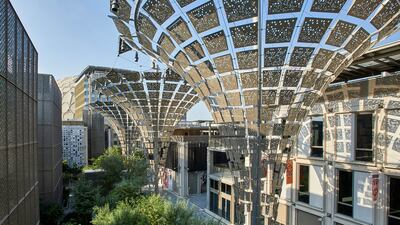
District 2020, the future of Expo 2020 Dubai, has announced the evaluation and shortlist of more than 600 applications from global start-ups and small businesses through its dedicated entrepreneurship programme. This marks the first major milestone for its dedicated Scale2Dubai programme which began accepting applications back in September 2021. The final announcement of successful applicants is expected to be revealed by March and will eventually see over 80 selected start-ups and small businesses joining District 2020’s community from October 2022. -
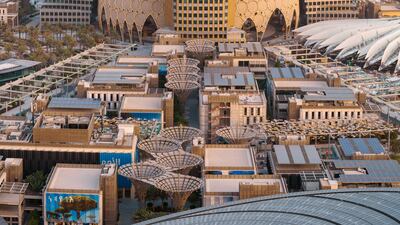
District 2020, the future of Expo 2020 Dubai, has announced the evaluation and shortlist of more than 600 applications from global start-ups and small businesses through its dedicated entrepreneurship programme. This marks the first major milestone for its dedicated Scale2Dubai programme which began accepting applications back in September 2021. The final announcement of successful applicants is expected to be revealed by March and will eventually see over 80 selected start-ups and small businesses joining District 2020’s community from October 2022. -
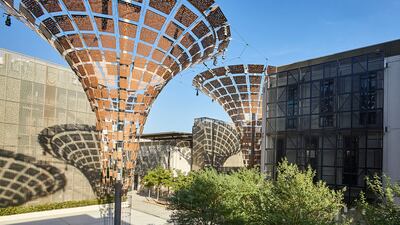
District 2020, the future of Expo 2020 Dubai, has announced the evaluation and shortlist of more than 600 applications from global start-ups and small businesses through its dedicated entrepreneurship programme. This marks the first major milestone for its dedicated Scale2Dubai programme which began accepting applications back in September 2021. The final announcement of successful applicants is expected to be revealed by March and will eventually see over 80 selected start-ups and small businesses joining District 2020’s community from October 2022. -
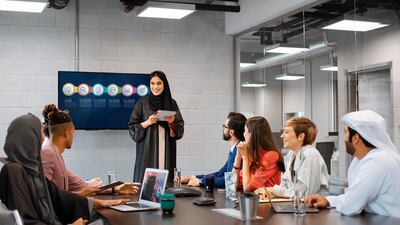
District 2020, the future of Expo 2020 Dubai, has announced the evaluation and shortlist of more than 600 applications from global start-ups and small businesses through its dedicated entrepreneurship programme. This marks the first major milestone for its dedicated Scale2Dubai programme which began accepting applications back in September 2021. The final announcement of successful applicants is expected to be revealed by March and will eventually see over 80 selected start-ups and small businesses joining District 2020’s community from October 2022. -
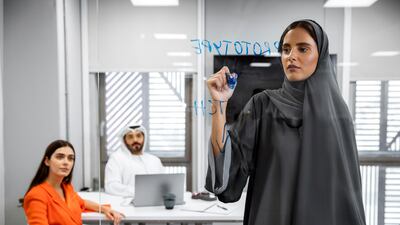
District 2020, the future of Expo 2020 Dubai, has announced the evaluation and shortlist of more than 600 applications from global start-ups and small businesses through its dedicated entrepreneurship programme. This marks the first major milestone for its dedicated Scale2Dubai programme which began accepting applications back in September 2021. The final announcement of successful applicants is expected to be revealed by March and will eventually see over 80 selected start-ups and small businesses joining District 2020’s community from October 2022. -
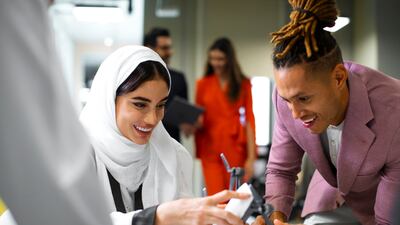
District 2020, the future of Expo 2020 Dubai, has announced the evaluation and shortlist of more than 600 applications from global start-ups and small businesses through its dedicated entrepreneurship programme. This marks the first major milestone for its dedicated Scale2Dubai programme which began accepting applications back in September 2021. The final announcement of successful applicants is expected to be revealed by March and will eventually see over 80 selected start-ups and small businesses joining District 2020’s community from October 2022.


Mr Al Khatib, Expo 2020 Dubai’s chief delivery officer, said the plan was to open up gradually.
“It will be in different phases, between now and October it should all open,” he told The National.
“Yes, the public can come in, so they can still can enjoy Terra, Mobility and other spaces.
“Our reopening will be done in phases because we want to open gradually.
“We need time to do the necessary transitioning to ensure the place is ready to integrate with the bigger city.”
Built to last from Day 1
Country pavilions will be dismantled and returned home as part of sustainability regulations that govern all world fairs.
“The physical site and of course the infrastructure will remain,” Mr Al Khatib said.
“The sustainability, mobility and opportunity pavilions are staying. Definitely the UAE pavilion, Al Wasl, the landscaping, the two parks, the exhibition centre, the water feature, the garden in the sky [observation tower] – all those were built to stay, since Day 1.”

These were references to the main pavilions that anchored the Expo – Terra, the disc-shaped sustainability pavilion; Alif, the mobility pavilion shaped like a fidget spinner; and the opportunity pavilion.
Other structures that will stay are Vision, the women’s pavilion, the UAE pavilion and a few other country pavilions.
Expo has previously said Terra would evolve into a children's and science centre that will be an educational attraction focused on green goals.
“What will be removed is just the security gates, signage, country pavilions,” Mr Al Khatib said.
“But the physical site, a lot, everything almost, will remain of what was built for Expo.”
Minutes away

The new neighbourhood will be the region’s first 15-minute city, with amenities in close proximity.
“So there is no reason for you to leave this city because you will have all your needs within 15 minutes from where you are,” Mr Al Khatib said.
“In terms of distance of your residence, work, park, gym, shopping, groceries, you are always within 15 minutes – also for your entertainment.
“It’s human-centric, the main factor was always the human experience for walkability, resting, shaded areas and the landscaping.”
The new district was planned from the outset to cater for residents.
This intention to build lasting structures was part of the bid document submitted in 2013 with the metro linked with a dedicated station.
Expo organisers studied earlier world fairs and visited the cities that hosted the events.
“We did look at the legacies of Shanghai, Milan and previous ones," Mr Al Khatib said.
“However, when it comes to Expo 2020 Dubai the approach is totally different.
“When we built Expo, the whole investment and vision was to build a future city and a legacy. That future city happened to host Expo.”
Must-visit destination

Art will hold a special space in the community with 11 art installations commissioned for the Expo that will stay.
“These are placed carefully in specific locations across the site so, during legacy, it will become not only a real estate destination, it will also be an art destination,” he said.
The public art programme includes Garden, an arresting marble inlay work with trees, streams and mountains and a recreation of life-size 11th-century implements to determine location that children and adults stop to examine.
Mr Al Khatib described the new space as a “must-visit” destination for all who loved the Expo.
“What will bring families here? Food, exploring, parks, entertainment, museums, everything is going to stay as you could see it during the Expo,” he said.
Mr Al Khatib said the enjoyment of visitors at the world fair was a treasured takeaway from his time spent working with the Expo for the past nine years.
“It has been amazing to see the reaction of the public, countries and participants from different groups coming to the Expo,” he said.
“In the morning you would see school kids interacting and playing. It’s priceless for all the hard work of the past years.”
He looked ahead to the future with mixed feelings.
“I don’t know should I be happy, should I be sad,” Mr Al Khatib said.
“I cannot imagine how I will feel on April 1.
“I’m sure it will be a time to reflect and relax and look forward to the next challenge.”
Ten Expo attractions that will stay as part of District 2020
-
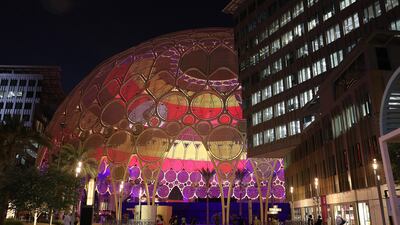
Al Wasl Plaza has been Expo’s main staging area and the venue of unforgettable concerts featuring bands such as Coldplay. Pawan Singh / The National -

The Sustainability Pavilion will live on as a children's and science centre. Chris Whiteoak / The National -

Alif - The Mobility Pavilion will host temporary exhibitions to attract tourists and residents. Photo: Expo 2020 Dubai -
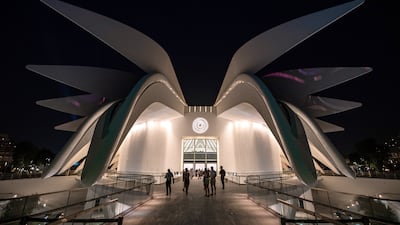
The UAE pavilion will be used as a visitor attraction and a cultural meeting place. Victor Besa / The National -
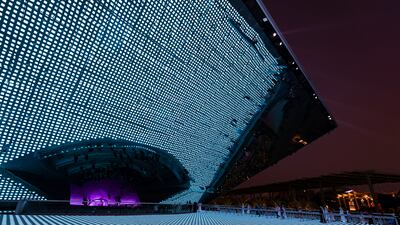
The Saudi Arabia pavilion will continue to showcase green energy innovations in Dubai and the rest of the region. Chris Whiteoak / The National -
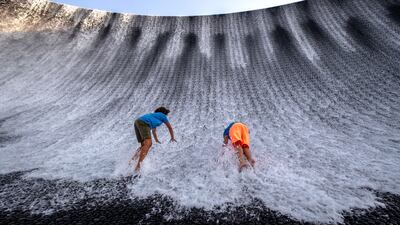
The Expo water feature will continue to be a big attraction even after Expo ends. Victor Besa / The National -
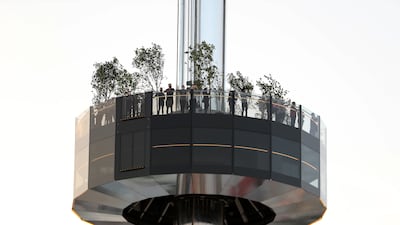
The Garden in the Sky is a rotating observation tower that soars 55 metres above the ground for a bird’s eye view of the site. Pawan Singh / The National -
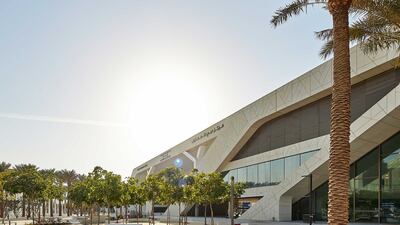
Dubai Exhibition Centre will be used by companies across the logistics, tourism, education and technology spectrum. Photo: Expo 2020 Dubai -
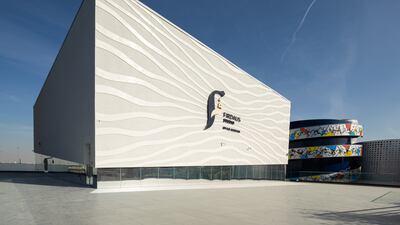
Firdaus Studio by AR Rahman will be a special element of the Expo’s legacy as it aspires to attract musical and artistic talent. Photo: Expo 2020 Dubai -

Cycling tracks at Expo. Photo: Expo 2020 Dubai



