

Two small earthquakes struck an area on the east coast of the UAE on Monday.
The first quake, of 3.1 magnitude, took place at a depth of 5 kilometres, just before 5am in Dibba, Fujairah.
A second, registering 2.3 magnitude, followed at 7.24am in the same location.
Khamis Al Shamsi, director of seismology at the National Centre of Meteorology, said these were nothing out of the ordinary.
"This happens maybe three to four times in a year," he told The National.
"Usually after the bigger earthquake, there is a smaller one. But these two are light shocks, not big."
According to a tsunami alert warning site, earthquakes below a magnitude of 2 can only be detected by instruments, while anything from 2-2.9 may cause hanging objects to swing.
-
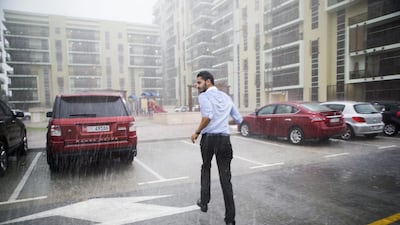
People run for cover during the March 9, 2016 storm in Khalifa City, Abu Dhabi, when strong winds and driving rain caused chaos across the UAE. Christopher Pike / The National -

City streets were inundated with water, such as here on 8th Street in Abu Dhabi. Antonie Robertson / The National -

While the rain and winds caused major damage they brought smiles of glee for some of the younger residents of Abu Dhabi. Delores Johnson / The National -
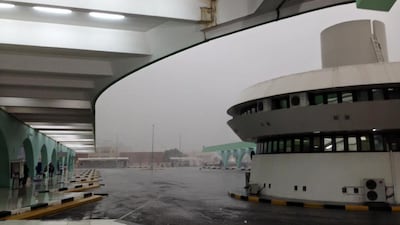
The sky darkened from early on March 9, 2016. The view from Abu Dhabi's main bus station is of murky skies. Jonathan Raymond / The National -
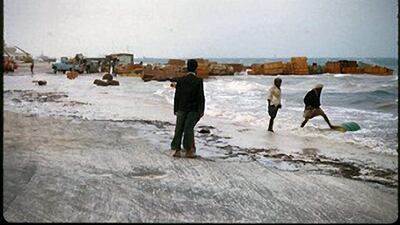
However, storms have always been a feature of the weather here, such as this squall on Abu Dhabi's Corniche taken at some point between 1962 and 1964. Photo: David Riley -
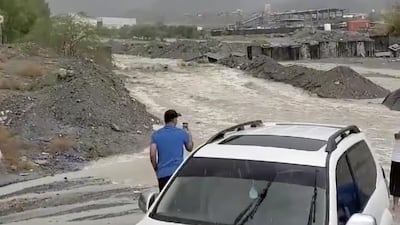
Flooding is seen in Fujairah following heavy rainfall. Photo: Storm Centre UAE -
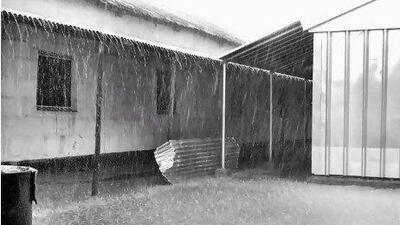
Floodwater often inundated Abu Dhabi island during the 1960s as defences had yet to be built. Photo: David Riley -
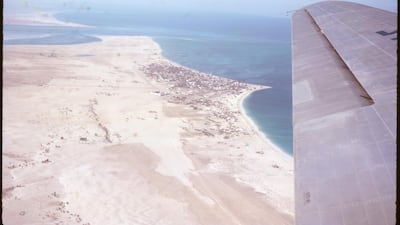
A huge storm that swept through the region in 1963 left the Sharjah Airbase flooded, as this photograph shows. Photo: Vic Cozens -

Snow can also be common in the winter. Snowmen are often built, such as this one in Jebel Jais in January, 2020. Photo: Ahmed Al Bedwawi -
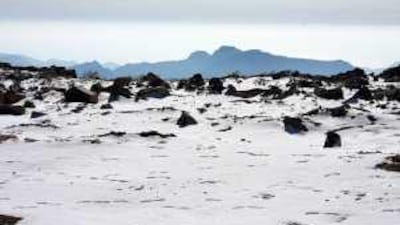
Snow also fell on Jebel Jais mountain in Ras al Khaimah in January and December 2017. Photo: Mike Charlton -

Most of Jebel Jais was blanketed in a pristine layer of snow. Photo: Ahmed Al Bedwawi -
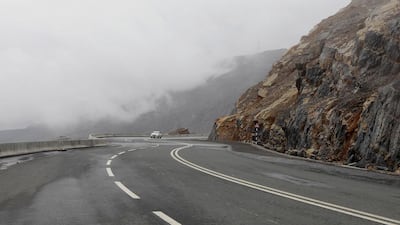
Dense fog is also common in the mountains, as this 2015 shot from Jebel Jais shows. Jeffrey E Biteng / The National -
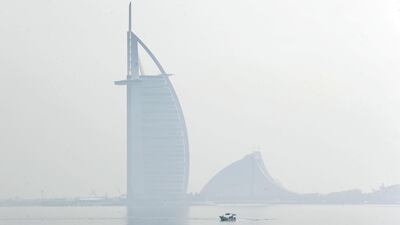
Fog and mist cover the Burj Al Arab. Chris Whiteoak / The National -
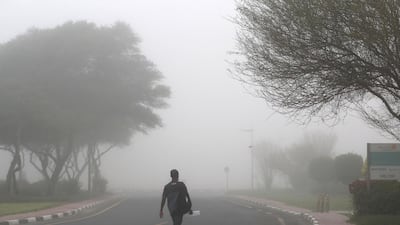
Early morning fog in Discovery Gardens, Dubai in April, 2020. Pawan Singh / The National -
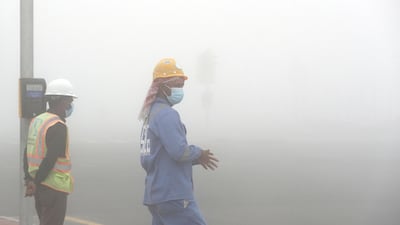
Dense fog is common during winter, reducing visibility on the roads. Pawan Singh / The National -
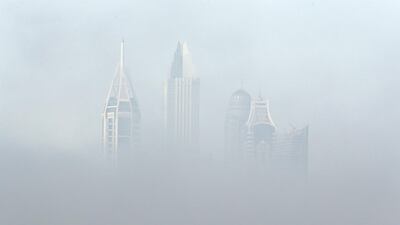
Dubai Media City enveloped in fog. Pawan Singh / The National -
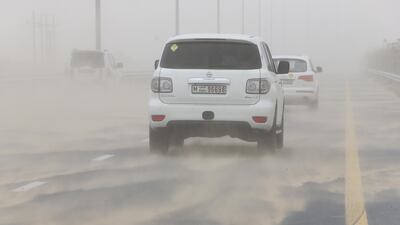
Dust storms are also common, causing havoc on the roads such as this one from March, 2017 in Dubai. Pawan Singh / The National -
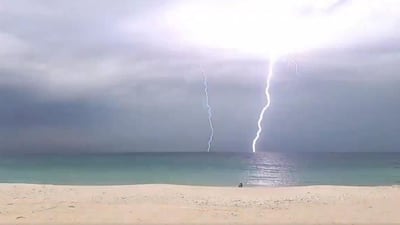
A lightening strike in Umm Al Quwain. Photo: Storm Centre UAE -
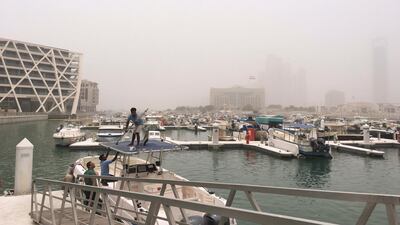
Another dust storm from 2018. Antonie Robertson / The National -
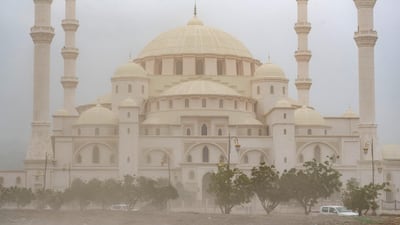
A dust storm passes by the Sheikh Zayed Mosque in Fujairah, April, 2020. Chris Whiteoak / The National -
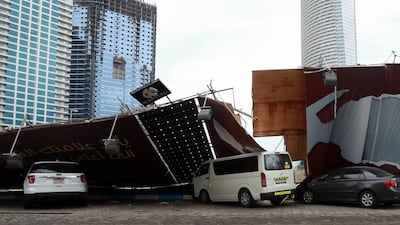
Rain storms can cause the most chaos, however, as the March 2016 one did. A construction barrier fell onto parked cars in Abu Dhabi. AFP -
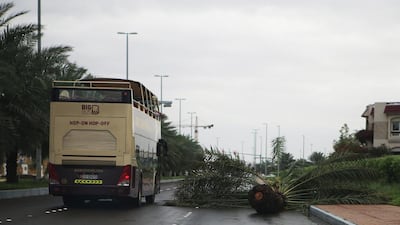
Trees were uprooted on 29th Street in Abu Dhabi during the same storm. Ravindranath K / The National


Anything between the magnitude of 3 and 3.9 creates tremors which are comparable to the vibrations of a passing truck.
Quakes which register between 4 and 4.9 may break windows or cause small or unstable objects to fall.
Dibba sits on an active fault line, which crosses into Oman.
The area experiences small to medium quakes up to the magnitude of 4-5.5, according to a seismic hazard assessment survey carried out by UAE authorities.
In 2002, Masafi in Fujairah experienced a 5 magnitude quake.
"It caused cracks in the walls to old buildings," said Mr Al Shamsi.
"It was a moderate quake. The big ones are 6 up to 7 or 8 magnitude.
"The UAE would not see these."
The country sits on the edge of the Arabian tectonic plate, adjacent to the Iranian plateau – one of the most seismically active areas in the world, which regularly suffers destructive quakes.
Since 1900, at least 126,000 people have died in Iran as a result of earthquakes.
The UAE occasionally experiences tremors from powerful earthquakes in Iran.
In 2014, a 5.1 magnitude quake southern Iran was felt in Dubai and the northern emirates.
And a year earlier, people were evacuated from high-rise buildings in Dubai as a precaution, after a 7.8 magnitude quake struck Iran’s border with Pakistan.
In pictures: 300-year-old Sharjah fortress transformed into a tourist attraction
-
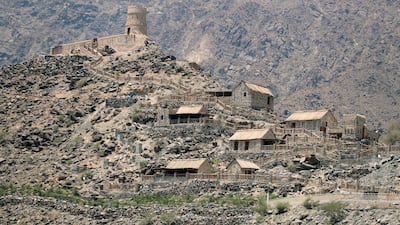
The fortress at Najd Al Maqsar in Khorfakkan, Sharjah. Chris Whiteoak / The National -
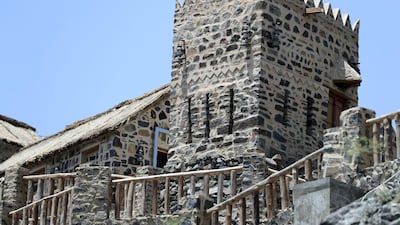
The fortress in Najd Al Maqsar in Khorfakkan, Sharjah, is 300-years-old. Chris Whiteoak /The National -
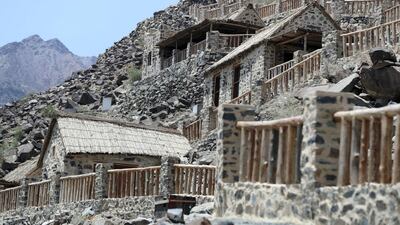
The houses in Najd Al Maqsar village are more than 100-years-old each. Chris Whiteoak / The National -

Rebu Raja is a regular visitor to Najd Al Maqsar in Khorfakkan, Sharjah. Chris Whiteoak/ The National -
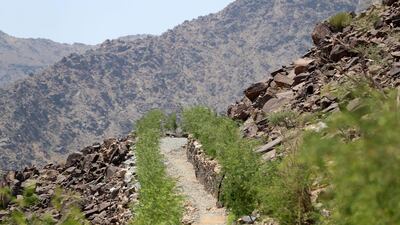
The trail path at Najd Al Maqsar in Khorfakkan, Sharjah. Chris Whiteoak / The National -

A plaque of commemoration at Najd Al Maqsar in Khorfakkan, Sharjah. Chris Whiteoak / The National



