

Authorities have completed a major Dh25 million upgrade to a medical waste incinerator in Al Ain.
The expansion comes amid a surge in such waste after the Covid-19 pandemic, authorities said.
The unit can now treat 1,000 kilograms of waste an hour across its three lines – up from 500kg an hour on two lines.
The facility burns hazardous material at temperatures of up to 1200°C.
Official statistics on the additional waste generated during the pandemic have not been released yet but the head of Abu Dhabi Waste Management Centre (Tadweer) said the highest safety standards had been implemented at the unit. Another waste facility is in the capital.
"Waste requires careful handling, especially in the wake of the pandemic that led to an increase in the generation of medical waste by healthcare facilities in the emirate," said Salem Al Kaabi, director general of Tadweer.
“At Tadweer, we spare no effort in creating a healthy environment for the community as part of our continued commitment to elevating the status of Abu Dhabi as one of the best capital cities in the world," said Mr Al Kaabi.
“As the treatment of medical and hazardous waste demands a different approach, we closely work with our partners to ensure its safe treatment."
How Abu Dhabi turns construction waste into stone for the UAE's roads - in pictures
-
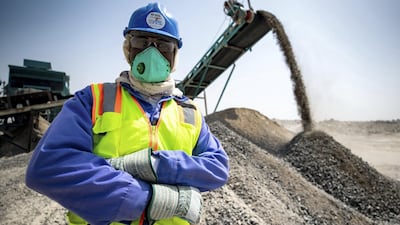
The Ghayathi crusher in Al Dhafra, Abu Dhabi. All photos by Victor Besa / The National -

About 2,000 tonnes of construction waste are recycled every day here. -
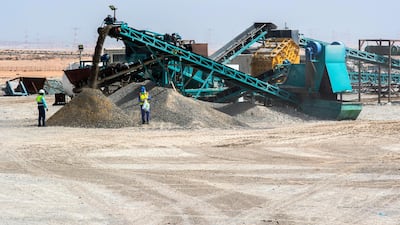
The 60-metre long crusher turns huge stones into gravel that can be used on the country's roads. -
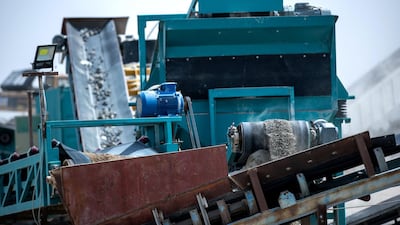
The waste travels on a magnetic conveyer belt where any metals or contaminated material is removed. -
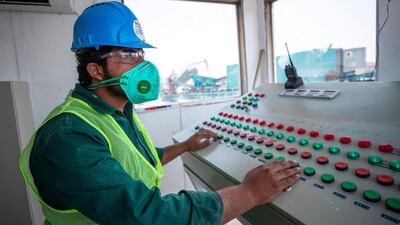
The material is sold for use in infrastructure projects. -
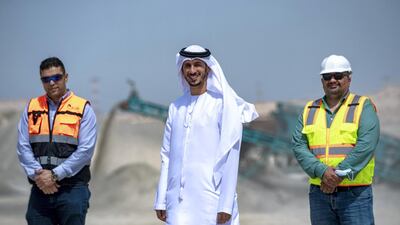
From left: Mohannad Raouf, plant manager; Khalid Al Khanbashi, Khalid Al Khanbashi, senior waste officer at Tadweer; and Ahmed Nour Gamil, operations director. -
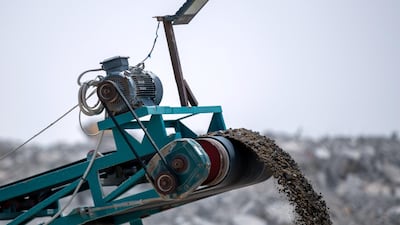
The material is screened to ensure it has been crushed to the right size – between 0 and 37.5mm. -
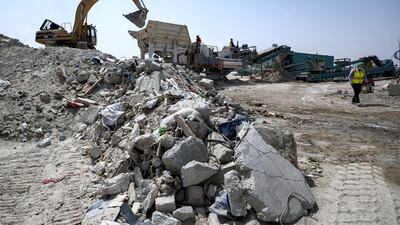
All stone from construction sites and demolished buildings in Al Dhafra is recycled, reused and sold to boost the economy. -
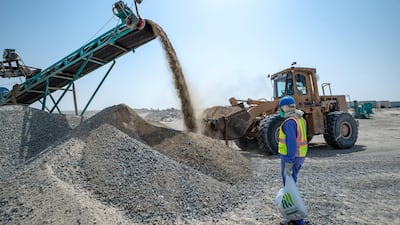
Previously the waste was brought to landfill, which damaged the environment. -
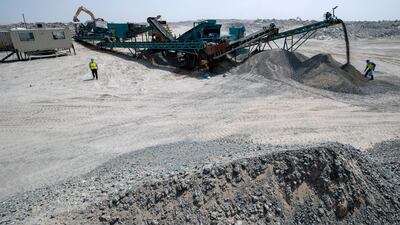
Hundreds of thousands of tonnes of waste this year could be processed at the plant. -
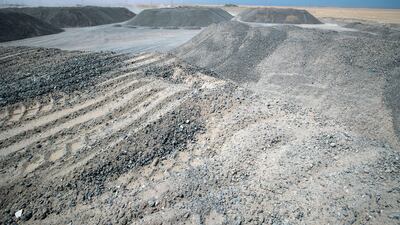
The crusher is part of Tadweer's plant to limit waste and pollution and encourage industrial recycling.



