

The UAE's nuclear energy chief spoke of his pride after securing a prominent role to champion safety in the sector around the world.
Mohamed Al Hammadi has been a driving force behind the development of the country's Barakah Nuclear Energy Plant as chief executive and managing director of Emirates Nuclear Energy Corporation.
He has now made history as the first person from the Arab world to be appointed president of the World Association of Nuclear Operators.
He was voted in at the organisation's biennial general meeting in Prague.
Wano is a not-for-profit international organisation focused on maximising the safety and reliability of the world's commercial nuclear power pants.
It is comprised of more than 120 members responsible for operating more than 430 nuclear energy reactors around the world.
Mr Al Hammadi will lead the organisation's governing body to deliver on its mission to ensure the safe use of nuclear energy.
“The UAE is a global leader in nuclear energy development, with the Barakah plant implementing the best practice and cumulative experience of the global nuclear energy industry," Mr Al Hammadi said.
"It is an honour to be appointed president of Wano, yet another example of the international community’s confidence in the UAE Peaceful Nuclear Energy Programme, a global nuclear energy success story.
"The UAE programme and the Barakah Nuclear Energy Plant have demonstrated how nuclear energy projects can be delivered safely, successfully and competitively to accelerate decarbonisation of the power sector and power our path to net zero."
Barakah is powering UAE's clean energy drive
-

Unit three of Abu Dhabi's Barakah Nuclear Energy Plant started commercial operations in February. Photo: Emirates Nuclear Energy Corporation -

The UAE has issued an operating licence for the fourth and final unit of its Barakah Nuclear Energy Plant. FANR -
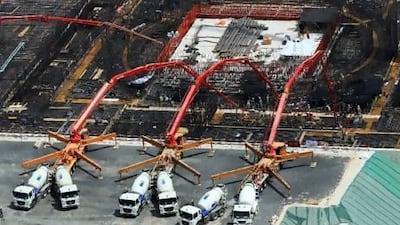
A view of the Barakah nuclear site under construction in 2012. -

Unit 1 being built in 2013 in the Western region of Abu Dhabi. -
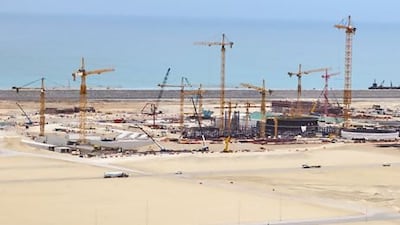
The Emirates Nuclear Energy Corporation selected a Korean consortium in 2013 to build four APR-1400 reactors. Photo: Enec -
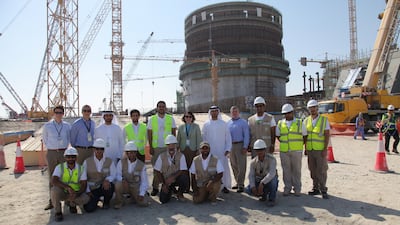
Kristine Svinicki, head of the US Nuclear Regulatory Commission, toured the Barakah site in November 2013. Photo: Enec -
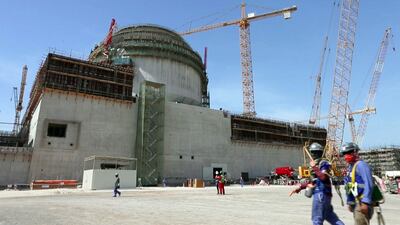
By August 2014, more than 55 per cent of construction at Unit 1 had been completed. Photo: Enec -
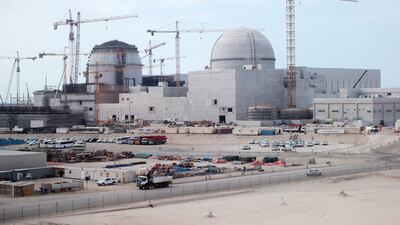
The first nuclear reactor at Barakah in 2016. Christopher Pike / The National -
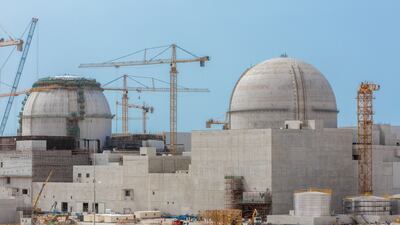
The UAE's nuclear energy programme is based in Barakah in the Western Region of Abu Dhabi. Photo: Enec -
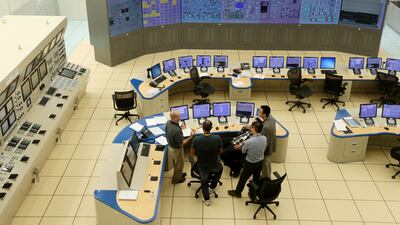
Trainees learn to deal with potentially catastrophic scenarios at this simulator in Barakah. Christopher Pike / The National -

Khalid Naqbi was part of the first batch of resident inspectors sent to the construction site by the Federal Authority for Nuclear Regulation. Ravindranath K / The National


The Barakah plant is at the heart of the UAE's efforts to promote clean energy and slash emissions, in line with its wider 2050 net zero target.
The four units of the Barakah plant will produce enough electricity to cover 25 per cent of the country’s energy needs.
The third unit of the plant delivered its first supply of carbon-free electricity last week, after being successfully connected to the national grid.
The latest milestone in the country's clean energy drive came only weeks after the reactor was switched on.
Unit 3 has the capacity to supply up to 1,400 megawatts of emission-free energy, helping to power the UAE's fight against climate change.
Nawah Energy Company, Enec's subsidiary responsible for the operation of the nuclear power plant, connected the unit to the UAE’s transmission grid.
The Arab world's first nuclear plant is rapidly taking shape and will be central to the Emirates' ambitious sustainability strategy for years to come.
Its power generation will significantly reduce the country's use of gas-fired power stations to generate electricity.
In February 2020 and March 2021, the Federal Authority for Nuclear Regulation issued the operating licences for Unit 1 and Unit 2, respectively.
Commercial operations at Unit 1 started on April 18 last year and, within a year, the energy it produced prevented the release of more than five million tonnes of carbon emissions.
This is the quantity of emissions that would have been created had fossil fuels been used to generate power.
It is the equivalent of more than “one million cars driven for a year”, Enec said in April.

