



The launch earlier this month of the UAE National Air Quality Agenda 2031 shows authorities are keen to tackle air pollution.
Unveiled by the Ministry of Climate Change and Environment and including public and private sector organisations, the new strategy is aimed at providing cleaner air for all.
With so much heavy industry, power-generation capacity and, as any driver will know, many thousands of vehicles causing acute congestion, it is no surprise that air quality can be a concern.
Globally, the UAE is just below average for exposure to PM2.5, one of the key measurements of polluted air.
Here we look at air pollution, where it comes from, and how to reduce it.
What does the UAE's air pollution consist of?
A major concern is particulate matter (PM), which consists of tiny particles that come from human and natural sources.
The main categories are PM10 (particulate matter up to 10 micrometres in size, where one micrometre is one thousandth of a millimetre) and PM2.5 (up to 2.5 micrometres in size).
The UAE Air Emissions Inventory Project, which looked at anthropogenic sources of pollution, indicated that industry is responsible for just over two-thirds of PM2.5s, with road transport causing almost one-fifth. Power generation and desalination cause about 3 per cent.
Khalifa University
Nitrogen oxides, carbon monoxides and other gases are also a problem, with traffic the primary source. This accounts for about 78 per cent of carbon monoxide (CO), for example. Industry causes about 17 per cent of CO pollution.
Dust storms are another pollution source. A study of Riyadh in Saudi Arabia, published last year in the journal Science of the Total Environment, found that sandstorms were linked to increased PM levels and higher levels of ozone and CO.
"The majority of particulate matter aerosols in the UAE are from natural origin (dust, sea salt) or a mixture, when pollutants get deposited on the natural aerosols to give a secondary PMs," said Dr Diana Francis, an assistant professor of earth sciences at Khalifa University in Abu Dhabi and head of the Environmental and Geophysical Sciences (Engeos) lab.
"That’s why air quality in the UAE is affected significantly by natural emissions as well as by anthropogenic ones."
How polluted is the UAE's air?
Figures published by the World Bank taken from the Global Burden of Disease Study 2017 showed the mean annual exposure to PM2.5 in the UAE is 41 microgrammes per cubic metre. This is compared with the World Health Organisation's recommended maximum of five microgrammes per cubic metre.
While high compared to many nations, the UAE's figure is the same as that for Oman and below Kuwait (61), Bahrain (71), Saudi Arabia (88) and Qatar (91). For the Arab world as a whole, the average is 59 microgrammes per cubic metre.
Among other major countries, in the US the mean annual exposure to PM2.5 is seven microgrammes per cubic metre. In Russia, it is 16, in China, 53, in Brazil, 13, in India, 91 and in Indonesia, 17.
The global average is 46.
__________________________________
Top 10 most polluted countries - in pictures
-
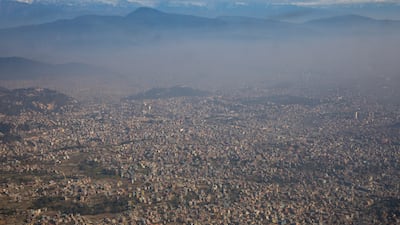
1 Nepal. Annual mean concentrations should not exceed 10 micrograms per cubic metre and Nepal had 99.73 micrograms. EPA -
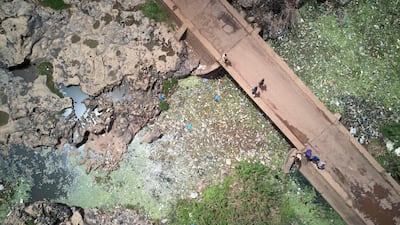
2 Niger — 94.05 micrograms per cubic metre. AFP -
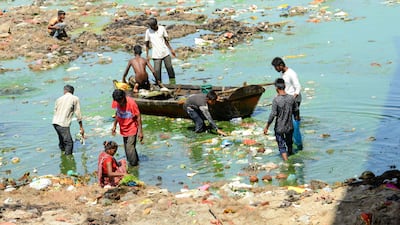
3 India — 90.87 micrograms per cubic metre. AFP -
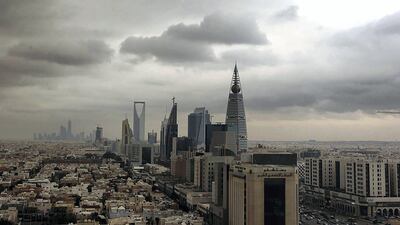
4 Saudi Arabia — 87.95 micrograms per cubic metre. Reuters -
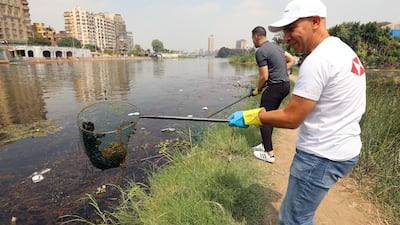
5 Egypt — 87.00 micrograms per cubic metre. EPA -
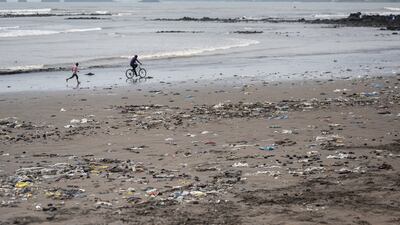
6 Cameroon — 72.79 micrograms per cubic metre. AFP -
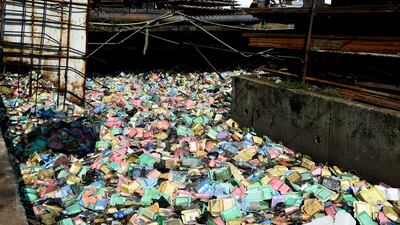
7 Nigeria — 71.80 micrograms per cubic metre. AFP -
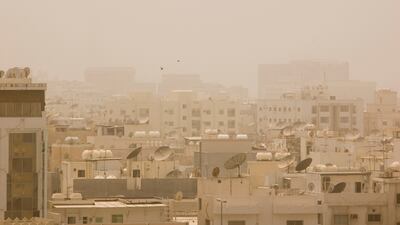
8 Bahrain — 70.82 micrograms per cubic metre. Getty -
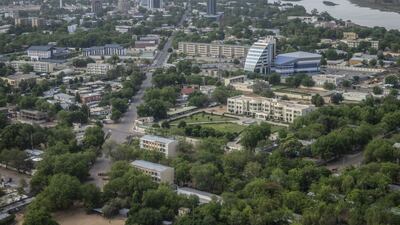
9 Chad — 66.03 micrograms per cubic metre. Bloomberg -
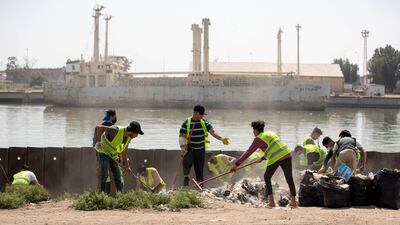
10 Iraq — 61.64 micrograms per cubic metre. AFP


__________________________________
World Bank figures published in 2015 but drawing on the Global Burden of Disease Study 2010 indicated that the Emirates, with a PM2.5 concentration of 80 microgrammes per cubic metre, had the world’s most polluted air.
UAE officials disputed this and indicated that the numbers unfairly bundled together natural dust and human-made pollution. They said their data indicated much lower pollution levels.
The World Bank subsequently said the figures "vastly over-reported pollution in desert countries affected by mineral dust".
What health issues does air pollution cause and how can people protect themselves?
Particulate matter, particularly PM2.5, which penetrates deeper into the lungs, is associated with a number of serious health conditions such as lung cancer and cardiovascular disease.
Short-term exposure "is associated with an increased risk of asthma, chronic obstructive pulmonary disease, and respiratory infection", an August 2021 study in GeoHealth found.
Reports have indicated that more than 120,000 people die prematurely each year in the Mena region because of air pollution. This equates to 7 per cent of premature deaths.
There are things that people can do to reduce their exposure to pollutants, such as installing an air filter, especially one with a high-efficiency, particulate-absorbing (Hepa) filter.
Numerous brands and models are available. Models are designed to filter properties of a particular size and typically prices start from about Dh2,500.
Some face masks may also filter out some particulate matter, as research, including the study published in GeoHealth in August, has noted.
"Face masks and respirators, with their ability to filter out a fraction of particulate matter, may offer a means to reduce exposure to PM2.5 and thus reduce the associated risk of acute respiratory outcomes," the study said.
What can be done to reduce pollution levels?
Julien Jreissati, programme director for Greenpeace Mena, said air pollution was a "massively important" issue in the region.
"Air pollution is one of the biggest concerns around the world, and in the Mena region it's growing, especially in the Gulf," he said.
He said the combination of sandstorms and fossil-fuel-related air pollution, such as from transport and power plants, "makes things even worse".
Mr Jreissati suggested limits on road use, such as allowing vehicles to be used on alternate days according to whether they have odd or even registration plate numbers, could help to cut pollution.
"Ultimately, the only way to solve chronic and rampant air pollution is by getting rid of fossil fuels, and that would require a nationwide strategy towards a just and equitable transition towards a decarbonised economy and society powered by renewable energy," he said.
Dr Francis said that one of her studies indicated that the amount of dust aerosols over the UAE decreased between 2002 and 2020. This was a trend caused by land-use changes, such as increases in urbanisation and the presence of more green areas, along with regional and global changes in air circulation.
Along with a warning system so that people could adjust their activities when dust levels are high, Dr Francis said "planting trees is essential" to reduce the amount of dust released into the air.

