• The Burj Khalifa can barely be seen on a hazy overcast day in Dubai. Chris Whiteoak / The National
    The Burj Khalifa can barely be seen on a hazy overcast day in Dubai. Chris Whiteoak / The National
  • The top of Almas Tower can be seen in JLT on a hazy overcast day in Dubai. Chris Whiteoak / The National
    The top of Almas Tower can be seen in JLT on a hazy overcast day in Dubai. Chris Whiteoak / The National
  • The Marina can barely be seen on a hazy overcast day in Dubai. Chris Whiteoak / The National
    The Marina can barely be seen on a hazy overcast day in Dubai. Chris Whiteoak / The National
  • People kayak at Deira Island under an overcast sky and dusty weather. Pawan Singh / The National
    People kayak at Deira Island under an overcast sky and dusty weather. Pawan Singh / The National
  • Dusty weather with wind in Dubai reduces visibility along Sheikh Zayed Road. Antonie Robertson / The National
    Dusty weather with wind in Dubai reduces visibility along Sheikh Zayed Road. Antonie Robertson / The National
  • Dusty weather with wind in Dubai reduces visibility along Sheikh Zayed Road. Antonie Robertson / The National
    Dusty weather with wind in Dubai reduces visibility along Sheikh Zayed Road. Antonie Robertson / The National
  • A sandstorm sweeps over Dubai. Antonie Robertson / The National
    A sandstorm sweeps over Dubai. Antonie Robertson / The National
  • A standstorm prompts a weather warning from authorities. Antonie Robertson / The National
    A standstorm prompts a weather warning from authorities. Antonie Robertson / The National
  • Grey skies as a sandstorm sweeps over Dubai. Antonie Robertson / The National
    Grey skies as a sandstorm sweeps over Dubai. Antonie Robertson / The National
  • Residents sheild themselves from the sun and dust as a sandstorm sweeps over the country. Antonie Robertson / The National
    Residents sheild themselves from the sun and dust as a sandstorm sweeps over the country. Antonie Robertson / The National

Urban development in the UAE may be limiting pollution levels, say scientists


Daniel Bardsley
  • English
  • Arabic

Urban development in the UAE may have helped to limit pollution levels by reducing the amount of dust whipped up by the wind, according to new research.

The study by scientists at Khalifa University of Science and Technology offered a new perspective on how urbanisation affects air quality by highlighting a way in which it may prove beneficial.

The research also suggested that cloud seeding may likewise have helped to clean the air, by encouraging rainfall.

The reduction we found is in the total load of aerosols in the atmosphere, which includes the anthropogenic aerosols

Scientists found that the aerosol optical depth, which is a measure of the overall quantity of particles in the air, including human-made pollution, has fallen in the UAE in recent decades.

“It was a surprise to see the reversal starting in 2009,” said Dr Diana Francis, one of the study’s authors, who heads Khalifa University’s Environmental and Geophysical Sciences Lab.

“The reduction we found is in the total load of aerosols in the atmosphere, which includes the anthropogenic [human-caused] aerosols.”

The study analysed aerosol optical depth data for the UAE for a 14-year period beginning in 2006.

The reduction that was identified could, the study said, be because rainfall has gradually increased during that period and “changes in land use” have taken place.

Downtown Dubai on a clear day. Supplied.

“Development in the UAE can generate pollution in the short term (while the construction is going on), but in the long term it contributes to a reduction, especially when we account for the green spaces being developed within the projects,” said Dr Francis.

“All of this reduces the exposed surface to strong winds and reduces the emissions.”

Mineral dust was the most common type of aerosol or suspended particle, and development may cut its release into the air.

The nitty gritty of pollution

The scientists at Khalifa University of Science and Technology analysed aerosol optical depth data for the UAE for a 14-year period beginning in 2006. Antonie Robertson / The National

Other findings have indicated that pollution levels in heavily urbanised parts of the UAE are high, largely because of traffic emissions, which produce particulate and other pollution, including harmful gases such as nitrogen dioxide.

A 2019 report from Greenpeace listed Dubai as the most heavily polluted city in the region, and the 10th most polluted worldwide.

The new study, which was co-authored by seven of Dr Francis's Khalifa University colleagues, has been published in the journal Earth and Space Science.

The aerosol optical depth data was recorded at two locations in Abu Dhabi emirate, one coastal and the other inland.

Analysis showed that in the warmer months, aerosols tended to be found up to about 4km from the ground surface, whereas in winter, little was present higher than about 2km.

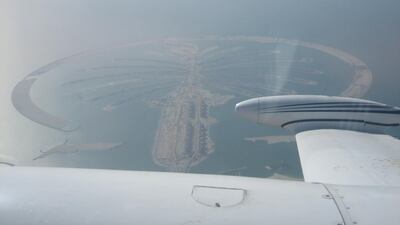
The Palm Jumeirah on a day with good visibility. Supplied.

Another recent study of pollution in Dubai and Abu Dhabi, reported in The National, also indicated that high levels of cloud seeding in the UAE may be clearing the air.

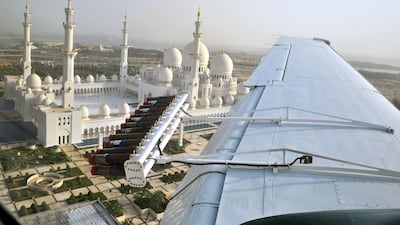
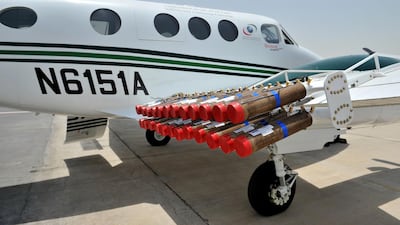
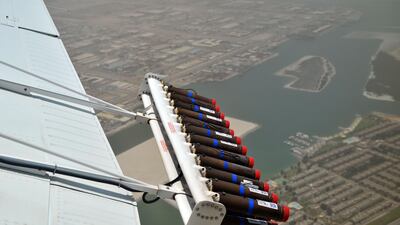
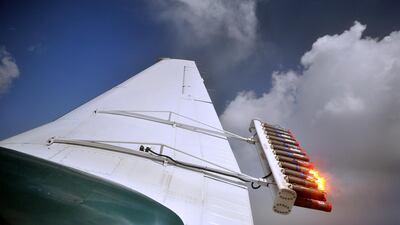
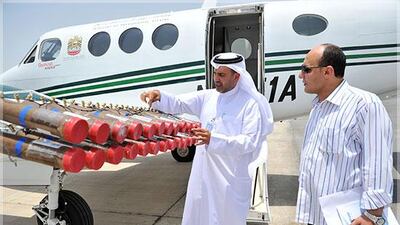
However, other researchers, who released their findings early this year, suggested that cloud seeding, in which silver iodide particles are blasted into the atmosphere using aeroplane-mounted flares to encourage water droplet formation, may instead increase ground-level pollution.

The National Centre of Meteorology, which runs the cloud-seeding operations, rejected this suggestion and insisted that the activity cuts pollution.

As well as cloud seeding, the Khalifa University researchers said natural variability could account for growth in rainfall over the period analysed.

While some scientists have highlighted the risks of droughts in the Middle East as a result of climate change, Dr Francis said projections suggested precipitation in the UAE could increase.

“A warmer atmosphere can hold a larger amount of water vapour, but also [there is] a projected expansion of the tropics, which would mean more rain for countries at the latitudes of the UAE,” she said.

“As a result, the aerosol loads are expected to decrease over our region but uncertainty remains, especially related to the impact of increasing temperatures on this process.”

The new study found that aerosol optical depth levels were higher in the spring and summer, partly because south-westerly winds pick up dust during those seasons.

Another finding was that, although aerosol levels as a whole tended to be lower in winter, those generated by pollution were more common in the colder season.

In Pictures: cloud seeding in the UAE

  • A cloud seeding plane soars over Abu Dhabi. The UAE’s National Centre of Meteorology has teamed up with experts from the UK to study whether electricity can help produce rain. All photos: National Centre of Meteorology
    A cloud seeding plane soars over Abu Dhabi. The UAE’s National Centre of Meteorology has teamed up with experts from the UK to study whether electricity can help produce rain. All photos: National Centre of Meteorology
  • An aircraft fitted for cloud-seeding operations in the UAE.
    An aircraft fitted for cloud-seeding operations in the UAE.
  • The UAE’s National Centre of Meteorology has teamed up with experts from the UK to study whether electricity can help produce rain.
    The UAE’s National Centre of Meteorology has teamed up with experts from the UK to study whether electricity can help produce rain.
  • Cloud seeding operations carried out across parts of the UAE.
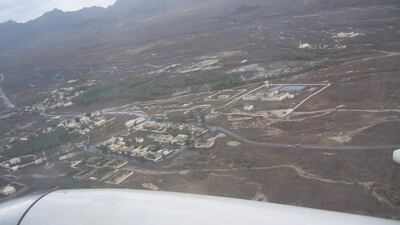
    Cloud seeding operations carried out across parts of the UAE.
  • Cloud seeding operations carried out across parts of the UAE.
    Cloud seeding operations carried out across parts of the UAE.
  • A cloud seeding operations is conducted over Dubai.
    A cloud seeding operations is conducted over Dubai.
  • A pilot prepares to take off on a cloud-seeding operation in the UAE.
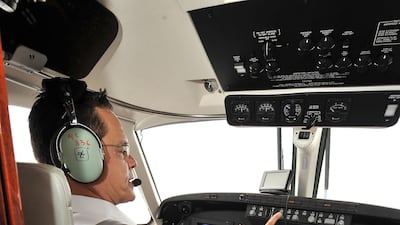
    A pilot prepares to take off on a cloud-seeding operation in the UAE.
  • An aircraft fitted for cloud-seeding operations in the UAE.
    An aircraft fitted for cloud-seeding operations in the UAE.
  • Cloud seeding operations carried out across parts of the UAE.
    Cloud seeding operations carried out across parts of the UAE.
UAE currency: the story behind the money in your pockets
MATCH INFO

Scotland 59 (Tries: Hastings (2), G Horne (3), Turner, Seymour, Barclay, Kinghorn, McInally; Cons: Hastings 8)

Russia 0

Mercer, the investment consulting arm of US services company Marsh & McLennan, expects its wealth division to at least double its assets under management (AUM) in the Middle East as wealth in the region continues to grow despite economic headwinds, a company official said.

Mercer Wealth, which globally has $160 billion in AUM, plans to boost its AUM in the region to $2-$3bn in the next 2-3 years from the present $1bn, said Yasir AbuShaban, a Dubai-based principal with Mercer Wealth.

Within the next two to three years, we are looking at reaching $2 to $3 billion as a conservative estimate and we do see an opportunity to do so,” said Mr AbuShaban.

Mercer does not directly make investments, but allocates clients’ money they have discretion to, to professional asset managers. They also provide advice to clients.

“We have buying power. We can negotiate on their (client’s) behalf with asset managers to provide them lower fees than they otherwise would have to get on their own,” he added.

Mercer Wealth’s clients include sovereign wealth funds, family offices, and insurance companies among others.

From its office in Dubai, Mercer also looks after Africa, India and Turkey, where they also see opportunity for growth.

Wealth creation in Middle East and Africa (MEA) grew 8.5 per cent to $8.1 trillion last year from $7.5tn in 2015, higher than last year’s global average of 6 per cent and the second-highest growth in a region after Asia-Pacific which grew 9.9 per cent, according to consultancy Boston Consulting Group (BCG). In the region, where wealth grew just 1.9 per cent in 2015 compared with 2014, a pickup in oil prices has helped in wealth generation.

BCG is forecasting MEA wealth will rise to $12tn by 2021, growing at an annual average of 8 per cent.

Drivers of wealth generation in the region will be split evenly between new wealth creation and growth of performance of existing assets, according to BCG.

Another general trend in the region is clients’ looking for a comprehensive approach to investing, according to Mr AbuShaban.

“Institutional investors or some of the families are seeing a slowdown in the available capital they have to invest and in that sense they are looking at optimizing the way they manage their portfolios and making sure they are not investing haphazardly and different parts of their investment are working together,” said Mr AbuShaban.

Some clients also have a higher appetite for risk, given the low interest-rate environment that does not provide enough yield for some institutional investors. These clients are keen to invest in illiquid assets, such as private equity and infrastructure.

“What we have seen is a desire for higher returns in what has been a low-return environment specifically in various fixed income or bonds,” he said.

“In this environment, we have seen a de facto increase in the risk that clients are taking in things like illiquid investments, private equity investments, infrastructure and private debt, those kind of investments were higher illiquidity results in incrementally higher returns.”

The Abu Dhabi Investment Authority, one of the largest sovereign wealth funds, said in its 2016 report that has gradually increased its exposure in direct private equity and private credit transactions, mainly in Asian markets and especially in China and India. The authority’s private equity department focused on structured equities owing to “their defensive characteristics.”

The%20specs%20
%3Cp%3E%3Cstrong%3EEngine%3A%20%3C%2Fstrong%3E2.0-litre%204cyl%20turbo%0D%3Cbr%3E%3Cstrong%3EPower%3A%20%3C%2Fstrong%3E261hp%20at%205%2C500rpm%0D%3Cbr%3E%3Cstrong%3ETorque%3A%20%3C%2Fstrong%3E400Nm%20at%201%2C750-4%2C000rpm%0D%3Cbr%3E%3Cstrong%3ETransmission%3A%20%3C%2Fstrong%3E7-speed%20dual-clutch%20auto%0D%3Cbr%3E%3Cstrong%3EFuel%20consumption%3A%20%3C%2Fstrong%3E10.5L%2F100km%0D%3Cbr%3E%3Cstrong%3EOn%20sale%3A%20%3C%2Fstrong%3ENow%0D%3Cbr%3E%3Cstrong%3EPrice%3A%20%3C%2Fstrong%3EFrom%20Dh129%2C999%20(VX%20Luxury)%3B%20from%20Dh149%2C999%20(VX%20Black%20Gold)%3C%2Fp%3E%0A
Pros%20and%20cons%20of%20BNPL
%3Cp%3E%3Cstrong%3EPros%3C%2Fstrong%3E%0D%3C%2Fp%3E%0A%3Cul%3E%0A%3Cli%3EEasy%20to%20use%20and%20require%20less%20rigorous%20credit%20checks%20than%20traditional%20credit%20options%0D%3C%2Fli%3E%0A%3Cli%3EOffers%20the%20ability%20to%20spread%20the%20cost%20of%20purchases%20over%20time%2C%20often%20interest-free%0D%3C%2Fli%3E%0A%3Cli%3EConvenient%20and%20can%20be%20integrated%20directly%20into%20the%20checkout%20process%2C%20useful%20for%20online%20shopping%0D%3C%2Fli%3E%0A%3Cli%3EHelps%20facilitate%20cash%20flow%20planning%20when%20used%20wisely%0D%3C%2Fli%3E%0A%3C%2Ful%3E%0A%3Cp%3E%3Cstrong%3ECons%3C%2Fstrong%3E%3C%2Fp%3E%0A%3Cul%3E%0A%3Cli%3EThe%20ease%20of%20making%20purchases%20can%20lead%20to%20overspending%20and%20accumulation%20of%20debt%0D%3C%2Fli%3E%0A%3Cli%3EMissing%20payments%20can%20result%20in%20hefty%20fees%20and%2C%20in%20some%20cases%2C%20high%20interest%20rates%20after%20an%20initial%20interest-free%20period%0D%3C%2Fli%3E%0A%3Cli%3EFailure%20to%20make%20payments%20can%20impact%20credit%20score%20negatively%0D%3C%2Fli%3E%0A%3Cli%3ERefunds%20can%20be%20complicated%20and%20delayed%0D%3C%2Fli%3E%0A%3C%2Ful%3E%0A%3Cp%3E%3Cem%3ECourtesy%3A%20Carol%20Glynn%3C%2Fem%3E%3C%2Fp%3E%0A
Cry Macho

Director: Clint Eastwood

Stars: Clint Eastwood, Dwight Yoakam

Rating:**

MO
%3Cp%3E%3Cstrong%3ECreators%3A%20%3C%2Fstrong%3EMohammed%20Amer%2C%20Ramy%20Youssef%3C%2Fp%3E%0A%3Cp%3E%3Cstrong%3EStars%3A%20%3C%2Fstrong%3EMohammed%20Amer%2C%20Teresa%20Ruiz%2C%20Omar%20Elba%3C%2Fp%3E%0A%3Cp%3E%3Cstrong%3ERating%3A%3C%2Fstrong%3E%204%2F5%3C%2Fp%3E%0A
COMPANY%20PROFILE%20
%3Cp%3EName%3A%20DarDoc%3Cbr%3EBased%3A%20Abu%20Dhabi%3Cbr%3EFounders%3A%20Samer%20Masri%2C%20Keswin%20Suresh%3Cbr%3ESector%3A%20HealthTech%3Cbr%3ETotal%20funding%3A%20%24800%2C000%3Cbr%3EInvestors%3A%20Flat6Labs%2C%20angel%20investors%20%2B%20Incubated%20by%20Hub71%2C%20Abu%20Dhabi's%20Department%20of%20Health%3Cbr%3ENumber%20of%20employees%3A%2010%3C%2Fp%3E%0A
UAE%20ILT20
%3Cp%3E%3Cstrong%3EMarquee%20players%3A%3C%2Fstrong%3E%3Cbr%3EMoeen%20Ali%2C%20Andre%20Russell%2C%20Dawid%20Malan%2C%20Wanindu%20Hasiranga%2C%20Sunil%20Narine%2C%20Evin%20Lewis%2C%20Colin%20Munro%2C%20Fabien%20Allen%2C%20Sam%20Billings%2C%20Tom%20Curran%2C%20Alex%20Hales%2C%20Dushmantha%20Chameera%2C%20Shimron%20Hetmyer%2C%20Akeal%20Hosein%2C%20Chris%20Jordan%2C%20Tom%20Banton%2C%20Sandeep%20Lamichhane%2C%20Chris%20Lynn%2C%20Rovman%20Powell%2C%20Bhanuka%20Rajapaksa%2C%20Mujeeb%20Ul%20Rahman%3C%2Fp%3E%0A%3Cp%3E%3Cstrong%3EInternational%20players%3A%3C%2Fstrong%3E%3C%2Fp%3E%0A%3Cp%3ELahiru%20Kumara%2C%20Seekugge%20Prassanna%2C%20Charith%20Asalanka%2C%20Colin%20Ingram%2C%20Paul%20Stirling%2C%20Kennar%20Lewis%2C%20Ali%20Khan%2C%20Brandon%20Glover%2C%20Ravi%20Rampaul%2C%20Raymon%20Reifer%2C%20Isuru%20Udana%2C%20Blessing%20Muzarabani%2C%20Niroshan%20Dickwella%2C%20Hazaratullah%20Zazai%2C%20Frederick%20Klassen%2C%20Sikandar%20Raja%2C%20George%20Munsey%2C%20Dan%20Lawrence%2C%20Dominic%20Drakes%2C%20Jamie%20Overton%2C%20Liam%20Dawson%2C%20David%20Wiese%2C%20Qais%20Ahmed%2C%20Richard%20Gleeson%2C%20James%20Vince%2C%20Noor%20Ahmed%2C%20Rahmanullah%20Gurbaz%2C%20Navin%20Ul%20Haq%2C%20Sherfane%20Rutherford%2C%20Saqib%20Mahmood%2C%20Ben%20Duckett%2C%20Benny%20Howell%2C%20Ruben%20Trumpelman%3C%2Fp%3E%0A
Biography

Favourite drink: Must have karak chai and Chinese tea every day

Favourite non-Chinese food: Arabic sweets and Indian puri, small round bread of wheat flour

Favourite Chinese dish: Spicy boiled fish or anything cooked by her mother because of its flavour

Best vacation: Returning home to China

Music interests: Enjoys playing the zheng, a string musical instrument

Enjoys reading: Chinese novels, romantic comedies, reading up on business trends, government policy changes

Favourite book: Chairman Mao Zedong’s poems

COMPANY PROFILE
Name: Kumulus Water
 
Started: 2021
 
Founders: Iheb Triki and Mohamed Ali Abid
 
Based: Tunisia 
 
Sector: Water technology 
 
Number of staff: 22 
 
Investment raised: $4 million 
THE%20FLASH
%3Cp%3E%3Cstrong%3EDirector%3A%3C%2Fstrong%3E%20Andy%20Muschietti%3Cbr%3E%3Cstrong%3EStars%3A%3C%2Fstrong%3E%20Sasha%20Calle%2C%20Ben%20Affleck%2C%20Ezra%20Miller%3Cbr%3E%3Cstrong%3ERating%3A%20%3C%2Fstrong%3E3%2F5%3C%2Fp%3E%0A
Ferrari 12Cilindri specs

Engine: naturally aspirated 6.5-liter V12

Power: 819hp

Torque: 678Nm at 7,250rpm

Price: From Dh1,700,000

Available: Now

Generation Start-up: Awok company profile

Started: 2013

Founder: Ulugbek Yuldashev

Sector: e-commerce

Size: 600 plus

Stage: still in talks with VCs

Principal Investors: self-financed by founder

Company profile

Date started: December 24, 2018

Founders: Omer Gurel, chief executive and co-founder and Edebali Sener, co-founder and chief technology officer

Based: Dubai Media City

Number of employees: 42 (34 in Dubai and a tech team of eight in Ankara, Turkey)

Sector: ConsumerTech and FinTech

Cashflow: Almost $1 million a year

Funding: Series A funding of $2.5m with Series B plans for May 2020

Director: Jon Favreau

Starring: Donald Glover, Seth Rogen, John Oliver

Rating: 2 out of 5 stars

Profile

Company name: Jaib

Started: January 2018

Co-founders: Fouad Jeryes and Sinan Taifour

Based: Jordan

Sector: FinTech

Total transactions: over $800,000 since January, 2018

Investors in Jaib's mother company Alpha Apps: Aramex and 500 Startups

WHAT IS GRAPHENE?

It was discovered in 2004, when Russian-born Manchester scientists Andrei Geim and Kostya Novoselov were experimenting with sticky tape and graphite, the material used as lead in pencils.

Placing the tape on the graphite and peeling it, they managed to rip off thin flakes of carbon. In the beginning they got flakes consisting of many layers of graphene. But when they repeated the process many times, the flakes got thinner.

By separating the graphite fragments repeatedly, they managed to create flakes that were just one atom thick. Their experiment led to graphene being isolated for the very first time.

In 2010, Geim and Novoselov were awarded the Nobel Prize for Physics. 

The five pillars of Islam

1. Fasting

2. Prayer

3. Hajj

4. Shahada

5. Zakat 

Who was Alfred Nobel?

The Nobel Prize was created by wealthy Swedish chemist and entrepreneur Alfred Nobel.

  • In his will he dictated that the bulk of his estate should be used to fund "prizes to those who, during the preceding year, have conferred the greatest benefit to humankind".
  • Nobel is best known as the inventor of dynamite, but also wrote poetry and drama and could speak Russian, French, English and German by the age of 17. The five original prize categories reflect the interests closest to his heart.
  • Nobel died in 1896 but it took until 1901, following a legal battle over his will, before the first prizes were awarded.
Cryopreservation: A timeline
  1. Keyhole surgery under general anaesthetic
  2. Ovarian tissue surgically removed
  3. Tissue processed in a high-tech facility
  4. Tissue re-implanted at a time of the patient’s choosing
  5. Full hormone production regained within 4-6 months
Indoor cricket in a nutshell

Indoor cricket in a nutshell
Indoor Cricket World Cup - Sept 16-20, Insportz, Dubai

16 Indoor cricket matches are 16 overs per side
8 There are eight players per team
9 There have been nine Indoor Cricket World Cups for men. Australia have won every one.
5 Five runs are deducted from the score when a wickets falls
4 Batsmen bat in pairs, facing four overs per partnership

Scoring In indoor cricket, runs are scored by way of both physical and bonus runs. Physical runs are scored by both batsmen completing a run from one crease to the other. Bonus runs are scored when the ball hits a net in different zones, but only when at least one physical run is score.

Zones

A Front net, behind the striker and wicketkeeper: 0 runs
B Side nets, between the striker and halfway down the pitch: 1 run
C Side nets between halfway and the bowlers end: 2 runs
D Back net: 4 runs on the bounce, 6 runs on the full