



When the Beirut port blast rocked Lebanon’s capital city in August last year, an initiative to encourage the development of more climate-resilient cities was born.
The Rubble to Mountains project used debris left behind from the devastating explosion and turned it into city-scape furniture, such as public benches and children’s play areas.
Of the 300,000 tonnes of construction and demolition waste left behind from the blast, volunteers managed to recycle 200,000 tonnes of rubble, 25,000 tonnes of glass and 5,000 tonnes of plastic.
Development Inc
Using ROGP, a patented technology that enables the recycling of all types of plastics and glass, including the ones previously deemed non-recyclable, the project produced a new material that is sturdy, durable and infinitely recyclable.
“The problem with the plastics in the world is that there are 80 plus types, but science can only treat seven,” said Mohamad Daoud, chief executive of Development Inc, the company behind Rubble to Mountains.
“The plastics you use in your everyday life are non-recyclable - for instance, your mouse, your keyboard, the plastic on your air conditioning.
“We as humans are heavy consumers and what we needed to do was create value for plastics and other types of waste, especially after so much debris was left behind by the explosion in Beirut."
-

A woman photographs a sculpture by Lebanese artist Nayla Romanos Iliya, entitled 'On the Other Side of Time', a permanent artwork erected in front of the church of St Elias in Beirut. All photos: AFP -

Ms Iliya speaks to the public in front of her multi-structural sculpture made of steel and cement. -

The sculpture stands tall at nine metres high. -
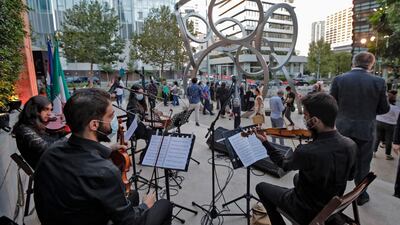
Musicians perform in front of the sculpture on the day of its inauguration. -

Ms Iliya poses in front of her sculpture, illustrating the sheer scale of the piece. -

People attend the inauguration ceremony. -

As the sun sets, the towering sculpture dazzles in the moonlight.


Use waste to build affordable housing
Mr Daoud said cities have “limited adequate and suitable systems to cope with changes in waste disposal”, but technology can help communities utilise waste for urbanisation.
The ROGP technology used in Rubble to Mountains works by allowing people to recycle mixed plastics and bond them together using silica from glass.
The end product can be used to build furniture, affordable housing, and when combined with other green materials, can even translate into large-scale city infrastructure.
“What we want to do is take the waste and help communities build their infrastructure with 80 per cent cheaper costs,” Mr Daoud said on the sidelines of World Cities Day at Expo 2020 Dubai.
“The end product is something that will always keep generating and the way our technology works is simple.
“It’s a set of four machines, including a glass crusher, two shredders for plastic and we then developed our own reactor, where you can place the materials together to produce a paste that can be moulded into planks, bricks, whatever you need.
“A small-scale system costs about $50,000.”
Today, half of the world's population lives in cities and this number is set to grow in the coming years.

World Cities Day this year focuses on the post-pandemic future and highlights the need for accelerating progress towards carbon-neutral cities.
Dr Sameh Wahba, from the World Bank, said cities had an outsize carbon footprint, and that needed to change urgently.
“We need to look at how important the waste and building sectors are for us to remain on track with the Paris Agreement and to remain within the confines of the 1.5 degree maximum global temperature rise,” he said.
“I think these are two of the most important sectors and we are capable of making a 90 per cent reduction in emissions generated in today’s cities with technology that exists today.
“We know that cities are already responsible for about 70 per cent of greenhouse gas emissions and this could be drastically reduced between now and 2050.”
He said 60 per cent of the change would have to come from the building sector, focusing mainly on reductions in energy consumption and an increase in water and material efficiency, and five per cent from the waste sector.
Dr Wahba said future-proofing the building sector must be a "centre piece of building resilience and GHG [greenhouse gas] emissions mitigation".
For example, passive design or use of green roofs and facades reduces vulnerability to heat for building users and reduces their energy demand for mechanical cooling for thermal comfort.
“From a waste perspective, we are on a very dangerous trajectory going forward,” he said.
“What we know is that the world is generating a lot more waste today. The rate of increase is twice the rate of population growth.
“So basically, if you will, it is your typical environmental disaster that we’re headed towards.”
Finding ways to reduce or use waste, such as for urbanisation projects, would benefit cities and help reduce its impact on the environment, he said.
In pictures - Dubai Urban 2040 Plan
-
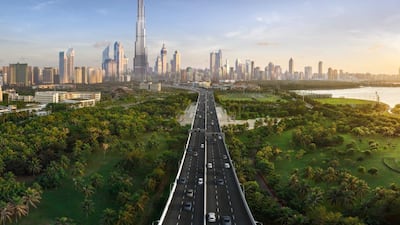
Beaches will be extended by 400 per cent and 60 per cent of Dubai will be nature reserves under the 2040 plan. Courtesy: Sheikh Mohammed bin Rashid Twitter -
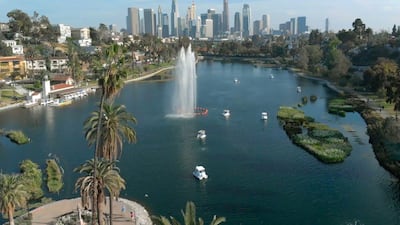
Beaches will be extended by 400 per cent and 60 per cent of Dubai will be nature reserves under the 2040 plan. Courtesy: Sheikh Mohammed bin Rashid Twitter -
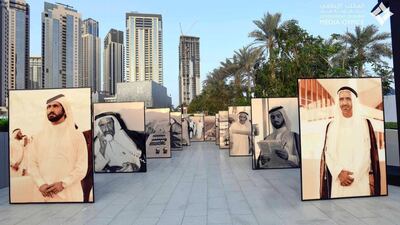
Historical images of Sheikh Mohammed bin Rashid and Sheikh Rashid, former Ruler of Dubai, at the presentation of the Dubai 2040 plan. Courtesy: Dubai Media Office -

The Dubai Urban Master Plan 2040, signed by Sheikh Mohammed bin Rashid, Vice President and Ruler of Dubai. Courtesy: Dubai Media Office -
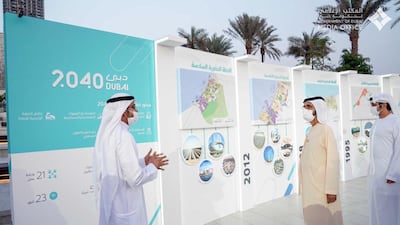
Sheikh Mohammed bin Rashid, Vice President and Ruler of Dubai, at an exhibition of the Dubai 2040 plan. Courtesy: Dubai Media Office -
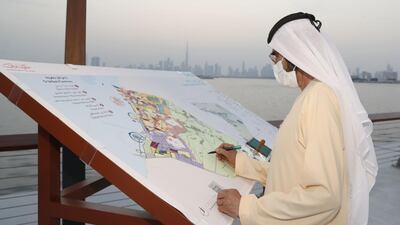
Sheikh Mohammed bin Rashid, Vice President and Ruler of Dubai, signs the Dubai Urban Master Plan 2040. Courtesy: Dubai Media Office -
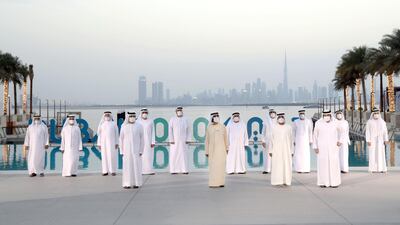
Sheikh Mohammed bin Rashid, Vice President and Ruler of Dubai, launches the Dubai 2040 Urban Master Plan. Wam -
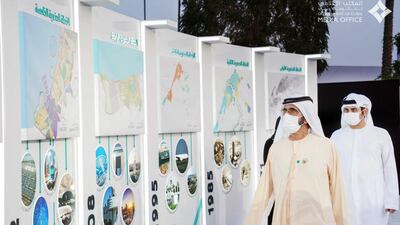
Sheikh Mohammed bin Rashid, Vice President and Ruler of Dubai, and Sheikh Maktoum bin Mohammed, Deputy Ruler of Dubai, at an exhibition of the Dubai 2040 plan. Courtesy: Dubai Media Office -

Sixty per cent of Dubai will be covered in nature reserves, under the 2040 plan unveiled by Sheikh Mohammed bin Rashid, Vice President and Ruler of Dubai. Courtesy: Sheikh Mohammed bin Rashid Twitter -
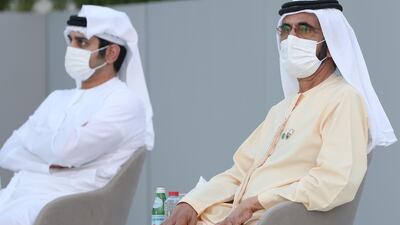
Sheikh Mohammed bin Rashid, Vice President and Ruler of Dubai, and Sheikh Maktoum bin Mohammed, Deputy Ruler of Dubai, launch the Dubai 2040 Urban Master Plan. Wam -
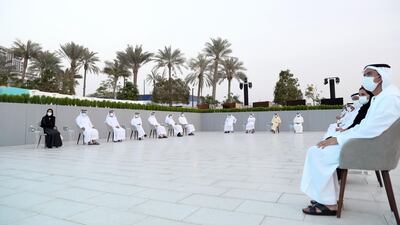
Sheikh Mohammed bin Rashid, Vice President and Ruler of Dubai, launches the Dubai 2040 Urban Master Plan. Wam -
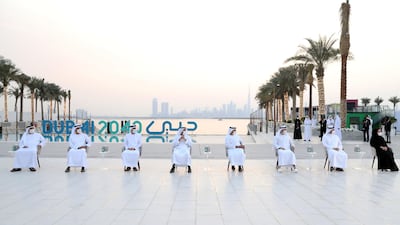
Sheikh Mohammed bin Rashid, Vice President and Ruler of Dubai, and Sheikh Maktoum bin Mohammed, Deputy Ruler of Dubai, launch the Dubai 2040 Urban Master Plan. Wam -
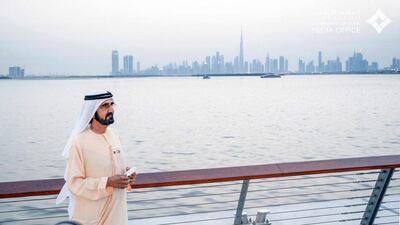
Sheikh Mohammed bin Rashid, Vice President and Ruler of Dubai, launched the Dubai 2040 plan with a move to overhaul the emirate's landscape. Courtesy: Dubai Media Office -
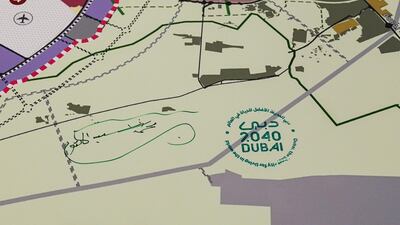
The Dubai Urban Master Plan 2040, signed by Sheikh Mohammed bin Rashid, Vice President and Ruler of Dubai. Courtesy: Dubai Media Office -

Since 1960, Dubai has implemented seven urban plans to keep up with the emirate's growing population. Courtesy: Dubai Media Office -
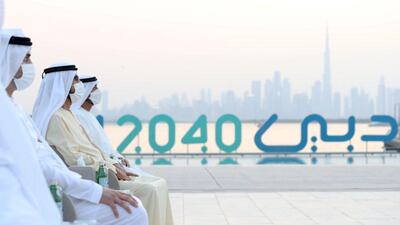
Sheikh Mohammed bin Rashid, Vice President and Ruler of Dubai, unveils the 2040 plan to overhaul the city's urban landscape. Courtesy: Sheikh Mohammed bin Rashid Twitter -
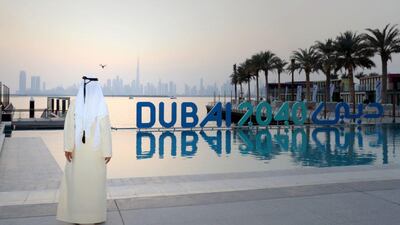
Sheikh Mohammed bin Rashid, Vice President and Ruler of Dubai, unveils the 2040 plan to overhaul the city's urban landscape. Courtesy: Sheikh Mohammed bin Rashid Twitter -

Since 1960, Dubai has brought in eight urban plans to keep up with the emirate's growing population. Courtesy: Dubai Media Office



