



The discovery of a “blue hole” off Abu Dhabi has linked the UAE to nations across the globe that are also home to stunning marine sinkholes.
From Belize to the Bahamas, from China to Malta, blue holes are breathtaking sights often characterised by water that, because of the hole’s depth, appears a much darker blue than the surrounding sea.
Typically formed in areas of limestone or coral, they can be rich in life nearer the water surface and often contain numerous species of fish.
Some, even if the surface area is smaller, are much deeper than Abu Dhabi's newly revealed blue hole, stretching hundreds of metres vertically.
However, with poor circulation, deeper blue holes may be oxygen-depleted further down, where the waters are home to many types of micro-organisms.
Dr Jamie Pringle, a senior lecturer in geosciences at Keele University in the UK, said the mechanism by which blue holes are formed was unusual.
Sinkholes on land are created typically, he said, by the flow of rain or groundwater, which gradually wears material down over time before the areas of erosion connect to form caverns.
The blue holes, by contrast, are thought to be formed by the exposure of structures on land at a time of lower sea levels. The eroded areas are filled by water when sea levels rise.
“It is interesting and unusual as it needs both soluble bedrock that is exposed to the surface for a relatively long time, then is covered with water to preserve [the blue hole],” Dr Pringle said.
The Abu Dhabi blue hole, which lies off Al Dhafra, is skirted by coral and is about 200 metres wide and with a depth of about 12 metres it is relatively shallow compared to other large blue holes. Like others, it is home to many fish species, including in this case emperor fish and jackfish.
No less stunning than blue holes are some of the sinkholes that form on land, such as cenotes, a name usually used in Mexico for pools formed when limestone bedrock – the solid rock that sits underneath the soil – collapses.
These are filled with groundwater and in come cases become popular swimming spots. The term 'cenote' is sometimes applied to blue holes, too.
Related structures include karst lakes, which are created by the collapse of caves in limestone regions when the underlying bedrock has dissolved.
Here are some of the world’s most impressive blue holes:
Dragon Hole

The world’s deepest known blue hole is in a coral reef off the Paracel Islands, a disputed archipelago in the South China Sea.
Known as Dragon Hole and the Sansha Yongle Blue Hole, it was described in a 2018 article in the journal Scientific Reports as resembling a ballet dancer’s shoe and has a depth of 301 metres.
Its upper section has a roughly vertical cylindrical shape but further down the hole narrows and is angled diagonally.
Bahama Blue Hole

With a depth of about 202 metres, the Bahama Blue Hole or Dean’s Blue Hole was the deepest known in the world until the Dragon Hole was analysed.
Dean’s Blue Hole has been the location for numerous world records in free-diving, in which participants dive without breathing apparatus.
One record set there, in 2018, was by Alexey Molchanov, a Russian, who went 130 metres below the surface, described by Guinness World Records as “the deepest self-propelled dive in history”.
Blue Hole (Sinai Peninsula)

Known simply as Blue Hole, a site at Dahab off the Sinai Peninsula on Egypt’s Red Sea coast has a depth of slightly more than 100 metres and is a popular diving location.
There have been numerous deaths at Blue Hole, partly because it contains a tunnel known as the Arch, which is said to be hazardous.
It is also a popular spot for snorkelling and tourism companies offer trips, with visitors able to enjoy a variety of multicoloured coral and many fish species.
Great Blue Hole

The Great Blue Hole off Belize in Central America lies near the centre of a coral atoll and was made famous by Jacques Cousteau, the French ocean explorer.
Famously, Cousteau berthed his ship, the Calypso, in the blue hole in the early 1970s and detected stalactites beneath the surface, indicating that the structure had formed on land before a rise in the sea level.
Another popular diving spot, it lies about 40 miles from the coast of Belize and is part of a reef system that is a Unesco World Heritage Site.
Blue Hole (Gozo)
Another site called Blue Hole is found off the Maltese island of Gozo and is a popular location for diving, free diving and snorkelling.
It is a sinkhole in the limestone that measures about 10 metres by five metres and is sheltered from the sea by a fringe of rock.
The Blue Hole has a depth of about 25 metres and at nine metres is an archway that connects to the open sea.
Natural disasters from space - in pictures
-
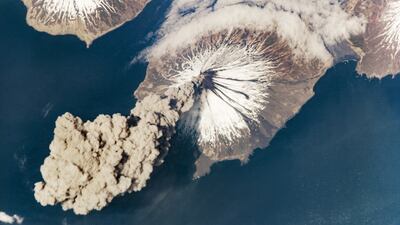
1. An enormous plume of ash rises from the Cleveland Volcano on May 23, 2006. The image was captured from the International Space Station by astronaut Jeff Williams. The ash cloud rose as high as 6,000 metres above sea level. Photo: Nasa Earth Observatory -
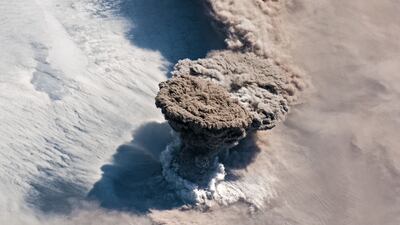
2. The Raikoke Volcano on the Kamchatka Peninsula erupts on June 22, 2019. The last time it exploded was in 1924. Photo: Nasa Earth Observatory -
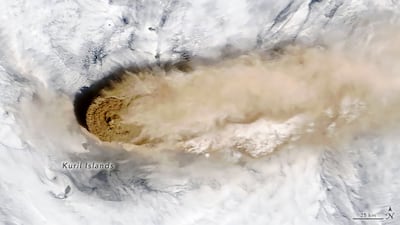
3. Another image of the Raikoke eruption was captured on the same morning by the Suomi NPP satellite. Photo: Nasa Earth Observatory -
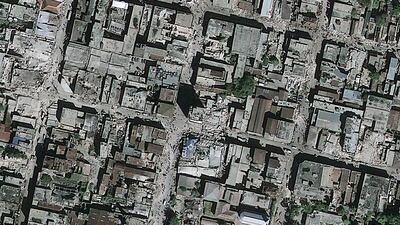
4. One of the deadliest earthquakes struck Haiti in 2010. This GeoEye-1 satellite image shows rubble on the streets of Port-au-Prince on January 13. About 250,000 people were killed in the 7.0 magnitude earthquake. Photo: Nasa Earth Observatory -
5. A huge sandstorm rolls across the Sahara Desert on August 1, 2018. Astronaut Ricky Arnold captured this image from the ISS. Photo: Ricky Arnold Twitter -
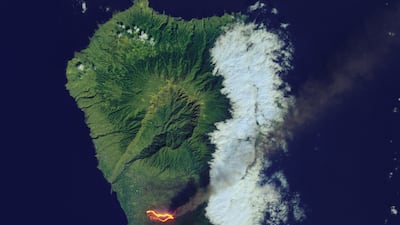
6. Satellite images show an active volcano on the Spanish island of La Palma on September 26, 2021. Photo: Nasa Earth Observatory -

7. The La Palma volcanic eruption has destroyed hundreds of homes. Photo: Nasa Earth Observatory -
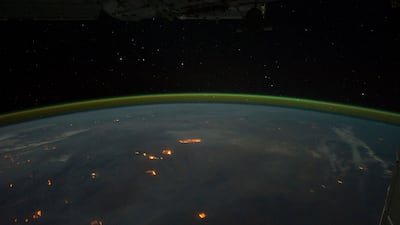
8. Astronauts on the space station captured images of auroras australis, or southern lights, while flying over the Indian Ocean. Light created by the wildfires in Australia can also be seen. Photo: Nasa Earth Observatory -
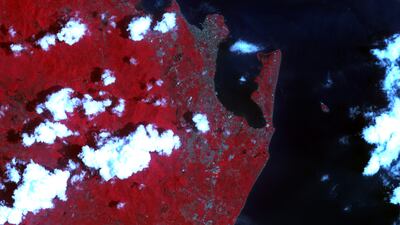
9. This Terra satellite image shows how green (represented in red in this photo) the island of Leyte was before the deadly super typhoon Haiyan hit Philippines in 2013. Photo: Nasa Earth Observatory -
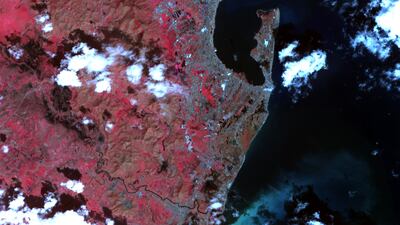
10. Much of the vegetation and properties on the island was destroyed after the typhoon struck with winds of near 315 kilometres per hour. Photo: Nasa Earth Observatory -

11. A view of super typhoon Haiyan from space taken by Nasa’s Aqua satellite. Photo: Nasa Earth Observatory -
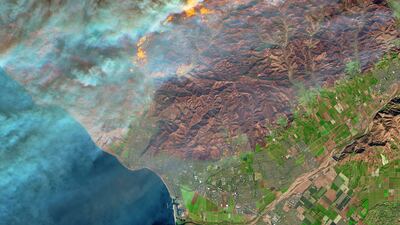
12. The European Space Agency’s Sentinel-2 satellite captured an image of the fires in southern California on December 5, 2017. This photo shows the largest of the blazes in Ventura County, which destroyed more than 65,000 acres. Photo: Nasa Earth Observatory -
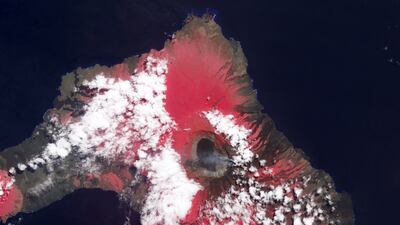
13. The highest volcano in the Galapagos Islands erupted for the first time in 33 years in 2015. An image captured by the Terra satellite shows volcanic ash and gases about 15 km high. Photo: Nasa Earth Observatory -
14. An image of the Hurricane Dorian taken by US astronaut Christina Koch in 2019. The natural disaster struck the Bahamas and killed more than 70 people. Photo: Nasa Earth Observatory -

15. Astronaut Christina Koch shared an image of smoke pluming over the Australian continent. The 2019-2020 bushfires destroyed thousands of homes and killed more than 30 people. Photo: Christina Koch Twitter -
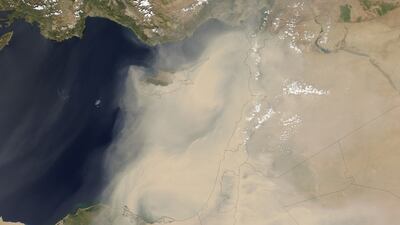
16. Satellite images show a dust storm sweeping over the Middle East in 2015. The storm hit Lebanon, Israel, Jordan, Cyprus and Palestine, causing many cancelled flights and the closure of seaports. Photo: Nasa Earth Observatory -
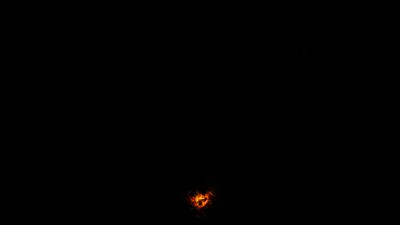
17. A shield volcano erupts on Iceland’s Reykjanes peninsula on March 22, 2021. Photo: Nasa Earth Observatory -
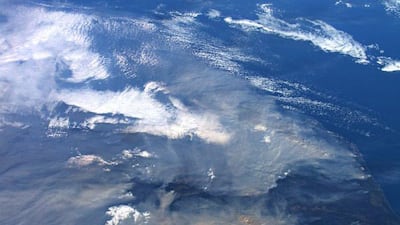
18. Astronaut Luca Parmitano shared an image of the wildfires in Australia on January 13, 2020. Photo: European Space Agency -
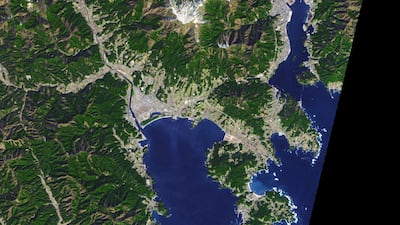
19. A 2007 view of Japan’s Tohoku region before one of the world’s deadliest earthquake destroyed most of the area in 2011. Photo: Nasa Earth Observatory -
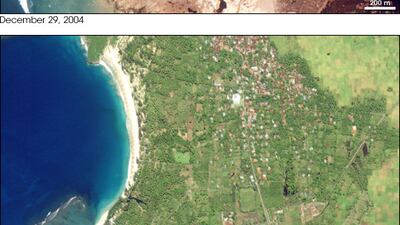
20. The 2004 Indian Ocean earthquake and tsunamis killed nearly 230,000 people. A satellite image shows the Indonesian town of Lhoknga destroyed by the natural disaster on December 26. All properties were destroyed, except for a white mosque that is visible in the image. Photo: Nasa -
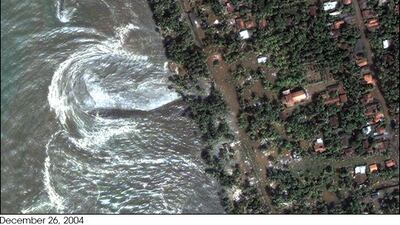
21. The tsunamis, caused by a 9.0 magnitude earthquake, also struck Sri Lanka. Photo: Nasa -
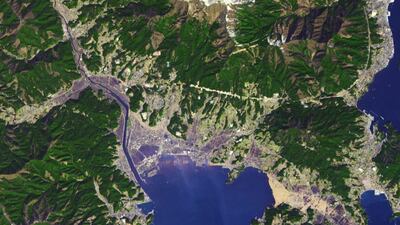
22. A satellite image taken after a 9.1 magnitude earthquake struck the Tohoku region in Japan, with tsunami waves destroying most of the coastal area. About five to 10 metre waves flooded into the town. The photo shows flooding, a destroyed seawall and debris. Photo: Nasa Earth Observatory -
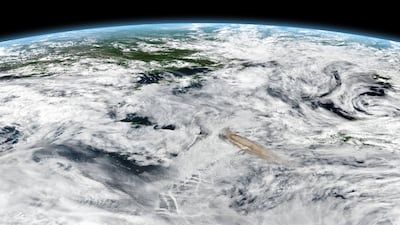
23. The Raikoke Volcano eruption seen from space on June 22, 2019. Photo: Nasa Earth Observatory -
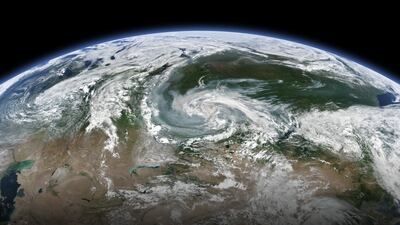
24. A Suomi NPP satellite image shows smoke over Russia, as wildfires burned across 11 regions of the country in July 2019. Photo: Nasa Earth Observatory -
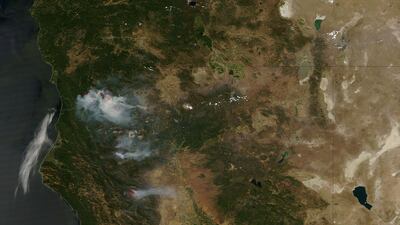
25. Satellite image of forest fires in Northern California captured in August 2008. Photo: Nasa Earth Observatory -
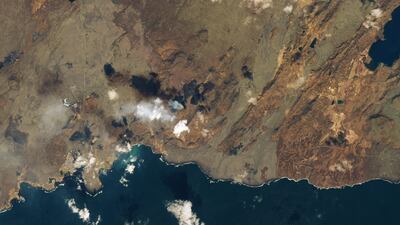
26. The Fagradalsfjall volcano in southwestern Iceland erupted on May 9, 2021. Photo: Nasa Earth Observatory -
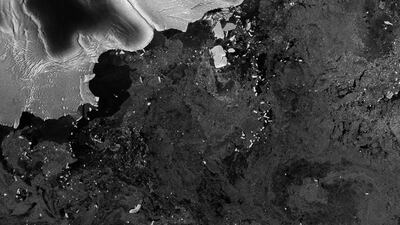
27. The 2011 tsunami in Japan was so intense, it caused calving of large icebergs from the Sulzberger Ice Shelf on the Antarctic coast, as shown in this image captured by European Space Agency’s Envisat satellite. Photo: Nasa Earth Observatory -
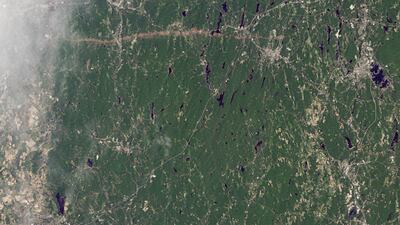
28. Satellite image shows a powerful tornado (brown horizontal line in the middle of image) sweeping across Massachusetts on June 2011. It wreaked havoc for 63 kilometres, killing three people and destroying property. Photo: Nasa Earth Observatory -
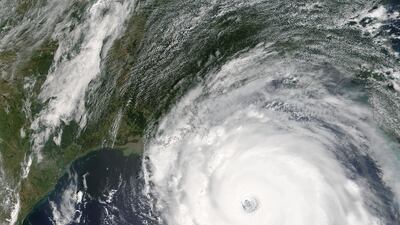
29. A satellite image of the Hurricane Katrina over the US in 2005. It struck the state of Louisiana, killing 1,833 people and destroying thousands of homes. Photo: Nasa Earth Observatory -

30. The Caldor fire reached Lake Tahoe on the California and Nevada border on September 15, 2021, as seen in this Landsat 8 satellite image. The fire had been burning for 10 weeks. Photo: Nasa Earth Observatory



