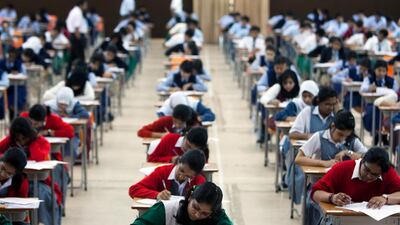
Thousands of parents across the UAE must foot the bill for costly exams despite schoolchildren not being able to sit the tests due to coronavirus.
School operators said they had no choice but to pass on the fees, which can total more than Dh2,000, as normal given exam boards were refusing to waive their charges.
Pupils throughout the country have been taught at home since March when the government was forced to close schools to prevent the spread of Covid-19.
Summer term exams were also cancelled, with pupils instead assessed by their overall performance during the year.
“I find it unfortunate that most UK exam boards have chosen to charge parents full fees for the cancelled GCSE and A-Level exams,” said Brendon Fulton, school principal of the Dubai British School, part of the schools operator Taaleem.
“While I appreciate that there are still costs involved in administering the predicted grades process to allow exam boards to ratify and award final grades to students, this process cannot possibly be as onerous or costly as marking and moderating hundreds upon thousands of exam scripts.
“Parents are very rightly upset with this. Unfortunately, the schools have no say over what the exam boards charge.
“I would have hoped the exam boards would do as we as an organisation did and provide parents with some deserved respite from costs during this period.”
Distance learning has become the new normal for millions of pupils around the world since the outbreak of Covid-19.
Governments had no choice but to take the draconian measure to close schools as part of efforts to reduce infection rates.
In the Emirates, education authorities announced schools would shut in March and instead launched a range of online learning platforms.
Some schools reacted by agreeing to offer discounts on fees, providing much-needed financial assistance to families, some of whom lost jobs as a result of the pandemic.
Repton in Dubai and British School Al Khubairat (Bsak) in Abu Dhabi – two of the country's highest-ranked schools – both cut fees by 15 per cent, for example.
Meanwhile, Taaleem, which operates 13 schools across the country, offered parents a 20 to 25 per cent fee discount for term three.
In the case of cancelled exams, however, exam boards have appeared less keen to alter their fee structure. Some end-of-year tests can cost more than Dh1,000 per pupil.
One parent, who did not want to be named, said he had been forced to pay more than Dh2,500 for his child to sit three exams, which did not take place.
Others said they had assumed some form of fee reduction would be implemented by exam boards, but that they had been left disappointed.
Indian mum Swati Bagai, said she had hoped her 18-year-old son’s Dh2,000 exam fees would be halved.
"The International Baccalaureate exams fees are very high [and] we were hoping that part of the fees would be refunded,” she said.
"No one has to be paid to prepare the question papers so there are savings. A lot of families are facing challenging times, having lost jobs, and even a small saving would help them.”
The International Baccalaureate recently opened its 50th IB World School, the Dubai International Academy in Al Barsha.
There, parents have paid an assessment fee per subject as opposed to the usual charge to sit an exam. Results are due to be released on July 5.
A group spokesman for IB schools said they had no control over the fees charged to parents that are set by IB World Schools, their governing body.

“The IB does not have influence over how IB World Schools set and charge fees for students,” a spokesman said.
“Assessment has been undertaken in line with the IB’s normal procedures and quality assurances.
“Results will be based on the externally marked assessment components and overseen by independent chief examiners.
“Pupils will receive...course results or certificates that reflect their standard of work.
“Therefore, the IB will not be refunding the candidate subject examination fees.”
Parents of children at schools operator Gems Education, which runs 45 schools across the UAE, will also be charged exam fees set by boards.
“As is normal practice, these costs have been passed on to families,” said Jodh Singh Dhesi, deputy chief education officer at the operator.
-

Palestinian women walk next to a graffiti painted by artists amid the ongoing Covid-19 pandemic, in Gaza City. EPA -
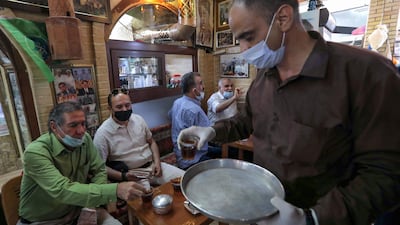
Iraqis gather at a coffee shop in Erbil, the capital of the autonomous Kurdish region of northern Iraq. AFP -
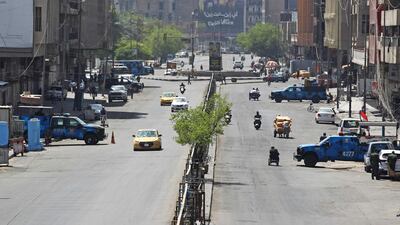
Iraqi security forces are deployed to enforce an extended curfew amid the pandemic, in Baghdad. AFP -
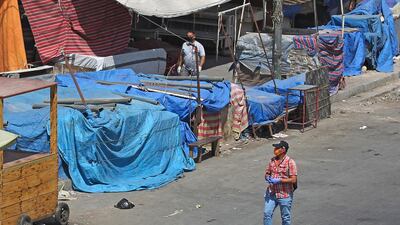
Men walk by covered stalls in the Iraqi capital Baghdad. AFP -
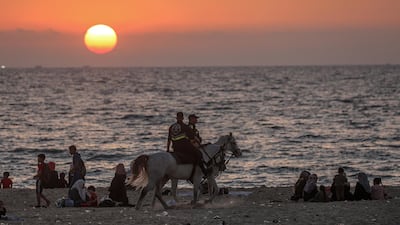
Palestinian families enjoy their time at the beach amid the ongoing Covid-19 pandemic in Gaza City. EPA -
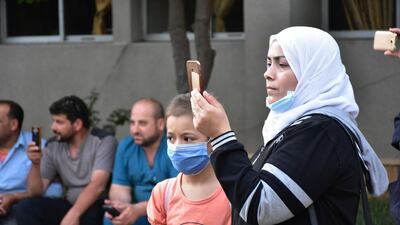
Medical staff and patients listen to Ghada Harb, the leader of the Syrian Ghardenia female choir, and the singers of her group as they perform outside of the Children's Hospital in Damascus, Syria, as part of the official 'The culture at your house' initiative aimed at thanking medics and nurses for their efforts in these times of crisis. EPA -
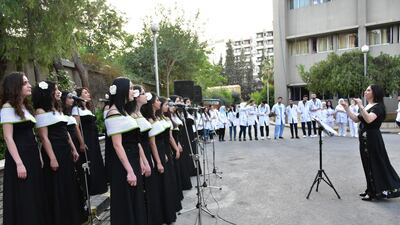
Ghada Harb, the leader of the Syrian Ghardenia female choir, and the singers of her group perform outside of the Children's Hospital in Damascus, Syria. EPA -
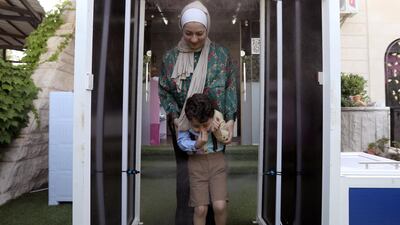
A woman and her child are sprayed with disinfectant as they enter a nursery after the government eased the coronavirus restrictions in Amman, Jordan. Reuters -

A teacher wearing a protective suit interacts with a child at a nursery after the government eased the coronavirus restrictions in Amman, Jordan. Reuters -
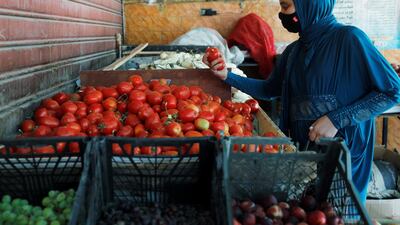
A woman buys vegetables from a cafe transformed into a fruit and vegetable shop in Cairo, Egypt. Reuters -
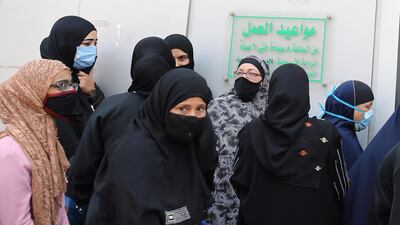
Egyptians wearing protective face masks stand outside a post office in Cairo, Egypt. EPA -

Students wearing face masks sit at a classroom at the Tunis Al-Manar university complex in Tunis, Tunisia, after authorities eased measures put in place to prevent the spread of coronavirus pandemic. EPA -
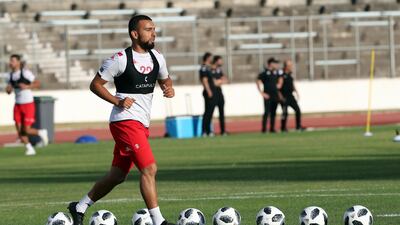
Tunisian player Naim Selliti attends a training session at the Elmanzeh stadium in Tunis, Tunisia. Tunisian national football team resumed training on Monday. EPA -

A Tunisian public health worker disinfects El Menzah Olympic Stadium in Tunis. EPA



