

Parents in Dubai will not have to send their children back into school at the start of the new academic year as education chiefs confirmed a distance learning option will remain in place.
The announcement was made in a statement from the Knowledge and Human Development Authority (KHDA) sent to school principals in the emirate.
Classrooms closed in March to help combat the spread of Covid-19.
But the private school regulator has set out plans for pupils to return to classrooms for the start of the new term on August 30, as long as safety measures are in place.
Some of the guidelines include mandatory use of face masks, thermal screening at entrances, physical distancing and protocols for suspected cases of coronavirus.
-

The first thermal gate has been installed at the school that can measure the temperature of hundreds of children passing through it quickly. Courtesy: Jumeira Baccalaureate School -
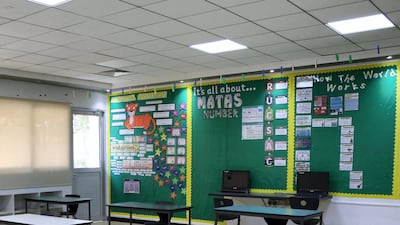
All desks in the classrooms have a distance of two metres. Courtesy: Jumeira Baccalaureate School -
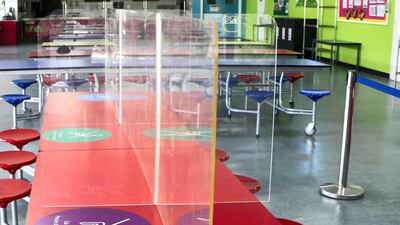
Plastic screens have been installed in the cafetaria to separate pupils. Courtesy: Jumeira Baccalaureate School -
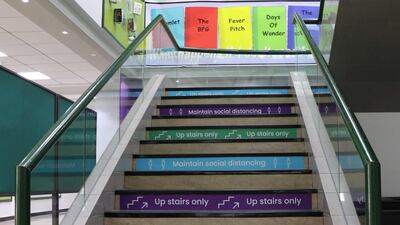
Markings on each step will help pupils remember not to get close to each other. Courtesy: Jumeira Baccalaureate School -
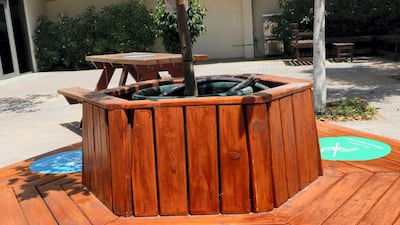
There are marking all around the school to remind pupils to maintain social distancing. Courtesy: Jumeira Baccalaureate School -

Several basketball hoops have been installed for pupils.Courtesy: Jumeira Baccalaureate School -
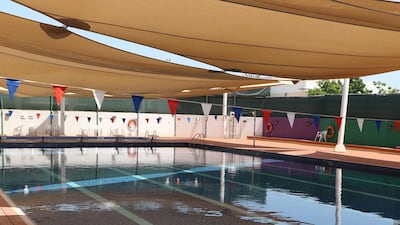
Lane markings will help pupils avoid coming in close contact with each other. Courtesy: Jumeira Baccalaureate School -
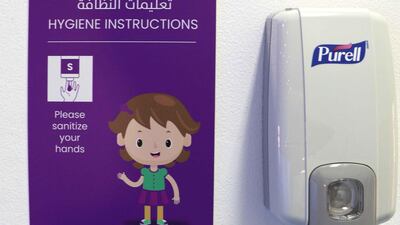
There are hand sanitiser stations at regular intervals so that pupils can clean their hands more often. Courtesy: Jumeira Baccalaureate School -
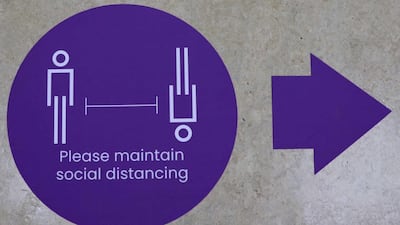
Markings show separate exit and entry points. Courtesy: Jumeira Baccalaureate School -
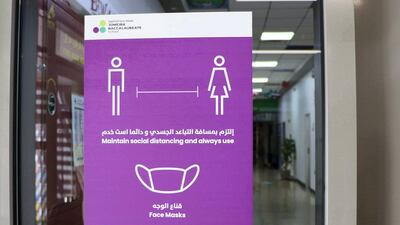
Markings to remind pupils the importance of precautionary measures. Courtesy: Jumeira Baccalaureate School -
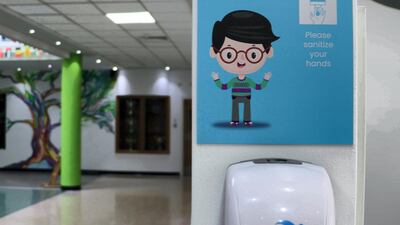
There are hand sanitiser stations at regular intervals so that pupils can clean their hands more often. Courtesy: Jumeira Baccalaureate School -
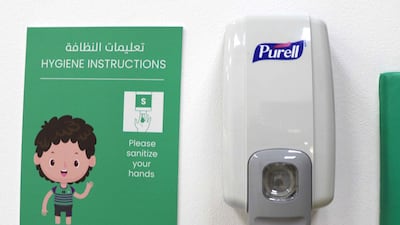
A hand sanitiser station outside a classroom. Courtesy: Jumeira Baccalaureate School -
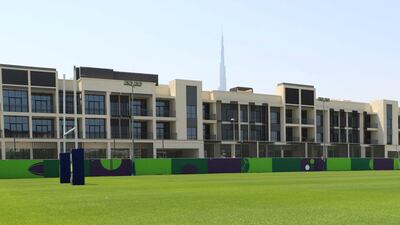
Marking to follow social distancing at the school. Courtesy: Jumeira Baccalaureate School -

Markings to show separate entry and exit points. Courtesy: Jumeira Baccalaureate School -

Floor markings at the school. Courtesy: Jumeira Baccalaureate School


Schools will be allowed to set classroom sizes as long as they are able to keep seats placed 1.5 metres apart.
"While face-to-face learning remains the preferred education model, we understand that different parents have different views, especially in the first phases of reopening,” read the KHDA statement.
“As a temporary measure, schools can and should provide 100 per cent distance learning provision in the new academic year to parents who request it.
“This is intended to help ease parents and children into an eventual return to face-to-face learning.”
The move was welcomed by education groups in Dubai, who had recently submitted plans for how they would handle the reopening of classrooms.
“We understand that some parents prefer to keep their children at home for a little longer, and we will fully support these families with a 100 per cent distance learning programme,” said a representative for Gems Education.
“We will ensure their curriculum is in line with that of the children in school.”
The representative added that Gems schools would also be offering a 100 per cent onsite education model.
“Whatever option families choose, both will have the same learning commitment every day,” said the representative.
“We will ensure that every lesson is supporting the progress of our children, whether delivered face-to-face in the classroom or via our remote learning strategy.”
A spokesman for Taaleem Education also said its schools would provide both onsite and distance learning options to families.
“Our schools will offer distance learning to children who are unwell, unable to come into school or for whom their parents would prefer them to stay at home,” said the spokesman.
“This option may not be in same format as the one available in the previous term but will ensure continuity both in learning opportunities and with the school community, albeit at a distance.”

