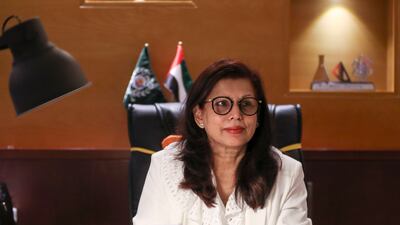
The cover of a Ministry of Education guidebook about verbal bullying that is used by teachers of public and private schools across UAE to teach pupils about the topic and help them deal with incidents. Photo: Ministry of Education
The cover of a Ministry of Education guidebook about verbal bullying that is used by teachers of public and private schools across UAE to teach pupils about the topic and help them deal with incidents

Pupils told verbal abuse is unacceptable in new anti-bullying campaign


Salam Al Amir
  • English
  • Arabic

Teachers will soon be including anti-bullying messages in their lessons as the Ministry of Education has called on educators to stamp out verbal abuse among children.

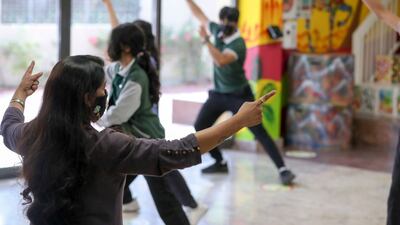
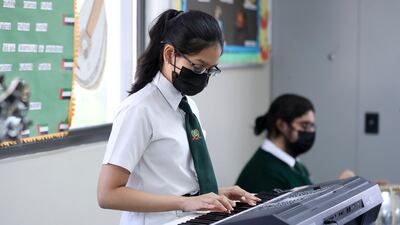
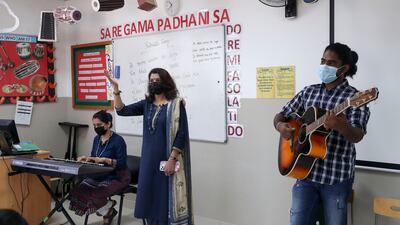
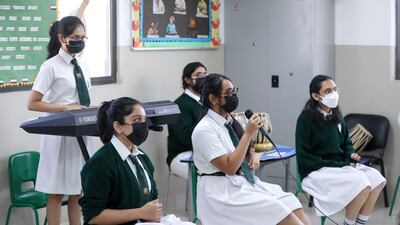
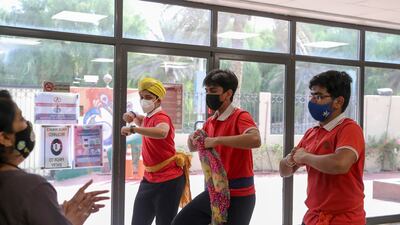
Officials instructed schools to select teachers across five subjects – maths, health sciences, Arabic language, moral education and music – who would then incorporate the message into their lessons.

The aim is for children to learn that verbal bullying is unacceptable, through examples provided by the teacher of each subject.

For example, a teacher of Arabic might ask pupils to write a story about a child being bullied, or a health sciences teacher could ask children to cut a heart out of red paper, crumple it up, and then see whether it could ever return to being perfectly flat.

I’ve seen children bully others about their clothes, appearance, food, accents and even living standards
Walaa Musatafa,
maths teacher

The multi-dimensional approach will ensure children understand not only that verbally bullying is wrong, but also why it is wrong.

The decision comes after the Ministry of Education prepared a guidebook on the topic and distributed it to schools across the UAE. It aims to promote positive behaviour among children and provide teachers with examples for activities they can use to help schoolchildren understand verbal bullying and how it affects others emotionally.

It also suggests scenarios that teach skills to help people deal with verbal bullying incidents whether as victims, bullies, bystanders or guardians.

“Issuing the guide is a very important move and it's imperative we follow it because in my 11-year career as a teacher I have witnessed so much verbal bullying,” said Walaa Musatafa, a maths teacher at a private school in Ras Al Khaimah.

She believes the behaviour is widespread and that stopping it involves commitment from teachers, school administrations, parents and pupils themselves.

Jumana Yousif, 35, from Jordan, said: “Although my daughter dealt with it properly by telling me all about it, other children may not know what to do and suffer in silence.

“Launching this scheme is really amazing and I hope parents will take part because children mirror their parents’ behaviour.”

Ms Yousif said her daughter, in grade four, was mocked and bullied by classmates at a private school in Sharjah because she is hyperactive and fidgets a lot.

“She was crying and deeply saddened and refused to go to school,” said the mother-of-two who raised her concerns to the school's social expert.

“The school promised to deal with the incident and they actually did, and the social expert spoke to my daughter and comforted her.”

“Her classmates were also spoken to and informed what they did was wrong and unacceptable."

The guide highlights how teachers are encouraged to discuss their pupils’ feelings and reactions to each activity and highlight how nicknames and harsh statements, whether made face to face or virtually, can be hurtful.

It says children must be taught to respect difference of abilities and to understand how verbal abuse can lead to emotional distress, depression, eating and sleeping disorders, as well as low self-esteem.

“It should be mandatory that schools implement this guide to stop verbal bullying and prevent it from happening in the future,” said Wafaa Eid, who has taught maths at Ebdaa Model School in Dubai for 12 years.

“I recall many incidents where pupils bullied their classmates and silenced them when they attempted to answer a question in class, or mocked their answers,” she said.

Ms Wafaa, who has been teaching in schools in Sharjah and Dubai for 26 years, said she was aware of former pupils who were bullied in class still suffering from the emotional effect as adults.

“At my school, although we barely see incidents of any sort of bullying as a result of our regular programmes for years now, we will implement the guidebook as should all other schools.”


The President's Cake

Director: Hasan Hadi

Starring: Baneen Ahmad Nayyef, Waheed Thabet Khreibat, Sajad Mohamad Qasem 

Rating: 4/5

A%20QUIET%20PLACE
%3Cp%3E%3Cstrong%3EStarring%3A%3C%2Fstrong%3E%20Lupita%20Nyong'o%2C%20Joseph%20Quinn%2C%20Djimon%20Hounsou%3C%2Fp%3E%0A%3Cp%3E%3Cstrong%3EDirector%3A%20%3C%2Fstrong%3EMichael%20Sarnoski%3C%2Fp%3E%0A%3Cp%3E%3Cstrong%3ERating%3A%3C%2Fstrong%3E%204%2F5%3C%2Fp%3E%0A
Gothia Cup 2025

4,872 matches 

1,942 teams

116 pitches

76 nations

26 UAE teams

15 Lebanese teams

2 Kuwaiti teams

The%20specs
%3Cp%3E%3Cstrong%3EEngine%3A%3C%2Fstrong%3E%20Dual%20synchronous%20electric%20motors%0D%3Cbr%3E%3Cstrong%3EPower%3A%20%3C%2Fstrong%3E660hp%0D%3Cbr%3E%3Cstrong%3ETorque%3A%20%3C%2Fstrong%3E1%2C100Nm%0D%3Cbr%3E%3Cstrong%3ETransmission%3A%20%3C%2Fstrong%3ESingle-speed%20automatic%0D%3Cbr%3E%3Cstrong%3ETouring%20range%3A%20%3C%2Fstrong%3E488km-560km%0D%3Cbr%3E%3Cstrong%3EPrice%3A%20%3C%2Fstrong%3EFrom%20Dh850%2C000%20(estimate)%0D%3Cbr%3E%3Cstrong%3EOn%20sale%3A%20%3C%2Fstrong%3EOctober%3C%2Fp%3E%0A
The burning issue

The internal combustion engine is facing a watershed moment – major manufacturer Volvo is to stop producing petroleum-powered vehicles by 2021 and countries in Europe, including the UK, have vowed to ban their sale before 2040. The National takes a look at the story of one of the most successful technologies of the last 100 years and how it has impacted life in the UAE. 

Read part four: an affection for classic cars lives on

Read part three: the age of the electric vehicle begins

Read part one: how cars came to the UAE


The burning issue

The internal combustion engine is facing a watershed moment – major manufacturer Volvo is to stop producing petroleum-powered vehicles by 2021 and countries in Europe, including the UK, have vowed to ban their sale before 2040. The National takes a look at the story of one of the most successful technologies of the last 100 years and how it has impacted life in the UAE. 

Read part four: an affection for classic cars lives on

Read part three: the age of the electric vehicle begins

Read part two: how climate change drove the race for an alternative 

Mobile phone packages comparison
Terror attacks in Paris, November 13, 2015

- At 9.16pm, three suicide attackers killed one person outside the Atade de France during a foootball match between France and Germany- At 9.25pm, three attackers opened fire on restaurants and cafes over 20 minutes, killing 39 people- Shortly after 9.40pm, three other attackers launched a three-hour raid on the Bataclan, in which 1,500 people had gathered to watch a rock concert. In total, 90 people were killed- Salah Abdeslam, the only survivor of the terrorists, did not directly participate in the attacks, thought to be due to a technical glitch in his suicide vest- He fled to Belgium and was involved in attacks on Brussels in March 2016. He is serving a life sentence in France

RESULT

Huddersfield Town 2 Manchester United 1
Huddersfield: Mooy (28'), Depoitre (33')
Manchester United: Rashford (78')


Man of the Match: Aaron Mooy (Huddersfield Town)

Spider-Man%202
%3Cp%3E%3Cstrong%3EDeveloper%3A%3C%2Fstrong%3E%20Insomniac%20Games%0D%3Cbr%3E%3Cstrong%3EPublisher%3A%3C%2Fstrong%3E%20%20Sony%20Interactive%20Entertainment%0D%3Cbr%3E%3Cstrong%3EConsole%3A%20%3C%2Fstrong%3EPlayStation%205%0D%3Cbr%3E%3Cstrong%3ERating%3A%3C%2Fstrong%3E%205%2F5%3C%2Fp%3E%0A

Mercer, the investment consulting arm of US services company Marsh & McLennan, expects its wealth division to at least double its assets under management (AUM) in the Middle East as wealth in the region continues to grow despite economic headwinds, a company official said.

Mercer Wealth, which globally has $160 billion in AUM, plans to boost its AUM in the region to $2-$3bn in the next 2-3 years from the present $1bn, said Yasir AbuShaban, a Dubai-based principal with Mercer Wealth.

Within the next two to three years, we are looking at reaching $2 to $3 billion as a conservative estimate and we do see an opportunity to do so,” said Mr AbuShaban.

Mercer does not directly make investments, but allocates clients’ money they have discretion to, to professional asset managers. They also provide advice to clients.

“We have buying power. We can negotiate on their (client’s) behalf with asset managers to provide them lower fees than they otherwise would have to get on their own,” he added.

Mercer Wealth’s clients include sovereign wealth funds, family offices, and insurance companies among others.

From its office in Dubai, Mercer also looks after Africa, India and Turkey, where they also see opportunity for growth.

Wealth creation in Middle East and Africa (MEA) grew 8.5 per cent to $8.1 trillion last year from $7.5tn in 2015, higher than last year’s global average of 6 per cent and the second-highest growth in a region after Asia-Pacific which grew 9.9 per cent, according to consultancy Boston Consulting Group (BCG). In the region, where wealth grew just 1.9 per cent in 2015 compared with 2014, a pickup in oil prices has helped in wealth generation.

BCG is forecasting MEA wealth will rise to $12tn by 2021, growing at an annual average of 8 per cent.

Drivers of wealth generation in the region will be split evenly between new wealth creation and growth of performance of existing assets, according to BCG.

Another general trend in the region is clients’ looking for a comprehensive approach to investing, according to Mr AbuShaban.

“Institutional investors or some of the families are seeing a slowdown in the available capital they have to invest and in that sense they are looking at optimizing the way they manage their portfolios and making sure they are not investing haphazardly and different parts of their investment are working together,” said Mr AbuShaban.

Some clients also have a higher appetite for risk, given the low interest-rate environment that does not provide enough yield for some institutional investors. These clients are keen to invest in illiquid assets, such as private equity and infrastructure.

“What we have seen is a desire for higher returns in what has been a low-return environment specifically in various fixed income or bonds,” he said.

“In this environment, we have seen a de facto increase in the risk that clients are taking in things like illiquid investments, private equity investments, infrastructure and private debt, those kind of investments were higher illiquidity results in incrementally higher returns.”

The Abu Dhabi Investment Authority, one of the largest sovereign wealth funds, said in its 2016 report that has gradually increased its exposure in direct private equity and private credit transactions, mainly in Asian markets and especially in China and India. The authority’s private equity department focused on structured equities owing to “their defensive characteristics.”

Indian construction workers stranded in Ajman with unpaid dues
Benefits of first-time home buyers' scheme
  • Priority access to new homes from participating developers
  • Discounts on sales price of off-plan units
  • Flexible payment plans from developers
  • Mortgages with better interest rates, faster approval times and reduced fees
  • DLD registration fee can be paid through banks or credit cards at zero interest rates
How to wear a kandura

Dos

  • Wear the right fabric for the right season and occasion 
  • Always ask for the dress code if you don’t know
  • Wear a white kandura, white ghutra / shemagh (headwear) and black shoes for work 
  • Wear 100 per cent cotton under the kandura as most fabrics are polyester

Don’ts 

  • Wear hamdania for work, always wear a ghutra and agal 
  • Buy a kandura only based on how it feels; ask questions about the fabric and understand what you are buying
Updated: January 16, 2022, 9:32 AM