
A pioneering breast cancer surgeon, a publisher of books for the blind and a law student are just some of the newly elected members who will represent Emiratis in the Federal National Council.
They are among the most diverse representatives in the council's history and while some were caught up in celebrations after Saturday's election, one new member was busy in the operating theatre.
Dr Moaza Al Amri, director of the breast cancer care centre at Tawam Hospital, was the second female member to be elected in Abu Dhabi, garnering 370 votes.
She was performing an operation when the National Election Committee announced her name late on Saturday, proving her insistence that nothing will get between her and her hospital work.
"I will not leave my current job. I'll always be Dr Moaza, the breast surgeon. My patients need me and I cannot leave them," she told The National.
Unconcerned about juggling both jobs, Dr Al Amri said her medical training has trained her to multitask.
“I’ve managed greater challenges. I can do both.”
While some candidates spent up to Dh2 million on advertising in an attempt to attract voters, Dr Al Amri said she barely campaigned.
“It was my patients and all the people who love me that helped me win. I am overwhelmed and overjoyed by the news,” she said.
In Dubai, Mariam bin Thania waited to hear the results of the election at a polling station. Surrounded by friends and family when she heard her name called, Ms Bin Thania raised a banner reading, "To make you a proud father".
"Since I was born and until the day he passed away, he has been my supporter, my strength and my happiness," she said of her father, who died in March.
“He was always proud of me and got excited if I only brought home a participation certificate.
“Running for the election is a challenge I took to make him proud of me.
“Knowing he would not witness this moment, I made this poster to be captured with me during the announcement to tell him that he is here with me and I still feel his presence in every step I take,” said the single mother of two.
-
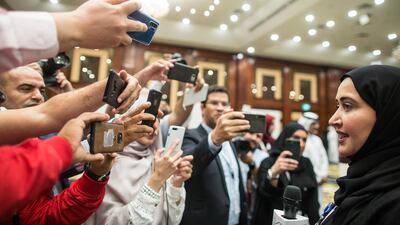
Candidate Maryam Bin Thaniah (R) celebrates after winning one of the seats for the Emirate of Dubai during the fourth session of Federal National Council elections at a polling station in Dubai, UAE. EPA -

Candidate Maryam Bin Thaniah celebrates after winning one of the seats for the Emirate of Dubai during the fourth session of Federal National Council elections at a polling station in Dubai, UAE. EPA -
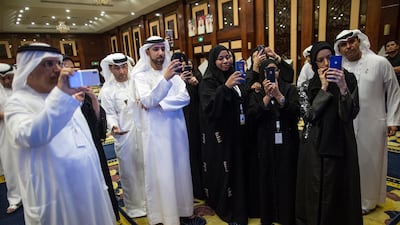
Candidates wait for the announcement of the fourth session of Federal National Council elections at a polling station in Dubai, UAE. EPA -
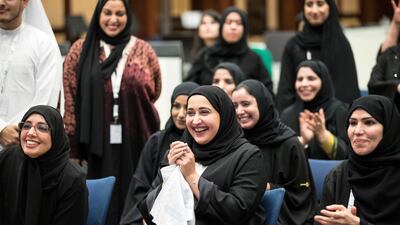
Candidate Maryam Bin Thaniah (C) celebrates after winning one of the seats for the Emirate of Dubai during the fourth session of Federal National Council elections at a polling station in Dubai, UAE. EPA -

Candidates wait for the announcement of the fourth session of Federal National Council elections at a polling station in Dubai, UAE. EPA -
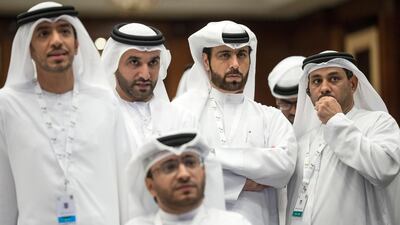
Candidates wait for the announcement of the fourth session of Federal National Council elections at a polling station in Dubai, UAE. EPA -

'I get very upset when I go to places and see people with special needs sitting doing nothing,' she said as the cast her vote for a candidate running in Fujairah, who she hopes will fight for better job opportunities for those with disabilities. Victor Besa / The National -
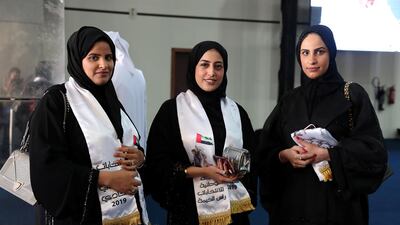
Jawaher Kardali, Asma Al Baloushi and Muna Kardali cast their vote at RAK Exhibition Centre. Pawan Singh / The National -

Federal National Council speaker Amal Al Qubaisi votes in Abu Dhabi on Saturday. Victor Besa / The National -

Friends greet each other before entering the hall to cast their votes. Victor Besa / The National -
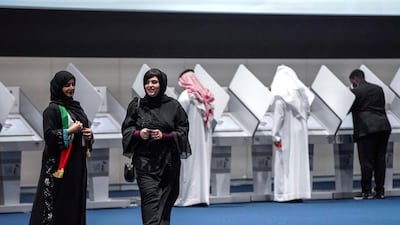
A voter smiles after casting her vote at the Abu Dhabi National Exhibition Centre on Saturday. Victor Besa / The National -
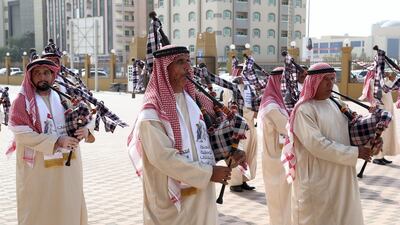
Ras Al Khaimah police band performs as voting opens at RAK Exhibition Centre. Pawan Singh / The National -
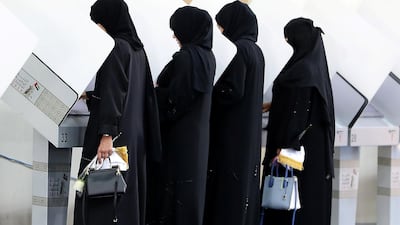
Voters at the polling booths at RAK Exhibition Centre. Pawan Singh / The National -
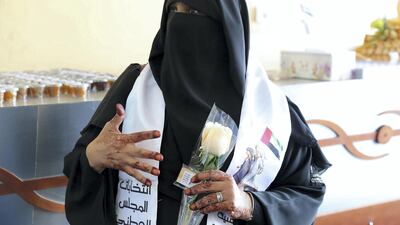
Aiysha Al Shahhi holds a flower given to her by election officials at RAK Exhibition Centre. Pawan Singh / The National -
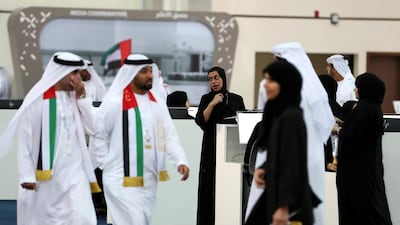
Saturday is the main day of voting but many took part in early voting between Tuesday and Thursday. Pawan Singh / The National -
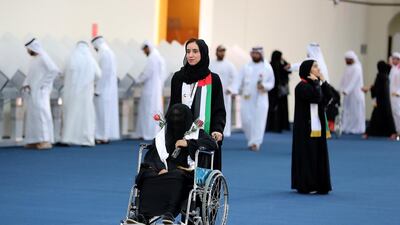
A voter in a wheelchair is helped to the polling booths. Pawan Singh / The National -
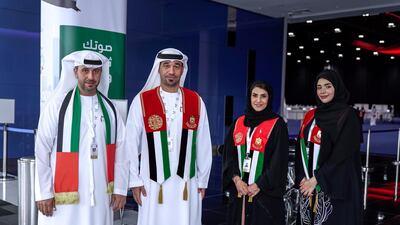
FNC volunteers at Abu Dhabi National Exhibition Centre on Saturday. Victor Besa / The National -
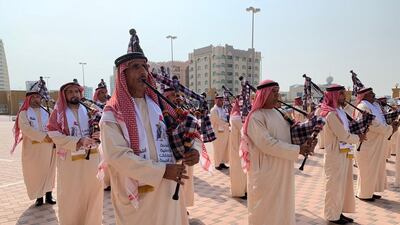
RAK Police Band Performing during the FNC Election Voting held at RAK Exhibition Centre in RAK. Pawan Singh -
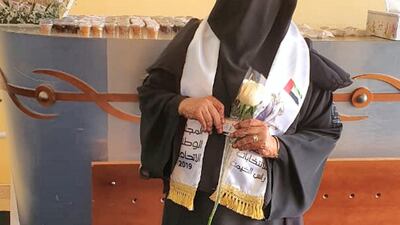
Ayesha Al Shahhi, 48, was offered a free scarf and a flower upon arrival. Pawan Singh -
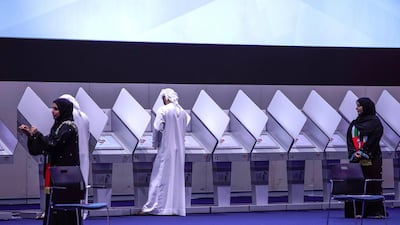
Voting started across the UAE, including Abu Dhabi's National Exhibition Centre, at 8am. Victor Besa / The National -
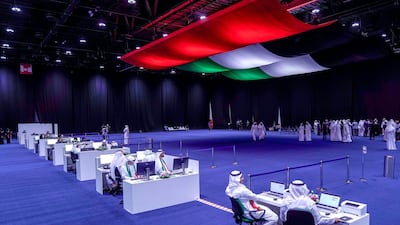
FNC organisers stand ready to assist voters at the floor. Victor Besa / The National -
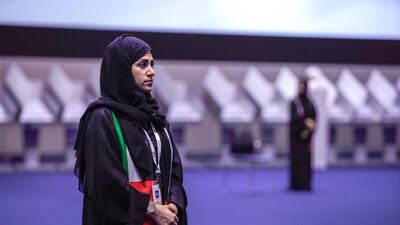
FNC organisers stand ready to assist voters at the floor. Victor Besa / The National -
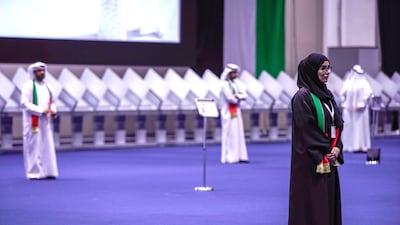
FNC organisers stand ready to assist voters at the floor. Victor Besa / The National -
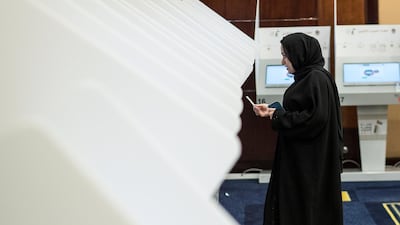
An Emirati woman votes by electronic voting system at a polling centre in Dubai. EPA -
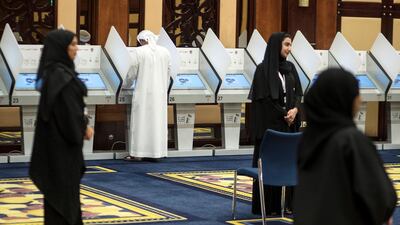
An Emirati man votes by electronic voting system in Dubai. EPA -

A polling station during fourth session of Federal National Council elections in Dubai. EPA -

An Emirati voter in front of a polling station in Dubai. EPA


The youngest member to be elected on Saturday was Hind Al Olayli in Ajman. At 28, she took the honour from Saeed Al Remeithi, who was 31 when he joined the council.
Ms Al Olayli earned 114 votes, putting her behind Ahmad Al Suwaidi, the emirate’s second candidate. She hopes she will be able to affect real change in her new role.
"I don't like slogans or to be categorised. I will not only call for Emiratisation, more opportunities for people with disabilities and distance learning; my role is to look into every national issue and leave a mark at the council. We are ambassadors from the country for the people," said the PhD law student.
She said it was the power of her small community that led to her victory.
"We are a small emirate and I won through word of mouth and the people's trust in me. I didn't have a massive campaign or hold lectures. Ajman is a small town and we are very close-knit so one person would tell the other and that is how I got the votes," she said.
In Abu Dhabi, the emirate with the largest number voters, Suhail Al Affari and Naema Al Mansouri topped the polls.
Mr Al Aferi, 57, received 2,624 votes. The retired colonel and chief executive of Aldar schools ran for elections after being encouraged by friends and family.
"After I was approved, I found support from the whole society, from Al Ain to Al Silaa.
"I am a man with connections and have always been co-operative with people.
“My private majlis has always been open for whoever visits and I'm always available on the phone."
On Sunday, he said he had been fielding calls all day.
Naema Al Mansouri, the fourth elected member in Abu Dhabi, earned 444 votes. Director of the Blind Care Office at Zayed Higher Organization for Humanitarian Care, Ms Al Mansouri is known as the “Mother of the Blind”.
She dedicated the past 27 years to helping people with disabilities and founded a printing press to publish text in Braille.

Arguably, the biggest winner on Saturday was Hamad Al Rahoomi, 58, who topped the poll in Dubai for the third time in a row — a first in the history of FNC elections.
Touched by the amount of trust people continue to have in him since his first victory in the 2011, the Mr Al Rahoomi withdrew from all his business ventures this year to dedicate himself entirely to the council.
“I have never been absent from a session as I consider my FNC work my top priority,” said the father of five and grandfather of four.
"After the pressure I went through last term and trying to juggle my many posts, I have decided to free myself completely for my role at the council.
"I have lost financially but I have gained something that means the world to me: everybody in the UAE is hailing my work."
He said his priority was to maintain the peoples' trust in him.
Mr Al Rahoomi was active on social media and frequented majlises throughout the campaigning period to reach voters. He would speak to his 6,771 followers every day through Instagram and maintained a strong presence on Twitter.
“I used to post the questions I will be raising at the council and receive people’s comments on them.”
He intends to remain active online when the new term begins.
“I will go live after each session to update the people on the proceedings on the issues they have raised.”
Though Mr Al Rahoomi earned the most votes in Dubai, the emirate had the lowest voter turnout of the country.
At just 21 per cent, just 12,891 of the 60,772 eligible voters cast their ballot in Dubai.
In total, 117,592 Emiratis voted in this year's election – 34.81 per cent of the 337,738 eligible voters.
This was slightly down from 35.29 per cent in 2015 despite the turnout in numbers on Saturday was much higher than four years ago, when 224,279 voters were eligible.
Mr Al Rahoomi said the reasons for the low turnout in his emirate must be looked at.
"The low turnout upset me … I am not happy about this," he said.
"We need to study the reasons why the number of voters dropped to that extent. The [election] commission needs to measure the factors that caused this drop. We need to figure out why there was such a low turnout from Dubai."
Umm Al Quwain had the highest voter turnout in percentage terms, with 57 per cent of the 6,653 eligible Emiratis casting their votes. However, it was even higher in 2015 when 67 per cent voted.
“The population is small here compared to the rest of the emirates and we have strong ties between each other," said Anoud Al Kendi, 31, a social worker who was able to vote for the first time this year.
"Neighbours, co-workers and family members encouraged each other to go and vote on the early days and the main election day. In our family, it is like a race to see who would vote first."

