• No.10, MUSCAT, OMAN. Bikers drive down a street in the Omani capital Muscat, as part of the 50th National Day celebrations. AFP
    No.10, MUSCAT, OMAN. Bikers drive down a street in the Omani capital Muscat, as part of the 50th National Day celebrations. AFP
  • No.9, CLUJ-NAPOCA, ROMANIA. Sunrise over Cluj-Napoca in Romania. Cluj-Napoca has a very low rate of violent crime. Getty Images
    No.9, CLUJ-NAPOCA, ROMANIA. Sunrise over Cluj-Napoca in Romania. Cluj-Napoca has a very low rate of violent crime. Getty Images
  • No. 8, MUNICH, GERMANY. One of Europe's wealthiest and safest cities, it benefits from low unemployment and high economic opportunity. Getty
    No. 8, MUNICH, GERMANY. One of Europe's wealthiest and safest cities, it benefits from low unemployment and high economic opportunity. Getty
  • No. 7, DUBAI, UAE. Dubai is one of the safest large cities in the world. Personal safety is high, with assaults and petty crime extremely low in comparison to other cities. Reem Mohammed / The National
    No. 7, DUBAI, UAE. Dubai is one of the safest large cities in the world. Personal safety is high, with assaults and petty crime extremely low in comparison to other cities. Reem Mohammed / The National
  • No. 6, SHARJAH, UAE. The sun sets over Khalid Lake, with Sharjah city visible. The city has become a major cultural draw for tourists, boasting libraries, architecture and popular visitor attractions. Reem Mohammed / The National
    No. 6, SHARJAH, UAE. The sun sets over Khalid Lake, with Sharjah city visible. The city has become a major cultural draw for tourists, boasting libraries, architecture and popular visitor attractions. Reem Mohammed / The National
  • No. 5, ZURICH, SWITZERLAND. The snow-covered Grossmuenster church. The capital of German-speaking Switzerland is a major financial hub - and one of the world's most expensive cities. EPA
    No. 5, ZURICH, SWITZERLAND. The snow-covered Grossmuenster church. The capital of German-speaking Switzerland is a major financial hub - and one of the world's most expensive cities. EPA
  • No. 4, MONTREAL, CANADA. People enjoy the New Moon sound-and-light installation at the Quartier des Spectacles. The capital of French-speaking Quebec is consistently one of the world's most livable cities. AFP
    No. 4, MONTREAL, CANADA. People enjoy the New Moon sound-and-light installation at the Quartier des Spectacles. The capital of French-speaking Quebec is consistently one of the world's most livable cities. AFP
  • No.3, TAIPEI, TAIWAN. This high-tech city thrives, even as its culture and tradition is protected and celebrated. High personal safety and high employment make the city and the island one of the safest places you could ever visit. EPA
    No.3, TAIPEI, TAIWAN. This high-tech city thrives, even as its culture and tradition is protected and celebrated. High personal safety and high employment make the city and the island one of the safest places you could ever visit. EPA
  • No.2, DOHA, QATAR. As with many of the Gulf metropolises, petty or violent crime are extremely rare. EPA
    No.2, DOHA, QATAR. As with many of the Gulf metropolises, petty or violent crime are extremely rare. EPA
  • No.1, ABU DHABI, UAE. A chilly January morning on Abu Dhabi's Corniche. Ranked the world's safest city for a fifth year, violent or petty crime is virtually unheard of in the Emirati capital, and it scored highest for high personal safety and high employment. Victor Besa / The National
    No.1, ABU DHABI, UAE. A chilly January morning on Abu Dhabi's Corniche. Ranked the world's safest city for a fifth year, violent or petty crime is virtually unheard of in the Emirati capital, and it scored highest for high personal safety and high employment. Victor Besa / The National

Abu Dhabi named world's safest city in 2021 safety index


Georgia Tolley
  • English
  • Arabic

The UAE’s three biggest cities have topped a safety index of more than 250 urban areas.

Abu Dhabi took pole position, with Sharjah coming sixth and Dubai, seventh.

Doha and Muscat also made the top 10, along with Taipei, Quebec City, Zurich, Munich and Cluj-Napoca in Romania.

The survey was carried out as part of a quality of life index by the global data website Numbeo.

The crowdsourced site uses several statistics to gauge which city's inhabitants have the best quality of life.

This year’s overall winner was Adelaide in Australia.

Along with safety, the poll also takes into account the purchasing power of the city’s inhabitants, the levels of pollution, house price-to-income ratio and cost of living.

The quality of health care, the time it takes to commute to work, and the climate also feature in the formula.

Cities require moderate temperatures and low humidity to be considered in the top ranks of pleasant places to live.

Abu Dhabi regularly tops the list of safest cities in the world; although it briefly slipped to third six months ago, after topping the list since 2016.

Safety is calculated on the results of surveys completed by the public on the Numbeo website, and also takes into account the level of crime in the city.

Abu Dhabi has a safety index of 88.46 out of 100, meaning its residents feel very secure indeed.

Sharjah’s ranking is 83.59 and Dubai’s is 83.44.

Here are the world’s top 10 safest cities for 2021:

1. Abu Dhabi, UAE

2. Doha, Qatar

3. Taipei, Taiwan

4. Montreal, Canada

5. Zurich, Switzerland

6. Sharjah, UAE

7. Dubai, UAE

8. Munich, Germany

9. Cluj-Napoca, Romania

10. Muscat, Oman

Where are the world's most dangerous cities in 2021?

  • No. 247, RIO DE JANEIRO, BRAZIL. Boys fly kites in the Cantagalo favela in Rio de Janeiro, Brazil. 15 million people live in the favelas, which are lawless areas of the city governed by rival gangs, who frequently engage in shootouts with the police. Mario Tama / Getty Images
    No. 247, RIO DE JANEIRO, BRAZIL. Boys fly kites in the Cantagalo favela in Rio de Janeiro, Brazil. 15 million people live in the favelas, which are lawless areas of the city governed by rival gangs, who frequently engage in shootouts with the police. Mario Tama / Getty Images
  • No. 248, JOHANNESBURG, SOUTH AFRICA. The city skyline rises beyond Ellis Park Stadium, one of the venues for the 2010 Fifa World Cup. Johannesburg saw a steep rise in both carjackings and truck hijackings in 2020. David Rogers / Getty Images
    No. 248, JOHANNESBURG, SOUTH AFRICA. The city skyline rises beyond Ellis Park Stadium, one of the venues for the 2010 Fifa World Cup. Johannesburg saw a steep rise in both carjackings and truck hijackings in 2020. David Rogers / Getty Images
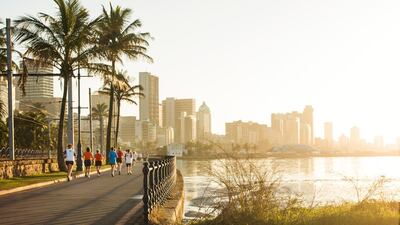
  • No. 249, DURBAN, SOUTH AFRICA. Durban has seen a marked rise in serious crimes in 2020, with its attempted murder rate increasing by 9.6 per cent. Getty Images
    No. 249, DURBAN, SOUTH AFRICA. Durban has seen a marked rise in serious crimes in 2020, with its attempted murder rate increasing by 9.6 per cent. Getty Images
  • No. 250, PRETORIA, SOUTH AFRICA. Pretoria recorded an increase in carjackings, common robbery, shoplifting, home invasions and murders in the second half of 2020. Getty Images
    No. 250, PRETORIA, SOUTH AFRICA. Pretoria recorded an increase in carjackings, common robbery, shoplifting, home invasions and murders in the second half of 2020. Getty Images
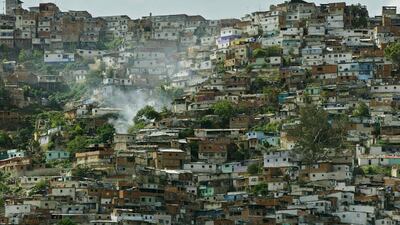
  • No. 251, CARACAS, VENEZUELA. Hillside slums in Caracas. Once the wealthiest country in South America, Venezuela has faced political turmoil, hyper-inflation and allegations of political mismanagement of the economy. Murder and kidnappings have risen sharply in recent years and it is regarded as particularly dangerous for foreign travellers and investors. Kimberly White / Getty Images
    No. 251, CARACAS, VENEZUELA. Hillside slums in Caracas. Once the wealthiest country in South America, Venezuela has faced political turmoil, hyper-inflation and allegations of political mismanagement of the economy. Murder and kidnappings have risen sharply in recent years and it is regarded as particularly dangerous for foreign travellers and investors. Kimberly White / Getty Images

Caracas in Venezuela, which comes bottom of the list has an index of 15.32, meaning its residents regularly fear for their lives.

Crime in the country has soared, ever since the oil-rich country’s economy collapsed over a decade ago.

Pretoria and Durban in South Africa also rank badly, along with the Brazilian cities Rio de Janeiro, Recife, Porto Alegre and Sao Paulo, which are all in the last 10.

Baltimore is considered the most unsafe city in the United States, closely preceded by Detroit. Both cities have high unemployment rates, and large communities of people living below the poverty line.

Gang violence and drug use are also problems. More than three hundred people were murdered in Baltimore in 2020, for the sixth year in a row.

The world's 5 most dangerous cities:

  1. Caracas, Venezuela
  2. Pretoria, South Africa
  3. Durban, South Africa
  4. Johannesburg, South Africa
  5. Rio de Janeiro, Brazil
Scoreline

Bournemouth 2

Wilson 70', Ibe 74'

Arsenal 1

Bellerin 52'

Winners

Ballon d’Or (Men’s)
Ousmane Dembélé (Paris Saint-Germain / France)

Ballon d’Or Féminin (Women’s)
Aitana Bonmatí (Barcelona / Spain)

Kopa Trophy (Best player under 21 – Men’s)
Lamine Yamal (Barcelona / Spain)

Best Young Women’s Player
Vicky López (Barcelona / Spain)

Yashin Trophy (Best Goalkeeper – Men’s)
Gianluigi Donnarumma (Paris Saint-Germain and Manchester City / Italy)

Best Women’s Goalkeeper
Hannah Hampton (England / Aston Villa and Chelsea)

Men’s Coach of the Year
Luis Enrique (Paris Saint-Germain)

Women’s Coach of the Year
Sarina Wiegman (England)

Key figures in the life of the fort

Sheikh Dhiyab bin Isa (ruled 1761-1793) Built Qasr Al Hosn as a watchtower to guard over the only freshwater well on Abu Dhabi island.

Sheikh Shakhbut bin Dhiyab (ruled 1793-1816) Expanded the tower into a small fort and transferred his ruling place of residence from Liwa Oasis to the fort on the island.

Sheikh Tahnoon bin Shakhbut (ruled 1818-1833) Expanded Qasr Al Hosn further as Abu Dhabi grew from a small village of palm huts to a town of more than 5,000 inhabitants.

Sheikh Khalifa bin Shakhbut (ruled 1833-1845) Repaired and fortified the fort.

Sheikh Saeed bin Tahnoon (ruled 1845-1855) Turned Qasr Al Hosn into a strong two-storied structure.

Sheikh Zayed bin Khalifa (ruled 1855-1909) Expanded Qasr Al Hosn further to reflect the emirate's increasing prominence.

Sheikh Shakhbut bin Sultan (ruled 1928-1966) Renovated and enlarged Qasr Al Hosn, adding a decorative arch and two new villas.

Sheikh Zayed bin Sultan (ruled 1966-2004) Moved the royal residence to Al Manhal palace and kept his diwan at Qasr Al Hosn.

Sources: Jayanti Maitra, www.adach.ae

If you go...

Etihad Airways flies from Abu Dhabi to Kuala Lumpur, from about Dh3,600. Air Asia currently flies from Kuala Lumpur to Terengganu, with Berjaya Hotels & Resorts planning to launch direct chartered flights to Redang Island in the near future. Rooms at The Taaras Beach and Spa Resort start from 680RM (Dh597).

UAE%20v%20West%20Indies
%3Cp%3EFirst%20ODI%20-%20Sunday%2C%20June%204%20%0D%3Cbr%3ESecond%20ODI%20-%20Tuesday%2C%20June%206%20%0D%3Cbr%3EThird%20ODI%20-%20Friday%2C%20June%209%26nbsp%3B%3C%2Fp%3E%0A%3Cp%3EMatches%20at%20Sharjah%20Cricket%20Stadium.%20All%20games%20start%20at%204.30pm%0D%3Cbr%3E%0D%3Cbr%3E%3Cstrong%3EUAE%20squad%3C%2Fstrong%3E%0D%3Cbr%3EMuhammad%20Waseem%20(captain)%2C%20Aayan%20Khan%2C%20Adithya%20Shetty%2C%20Ali%20Naseer%2C%20Ansh%20Tandon%2C%20Aryansh%20Sharma%2C%20Asif%20Khan%2C%20Basil%20Hameed%2C%20Ethan%20D%E2%80%99Souza%2C%20Fahad%20Nawaz%2C%20Jonathan%20Figy%2C%20Junaid%20Siddique%2C%20Karthik%20Meiyappan%2C%20Lovepreet%20Singh%2C%20Matiullah%2C%20Mohammed%20Faraazuddin%2C%20Muhammad%20Jawadullah%2C%20Rameez%20Shahzad%2C%20Rohan%20Mustafa%2C%20Sanchit%20Sharma%2C%20Vriitya%20Aravind%2C%20Zahoor%20Khan%0D%3C%2Fp%3E%0A

Mercer, the investment consulting arm of US services company Marsh & McLennan, expects its wealth division to at least double its assets under management (AUM) in the Middle East as wealth in the region continues to grow despite economic headwinds, a company official said.

Mercer Wealth, which globally has $160 billion in AUM, plans to boost its AUM in the region to $2-$3bn in the next 2-3 years from the present $1bn, said Yasir AbuShaban, a Dubai-based principal with Mercer Wealth.

Within the next two to three years, we are looking at reaching $2 to $3 billion as a conservative estimate and we do see an opportunity to do so,” said Mr AbuShaban.

Mercer does not directly make investments, but allocates clients’ money they have discretion to, to professional asset managers. They also provide advice to clients.

“We have buying power. We can negotiate on their (client’s) behalf with asset managers to provide them lower fees than they otherwise would have to get on their own,” he added.

Mercer Wealth’s clients include sovereign wealth funds, family offices, and insurance companies among others.

From its office in Dubai, Mercer also looks after Africa, India and Turkey, where they also see opportunity for growth.

Wealth creation in Middle East and Africa (MEA) grew 8.5 per cent to $8.1 trillion last year from $7.5tn in 2015, higher than last year’s global average of 6 per cent and the second-highest growth in a region after Asia-Pacific which grew 9.9 per cent, according to consultancy Boston Consulting Group (BCG). In the region, where wealth grew just 1.9 per cent in 2015 compared with 2014, a pickup in oil prices has helped in wealth generation.

BCG is forecasting MEA wealth will rise to $12tn by 2021, growing at an annual average of 8 per cent.

Drivers of wealth generation in the region will be split evenly between new wealth creation and growth of performance of existing assets, according to BCG.

Another general trend in the region is clients’ looking for a comprehensive approach to investing, according to Mr AbuShaban.

“Institutional investors or some of the families are seeing a slowdown in the available capital they have to invest and in that sense they are looking at optimizing the way they manage their portfolios and making sure they are not investing haphazardly and different parts of their investment are working together,” said Mr AbuShaban.

Some clients also have a higher appetite for risk, given the low interest-rate environment that does not provide enough yield for some institutional investors. These clients are keen to invest in illiquid assets, such as private equity and infrastructure.

“What we have seen is a desire for higher returns in what has been a low-return environment specifically in various fixed income or bonds,” he said.

“In this environment, we have seen a de facto increase in the risk that clients are taking in things like illiquid investments, private equity investments, infrastructure and private debt, those kind of investments were higher illiquidity results in incrementally higher returns.”

The Abu Dhabi Investment Authority, one of the largest sovereign wealth funds, said in its 2016 report that has gradually increased its exposure in direct private equity and private credit transactions, mainly in Asian markets and especially in China and India. The authority’s private equity department focused on structured equities owing to “their defensive characteristics.”

Real estate tokenisation project

Dubai launched the pilot phase of its real estate tokenisation project last month.

The initiative focuses on converting real estate assets into digital tokens recorded on blockchain technology and helps in streamlining the process of buying, selling and investing, the Dubai Land Department said.

Dubai’s real estate tokenisation market is projected to reach Dh60 billion ($16.33 billion) by 2033, representing 7 per cent of the emirate’s total property transactions, according to the DLD.