


The Pearl Museum contains one of the world’s largest and finest collections of salt-water pearls from the Gulf. It was donated by Sultan Al Owais, a descendant of a family of pearl merchants. Photos: Pawan Singh / The National
-
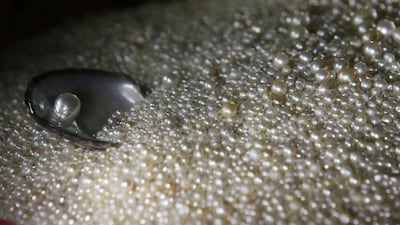
-
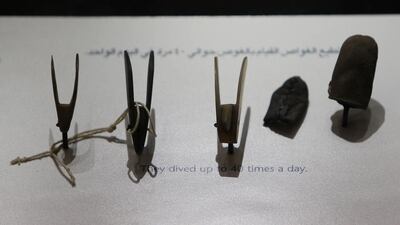
A nose peg on display at the Pearl Museum. The pearl collection was donated by Sultan Al Owais, a descendant of a family of pearl merchants. -
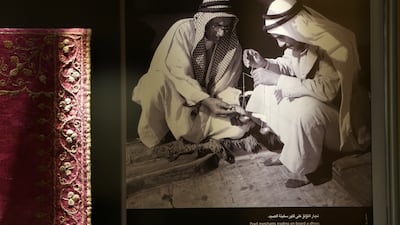
An old photograph of the pearl merchants on display at the museum. -
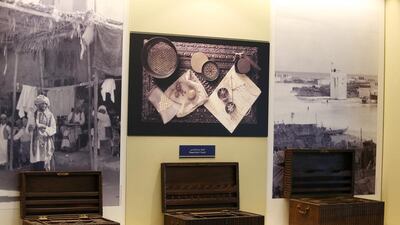
Wooden boxes used by the merchants on display at the Pearl Museum. -
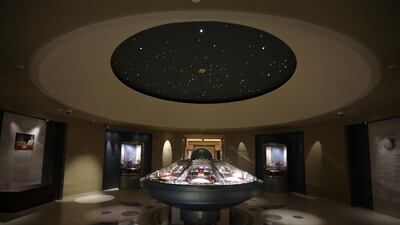
The pearls in the collection are displayed against red silk cloth, traditionally used by pearl merchants because they say it offers the best opportunity of viewing the gems without changing their color. -
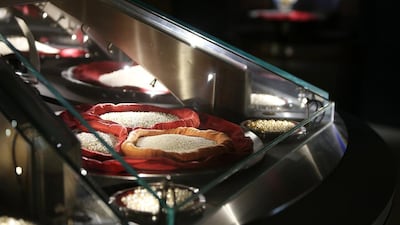
The colours vary a great deal - silver, pinkish, golden, grey and black. While the color of cultured pearls is more obvious, the colour of the natural ones can be determined after a few seconds of observation. -
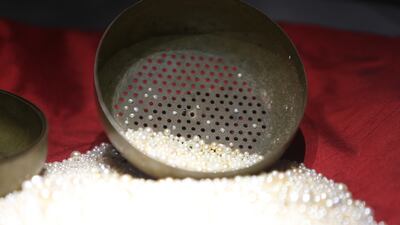
Sieves on display at the Pearl Museum. -
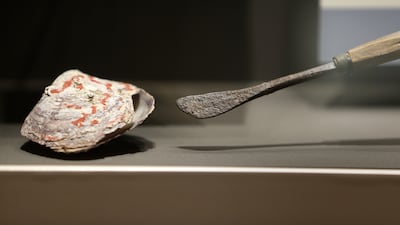
A knife used for opening oyster shells on display. -
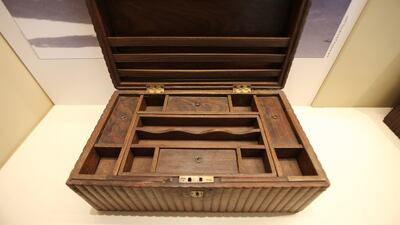
A wooden box used by pearl merchants on display at the museum. -
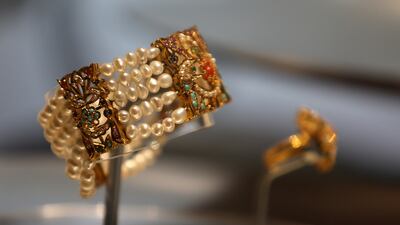
Pearl jewellery on display at the museum. -
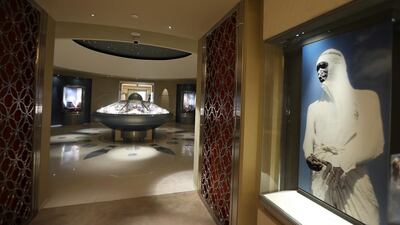
The museum welcomes guests through appointment and more information is available on their website. -
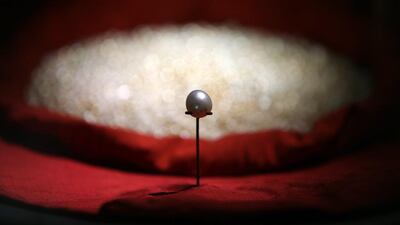
When it comes to distinguishing the value of a pearl, a variety of factors play a part. Size is important and so is colour. -
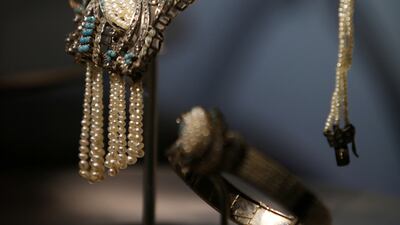
Most of the jewellery in the collection follows either European or Indian fashions since prior to the discovery of oil, the UAE people preferred to sell the precious gemstones rather than wear them. -
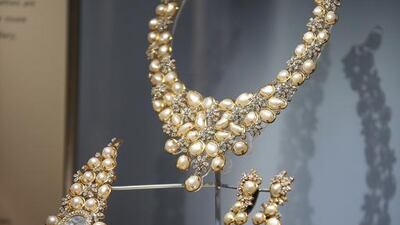
In 1917, when pearl harvesting was at its height in the UAE, a gram of Gulf pearls traded for 320 grams of gold in the markets of India where the Gulf traders would usually bring their wares. -
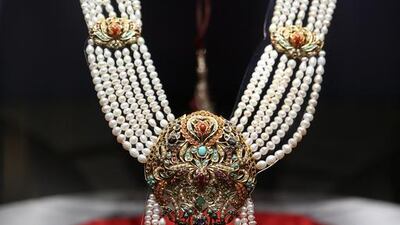
Pearl jewellery on display at the museum.
A priceless pearl collection - in pictures
Most popular today

