


A Libyan princess who grew up in exile has spoken of her horror, deep sadness and anger at the humanitarian catastrophe that has unfolded in the flood-stricken city of Derna.
Princess Alia Al Senussi, part of the royal family ousted by Muammar Qaddafi in 1969, said the irresponsibility of governments and the “anarchic situation of greed and obsession for power” represented an absolute disregard for the dignity of human life in Libya.
The royal said the causes for what unfolded in the eastern Libyan city, where devastating floods killed thousands, dated back to the neglect of the Qaddafi era and had been compounded by the chaos of the current system. She said sadness had now turned to anger at not just the officials but also climate-change deniers. Experts believe climate change made the floods much more likely to happen.
“A friend of mine said that Libya is outside the imagination of the world because the world has left it,” Ms Al Senussi told The National on Tuesday.
“There is no empathy. People that don’t deserve to suffer are suffering the most. And we can say that about a lot of places.”
Her comments came more than a week after floods inundated Derna when two dams broke during a powerful storm. The World Health Organisation said about 4,000 people were killed but organisations on the ground believe the death toll is far higher. Experts have suggested the lack of an evacuation order or warning about Storm Daniel made the outcome far worse, while long-term neglect of the dams has also been blamed.
Ms Al Senussi’s family ruled Libya until the military takeover of the country. She was born in the US, grew up in Egypt and now lives in the UK. Ms Al Senussi, 40, previously spoke of her emotional trips to Libya after Qaddafi was removed from power in 2011 and how the hopes of a young generation desperate for change weighed heavily on her.
“It was a hopeful time,” she said. “But it has deteriorated dramatically since then.”
-
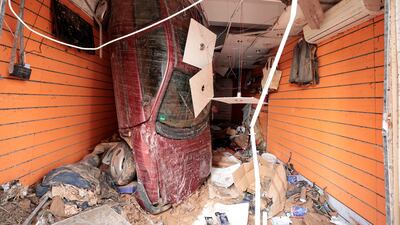
An upturned car inside a shop where it was carried by a torrent of floodwater in Derna, Libya. Reuters -
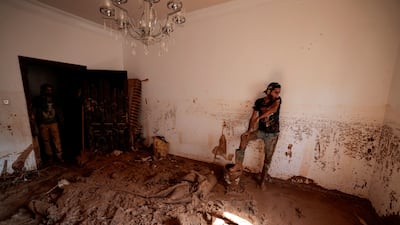
A flood survivor takes a breather from removing mud from his home in the aftermath of deadly floods in Derna. Reuters -
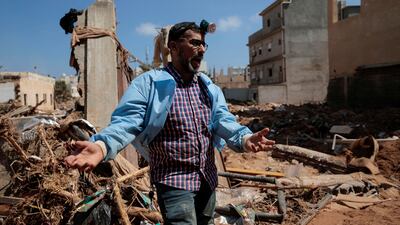
Mohammed Fathallah Al Hassi lost his mother and sister in Derna when dams collapsed, flooding the city, after heavy rainfall and a powerful storm hit eastern Libya. Reuters -
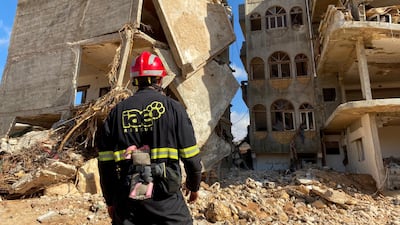
A Spanish rescue worker in Derna where authorities have been struggling to cope with thousands of flood victims' bodies washing up or decaying under rubble. Reuters -
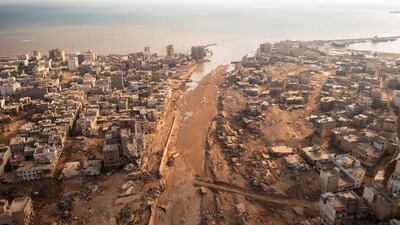
The destruction in the aftermath of the floods in Derna, Libya, as seen from the air. Reuters -

A view of Derna in the aftermath of the floods. Reuters -
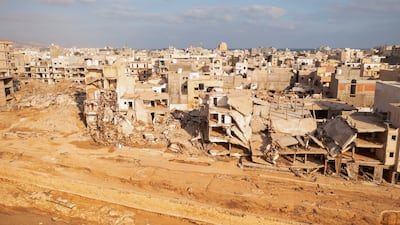
The aftermath of the floods in Derna. Libyan authorities said access to some areas had become impossible. Reuters -
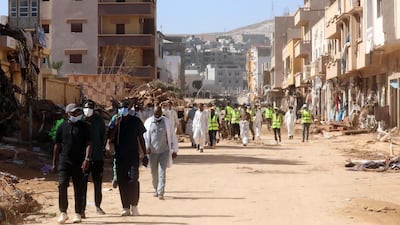
Volunteers amid the ruins and damaged homes after the Mediterranean Storm Daniel hit Libya's eastern city of Derna. AFP -
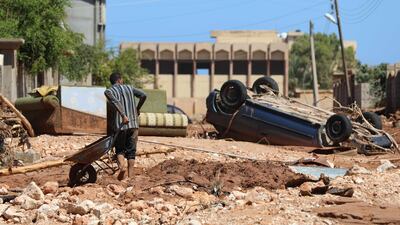
A rubble-strewn street in Libya's eastern city of Soussa. AFP -

People view areas damaged in the flooding in Derna, Libya. Reuters -
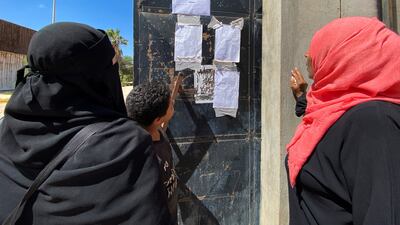
Locals view a list of the missing following the floods in Derna. Reuters -
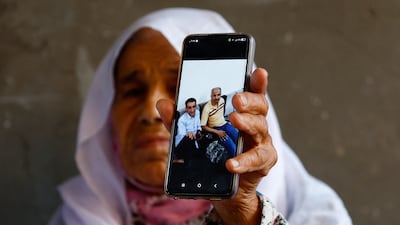
A Palestinian woman in the Gaza Strip displays a picture of her relatives, who had been living in Libya, that were among the victims of the flooding. Reuters -
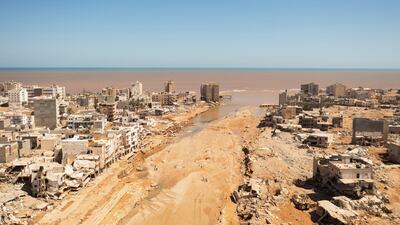
Libya's port city of Derna, days after floods swept away entire communities after two dams collapsed amid heavy rain. Reuters -
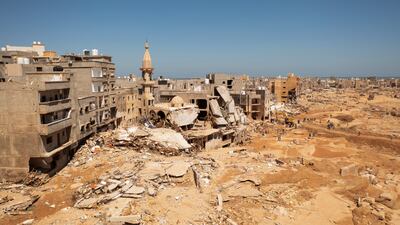
The dams collapsed causing a huge flash flood that killed thousands of people. Reuters -
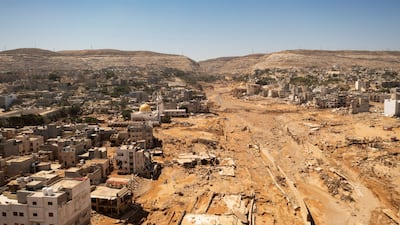
Thousands were still missing while more than 30,000 were displaced. Reuters -
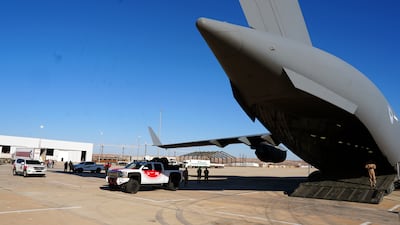
Five Emirati planes arrived in Benghazi carrying three rescue teams, urgent relief and medical aid, as part of UAE efforts to provide relief to the Libyan people. Wam -
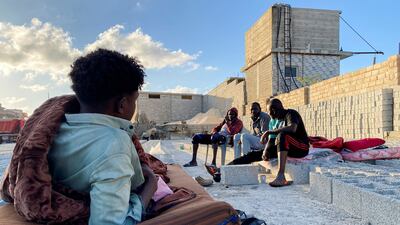
Sudanese workers who lost family members and friends during the disaster sit outside a tile factory in Derna. Reuters -
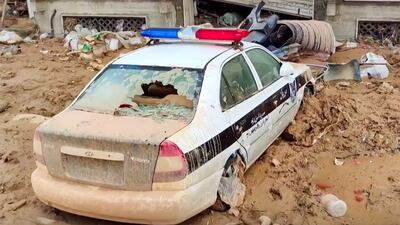
A police vehicle washed away by floods lies on a street in Derna. AFP -

A militiaman directs vehicles on along a muddy road after deadly floods caused by Storm Daniel hit Derna, forcing two dams to collapse. AFP -
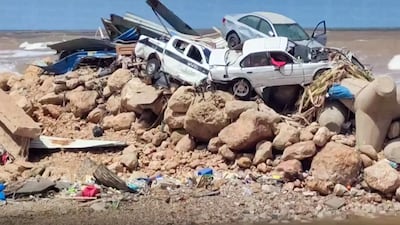
Vehicles washed away by the floods are piled up on the outskirts of Derna. AFP -
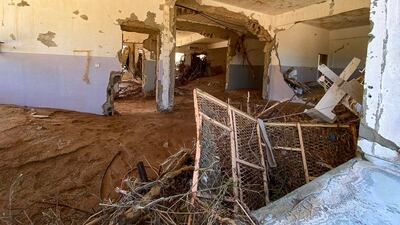
A school damaged by the floods in Derna. Reuters -
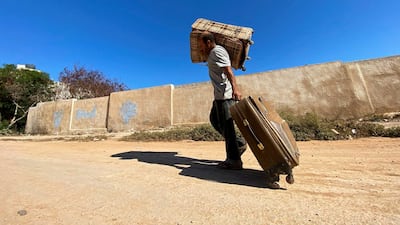
A man carries his belongings, in the aftermath of floods in Derna. Reuters -
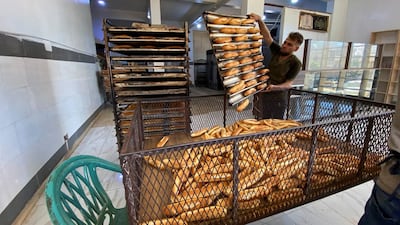
A worker puts bread in a box at a bakery, in the aftermath of the floods in Derna. Reuters -
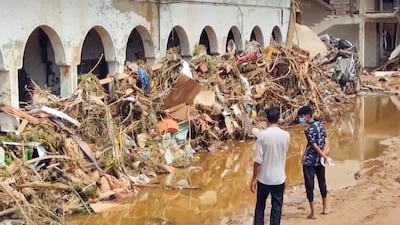
The trail of destruction left by the floods that hit Derna. AFP


However, Ms Al Senussi, now a senior figure in the global art world, said she had observed an increasing number of Libyans trying to make their voice heard.
“In the Qaddafi era, people didn’t have freedom to enter the civil service and, despite the anarchy now, there is slightly more space for people to be involved and to volunteer and work. There are also more student initiatives. So there is hope.
“We need more Libyans out there doing things and making their voices heard, from the smallest to the largest thing. Having that interaction is important because Libya is so far from the global mentality. We have to wait for this generation to get an education, become involved, grow and mature and become the leaders that we need now."
Ms Al Senussi said she was in Seoul when she heard about the disaster and immediately knew it would be "a horror story”. But another moment of hope took place there in South Korea as she listened to personal stories of people who told of how they came through severe challenges in the past to build a new country. “They were able, somehow, to move forward, so there is hope that places can reverse course.”
Libya has been hit by years of turmoil since Qaddafi was ousted, with rival administrations governing in the east and west of the country.
Protesters in Derna, meanwhile, have called for a swift inquiry into the floods, accountability from leaders, compensation and a quick rebuilding of the city.
Rescuers from the UAE, Egypt, Turkey, Algeria, France, Italy and Spain are all assisting in the recovery effort.
"It is an incredibly dark moment for Libya,” said Ms Al Senussi. “But I’m reminded of a quote from a Lebanese friend after the devastating 2020 blast, who said: ‘We are so tired of being resilient but that’s who we are. We will pick ourselves up and be resilient and hope for a day we can live and thrive and not have to be resilient.’”

