Day in the Life: What it's like to manage a boarding school in Dubai


  • English
  • Arabic

A Day in the Life allows you to step into the shoes of a UAE resident to experience a typical 24 hours in their work and home life.

Being responsible for 100 children waking up and going to bed on time alongside studies, activities and meals, Ashley Fitzgibbons has a busy job.

In her role as head of boarding at Swiss International School Dubai (SISD), she also oversees finances, planning weekend itineraries and working with pastoral staff on emotional support for pupils.

The Irish-born educator, 35, who joined the International Baccalaureate curriculum school five years ago, shares with The National how her weekdays can look.

6am: Early start to plan the day

Usually already awake, this is when Ms Fitzgibbons' day begins as she reviews the calendar for birthdays, children off, any tournaments taking place or flights planned.

“A quick check to see if they have done washing up the night before and our housekeeping team start cleaning the common areas,” she says.

“We have 70 kids in the boarding houses, but have 100 enrolled next academic year, over 20 nationalities … that brings a nice vibrancy.”

6.40am: Wake up to music

Time to rouse sleepy youngsters in Geneva House (the boys), and Zurich House (girls) – each floor has a member of the 14 boarding staff living alongside.

I’ve been in education for 13 years and this is the most rewarding position I’ve had
Ashley Fitzgibbons

“We turn the radio on for 20 minutes,” says Ms Fitzgibbons. “Once it’s off, they know to be downstairs, together in the canteen for 7.30am for a lovely buffet breakfast, each morning based on different countries.”

Boarders scan into an attendance system that reveals any absentees.

“There’s always one who didn’t put out all their laundry and is looking for shorts or a T-shirt or has forgotten swimming gear or a laptop.”

As part of the curriculum’s community service element, clothes left by departed boarders are washed and donated to clothing banks.

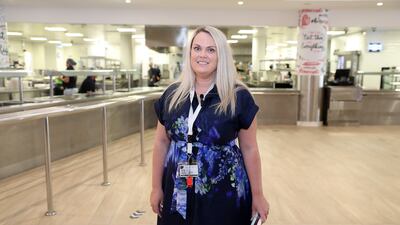
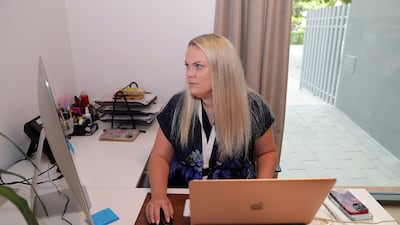
  • Ashley Fitzgibbons, head of boarding at Swiss International School Dubai, at the canteen on campus. All photos: Pawan Singh / The National
    Ashley Fitzgibbons, head of boarding at Swiss International School Dubai, at the canteen on campus. All photos: Pawan Singh / The National
  • The Swiss International School caters for boys and girls
    The Swiss International School caters for boys and girls
  • Ms Fitzgibbons turns on the radio for 20 minutes in morning before breakfast
    Ms Fitzgibbons turns on the radio for 20 minutes in morning before breakfast
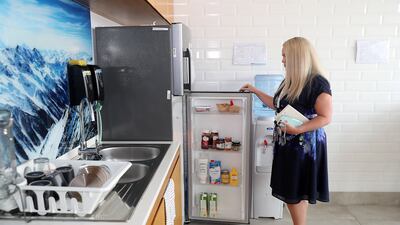
  • Ms Fitzgibbons checking the fridge in the girls' boarding block
    Ms Fitzgibbons checking the fridge in the girls' boarding block
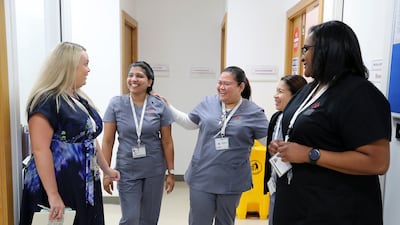
  • Ms Fitzgibbons meets nursing staff in the school's sports clinic
    Ms Fitzgibbons meets nursing staff in the school's sports clinic
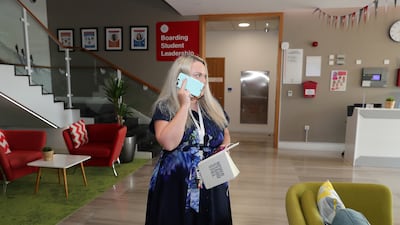
  • The day includes many phone calls
    The day includes many phone calls
  • Ms Fitzgibbons speaks to pupils throughout the school day
    Ms Fitzgibbons speaks to pupils throughout the school day
  • The job involves much administration
    The job involves much administration
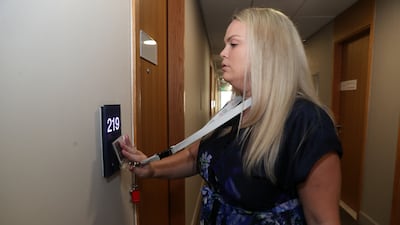
  • Ms Fitzgibbons inspects rooms in the girls' block
    Ms Fitzgibbons inspects rooms in the girls' block
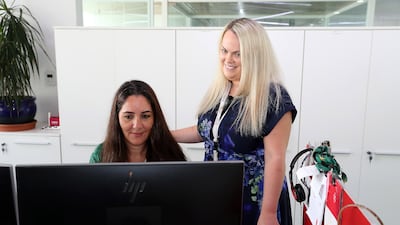
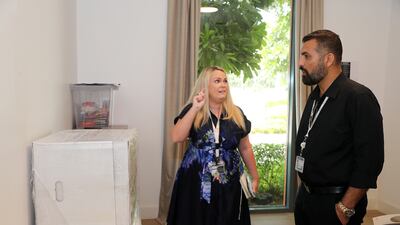
  • Ms Fitzgibbons with Angela Arnold, deputy head academic at the school
    Ms Fitzgibbons with Angela Arnold, deputy head academic at the school
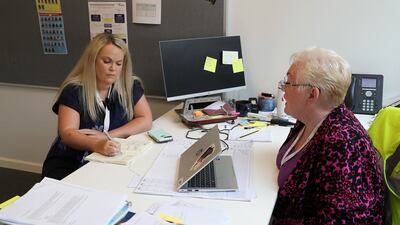
  • Ms Fitzgibbons speaks to the HR official at the school
    Ms Fitzgibbons speaks to the HR official at the school
  • Ms Fitzgibbons speaks to Ashfaq Khan, head of facility at the girls' boarding block
    Ms Fitzgibbons speaks to Ashfaq Khan, head of facility at the girls' boarding block

8am: Problem-solving and teaching life skills

Boarders head into school and Ms Fitzgibbons receives a canteen report revealing popular food options and feedback ahead of meal planning discussions.

Pupils exhibiting sniffles visit the onsite clinic and house checks ensure nothing is broken. The matron liaises with cleaners and reports to Ms Fitzgibbons if additional bedroom checks are needed.

“We address whatever concerns are there and when the student comes back that evening,” she says, revealing male boarders keep rooms tidier. “I think it’s because the girls have too many clothes and shoes.”

Ahead of graduation, she taught some boys how to iron shirts and prepare a smoothie, but she once witnessed children mistakenly putting milk in a kettle.

“Those life skills, simple things like reading clothes labels, you have to train them and we plan to develop our programme even more. They’ve done lots of baking, healthy snack making … we really want to dig into cooking next year.”

8.30am: Admissions meeting

An admissions meeting examines numbers for the next academic year – boarding is from ages 11 to 18/19.

Ms Fitzgibbons handles rooming arrangements, moving older pupils to higher floors, as well as allocating newcomers.

“We pack their first week with activities so they don’t have much time to think about being away from home,” she says.

“In their rooms, the homesickness will kick in, so we do games and quiz nights, cinema night, get the popcorn and find a movie.

“When they’ve moved into our boarding school, they won’t always put themselves forward … it’s our job to uncover their talents.”

8-10am: Team talks

Discussions with support staff plus laundry personnel.

Ms Fitzgibbons speaks to pupils throughout the school day. Pawan Singh / The National

“The boarding team might be running an activity and need to order resources,” says Ms Fitzgibbons, who also oversees the boarding Instagram account. “Any sports activities or trips, we’ll take photos and pop them on to update parents.”

Come late August, she will have to get 100 boarders into uniforms, so checks supplies alongside meeting and discussing academic progress with the secondary team.

“Our Amazon account looks interesting. We could be ordering anything,” she reveals.

“From luggage tags for new kids coming in to water guns … we ran boarding Olympics and the kids wanted a water fight. It was great fun.”

10-2pm: Squeeze in time to relax

Admin work before a “grab and go” lunch around noon.

“My secretary is good at making sure I have time off during the middle of the day, to just go for a walk or coffee.”

Beside her head of boarding role, Ms Fitzgibbons teaches business management, but her afternoons can also involve consulting parents for end-of-year feedback, interviewing new boarding house pupils, or giving a tour.

3.30pm: Afterschool activities

School finishes and roll call happens ahead of afterschool activities including swimming, debate club, jiu-jitsu. Some pupils remain for study time.

Ashely Fitzgibbons speaks to the HR official at the school. Pawan Singh / The National

“We’re really pushing the enrichment side and making sure they are fully rounded … they can’t be hitting the books all the time. And we have to match their schedule to everything else that’s going on, it’s not one-size-fits-all.”

5-6pm: Sports or more learning

Boarders head either to sport such as badminton or basketball, or academic support with teachers dropping in to assist.

“You build really strong relationships with the kids, I’ve seen so many of their journeys,” says Ms Fitzgibbons.

“The ones who wander around in pyjamas, who asked random questions like ‘can I cook pasta in an air fryer?’ More than likely, they’re going to be with us when they get university offers.”

7pm: Time for dinner

Dinner is in the dining hall until about eight “when the houses start to wind down”.

But if it’s her turn to work a weekend, Saturday is takeaway night for 70.

“We ordered Shake Shack and 10 delivery drivers arrived, one after another,” Ms Fitzgibbons recalls.

9-10pm: Favourite time of the day

Final roll call to ensure everyone is in.

“My favourite time of the day … they come and sit in the foyer, tell you about their day or plans for the weekend. Two kids had Tamagotchis yesterday; they’re becoming a trend again."

All children should be in bed at 10pm, but sometimes “love playing 'knock and run' on each other”.

A final email check before Ms Fitzgibbons falls asleep about 11.30pm.

With holidays imminent, hectic days beckon ensuring everyone makes flights home or overseeing 50 room moves.

“Spreadsheets are colour coded, numbered, in different tab. I wouldn’t be able to cope without Excel. And we all pitch in, there are some amazing people,” adds the head of boarding.

“I’ve been in education for 13 years and this is the most rewarding position I’ve had. Long days, but definitely the most rewarding.


Mercer, the investment consulting arm of US services company Marsh & McLennan, expects its wealth division to at least double its assets under management (AUM) in the Middle East as wealth in the region continues to grow despite economic headwinds, a company official said.

Mercer Wealth, which globally has $160 billion in AUM, plans to boost its AUM in the region to $2-$3bn in the next 2-3 years from the present $1bn, said Yasir AbuShaban, a Dubai-based principal with Mercer Wealth.

Within the next two to three years, we are looking at reaching $2 to $3 billion as a conservative estimate and we do see an opportunity to do so,” said Mr AbuShaban.

Mercer does not directly make investments, but allocates clients’ money they have discretion to, to professional asset managers. They also provide advice to clients.

“We have buying power. We can negotiate on their (client’s) behalf with asset managers to provide them lower fees than they otherwise would have to get on their own,” he added.

Mercer Wealth’s clients include sovereign wealth funds, family offices, and insurance companies among others.

From its office in Dubai, Mercer also looks after Africa, India and Turkey, where they also see opportunity for growth.

Wealth creation in Middle East and Africa (MEA) grew 8.5 per cent to $8.1 trillion last year from $7.5tn in 2015, higher than last year’s global average of 6 per cent and the second-highest growth in a region after Asia-Pacific which grew 9.9 per cent, according to consultancy Boston Consulting Group (BCG). In the region, where wealth grew just 1.9 per cent in 2015 compared with 2014, a pickup in oil prices has helped in wealth generation.

BCG is forecasting MEA wealth will rise to $12tn by 2021, growing at an annual average of 8 per cent.

Drivers of wealth generation in the region will be split evenly between new wealth creation and growth of performance of existing assets, according to BCG.

Another general trend in the region is clients’ looking for a comprehensive approach to investing, according to Mr AbuShaban.

“Institutional investors or some of the families are seeing a slowdown in the available capital they have to invest and in that sense they are looking at optimizing the way they manage their portfolios and making sure they are not investing haphazardly and different parts of their investment are working together,” said Mr AbuShaban.

Some clients also have a higher appetite for risk, given the low interest-rate environment that does not provide enough yield for some institutional investors. These clients are keen to invest in illiquid assets, such as private equity and infrastructure.

“What we have seen is a desire for higher returns in what has been a low-return environment specifically in various fixed income or bonds,” he said.

“In this environment, we have seen a de facto increase in the risk that clients are taking in things like illiquid investments, private equity investments, infrastructure and private debt, those kind of investments were higher illiquidity results in incrementally higher returns.”

The Abu Dhabi Investment Authority, one of the largest sovereign wealth funds, said in its 2016 report that has gradually increased its exposure in direct private equity and private credit transactions, mainly in Asian markets and especially in China and India. The authority’s private equity department focused on structured equities owing to “their defensive characteristics.”

The bio

Date of Birth: April 25, 1993
Place of Birth: Dubai, UAE
Marital Status: Single
School: Al Sufouh in Jumeirah, Dubai
University: Emirates Airline National Cadet Programme and Hamdan University
Job Title: Pilot, First Officer
Number of hours flying in a Boeing 777: 1,200
Number of flights: Approximately 300
Hobbies: Exercising
Nicest destination: Milan, New Zealand, Seattle for shopping
Least nice destination: Kabul, but someone has to do it. It’s not scary but at least you can tick the box that you’ve been
Favourite place to visit: Dubai, there’s no place like home

The burning issue

The internal combustion engine is facing a watershed moment – major manufacturer Volvo is to stop producing petroleum-powered vehicles by 2021 and countries in Europe, including the UK, have vowed to ban their sale before 2040. The National takes a look at the story of one of the most successful technologies of the last 100 years and how it has impacted life in the UAE. 

Read part four: an affection for classic cars lives on

Read part three: the age of the electric vehicle begins

Read part one: how cars came to the UAE


TRAINING FOR TOKYO

A typical week's training for Sebastian, who is competing at the ITU Abu Dhabi World Triathlon on March 8-9:

  • Four swim sessions (14km)
  • Three bike sessions (200km)
  • Four run sessions (45km)
  • Two strength and conditioning session (two hours)
  • One session therapy session at DISC Dubai
  • Two-three hours of stretching and self-maintenance of the body

ITU Abu Dhabi World Triathlon

For more information go to www.abudhabi.triathlon.org.

LAST 16

SEEDS

Liverpool, Manchester City, Barcelona, Paris St-Germain, Bayern Munich, RB Leipzig, Valencia, Juventus

PLUS

Real Madrid, Tottenham, Atalanta, Atletico Madrid, Napoli, Borussia Dortmund, Lyon, Chelsea

Dr Afridi's warning signs of digital addiction

Spending an excessive amount of time on the phone.

Neglecting personal, social, or academic responsibilities.

Losing interest in other activities or hobbies that were once enjoyed.

Having withdrawal symptoms like feeling anxious, restless, or upset when the technology is not available.

Experiencing sleep disturbances or changes in sleep patterns.

What are the guidelines?

Under 18 months: Avoid screen time altogether, except for video chatting with family.

Aged 18-24 months: If screens are introduced, it should be high-quality content watched with a caregiver to help the child understand what they are seeing.

Aged 2-5 years: Limit to one-hour per day of high-quality programming, with co-viewing whenever possible.

Aged 6-12 years: Set consistent limits on screen time to ensure it does not interfere with sleep, physical activity, or social interactions.

Teenagers: Encourage a balanced approach – screens should not replace sleep, exercise, or face-to-face socialisation.

Source: American Paediatric Association
The specs: Rolls-Royce Cullinan

Price, base: Dh1 million (estimate)

Engine: 6.75-litre twin-turbo V12

Transmission: Eight-speed automatic

Power: 563hp @ 5,000rpm

Torque: 850Nm @ 1,600rpm

Fuel economy, combined: 15L / 100km

Avatar: Fire and Ash

Director: James Cameron

Starring: Sam Worthington, Sigourney Weaver, Zoe Saldana

Rating: 4.5/5

The specs

Engine: Four electric motors, one at each wheel

Power: 579hp

Torque: 859Nm

Transmission: Single-speed automatic

Price: From Dh825,900

On sale: Now

The burning issue

The internal combustion engine is facing a watershed moment – major manufacturer Volvo is to stop producing petroleum-powered vehicles by 2021 and countries in Europe, including the UK, have vowed to ban their sale before 2040. The National takes a look at the story of one of the most successful technologies of the last 100 years and how it has impacted life in the UAE.

Read part three: the age of the electric vehicle begins

Read part two: how climate change drove the race for an alternative 

Read part one: how cars came to the UAE

COMPANY%20PROFILE%20
%3Cp%3EName%3A%20DarDoc%3Cbr%3EBased%3A%20Abu%20Dhabi%3Cbr%3EFounders%3A%20Samer%20Masri%2C%20Keswin%20Suresh%3Cbr%3ESector%3A%20HealthTech%3Cbr%3ETotal%20funding%3A%20%24800%2C000%3Cbr%3EInvestors%3A%20Flat6Labs%2C%20angel%20investors%20%2B%20Incubated%20by%20Hub71%2C%20Abu%20Dhabi's%20Department%20of%20Health%3Cbr%3ENumber%20of%20employees%3A%2010%3C%2Fp%3E%0A
In-demand jobs and monthly salaries
  • Technology expert in robotics and automation: Dh20,000 to Dh40,000 
  • Energy engineer: Dh25,000 to Dh30,000 
  • Production engineer: Dh30,000 to Dh40,000 
  • Data-driven supply chain management professional: Dh30,000 to Dh50,000 
  • HR leader: Dh40,000 to Dh60,000 
  • Engineering leader: Dh30,000 to Dh55,000 
  • Project manager: Dh55,000 to Dh65,000 
  • Senior reservoir engineer: Dh40,000 to Dh55,000 
  • Senior drilling engineer: Dh38,000 to Dh46,000 
  • Senior process engineer: Dh28,000 to Dh38,000 
  • Senior maintenance engineer: Dh22,000 to Dh34,000 
  • Field engineer: Dh6,500 to Dh7,500
  • Field supervisor: Dh9,000 to Dh12,000
  • Field operator: Dh5,000 to Dh7,000
Key figures in the life of the fort

Sheikh Dhiyab bin Isa (ruled 1761-1793) Built Qasr Al Hosn as a watchtower to guard over the only freshwater well on Abu Dhabi island.

Sheikh Shakhbut bin Dhiyab (ruled 1793-1816) Expanded the tower into a small fort and transferred his ruling place of residence from Liwa Oasis to the fort on the island.

Sheikh Tahnoon bin Shakhbut (ruled 1818-1833) Expanded Qasr Al Hosn further as Abu Dhabi grew from a small village of palm huts to a town of more than 5,000 inhabitants.

Sheikh Khalifa bin Shakhbut (ruled 1833-1845) Repaired and fortified the fort.

Sheikh Saeed bin Tahnoon (ruled 1845-1855) Turned Qasr Al Hosn into a strong two-storied structure.

Sheikh Zayed bin Khalifa (ruled 1855-1909) Expanded Qasr Al Hosn further to reflect the emirate's increasing prominence.

Sheikh Shakhbut bin Sultan (ruled 1928-1966) Renovated and enlarged Qasr Al Hosn, adding a decorative arch and two new villas.

Sheikh Zayed bin Sultan (ruled 1966-2004) Moved the royal residence to Al Manhal palace and kept his diwan at Qasr Al Hosn.

Sources: Jayanti Maitra, www.adach.ae

UAE v Ireland

1st ODI, UAE win by 6 wickets

2nd ODI, January 12

3rd ODI, January 14

4th ODI, January 16

The years Ramadan fell in May

1987

1954

1921

1888

The President's Cake

Director: Hasan Hadi

Starring: Baneen Ahmad Nayyef, Waheed Thabet Khreibat, Sajad Mohamad Qasem 

Rating: 4/5

Western Region Asia Cup Qualifier

Results

UAE beat Saudi Arabia by 12 runs

Kuwait beat Iran by eight wickets

Oman beat Maldives by 10 wickets

Bahrain beat Qatar by six wickets

Semi-finals

UAE v Qatar

Bahrain v Kuwait


Tamkeen's offering
  • Option 1: 70% in year 1, 50% in year 2, 30% in year 3
  • Option 2: 50% across three years
  • Option 3: 30% across five years 
LILO & STITCH

Starring: Sydney Elizebeth Agudong, Maia Kealoha, Chris Sanders

Director: Dean Fleischer Camp

Rating: 4.5/5

Company Profile

Name: Thndr
Started: 2019
Co-founders: Ahmad Hammouda and Seif Amr
Sector: FinTech
Headquarters: Egypt
UAE base: Hub71, Abu Dhabi
Current number of staff: More than 150
Funds raised: $22 million

Ponti

Sharlene Teo, Pan Macmillan

Name: Peter Dicce

Title: Assistant dean of students and director of athletics

Favourite sport: soccer

Favourite team: Bayern Munich

Favourite player: Franz Beckenbauer

Favourite activity in Abu Dhabi: scuba diving in the Northern Emirates 


Updated: November 10, 2023, 12:22 PM