

The Middle East is likely to experience less rainfall but an increase in the number of extreme downpours because of climate change, experts have said.
Flooding is likely to increase, said Karim Elgendy, an associate fellow in the climate and environment programme at Chatham House in London, as part of an Intergovernmental Panel on Climate Change (IPCC) briefing.
While climate change will, on average, increase rainfall globally, Mr Elgendy said the Middle East would be an exception.
“We’re going to get longer droughts and when it does rain, it’s going to rain in a flooding manner,” he said.
“Then you have sea-level rises,” he added. “In the Nile Delta, we’re going to expect a dramatic impact, especially in the Nile, which is below sea level.”
There will be “secondary impacts” on agriculture, tourism and development, with “tertiary impacts” on social structures, migration and resource demand, although Mr Elgendy said forecasting these was difficult.
Middle East second-most affected region by rising temperatures
Mr Elgendy was speaking at a Mena region briefing before Monday's release of the Synthesis Report of the IPCC's Sixth Assessment Report, which summarises the current situation regarding climate change.
Released following final discussions between experts in Switzerland, the report indicates that the world is falling far short of its climate change targets if global temperature rises are not to exceed 1.5°C above pre-industrial levels.
This has happened ahead of Cop28, the IPCC climate-change gathering to be held in the UAE later this year — the second successive Cop in the Mena region, with Cop27 having taken place in Sharm El Sheikh in Egypt last year.
-
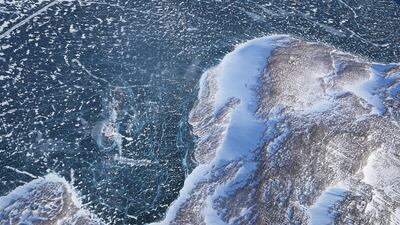
Greenland ice sheet disintegration – Rising temperatures causing the retreat of the ice sheet, which would cause sea levels to rise. -
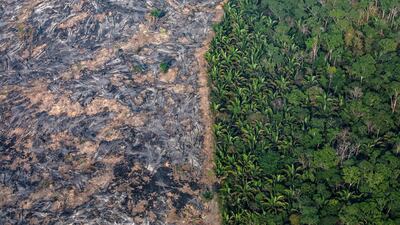
Amazon rainforest dieback – Large-scale dieback of the forest, via increased temperatures and drying, or direct deforestation, would amplify global warming. -
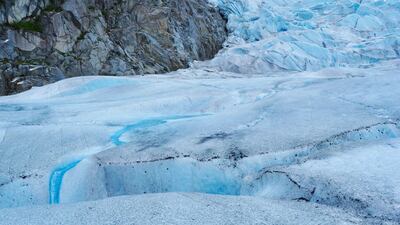
Permafrost loss – Thawing of carbon-rich soils, which releases greenhouse gas into the atmosphere. -
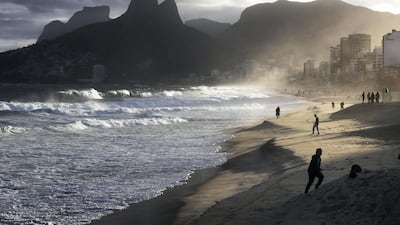
Atlantic meridional overturning circulation breakdown – An increased amount of freshwater in the Northern Atlantic disrupting the system of currents. -
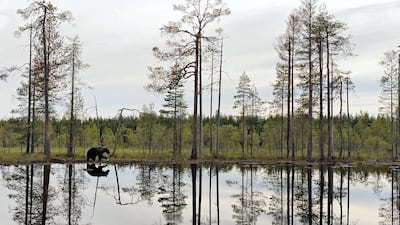
Boreal forest shift – Warming causes dieback in the south of the forests, and expansion into the tundra in the north, which would cause regional warming. -
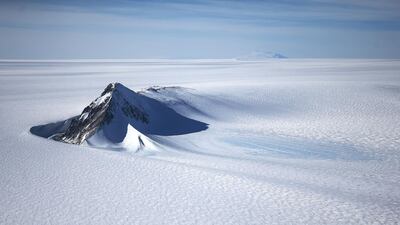
West Antarctic ice sheet disintegration – The melting of major ice sheets would lead to significant increases in sea level. -
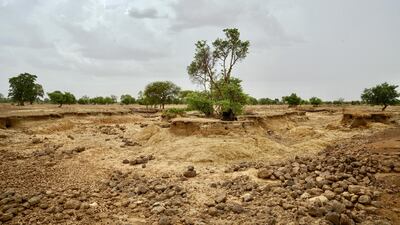
West African monsoon shift – A change in the monsoon season would lead to agricultural disruption and effect the ecosystem. -
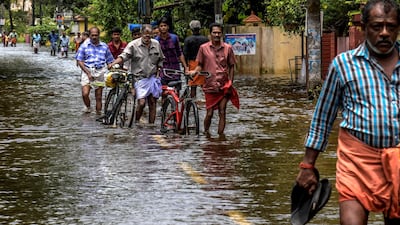
Indian monsoon shift – An increase in the planetary albedo (increases in the atmospheric brown cloud haze over India) has the capability of switching off the monsoon, which is crucial for the local economy, as well as being important for agriculture. -
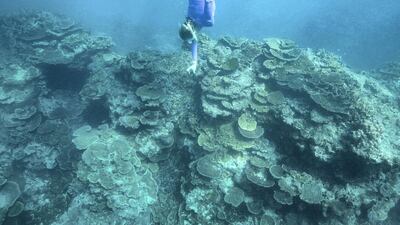
Coral reef die-off – Exposure to increased sea temperatures can kill off reefs, which has a serious effect on ecosystems and local economies.


Mr Elgendy indicated that this focus on the region was appropriate, as the Eastern Mediterranean and Middle East would experience the largest increases in temperature as a result of climate change of any inhabited region, with only the Arctic, which despite its vast size is inhabited by only 4 million people, facing faster rises.
Cop28 will involve three key elements, according to Mr Elgendy, including a global stocktake of progress since the Paris Agreement on climate change drafted in 2015.
Also expected, he said, was a global agreement on adaptation, or how countries will respond to climate change, and the finalisation of a deal on loss and damage, in which poorer countries severely affected by climate change will be given financial support to cope with its consequences.
“All these things mean Cop28 is where most pending issues will get resolved,” he said. “It means we have fewer things to negotiate.”
'A Cop for action'
Mr Elgendy, who founded Carboun, an initiative that promotes sustainability in Middle Eastern cities, said Cop28 could mark a transition in the nature of climate conferences if the focus is more on assessing and promoting action to combat climate change, instead of forging agreements on what needs to be done.

“Cop 28 could be a Cop for action,” he said. “It could start a transition in what the Cop is [about] … it’s something that’s largely about encouraging climate action.”
However, he said the world is set to overshoot the target of limiting global temperature rises to 1.5°C, so greater ambition is needed.
“If we hit all the voluntary targets by 2050, maybe we’ll get to 2°C but we’re certainly off target for 1.5°C,” he said.
“The process … isn’t going fast enough and time is running out. Emissions grew by 1 per cent last year and it was nothing to do with Covid recovery.”
He said the UAE’s climate policy appeared “unorthodox” but that it had largely been followed by the rest of the GCC.
The country, he said, is keen to diversify its economy away from oil and gas, funded by revenue from the petroleum sector.

Investment in renewable and nuclear energy, Mr Elgendy said, had allowed the country to reduce its own petroleum consumption.
This, in turn, means that exports can be maximised — justified not only in the UAE but in the GCC as a whole — on the basis that oil and gas extraction is less carbon-intensive in the Gulf than in many other parts of the world, he said.
“The UAE and Saudi position is … we should be the last producers standing, because the oil … requires less energy to get it out of the ground,” he said.
Another speaker, Camille Ammoun, an associate fellow at the American University of Beirut, said GCC countries had an economic interest to engage in efforts to mitigate climate change, as well as the financial means to drive green projects. They also have an interest in doing so because of the environmental effects of climate change.
“The Gulf countries have the interest and means to go further,” he said, although these nations are “still very reliant on fossil-fuel extraction.”

