


Dubai's property market has experienced a record-breaking year, with registered sales in 2022 reaching Dh208bn ($56.63 billion), data released by the emirate's land department shows.
A total of 86,490 residential sale transactions were recorded, beating the previous record of 80,000 in 2009, a year of property boom.
Of these, 62,363 were apartments, including 27,892 sold on the secondary market.
Based on the data compiled by Better Homes, Dubai Marina was the top spot where expats bought apartments last year, followed by Palm Jumeirah and Business Bay.
Huspy Real Estate
The most significant price increase was in Palm Jumeirah, up 30 per cent with an average sale price of Dh1,815 per square foot, while units in Business Bay appreciated by 8 per cent in 2021 and were sold at Dh1,441 8 per sq ft.
Classifieds website Propertyfinder shows the average sale price in Dubai Marina in December was Dh1,289.
"The secondary market is popular among end users who want to move in while investors are looking at off-plan properties," Kavinda Bakmeedeniya, sales consultant at Huspy Real Estate told The National.
All three areas are freehold, have good connectivity and amenities, and a range of options that may come at the right price tag for you. Properties here are easier to resell and rent out and make for perfect Dubai living.
We have rounded up what a studio, one and two bedrooms can cost in these areas, which are the most popular buildings and why.
Dubai Marina
-
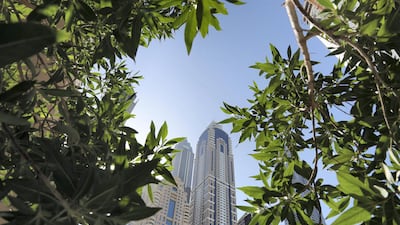
The impressive skyline in Dubai Marina is made up of 152 imposing towers. Pawan Singh / The National -

Dubai Marina has some pet-friendly areas where owners can walk their pets on a leash. -
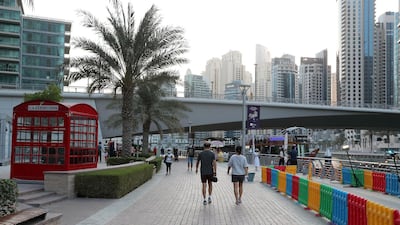
The winding marina walk, which snakes 3.6km through the impressive residential and commercial towers, is home to more than 600 boats and yachts. Pawan Singh / The National -
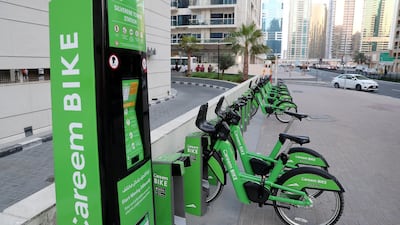
A view of one of the Careem bike stations in Dubai Marina. -
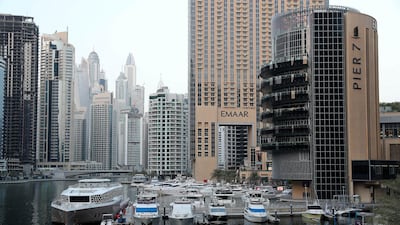
The total length of the promenade in Dubai Marina is just shy of 8km and there are plenty of stopping points along the way, from coffee shops to cafes and more. -
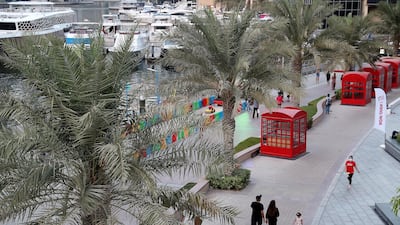
The majority of residential towers in Dubai Marina offer incredible views, have their own swimming pools, gyms, parks and sometimes BBQ areas for residents to enjoy. -
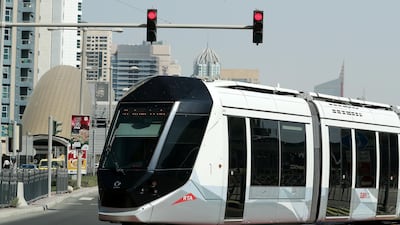
Dubai Marina is one of the most well connected neighbourhoods in the city. If boasts great public transport options including Dubai Metro, Dubai Tram and Dubai Water Bus -
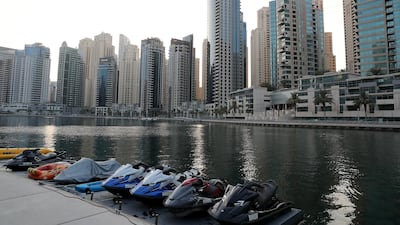
This popular bustling neighbourhood bagged the title of Top 10 most Instagrammable spots in the city by Bayut.com in 2018.


Dubai Marina is a lively hive of activity and its famous skyline is recognisable worldwide.
The winding marina, which snakes 3.6km through a landscape of residential and commercial towers, is home to more than 600 boats and yachts, many with multimillion-dollar price tags.
It is one of the best-connected neighbourhoods in the city. Dubai Metro, Dubai Tram, Dubai bus — it has all.
For retail, the Marina Mall shopping centre is spread across four floors and covers more than 390,000 sq ft.
There are many hotels, clinics and medical centres in the area.
Emirates International School, the International School of Choueifat Dubai and the Dubai British School are within a short driving distance.
Property price range
Studio - Dh700,000 to Dh900,000, average size is 500sq ft
One-bedroom - Dh900,000 to 1.2m, average size is 800sq ft
Two-bedroom - Dh1.5m to Dh2.5m, average size is 1,000sq ft to 1,200sq ft
Best buildings - Studio One, Silverene and Marina Gate, to name a few.
"The price depends a lot on the building finishes, location and high or low floor and the views," said Mr Bakmeedeniya.
"For example, Studio One is really popular because of its good rental yield. In the short term, you can expect a return of 10 to 11 per cent and in the long term, you can look at a minimum of 6 to 7 per cent if you are an investor.
"Emaar ones have always been popular because they have free chilling and their maintenance is very good. Then we have Silverene, Studio One on the high-end. Marina Gate is also very good.
"Emaar buildings have always been popular because they are chiller-free and the maintenance is very good.
"On a lower price end, we have towers like Marina Diamond 1 to 6, where units are cheaper."
"You should also factor in the price depending on the location. So, a road-facing property will cost you about Dh200,000 less than an apartment that faces the Marina."
Palm Jumeirah
-
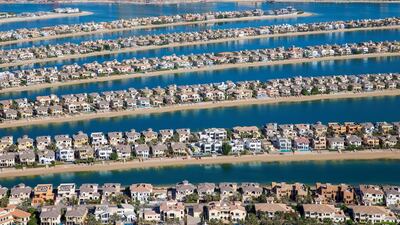
The fronds is the height of luxury and there are mansion-sized villas with more than seven bedrooms in some cases. -
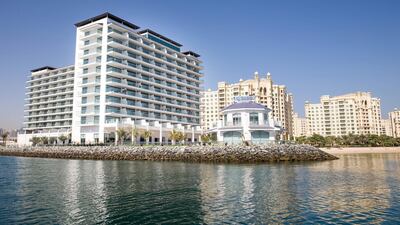
Located on the trunk of the Palm Jumeirah, Azure Residences offers apartments and restaurants with views of the Arabian Gulf. All photos supplied by Nakheel -
The Palm Jumeirah island consists of the trunk, the crescent and 16 fronds, which are accessible only to homeowners and tenants. -
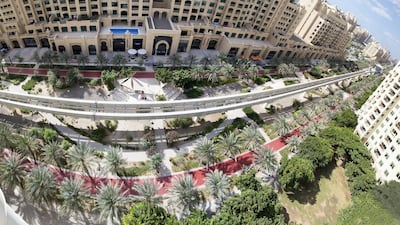
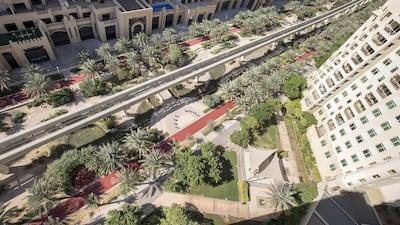
Al Ittihad park is located at the entrance of the Palm. -
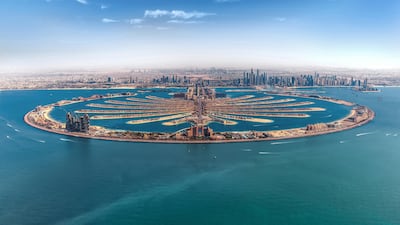
Palm Jumeirah, set on the coast of the Arabian Gulf, is considered by many to be the unofficial eighth wonder of the world. -
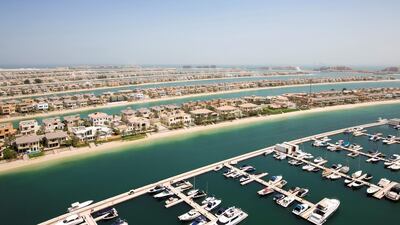
The Palm Jumeirah island consists of the trunk, the crescent and 16 fronds. -
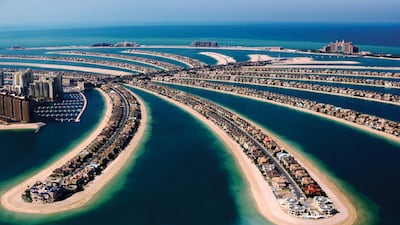
This thriving community is home to more than 78,000 people. -
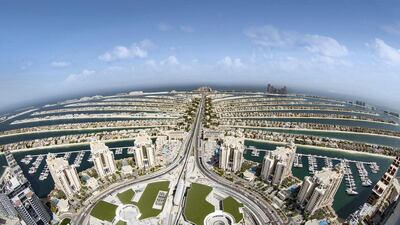
In terms of size, the island covers 560 hectares, which is big enough to house 600 football pitches. -
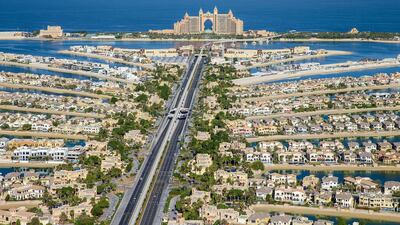
As its name suggests, this bustling neighbourhood is carved in the shape of a palm tree. Once completed, it doubled the coastline of the city by adding 80km to Dubai’s original shoreline. -
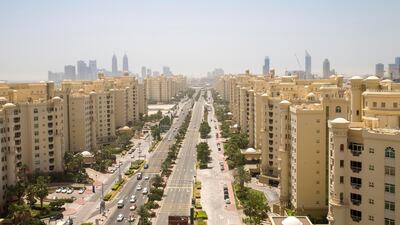
Shoreline Apartments are on the east side of the trunk of Palm Jumeirah


This man-made island is the luxury playground of the wealthiest people in the world, with villas sold for Dh130 million ($35.3 million).
But that does not mean there are no options for the middle-class buyer.
The Nakheel development is a thriving hub for tourists and residents alike.
It is home to more than 18 hotels and resorts, a water park and its own dedicated public transport network, the monorail.
It has of the world’s largest fountains at The Pointe, which overlooks the famous Atlantis Hotel and the newly opened Dubai's Atlantis The Royal.
For retail, Nakheel Mall is a multi-floor shopping centre with more than 350 shops and restaurants.
Dubai College, Gems Wellington International School and the American School of Dubai are close by.
Property price range
Studio - lowest one will be Dh1.2m to Dh2m, average size 500sq ft
One-bedroom - lowest range will be between Dh1.75m to Dh2.5m, average size 800sq ft to 1,000sq ft
Two-bedroom - will cost at least Dh2.5m to Dh3.5m, average size 1,600sq ft to 2,000sq ft
Best buildings - Shoreline Apartments, Royal Bay, and Palm Views, to name a few
"Shoreline Apartments in Palm Jumeirah are generally cheaper due to partial sea views. Apartments located on the Palm with direct sea views would be on the premium side," said Mr Bakmeedeniya.
"The Palm has become very expensive for its exclusivity and lack of supply. In premium buildings such as The Royal Atlantis, a two-bedroom can go for Dh16m and a 4-bed can fetch 35m."
Business Bay
-
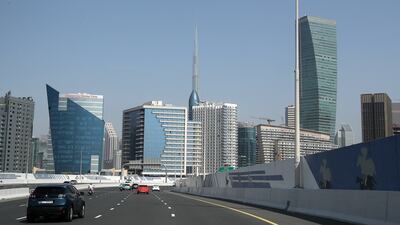
The Business Bay and Downtown area in Dubai. Pawan Singh / The National -

Dubai Water Canal is a 3.2km-long waterway that extends from the Creek in Old Dubai through Business Bay, before reaching the Arabian Gulf. Antonie Robertson / The National -
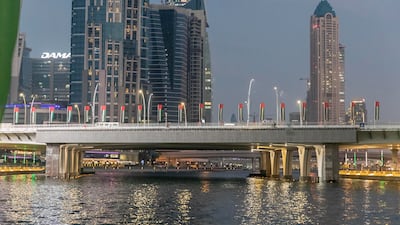
Business Bay properties appreciated after the Dubai Water Canal was built in 2016. Antonie Robertson / The National -

Grocery shops and pharmacies in the area. Chris Whiteoak / The National -

The area is well-connected by the metro. Chris Whiteoak / The National


Business Bay is more than merely skyscrapers. It is also a fine residential district with entertainment venues, a range of apartments, hotels, restaurants and retail outlets.
The best part of living in this area is that you are so near Downtown Dubai.
Maple Bear nursery, Jumeirah Primary School, Jumeirah College, English College, and Horizon School are just across Sheikh Zayed Road.
Emirates Hospital Clinic is within the community and Medcare hospital is a short distance away.
Property price range
Studio - at least Dh700,000, average size 500sq ft
One-bedroom - lowest will be Dh1m, average size 700sq ft to 1,000sq ft
Two-bedroom - Dh1.5m to Dh2m, average size is 1,000sq ft to 1,100sq ft
Best buildings - Executive Towers have always been popular, then you have Paramount Tower, Noora building can cost Dh2.2m for a 1,300sq ft unit.

