British Prime Minister Boris Johnson smiles during a televised press conference at 10 Downing Street on February 22, 2021 in London, England. Getty Images

One in three fear their government isn't prepared for next pandemic: OECD report


Kelly Clarke
  • English
  • Arabic

The way countries handled the Covid-19 pandemic had a major impact on people's trust in government and resulted in high levels of pandemic fatigue, a new report has found.

According to the OECD’s inaugural Survey on Drivers of Trust in Public Institutions, a little more than a third of respondents believe their government would not be prepared to respond to a future pandemic.

On a more positive note, nearly half (49.4 per cent) have faith that their government would be able to better handle the next health crises.

YouGov, on behalf of the OECD, polled about 50,000 residents in 22 countries to measure and better understand what drives people’s trust in public institutions.

The judiciary, the police, the civic service and some local governments tend to inspire more confidence than national governments, elected officials, political parties and parliament
Elsa Pilichowski,
OECD Directorate

While most OECD countries saw an increase in trust in government in 2020 around the start of the pandemic, by mid-2021 this trust had declined in many countries.

“The Covid-19 pandemic and the exceptional measures restricting civil liberties that were taken in many countries bluntly reminded decision-makers and institutions that citizens’ trust towards them and towards their decisions is vital to guarantee the functioning of our democratic societies,” said Xavier Bettel, Prime Minister of Luxembourg, during the launch of the report.

“If the majority of citizens trusted decision-makers and believed and followed decisions taken by them, the violent and irrational reactions of a tiny fraction of our citizens who lost trust gave us a glimpse of what the lack of trust implies.

“If this lack of trust in politicians persists on a longer-term [basis], we run the risk that it interferes with the institutions themselves, questioning their legitimacy and putting into danger the functioning of our democracies.”

The survey interviewed respondents in 13 of the 22 participating countries in November and December 2021. This corresponded with rising case counts in Europe and interventionist measures such as the closures of public places and the start of vaccine passes.

Across several countries, pandemic fatigue had already set in, especially in Asia where the pandemic has been going on the longest.

Lockdowns, vaccination drives and long-term strict public health protocols left people feeling frustrated with how the pandemic was handled, affecting their views on the government.

Per the report, few people see their government as responsive to their wants and needs, and many see high-level political officials as easily corruptible.

The OECD said governments must take a more holistic approach to building trust, focusing in particular on how to address perceptions of low government responsiveness and integrity.

This will help to “advance the pandemic recovery and help to address the significant policy challenges” countries face today.

As countries fight to emerge from the largest health, economic and social crisis in decades, they urgently need to invest in re-establishing trust to tackle the policy challenges ahead or it could be lost for good, Mr Bettel said.

Room for improvement

The Trust Survey was launched to help governments to understand better where citizen confidence is wavering, where it remains solid, and what needs to be done to close the gap.

Elsa Pilichowski, director of the OECD directorate for public governance, said overall, the results show that OECD countries are performing "reasonably well on average" in many measures of government. These include citizens’ perceptions of government reliability, service provision, and data openness.

“For the majority of participating countries, the survey was run somewhere between a year and a half and two years after the beginning of the pandemic and before the Russian invasion of Ukraine,” she said.

“The results vary considerably because of various cultural, social, institutional, and economic factors, but there's also the specific context of the country at the time when the survey was run and comparisons need to be made cautiously.

“Particularly because in some countries the proportion of people responding that they're neutral, or that they do not know is relatively high.”

Per the results, four out of 10 respondents said they trusted their governments, while four out of 10 said they did not.

Ms Pilichowski said the results showed trust was under strain, but “remained slightly higher on average than in the aftermath of the financial crisis in 2008”.

The survey revealed large variations across countries, with trust levels above 60 per cent in Finland and Norway and trust levels below 30 per cent in countries such as Australia, Colombia, France, Japan and Latvia.

“At a more granular level when we unpack the data, the judiciary, the police, the civic service and some local governments tend to inspire more confidence than national governments, elected officials, political parties and parliament,” Ms Pilichowski said.

“The first important message of the survey on the drivers of trust is that, on average, citizens in these countries are reasonably confident that they can rely on governments to deliver public services.

“The majority say they are satisfied with the healthcare and educational systems and satisfaction with administrative services is even higher, at 65 per cent for all, on average, across countries.

“I think we can say that this is a remarkable finding considering that the survey was conducted almost two years into the Covid-19 pandemic.”

Looking at the wider picture, more than two-thirds (65.1 per cent) of respondents said they can find information about administrative processes easily, and more than half (51.1 per cent) trust their government to use their personal data safely.

When it comes to national health care, a majority in most countries (61.7 per cent) say they are satisfied with services available to them.

Finland scored the highest on the healthcare scale, with more than 80 per cent of respondents satisfied with their provisions, with Belgium, Korea, Luxembourg and Norway close behind.

Looking at education, about six out of 10 people across all countries are happy with their education system, with those in tertiary education most satisfied.

Finland again came out on top, with more than 90 per cent of respondents from the country giving it the highest rating.

“More than half of respondents, on average cross-nationally, trust their government to use their personal data only for legitimate purposes, and about six in ten think they would be treated fairly if they applied for a benefit,” the report said.

The 22 countries featured in the survey were Australia, Austria, Belgium, Canada, Colombia, Denmark, Estonia, Finland, France, Ireland, Iceland, Japan, Korea, Latvia, Luxembourg, Mexico, the Netherlands, New Zealand, Norway, Portugal, Sweden and the UK.

About 2,000 respondents were surveyed from each nation.

Pandemic safety rules and restrictions in Europe – in pictures

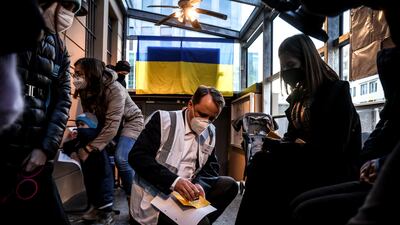
  • Ukrainians are registered by health workers while waiting to be vaccinated against the coronavirus at their country's embassy in German capital Berlin. EPA
    Ukrainians are registered by health workers while waiting to be vaccinated against the coronavirus at their country's embassy in German capital Berlin. EPA
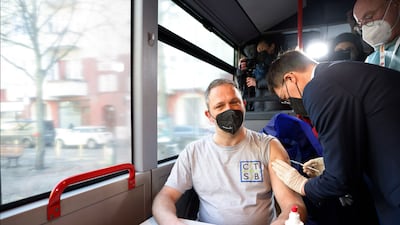
  • German Health Minister Karl Lauterbach, who studied medicine, vaccinates a man in the Vaccination Helps tour bus, at the project's launch in Berlin. EPA
    German Health Minister Karl Lauterbach, who studied medicine, vaccinates a man in the Vaccination Helps tour bus, at the project's launch in Berlin. EPA
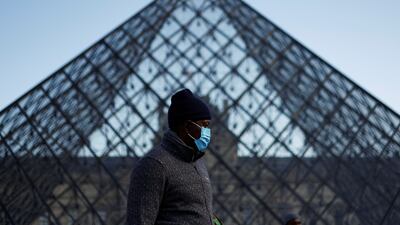
  • A man wearing a face mask walks past the Louvre Pyramid, at the Louvre museum, in French capital Paris. Reuters
    A man wearing a face mask walks past the Louvre Pyramid, at the Louvre museum, in French capital Paris. Reuters
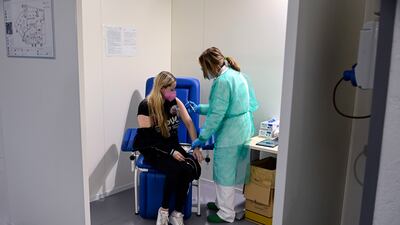
  • A Ukrainian refugee gets a Covid-19 vaccine at the Acea Hub in Italy's capital Rome. EPA
    A Ukrainian refugee gets a Covid-19 vaccine at the Acea Hub in Italy's capital Rome. EPA
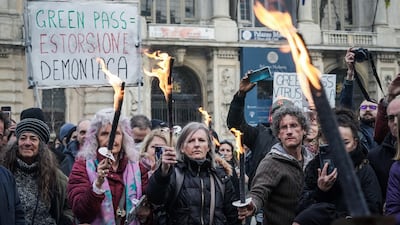
  • Protesters hold torches to burn Covid-19 vaccination passes, during a demonstration at Castello Square, in Turin, Italy. EPA
    Protesters hold torches to burn Covid-19 vaccination passes, during a demonstration at Castello Square, in Turin, Italy. EPA
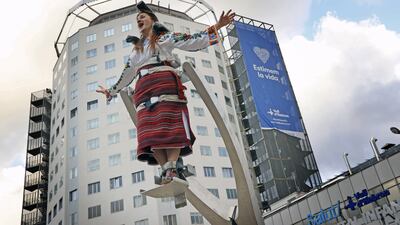
  • Ukrainian mezzosoprano Maria Melnychyn performs with the La Fura dels Baus theatre company at Vall d'Hebron hospital, in Barcelona, Spain, to mark the second anniversary of the beginning of the pandemic. EPA
    Ukrainian mezzosoprano Maria Melnychyn performs with the La Fura dels Baus theatre company at Vall d'Hebron hospital, in Barcelona, Spain, to mark the second anniversary of the beginning of the pandemic. EPA
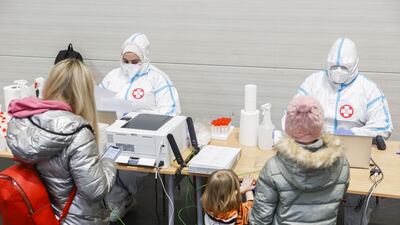
  • Ukrainian refugees are tested for coronavirus in a reception centre in Vienna, Austria. AFP
    Ukrainian refugees are tested for coronavirus in a reception centre in Vienna, Austria. AFP
'Nope'
%3Cp%3E%3Cstrong%3EDirector%3A%3C%2Fstrong%3E%20Jordan%20Peele%0D%3Cbr%3E%3Cstrong%3EStars%3A%3C%2Fstrong%3E%20Daniel%20Kaluuya%2C%20Keke%20Palmer%2C%20Brandon%20Perea%2C%20Steven%20Yeun%0D%3Cbr%3E%3Cstrong%3ERating%3A%3C%2Fstrong%3E%203.5%2F5%3C%2Fp%3E%0A

Mercer, the investment consulting arm of US services company Marsh & McLennan, expects its wealth division to at least double its assets under management (AUM) in the Middle East as wealth in the region continues to grow despite economic headwinds, a company official said.

Mercer Wealth, which globally has $160 billion in AUM, plans to boost its AUM in the region to $2-$3bn in the next 2-3 years from the present $1bn, said Yasir AbuShaban, a Dubai-based principal with Mercer Wealth.

Within the next two to three years, we are looking at reaching $2 to $3 billion as a conservative estimate and we do see an opportunity to do so,” said Mr AbuShaban.

Mercer does not directly make investments, but allocates clients’ money they have discretion to, to professional asset managers. They also provide advice to clients.

“We have buying power. We can negotiate on their (client’s) behalf with asset managers to provide them lower fees than they otherwise would have to get on their own,” he added.

Mercer Wealth’s clients include sovereign wealth funds, family offices, and insurance companies among others.

From its office in Dubai, Mercer also looks after Africa, India and Turkey, where they also see opportunity for growth.

Wealth creation in Middle East and Africa (MEA) grew 8.5 per cent to $8.1 trillion last year from $7.5tn in 2015, higher than last year’s global average of 6 per cent and the second-highest growth in a region after Asia-Pacific which grew 9.9 per cent, according to consultancy Boston Consulting Group (BCG). In the region, where wealth grew just 1.9 per cent in 2015 compared with 2014, a pickup in oil prices has helped in wealth generation.

BCG is forecasting MEA wealth will rise to $12tn by 2021, growing at an annual average of 8 per cent.

Drivers of wealth generation in the region will be split evenly between new wealth creation and growth of performance of existing assets, according to BCG.

Another general trend in the region is clients’ looking for a comprehensive approach to investing, according to Mr AbuShaban.

“Institutional investors or some of the families are seeing a slowdown in the available capital they have to invest and in that sense they are looking at optimizing the way they manage their portfolios and making sure they are not investing haphazardly and different parts of their investment are working together,” said Mr AbuShaban.

Some clients also have a higher appetite for risk, given the low interest-rate environment that does not provide enough yield for some institutional investors. These clients are keen to invest in illiquid assets, such as private equity and infrastructure.

“What we have seen is a desire for higher returns in what has been a low-return environment specifically in various fixed income or bonds,” he said.

“In this environment, we have seen a de facto increase in the risk that clients are taking in things like illiquid investments, private equity investments, infrastructure and private debt, those kind of investments were higher illiquidity results in incrementally higher returns.”

The Abu Dhabi Investment Authority, one of the largest sovereign wealth funds, said in its 2016 report that has gradually increased its exposure in direct private equity and private credit transactions, mainly in Asian markets and especially in China and India. The authority’s private equity department focused on structured equities owing to “their defensive characteristics.”

Top 10 most polluted cities
  1. Bhiwadi, India
  2. Ghaziabad, India
  3. Hotan, China
  4. Delhi, India
  5. Jaunpur, India
  6. Faisalabad, Pakistan
  7. Noida, India
  8. Bahawalpur, Pakistan
  9. Peshawar, Pakistan
  10. Bagpat, India
General%20Classification
%3Cp%3E1.%20Elisa%20Longo%20Borghini%20(ITA)%20Trek-Segafredo%3Cbr%3E2.%20Gaia%20Realini%20(ITA)%20Trek-Segafredo%207%20secs%3Cbr%3E3.%20Silvia%20Persico%20(ITA)%20UAE%20Team%20ADQ%201%20min%2018%20secs%3C%2Fp%3E%0A
The smuggler

Eldarir had arrived at JFK in January 2020 with three suitcases, containing goods he valued at $300, when he was directed to a search area.
Officers found 41 gold artefacts among the bags, including amulets from a funerary set which prepared the deceased for the afterlife.
Also found was a cartouche of a Ptolemaic king on a relief that was originally part of a royal building or temple. 
The largest single group of items found in Eldarir’s cases were 400 shabtis, or figurines.

Khouli conviction

Khouli smuggled items into the US by making false declarations to customs about the country of origin and value of the items.
According to Immigration and Customs Enforcement, he provided “false provenances which stated that [two] Egyptian antiquities were part of a collection assembled by Khouli's father in Israel in the 1960s” when in fact “Khouli acquired the Egyptian antiquities from other dealers”.
He was sentenced to one year of probation, six months of home confinement and 200 hours of community service in 2012 after admitting buying and smuggling Egyptian antiquities, including coffins, funerary boats and limestone figures.

For sale

A number of other items said to come from the collection of Ezeldeen Taha Eldarir are currently or recently for sale.
Their provenance is described in near identical terms as the British Museum shabti: bought from Salahaddin Sirmali, "authenticated and appraised" by Hossen Rashed, then imported to the US in 1948.

- An Egyptian Mummy mask dating from 700BC-30BC, is on offer for £11,807 ($15,275) online by a seller in Mexico

- A coffin lid dating back to 664BC-332BC was offered for sale by a Colorado-based art dealer, with a starting price of $65,000

- A shabti that was on sale through a Chicago-based coin dealer, dating from 1567BC-1085BC, is up for $1,950

Ovo's tips to find extra heat
  • Open your curtains when it’s sunny 
  • Keep your oven open after cooking  
  • Have a cuddle with pets and loved ones to help stay cosy 
  • Eat ginger but avoid chilli as it makes you sweat 
  • Put on extra layers  
  • Do a few star jumps  
  • Avoid alcohol   
GIANT REVIEW

Starring: Amir El-Masry, Pierce Brosnan

Director: Athale

Rating: 4/5

Infiniti QX80 specs

Engine: twin-turbocharged 3.5-liter V6

Power: 450hp

Torque: 700Nm

Price: From Dh450,000, Autograph model from Dh510,000

Available: Now

RESULT

Arsenal 0 Chelsea 3
Chelsea: Willian (40'), Batshuayi (42', 49')

Director: Laxman Utekar

Cast: Vicky Kaushal, Akshaye Khanna, Diana Penty, Vineet Kumar Singh, Rashmika Mandanna

Rating: 1/5

Global state-owned investor ranking by size

1.

United States

2.

China

3.

UAE

4.

Japan

5

Norway

6.

Canada

7.

Singapore

8.

Australia

9.

Saudi Arabia

10.

South Korea

SERIES INFO

Afghanistan v Zimbabwe, Abu Dhabi Sunshine Series

All matches at the Zayed Cricket Stadium, Abu Dhabi

Test series

1st Test: Zimbabwe beat Afghanistan by 10 wickets
2nd Test: Wednesday, 10 March – Sunday, 14 March

Play starts at 9.30am

T20 series

1st T20I: Wednesday, 17 March
2nd T20I: Friday, 19 March
3rd T20I: Saturday, 20 March

TV
Supporters in the UAE can watch the matches on the Rabbithole channel on YouTube

The rules on fostering in the UAE

A foster couple or family must:

  • be Muslim, Emirati and be residing in the UAE
  • not be younger than 25 years old
  • not have been convicted of offences or crimes involving moral turpitude
  • be free of infectious diseases or psychological and mental disorders
  • have the ability to support its members and the foster child financially
  • undertake to treat and raise the child in a proper manner and take care of his or her health and well-being
  • A single, divorced or widowed Muslim Emirati female, residing in the UAE may apply to foster a child if she is at least 30 years old and able to support the child financially
Trump v Khan

2016: Feud begins after Khan criticised Trump’s proposed Muslim travel ban to US

2017: Trump criticises Khan’s ‘no reason to be alarmed’ response to London Bridge terror attacks

2019: Trump calls Khan a “stone cold loser” before first state visit

2019: Trump tweets about “Khan’s Londonistan”, calling him “a national disgrace”

2022:  Khan’s office attributes rise in Islamophobic abuse against the major to hostility stoked during Trump’s presidency

July 2025 During a golfing trip to Scotland, Trump calls Khan “a nasty person”

Sept 2025 Trump blames Khan for London’s “stabbings and the dirt and the filth”.

Dec 2025 Trump suggests migrants got Khan elected, calls him a “horrible, vicious, disgusting mayor”

Company profile

Company: Rent Your Wardrobe 

Date started: May 2021 

Founder: Mamta Arora 

Based: Dubai 

Sector: Clothes rental subscription 

Stage: Bootstrapped, self-funded 

What is a robo-adviser?

Robo-advisers use an online sign-up process to gauge an investor’s risk tolerance by feeding information such as their age, income, saving goals and investment history into an algorithm, which then assigns them an investment portfolio, ranging from more conservative to higher risk ones.

These portfolios are made up of exchange traded funds (ETFs) with exposure to indices such as US and global equities, fixed-income products like bonds, though exposure to real estate, commodity ETFs or gold is also possible.

Investing in ETFs allows robo-advisers to offer fees far lower than traditional investments, such as actively managed mutual funds bought through a bank or broker. Investors can buy ETFs directly via a brokerage, but with robo-advisers they benefit from investment portfolios matched to their risk tolerance as well as being user friendly.

Many robo-advisers charge what are called wrap fees, meaning there are no additional fees such as subscription or withdrawal fees, success fees or fees for rebalancing.

COMPANY PROFILE
Name: Airev
Started: September 2023
Founder: Muhammad Khalid
Based: Abu Dhabi
Sector: Generative AI
Initial investment: Undisclosed
Investment stage: Series A
Investors: Core42
Current number of staff: 47
 
A MINECRAFT MOVIE

Director: Jared Hess

Starring: Jack Black, Jennifer Coolidge, Jason Momoa

Rating: 3/5

EVIL%20DEAD%20RISE
%3Cp%3E%3Cstrong%3EDirector%3A%20%3C%2Fstrong%3ELee%20Cronin%3Cbr%3E%3Cstrong%3EStars%3A%20%3C%2Fstrong%3EAlyssa%20Sutherland%2C%20Morgan%20Davies%2C%20Lily%20Sullivan%3Cbr%3E%3Cstrong%3ERating%3A%3C%2Fstrong%3E%205%2F5%3C%2Fp%3E%0A
What is a Ponzi scheme?

A fraudulent investment operation where the scammer provides fake reports and generates returns for old investors through money paid by new investors, rather than through ligitimate business activities.

Updated: July 14, 2022, 10:37 AM