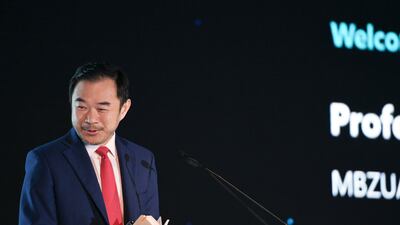
Artificial intelligence is being tipped to be the UAE's most important industry over the next 10 years, with universities urged to step up efforts to prepare the next generation of high-tech workers.
The fast-rising sector was ranked ahead of construction, electronics, aerospace, robotics, design engineering and IT and cybersecurity in a poll of technology and engineering employees in the Emirates.
The UAE government is driving forwards with ambitious plans to establish itself as a global AI hub.
In 2017, the country appointed Omar Al Olama as its first Minister of State for Artificial Intelligence and later adopted the National Artificial Intelligence Strategy 2031 to promote the growth of the cutting-edge technology.
The Mohamed bin Zayed University of Artificial Intelligence in Abu Dhabi was established in 2019 to develop the skills of top talent from across the world to lead workplaces of the future.
The survey, commissioned by the UK-based Institution of Engineering and Technology (IET), and carried out by YouGov, polled 325 employers and employees in the UAE in December 2021 and January 2022.
Julian Young, IET president, said artificial intelligence would most certainly continue to grow in prominence.
“Alongside that, I would almost add everything to do with digitalisation. Everything in the future in a highly advanced technological community, will be about digitalisation and getting computers to do far more work for us," said Mr Young.
“So if one has a skilled workforce in this field, one would be able to make a profitable company and a profitable organisation — and be a truly global player.
“I'm not surprised to see that these are the skill sets that are required in three years' time, that these are the skill sets required in 10 years' time.
"If you pick up artificial intelligence and then think about the type of courses that people are undertaking. Do we need courses in artificial intelligence? Yes, of course. But in the more traditional areas of engineering, mechanical, electrical, electronic aerospace, there needs to be a digital component."
He said all of the traditional industries need digital and software and computer science inputs to be able to make the best of their workforce.
Education must keep pace with career trends
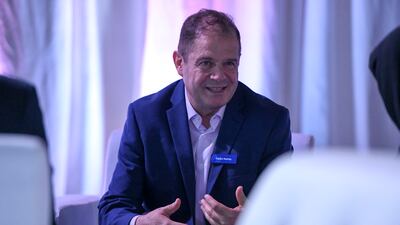
Ian Mercer, head of international operations for the Institution of Engineering and Technology, said universities could use the findings to ensure their courses run parallel to the immediate and future demands of the economy.
"If I were an academician, then I would be thinking, 'if that's where the where the industry is going to go then the courses that we're going to offer to students probably need to be ramped up to be where the need is going to be'," Mr Mercer said.
"At the end of the day, universities want jobs to be available for the people that they put through the system.
"If you look at the the ambitions of the UAE government, they want to become a tech hub of the world."
He said that in a post-oil and gas economy, technology may be one of the main workforce providers in the region.
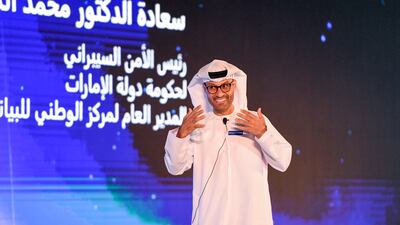
The UAE is continuing to explore ways in which artificial intelligence can be used to boost business, make government departments more agile and efficient, and support health services.
Artificial intelligence could soon be used to tailor UAE government employees’ working hours to their own personal productivity.
The initiative, which is being studied by the Federal Authority for Government Human Resources, is one of a host of practical applications for AI in everyday life.
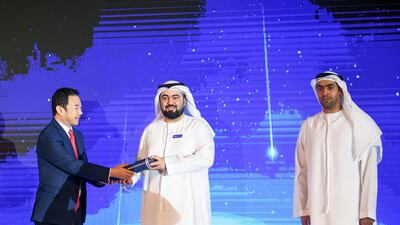
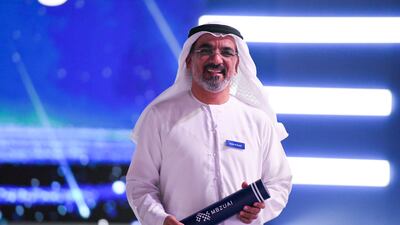
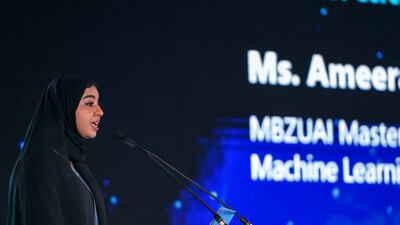
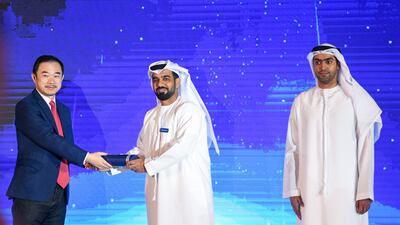
In March, 41 business leaders who took a three-month course at Mohamed bin Zayed University for Artificial Intelligence, celebrated their graduation.
The course aimed to support UAE government and business sectors. Participants were required to complete 12 rigorous weeks of coursework, lectures and collaborative project work.
Dr Jamal Al Kaabi, undersecretary at the Department of Health in Abu Dhabi, joined the programme after the Covid-19 pandemic made him realise the potential of artificial intelligence.
He believes wearable technology and AI could be crucial in providing home services and follow-up care for the elderly.

Know your Camel lingo
The bairaq is a competition for the best herd of 50 camels, named for the banner its winner takes home
Namoos - a word of congratulations reserved for falconry competitions, camel races and camel pageants. It best translates as 'the pride of victory' - and for competitors, it is priceless
Asayel camels - sleek, short-haired hound-like racers
Majahim - chocolate-brown camels that can grow to weigh two tonnes. They were only valued for milk until camel pageantry took off in the 1990s
Millions Street - the thoroughfare where camels are led and where white 4x4s throng throughout the festival
The specs
Engine: 5.2-litre V10
Power: 640hp at 8,000rpm
Torque: 565Nm at 6,500rpm
Transmission: 7-speed dual-clutch auto
Price: From Dh1 million
On sale: Q3 or Q4 2022
Pathaan
%3Cp%3E%3Cstrong%3EDirector%3A%3C%2Fstrong%3E%20Siddharth%20Anand%C2%A0%3C%2Fp%3E%0A%3Cp%3E%3Cstrong%3EStars%3A%3C%2Fstrong%3E%20Shah%20Rukh%20Khan%2C%20Deepika%20Padukone%2C%20John%20Abraham%C2%A0%3C%2Fp%3E%0A%3Cp%3E%3Cstrong%3ERating%3A%3C%2Fstrong%3E%203%2F5%3C%2Fp%3E%0A
Specs
Engine: Dual-motor all-wheel-drive electric
Range: Up to 610km
Power: 905hp
Torque: 985Nm
Price: From Dh439,000
Available: Now
The Sand Castle
Director: Matty Brown
Stars: Nadine Labaki, Ziad Bakri, Zain Al Rafeea, Riman Al Rafeea
Rating: 2.5/5
All the Money in the World
Director: Ridley Scott
Starring: Charlie Plummer, Mark Wahlberg, Michelle Williams, Christopher Plummer
Four stars
Mercer, the investment consulting arm of US services company Marsh & McLennan, expects its wealth division to at least double its assets under management (AUM) in the Middle East as wealth in the region continues to grow despite economic headwinds, a company official said.
Mercer Wealth, which globally has $160 billion in AUM, plans to boost its AUM in the region to $2-$3bn in the next 2-3 years from the present $1bn, said Yasir AbuShaban, a Dubai-based principal with Mercer Wealth.
“Within the next two to three years, we are looking at reaching $2 to $3 billion as a conservative estimate and we do see an opportunity to do so,” said Mr AbuShaban.
Mercer does not directly make investments, but allocates clients’ money they have discretion to, to professional asset managers. They also provide advice to clients.
“We have buying power. We can negotiate on their (client’s) behalf with asset managers to provide them lower fees than they otherwise would have to get on their own,” he added.
Mercer Wealth’s clients include sovereign wealth funds, family offices, and insurance companies among others.
From its office in Dubai, Mercer also looks after Africa, India and Turkey, where they also see opportunity for growth.
Wealth creation in Middle East and Africa (MEA) grew 8.5 per cent to $8.1 trillion last year from $7.5tn in 2015, higher than last year’s global average of 6 per cent and the second-highest growth in a region after Asia-Pacific which grew 9.9 per cent, according to consultancy Boston Consulting Group (BCG). In the region, where wealth grew just 1.9 per cent in 2015 compared with 2014, a pickup in oil prices has helped in wealth generation.
BCG is forecasting MEA wealth will rise to $12tn by 2021, growing at an annual average of 8 per cent.
Drivers of wealth generation in the region will be split evenly between new wealth creation and growth of performance of existing assets, according to BCG.
Another general trend in the region is clients’ looking for a comprehensive approach to investing, according to Mr AbuShaban.
“Institutional investors or some of the families are seeing a slowdown in the available capital they have to invest and in that sense they are looking at optimizing the way they manage their portfolios and making sure they are not investing haphazardly and different parts of their investment are working together,” said Mr AbuShaban.
Some clients also have a higher appetite for risk, given the low interest-rate environment that does not provide enough yield for some institutional investors. These clients are keen to invest in illiquid assets, such as private equity and infrastructure.
“What we have seen is a desire for higher returns in what has been a low-return environment specifically in various fixed income or bonds,” he said.
“In this environment, we have seen a de facto increase in the risk that clients are taking in things like illiquid investments, private equity investments, infrastructure and private debt, those kind of investments were higher illiquidity results in incrementally higher returns.”
The Abu Dhabi Investment Authority, one of the largest sovereign wealth funds, said in its 2016 report that has gradually increased its exposure in direct private equity and private credit transactions, mainly in Asian markets and especially in China and India. The authority’s private equity department focused on structured equities owing to “their defensive characteristics.”
BULKWHIZ PROFILE
Date started: February 2017
Founders: Amira Rashad (CEO), Yusuf Saber (CTO), Mahmoud Sayedahmed (adviser), Reda Bouraoui (adviser)
Based: Dubai, UAE
Sector: E-commerce
Size: 50 employees
Funding: approximately $6m
Investors: Beco Capital, Enabling Future and Wain in the UAE; China's MSA Capital; 500 Startups; Faith Capital and Savour Ventures in Kuwait
French business
France has organised a delegation of leading businesses to travel to Syria. The group was led by French shipping giant CMA CGM, which struck a 30-year contract in May with the Syrian government to develop and run Latakia port. Also present were water and waste management company Suez, defence multinational Thales, and Ellipse Group, which is currently looking into rehabilitating Syrian hospitals.
Ms Yang's top tips for parents new to the UAE
- Join parent networks
- Look beyond school fees
- Keep an open mind
UAE currency: the story behind the money in your pockets
SPECS
%3Cp%3EEngine%3A%20Twin-turbocharged%204-litre%20V8%3Cbr%3EPower%3A%20625%20bhp%3Cbr%3ETorque%3A%20630Nm%3Cbr%3EOn%20sale%3A%20Now%3Cbr%3EPrice%3A%20From%20Dh974%2C011%3C%2Fp%3E%0A