

The Environment Agency — Abu Dhabi (EAD) has released 20 Arabian Oryx into the Shumari Wildlife Reserve in Jordan.
It is hoped there will soon be a thriving herd of an animal once effectively hunted out of existence in the reserve, and that it will boost awareness about conservation and bolster eco-tourism.
It is part of the Sheikh Mohamed bin Zayed Arabian Oryx Reintroduction Programme, which is regarded as one of the world's most successful conservation programmes.
The programme was established in 2007 and has supported the introduction of the Oryx across the Middle East to a point in 2011 where the animal's status in the International Union for Conservation of Nature's Red List went from “threatened” to “vulnerable” in 2011.
This was considered one of the most significant achievements in the field of species reintroduction at a global level.

The latest release comes after a deal between the EAD and the Royal Society for the Conservation of Nature (RSCN) to develop a herd in the Jordanian reserve.
The reserve is expected to be expanded to ensure there are enough suitable new grazing sites for them to thrive, while an educational centre and eco-tourism programmes will raise awareness.
Photos of the release showed the Arabian oryx, with its distinctive white coat that reflects heat and helps lower its body temperature, roaming across the reserve.
“The programme has undertaken extensive breeding and reintroduction programmes, and so far, more than 1,000 Arabian Oryx have been released across the UAE, Oman and Jordan,” said the EAD's Ahmed Al Hashmi.
“Today, the Arabian Oryx Conservation Programme is considered one of the world’s most successful conservation programmes, which has helped increase the number of Arabian Oryx in the UAE to 10,000, with 5,000 currently located in Abu Dhabi, which is considered the largest group of Arabian Oryx in the world.”
The Shumari Wildlife Reserve is 120 kilometres east of the capital Amman and near the town of Azraq. It was established in 1975, with the support of RSCN and the World Wildlife Fund.
How the UAE is protecting nature — in pictures
-
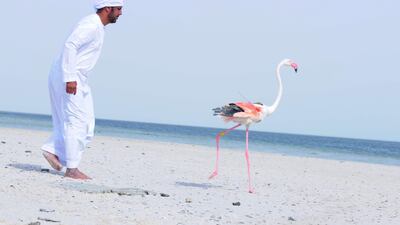
The UAE is known for protecting the environment. Here Environment Agency Abu Dhabi staff release a tagged flamingo as part of Abu Dhabi Birdathon initiative. Courtesy Environment Agency Abu Dhabi -

Umbrella Thorn Acacia trees are among the UAE's rich flora. Silvia Razgova / The National -
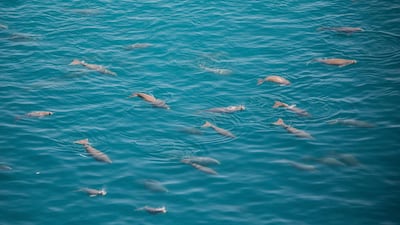
Abu Dhabi has the second-largest dugong population in the world. Environment Agency Abu Dhabi -
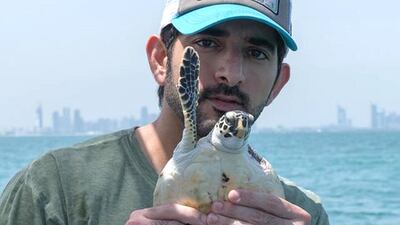
Love of nature is part of life here. Sheikh Hamdan bin Mohammed, Crown Prince of Dubai, with a sea turtles he helped release into the wild. Instagram/ @faz3 -
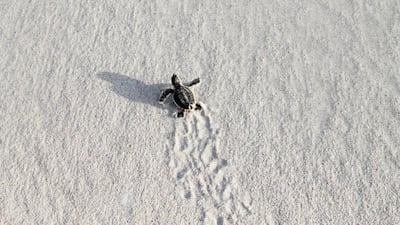
Abu Dhabi's environment agency is working to protect Hawksbill and Green turtles which live in the emirate's waters. Courtesy TDIC -
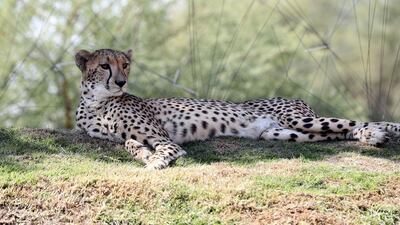
A cheetah at Al Ain Zoo, Al Ain. The zoo was founded by the Late President, Sheikh Zayed. Chris Whiteoak / The National -
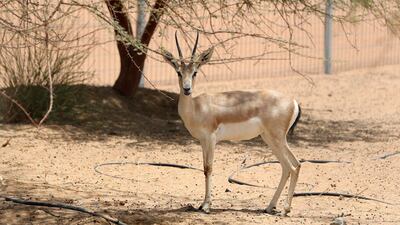
An Arabian sand gazelle at the Mleiha Archaeological Centre in Sharjah. Chris Whiteoak / The National -

The UAE is also embracing clean energy. This computer-generated image shows what phase four of Dubai's Mohammed Bin Rashid Solar Park, currently under construction in Dubai. Image courtesy of Acwa Power -

Nuclear energy is also important. The first reactor at Barakah nuclear plant reached 100 per cent power in December 2020. -

Abu Dhabi's new Midfield Terminal has won a coveted three-pearl rating under Abu Dhabi's Estidama, Arabic for sustainability, system. Courtesy KPF -
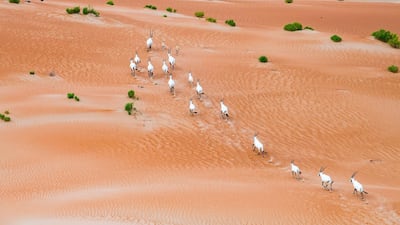
A breeding programme run by Environment Agency Abu Dhabi helped bring Arabian Oryx back from the brink of extinction. Courtesy: EAD



