• An Iranian-built Qasef-1 drone used by Houthi rebels in Yemen.
    An Iranian-built Qasef-1 drone used by Houthi rebels in Yemen.
  • A shot down drone on display. All photos by Victor Besa / The National
    A shot down drone on display. All photos by Victor Besa / The National
  • The remains of a Houthi drone intercepted by the Saudi Arabian Air Force. @SPAregions
    The remains of a Houthi drone intercepted by the Saudi Arabian Air Force. @SPAregions
  • The engine of a Qasef-1 drone shot down by Arab Coalition forces in Yemen.
    The engine of a Qasef-1 drone shot down by Arab Coalition forces in Yemen.
  • A drone used by Houthi rebels to launch attacks on Saudi Arabia. AP
    A drone used by Houthi rebels to launch attacks on Saudi Arabia. AP
  • An IED built with Iranian components and camouflaged as a cooking pot recovered by Arab Coalition forces in Yemen.
    An IED built with Iranian components and camouflaged as a cooking pot recovered by Arab Coalition forces in Yemen.
  • An Iranian-supplied STEYR .50 Calibre sniper riffle being used by the Houthi rebels in Yemen.
    An Iranian-supplied STEYR .50 Calibre sniper riffle being used by the Houthi rebels in Yemen.
  • Two anti-tank guided missiles (ATGM). The one on the right is a Russian-made Kornet, and on the left is an Iranian imitation. Markings show they were built in 2015 indicating they were smuggled to Yemen after the UN arms embargo.
    Two anti-tank guided missiles (ATGM). The one on the right is a Russian-made Kornet, and on the left is an Iranian imitation. Markings show they were built in 2015 indicating they were smuggled to Yemen after the UN arms embargo.
  • IEDs camouflaged inside a fake rock. Arab Coalition officials estimate they have defused up to 30,000 such devices since the war began.
    IEDs camouflaged inside a fake rock. Arab Coalition officials estimate they have defused up to 30,000 such devices since the war began.
  • Farsi language was found enscribed on the wiring of this drone battery from a Qasef-1 UAV indicating its Iranian origins.
    Farsi language was found enscribed on the wiring of this drone battery from a Qasef-1 UAV indicating its Iranian origins.
  • Limpet mines.
    Limpet mines.
  • Electronics of an IED.
    Electronics of an IED.
  • Remains of Houthi drone which the coalition shot down. @SPAregions
    Remains of Houthi drone which the coalition shot down. @SPAregions
  • Weapons supplied by Iran to the Houthi militias in Yemen were put on display at a press conference by the Saudi-led Arab coalition. Victor Besa / The National
    Weapons supplied by Iran to the Houthi militias in Yemen were put on display at a press conference by the Saudi-led Arab coalition. Victor Besa / The National

Houthi terror attack: what drones do the terrorists have?


  • English
  • Arabic

After Monday’s terrorist attack against the UAE, which killed three people and wounded six, international attention is once again focused on low-cost drones: how to stop them, and how to prevent their acquisition by terror groups.

This follows the UAE's announcement that drones were a suspected method behind the attack, but an investigation is ongoing.

Explosive drones, or the “loitering munitions” suspected in this case, have become a challenge to advanced militaries around the world.

But what exactly are these weapons, frequently used by the Houthis and other Iran-backed groups to attack Saudi Arabia and Iraq?

Iranian drones

Iran has proliferated unmanned aircraft originally designed for target practice in the 1980s. They typically have a rear-mounted “pusher propeller” system and are constructed from cheap material, sometimes including wooden components.

As cameras evolved, drones such as Iran’s Ababil were used for reconnaissance, but in recent years the flimsy looking planes have been rigged with bombs and are sometimes referred to as “Kamikaze drones”.

Notoriously, they were used in an attack that shocked the world at Abqaiq in Saudi Arabia in September 2019, when critical oil infrastructure was destroyed.

Drones such as the Houthi Qasef-2K and Sammad 3, propeller-driven aircraft, are slow moving but have a long range.

They have high endurance petrol engines, often made from strong, lightweight material such as titanium and carbon fibre, to reduce weight. The Houthis also have a small cruise missile fitted with turbojet engines, copied from European designs.

Many of these captured and shot down drones, including the Quds-1 missile, were found to have components made in Iran, according to a January 2020 UN Panel of Experts report.

And because of their slow speed, small size, low and unpredictable flight path, they are difficult to detect for ground-based radar systems.

  • World leaders have condemned the attack and offered their support to the Emirates. US Secretary of State Antony Blinken called his Emirati counterpart Sheikh Abdullah bin Zayed to express his condolences. Reuters
    World leaders have condemned the attack and offered their support to the Emirates. US Secretary of State Antony Blinken called his Emirati counterpart Sheikh Abdullah bin Zayed to express his condolences. Reuters
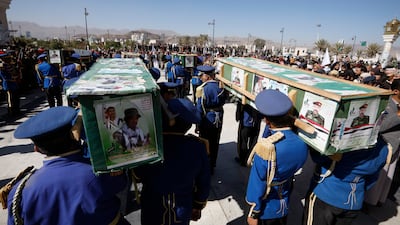
  • A mass funeral for pro-Houthi rebels. In oil-rich Shabwa province, 40 rebels were killed 10 days ago when the Southern Transitional Council seized a military base, while as many as 280 died in air strikes on Marib and Al Bayda at the weekend. EPA
    A mass funeral for pro-Houthi rebels. In oil-rich Shabwa province, 40 rebels were killed 10 days ago when the Southern Transitional Council seized a military base, while as many as 280 died in air strikes on Marib and Al Bayda at the weekend. EPA
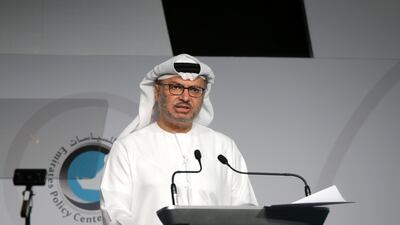
  • Dr Anwar Gargash, diplomatic adviser to President Sheikh Khalifa, said the attack on Abu Dhabi airport and an Adnoc oil storage unit in Mussaffah was a 'heinous crime' by a terrorist group. Navin Khianey for The National
    Dr Anwar Gargash, diplomatic adviser to President Sheikh Khalifa, said the attack on Abu Dhabi airport and an Adnoc oil storage unit in Mussaffah was a 'heinous crime' by a terrorist group. Navin Khianey for The National
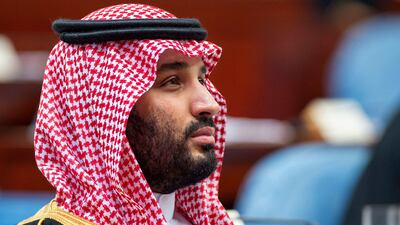
  • Saudi Crown Prince Mohammed bin Salman spoke to Sheikh Mohamed bin Zayed, Crown Prince of Abu Dhabi and Deputy Supreme Commander of the Armed Forces, on Monday night to offer his support. Riyadh and other cities have been struck by dozens of Houthi drones in recent months. AFP
    Saudi Crown Prince Mohammed bin Salman spoke to Sheikh Mohamed bin Zayed, Crown Prince of Abu Dhabi and Deputy Supreme Commander of the Armed Forces, on Monday night to offer his support. Riyadh and other cities have been struck by dozens of Houthi drones in recent months. AFP
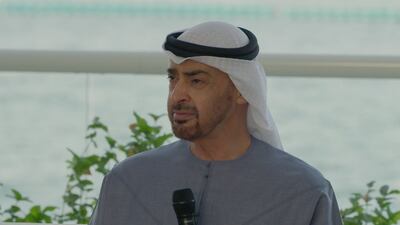
  • Sheikh Mohamed bin Zayed received calls from leaders across the globe on Monday night. Photo: Ministry of Presidential Affairs
    Sheikh Mohamed bin Zayed received calls from leaders across the globe on Monday night. Photo: Ministry of Presidential Affairs

If you have heard the phrase “flying under the radar” – a dangerous job for any pilot – this is roughly the concept used for attack drones, except the risk to a human pilot is removed.

Much of the technology transfer for these aircraft has been sent to Iran through front companies such as Tehran Hobby Ltd, which has illegally obtained engine components from foreign civilian companies.

Indeed, the Qasef drone and similar variants, frequently used to attack Saudi Arabia, is based on the Iranian Ababil drone and built from foreign parts used on commercial drones, plus parts that have been reverse engineered.

These unmanned aircraft are sometimes referred to as “loitering munitions” because they can fly on an unpredictable pattern for long periods and sometimes change course, unlike most missiles that fly on a fixed course.

The concept is often thought of as low tech – and the Iranian designs and Houthi variants often are.

But loitering munitions – as opposed to Iran’s target drones such as the Ababil – were first developed by the US in the 1980s.

The most recent variants, such as the Israeli Harop, are far deadlier than Houthi drones, with much more sophisticated guidance systems and autonomous capability.

By contrast, Iran-designed drones should be easy to intercept, but it has proven challenging because modern air defences are designed to shoot down missiles, including ballistic missiles that travel on a predictable arc high in the atmosphere, or enemy aircraft, which have a large radar signature.

These air defense systems are a legacy of the Cold War when many existing systems were developed, including the US Patriot system and the Russian S-300 family of systems.

Russia and America simply did not expect drones to be used in this way — low level kamikazes that fly under the radar horizon— and therefore did not design air defences accordingly.

This problem is quickly being solved; the US Patriot missile system PAC-3 variant is designed to shoot down drones with 360-degree radar coverage configured to detect the small objects.

Israel’s Iron Dome, which has powerful AI-assisted targeting computers, has proven similarly capable against drones, and the US is now developing a similar system, while Russia’s new S-500 system is also designed to take down drones.


The story in numbers

18

This is how many recognised sects Lebanon is home to, along with about four million citizens

450,000

More than this many Palestinian refugees are registered with UNRWA in Lebanon, with about 45 per cent of them living in the country’s 12 refugee camps

1.5 million

There are just under 1 million Syrian refugees registered with the UN, although the government puts the figure upwards of 1.5m

73

The percentage of stateless people in Lebanon, who are not of Palestinian origin, born to a Lebanese mother, according to a 2012-2013 study by human rights organisation Frontiers Ruwad Association

18,000

The number of marriages recorded between Lebanese women and foreigners between the years 1995 and 2008, according to a 2009 study backed by the UN Development Programme

77,400

The number of people believed to be affected by the current nationality law, according to the 2009 UN study

4,926

This is how many Lebanese-Palestinian households there were in Lebanon in 2016, according to a census by the Lebanese-Palestinian dialogue committee

The specs

Engine: 3.0-litre 6-cyl turbo

Power: 435hp at 5,900rpm

Torque: 520Nm at 1,800-5,500rpm

Transmission: 9-speed auto

Price: from Dh498,542

On sale: now

The five pillars of Islam

1. Fasting 

2. Prayer 

3. Hajj 

4. Shahada 

5. Zakat 

Results:

2.15pm: Handicap (PA) Dh60,000 1,200m.

Winner: AZ Dhabyan, Adam McLean (jockey), Saleha Al Ghurair (trainer).

2.45pm: Maiden (PA) Dh60,000 1,200m.

Winner: Ashton Tourettes, Sam Hitchcott, Ibrahim Aseel.

3.15pm: Conditions (PA) Dh60,000 2,000m.

Winner: Hareer Al Reef, Gerald Avranche, Abdallah Al Hammadi.

3.45pm: Maiden (PA) Dh60,000 1,700m.

Winner: Kenz Al Reef, Gerald Avranche, Abdallah Al Hammadi.

4.15pm: Sheikh Ahmed bin Rashid Al Maktoum Cup (TB) Dh 200,000 1,700m.

Winner: Mystique Moon, Sam Hitchcott, Doug Watson.

4.45pm: The Crown Prince Of Sharjah Cup Prestige (PA) Dh200,000 1,200m.

Winner: ES Ajeeb, Sam Hitchcott, Ibrahim Aseel.

Tuesday's fixtures
Group A
Kyrgyzstan v Qatar, 5.45pm
Iran v Uzbekistan, 8pm
N Korea v UAE, 10.15pm
Updated: January 19, 2022, 5:49 AM