
A driver causes chaos by veering across motorway lanes in a new video from Abu Dhabi Police.
The SUV driver swerves across six lanes from left to right to take an exit.
The undated 38-second video shows other motorists committing the offence on the same road in the capital.
As part of its latest safety campaign, the force said irresponsible lane changing can lead to serious accidents that would result in severe injuries.
Anyone caught flouting lane-changing rules will be fined Dh400, and the penalty could be far greater if lives are put at risk.
UAE police's supercar fleet - in pictures
-
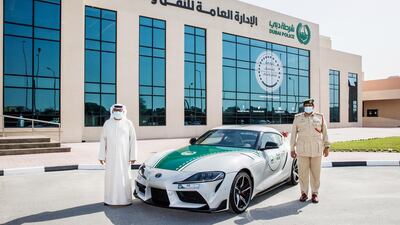
Dubai Police have recently acquired a Toyota Supra to add to their supercar fleet. Courtesy: Dubai Police -
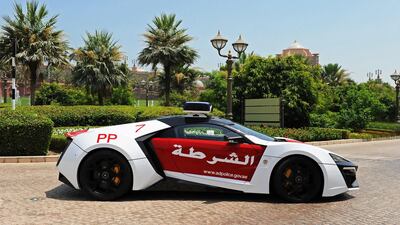
In 2015, Abu Dhabi Police displayed a liveried Lykan HyperSport by Dubai-based car maker W Motors. Security Media -
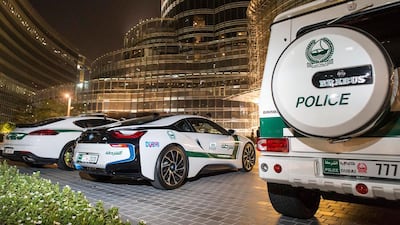
From left, a Porsche Panamera, BMW i8 hybrid sports car and a Brabus 700, all in the Dubai Police colours, pictured in 2015. Dubai Police -
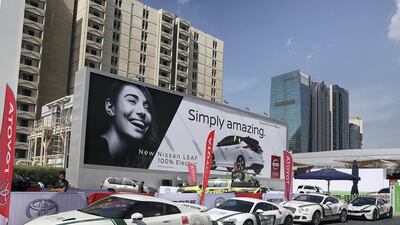
A few million dirhams of Dubai Police metal outside the Dubai International Motor Show in 2017: from left, a Nissan GT-R, an Audi R8, a Bentley Continental GT and a BMW i8. Satish Kumar for The National -
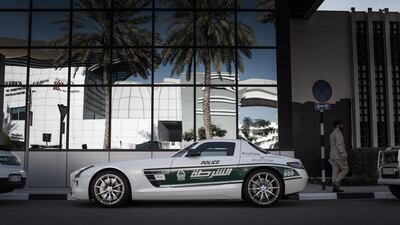
A Mercedes-Benz SLS-AMG on the Dubai Police fleet in 2015. WSF Creative -
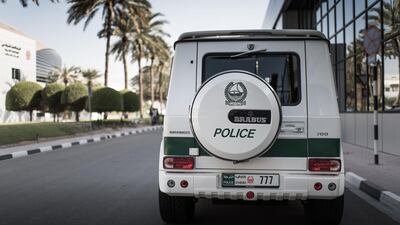
Dubai Police's Brabus 700, which is a Mercedes-Benz G 63 modified by German company Brabus. WSF Creative -

The Bugatti Veyron, once the fastest production car in the world, has been one of the most expensive cars in Dubai Police's collection. EPA -
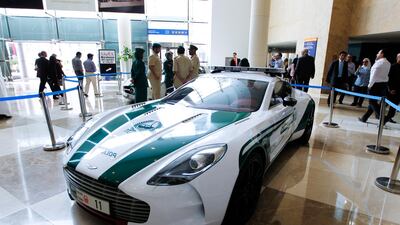
An Aston Martin One-77, one of a limited edition of 77 cars, in Dubai Police livery at the Arabian Travel Market in Dubai in 2013. Sarah Dea / The National -
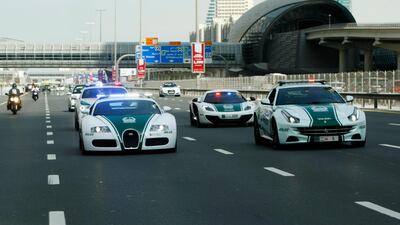
A fleet of Dubai Police supercars led the way during the fourth stage of the Dubai Tour cycling race in 2014. Christopher Pike / The National -

Dubai Police's Brabus 700 was unveiled at the Dubai International Motor Show in 2013. Pawan Singh / The National -
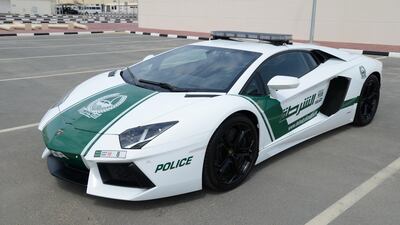
A Lamborghini Aventador in Dubai Police colours. Dubai Police -
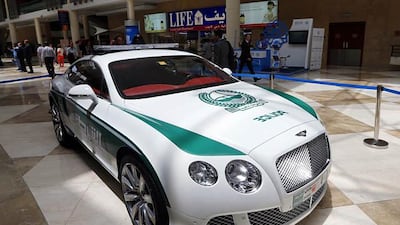
A Bentley Continental GT from Dubai Police's fleet at the Arabian Travel Market in Dubai in 2013. AFP -
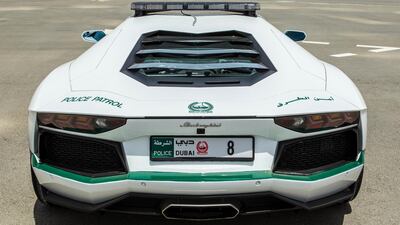
The Lamborghini Aventador is capable of speeds of up to 350 kilometres per hour. Dubai Police -
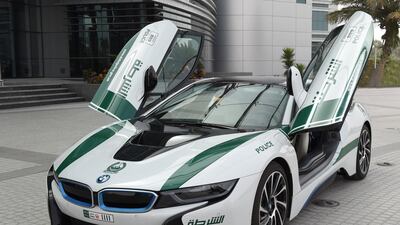
The BMW i8, which is a hybrid vehicle, adds an environmental edge to Dubai Police's glittering fleet. Dubai Police -
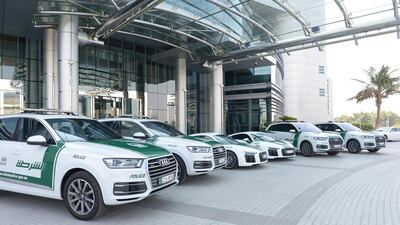
Two new Audi R8s, centre, were added to the Dubai Police roster in 2016. Grayling -
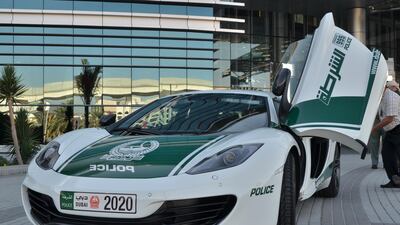
A McLaren MP4-12C was given the green-and-white treatment in 2013. Dubai Police -
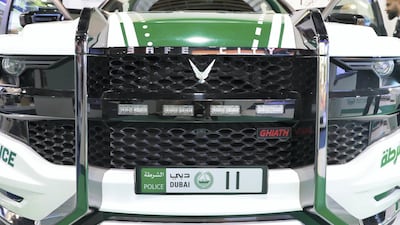
Dubai Police's Ghiath, aka the 'Beast Patrol', fights crime by using AI systems with facialrecognition technology. Victor Besa / The National -
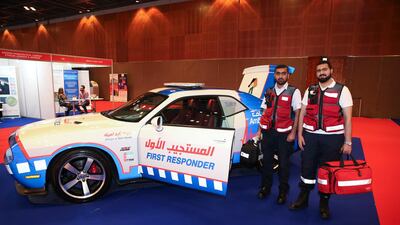
Dubai Ambulance's Ford Mustang. Courtesy: Aletihad -
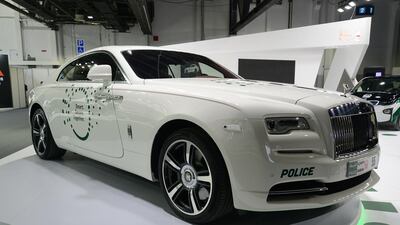
The Rolls-Royce Wraith is the most luxurious of Dubai Police's fleet. Courtesy: Dubai Police -
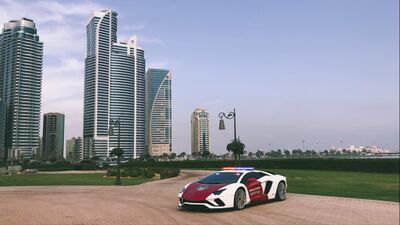
The Ministry of Interior's Lamborghini Aventador. Lamborghini -
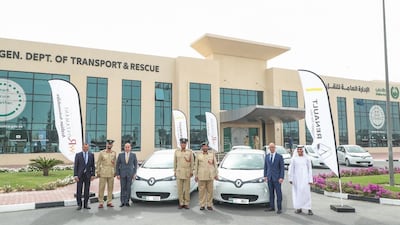
Dubai Police officers set to take to the road in a new fleet of Renault Zoe cars. -
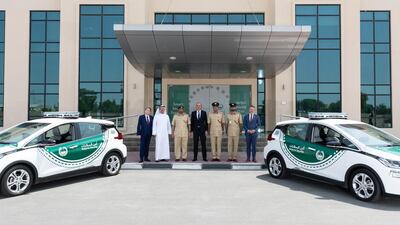
Eight Chevolet Bolt EV cars are now being used by Dubai Police. Courtesy: Chevrolet -
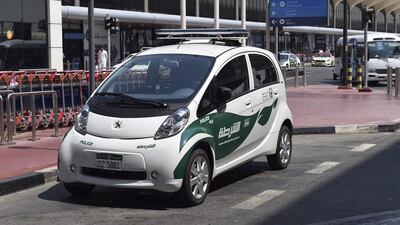
One of Dubai Police's new Peugeot electric cars that will be stationed at Dubai Airports. Dubai Media Office
Abdul Jabar Qahraman was meeting supporters in his campaign office in the southern Afghan province of Helmand when a bomb hidden under a sofa exploded on Wednesday.
The blast in the provincial capital Lashkar Gah killed the Afghan election candidate and at least another three people, Interior Minister Wais Ahmad Barmak told reporters. Another three were wounded, while three suspects were detained, he said.
The Taliban – which controls much of Helmand and has vowed to disrupt the October 20 parliamentary elections – claimed responsibility for the attack.
Mr Qahraman was at least the 10th candidate killed so far during the campaign season, and the second from Lashkar Gah this month. Another candidate, Saleh Mohammad Asikzai, was among eight people killed in a suicide attack last week. Most of the slain candidates were murdered in targeted assassinations, including Avtar Singh Khalsa, the first Afghan Sikh to run for the lower house of the parliament.
The same week the Taliban warned candidates to withdraw from the elections. On Wednesday the group issued fresh warnings, calling on educational workers to stop schools from being used as polling centres.
While you're here
Samanth Subramanian: Imposing Hindi could undermine India's linguistic diversity
Phil Mercer: Aboriginal musicians are struggling to be heard
Gavin Esler: What we lose when we allow languages to die
Mission%3A%20Impossible%20-%20Dead%20Reckoning%20Part%20One
Analysis
Members of Syria's Alawite minority community face threat in their heartland after one of the deadliest days in country’s recent history. Read more
Mercer, the investment consulting arm of US services company Marsh & McLennan, expects its wealth division to at least double its assets under management (AUM) in the Middle East as wealth in the region continues to grow despite economic headwinds, a company official said.
Mercer Wealth, which globally has $160 billion in AUM, plans to boost its AUM in the region to $2-$3bn in the next 2-3 years from the present $1bn, said Yasir AbuShaban, a Dubai-based principal with Mercer Wealth.
“Within the next two to three years, we are looking at reaching $2 to $3 billion as a conservative estimate and we do see an opportunity to do so,” said Mr AbuShaban.
Mercer does not directly make investments, but allocates clients’ money they have discretion to, to professional asset managers. They also provide advice to clients.
“We have buying power. We can negotiate on their (client’s) behalf with asset managers to provide them lower fees than they otherwise would have to get on their own,” he added.
Mercer Wealth’s clients include sovereign wealth funds, family offices, and insurance companies among others.
From its office in Dubai, Mercer also looks after Africa, India and Turkey, where they also see opportunity for growth.
Wealth creation in Middle East and Africa (MEA) grew 8.5 per cent to $8.1 trillion last year from $7.5tn in 2015, higher than last year’s global average of 6 per cent and the second-highest growth in a region after Asia-Pacific which grew 9.9 per cent, according to consultancy Boston Consulting Group (BCG). In the region, where wealth grew just 1.9 per cent in 2015 compared with 2014, a pickup in oil prices has helped in wealth generation.
BCG is forecasting MEA wealth will rise to $12tn by 2021, growing at an annual average of 8 per cent.
Drivers of wealth generation in the region will be split evenly between new wealth creation and growth of performance of existing assets, according to BCG.
Another general trend in the region is clients’ looking for a comprehensive approach to investing, according to Mr AbuShaban.
“Institutional investors or some of the families are seeing a slowdown in the available capital they have to invest and in that sense they are looking at optimizing the way they manage their portfolios and making sure they are not investing haphazardly and different parts of their investment are working together,” said Mr AbuShaban.
Some clients also have a higher appetite for risk, given the low interest-rate environment that does not provide enough yield for some institutional investors. These clients are keen to invest in illiquid assets, such as private equity and infrastructure.
“What we have seen is a desire for higher returns in what has been a low-return environment specifically in various fixed income or bonds,” he said.
“In this environment, we have seen a de facto increase in the risk that clients are taking in things like illiquid investments, private equity investments, infrastructure and private debt, those kind of investments were higher illiquidity results in incrementally higher returns.”
The Abu Dhabi Investment Authority, one of the largest sovereign wealth funds, said in its 2016 report that has gradually increased its exposure in direct private equity and private credit transactions, mainly in Asian markets and especially in China and India. The authority’s private equity department focused on structured equities owing to “their defensive characteristics.”


