



Sharjah's public sector will adopt a four-day working week and a three-day weekend - giving employees an extra half day off than the rest of the country.
Sharjah's Executive Council announced the decision on Thursday. It will come into effect on January 1, 2022.
Employees will work from 7.30am to 3.30pm, which is 60 to 90 minutes longer than they do at present.
The decision follows the federal government's landmark shift to a Saturday-Sunday weekend, with a half day of work on Friday. The UAE's labour minister said the private sector will receive no official instruction to make the change, and can do so at their own discretion.
It makes Sharjah's government sector the first in the Gulf and Middle East to fully adopt a four-day working week. Dubai, Abu Dhabi, Ras Al Khaimah and Fujairah's local governments have all committed to a 4.5 day working week.
Sheikh Sultan bin Ahmed Al Qasimi, Deputy Ruler of Sharjah, announced the move after instructions from the Ruler of Sharjah.
Schools throughout the country are already braced for the new Monday to Friday working week, with schools expected to open with a new timetable on Monday, January 3. There is an extra national holiday on Sunday, January 2, 2022.
'More quality family time'
Sheikha Tariq, an Emirati public sector employee, told The National she and her colleagues were elated by the news.
She said it was clear that more work will have to be got through during the working week in return for the extra time off.
“This will not only give us more time to spend with our families in a way that will boost the emirate’s efforts of preserving the family unit, but will also encourage employees to perform better at work,” she said.
“It's a great decision in terms of more family bonding, religious commitment and increased productivity."
Abdul Jaleel Al Bloushi, who works for a government HR department in the town of Kalba, said employees would need to show they could make a four-day week work.
"You see by the working hours, you will notice they have been extended. And now employees including myself have an incentive to do better performance," he said.
He said many will appreciate the chance to be "more present in the lives of our children and families".
School situation not yet clear
Although it would appear likely that schools could fall in line with government work hours, headteachers said it was too soon to say whether pupils would attend classes on Fridays or not.
The country's public schools, largely attended by Emiratis, are overseen by a federal authority, while Sharjah's private schools are regulated by a local education authority.
Ibraheem Barakeh, director of the Al Shola group of private schools, said there were many factors to consider.
"We haven’t received anything official related to this decision, in terms of the shape of the school week," he said.
"We are eagerly waiting for details in order to be able to coordinate not only the new school week but also what’s connected to it, such as school holidays, final exams in each of the terms.
"We expect all of these factors were taken into consideration before the decision was taken."
Sharjah's ancient Egypt exhibition dazzles visitors - in pictures
-
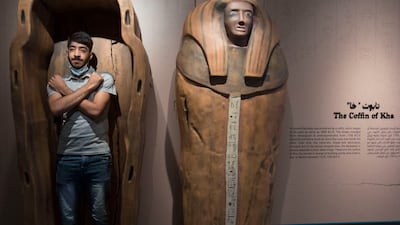
An interactive exhibition at the Sharjah Archeological Museum teaches children about an ancient Egyptian village where hundreds of craftsmen who worked on and decorated Valley of the Kings tombs lived. All Photos: Ruel Pableo/The National -
The focus of the exhibition is the discovery of the 3,400-year-old Deir El Medina village, home to the artisans and craftsmen who built and decorated the royal tombs. -
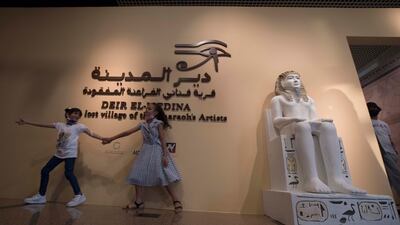
Children at the exhibition. -
The exhibition teaches children about royal tombs, pharaohs and life in ancient Egypt. -
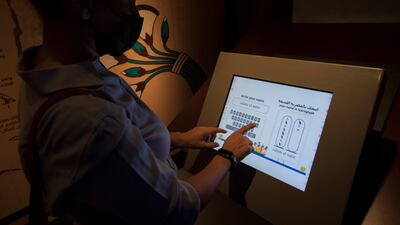
Visitors learn about major archaeological discoveries through workshops, hands-on activities and touchscreen games. -

The exhibition was organised by Sharjah Museums Authority in partnership with the Egyptian Museum in Turin, Italy. -
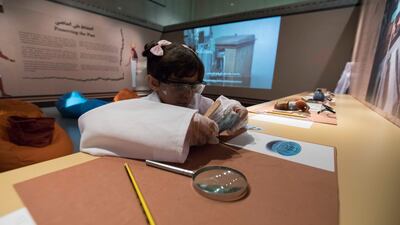
The exhibition tells the story of the builders, artists, and painters who worked on Egypt’s pharaohs’ tombs in 1,500 BC. -
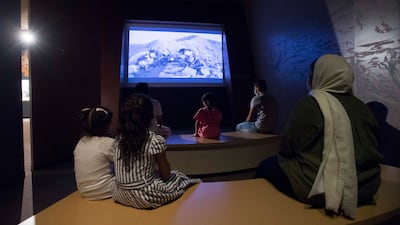
"We are proud to organise this first-of-its-kind children's exhibition. It helps our young audience to explore the rich ancient Egyptian history and learn about archaeology,” said Manal Ataya, director general of SMA. -
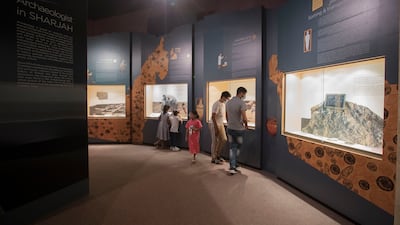
Short movies are played on large screens about the Deir El-Medina village, the excavation missions that led to its discovery, and methods of restoring and preserving artefacts. -

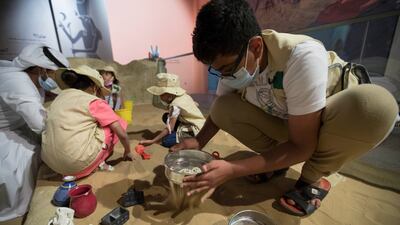
Children use mock-up excavation tools and are introduced to techniques used by archaeologists. -
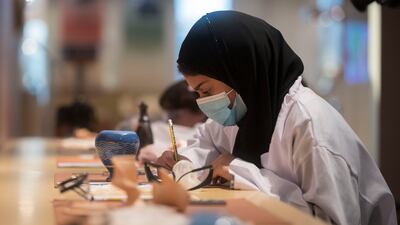
Christian Greco, director of the Egyptian Museum in Italy, said: "The exhibition allows children and their families to remotely visit one of the most iconic sections of the Egyptian Museum’s collection." -
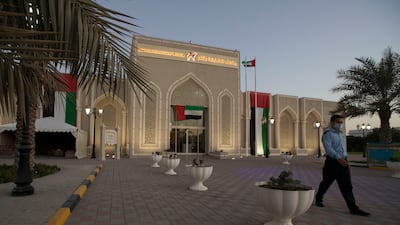
The Sharjah Archeological Museum. -

The exhibition runs until August 31, 2022. -
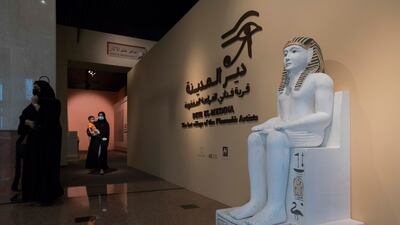
The Sharjah Archeological Museum. -
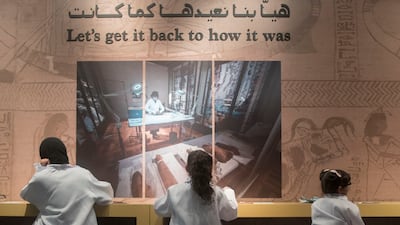
Children learn how to restore objects as part of the exhibition. -
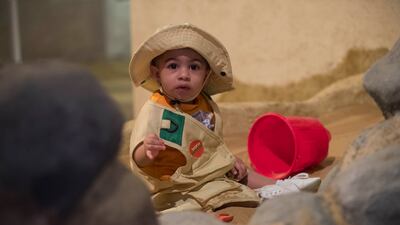
The exhibition helps its young visitors gain an insight into archeology. -
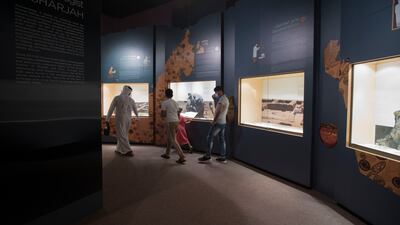
Ancient Egypt is brought to life at the exhibition. -

A child uses a touchscreen to learn about Ancient Egypt. -

Children can enjoy a variety of hands-on activities. -

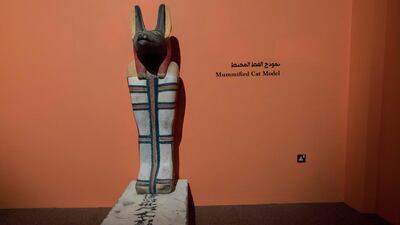
Displays help young viewers learn about Egyptian history. -
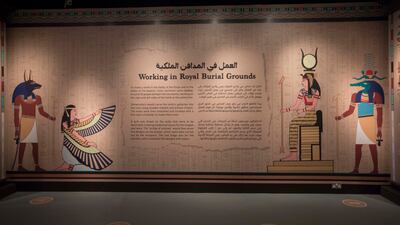
Children can also learn about the history of Ancient Egypt.



