• Jebel Ali Village will be transformed into a gated, hillside collection of luxury villas set among green spaces. Photo: Nakheel
    Jebel Ali Village will be transformed into a gated, hillside collection of luxury villas set among green spaces. Photo: Nakheel
  • Houses in the new Jebel Ali Village will have four or five bedrooms. Photo: Nakheel
    Houses in the new Jebel Ali Village will have four or five bedrooms. Photo: Nakheel
  • Nakheel say the new Jebel Ali Village development will be an upgrade on the old villas. Photo: Nakheel
    Nakheel say the new Jebel Ali Village development will be an upgrade on the old villas. Photo: Nakheel
  • Onsite amenities will include a mosque, bike trails, jogging tracks, cycle paths, pools, parks and sports courts.
    Onsite amenities will include a mosque, bike trails, jogging tracks, cycle paths, pools, parks and sports courts.
  • A rendering of the new style of houses that will be built in the new Jebel Ali Village. Photo: Nakheel
    A rendering of the new style of houses that will be built in the new Jebel Ali Village. Photo: Nakheel
  • The first phase of four and five-bedroom villas is on sale from November 7. Photo: Nakheel
    The first phase of four and five-bedroom villas is on sale from November 7. Photo: Nakheel

First images of plans for Jebel Ali Village released by developer


Gillian Duncan
  • English
  • Arabic

The first images of plans for Jebel Ali Village have been released. The old development, which is to be demolished in about 12 months, will make way for a gated community.

Nakheel has distributed renderings of the four- and five-bedroom villas, which will be built on the 80-hectare site, to property agents.

Last week, the developer served tenants of the village with a 12-month notice to vacate.

A statement said the new plans would preserve and enhance the community's longevity for many generations to come.

Residents said they learnt of Nakheel’s plans from sales flyers left outside their homes.

Those living in the village, which will be demolished, woke on Tuesday to find the advert tagged to their gates and cars.

“Looking for a house to call home?” said the advert, above an image of an existing villa next to a new house, with the words “The past has a new future”.

The homes will be available to buy, which is a change to current arrangements as everyone living in Jebel Ali Village leases their homes from Nakheel.

Upscale housing

The first phase of four and five bedroom villas are on sale from November 7, 2021. Photo: Nakheel

The new development will consist of four- and five-bedroom homes, with an average plot area of 6,900 square feet for a four-bedroom villa and 7,600 sq ft for a five-bed home.

All the properties will have open-plan layouts, generous sized gardens and a three-car private garage, plus a maid's room, and for some villas a driver's room.

Prices have not been released, according to a sales agent with H&S Real Estate, but they are expected to start at Dh4million based on the location and size of the properties.

A Nakheel spokesman said: “We are committed to adding value to Dubai’s real estate sector by delivering world class projects and enhancing our communities across the city."

"Jebel Ali Village holds a special place in Dubai’s history, and we are redeveloping the community to preserve and enhance its longevity for many more generations to come.

"We will continue the legacy of this vibrant community as we embark on the creation of the new Jebel Ali Village.”

Residents said the flyer placement outside their homes felt premature, coming just days after they received a notice to leave.

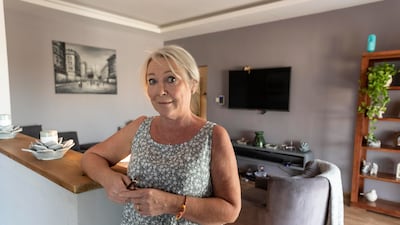
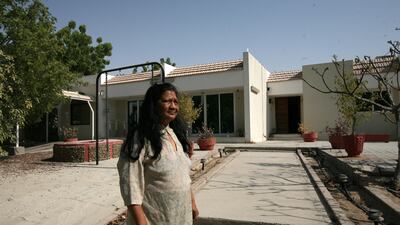
  • Amanda James has lived in the development on and off since the 1980s when her family moved from Saudi Arabia to the UAE. She is devastated by the demolition news. Antonie Robertson / The National
    Amanda James has lived in the development on and off since the 1980s when her family moved from Saudi Arabia to the UAE. She is devastated by the demolition news. Antonie Robertson / The National
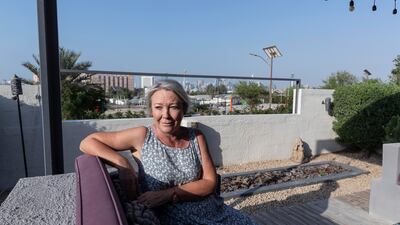
  • Amanda James says she received the notice from Nakheel on Saturday. Antonie Robertson / The National
    Amanda James says she received the notice from Nakheel on Saturday. Antonie Robertson / The National
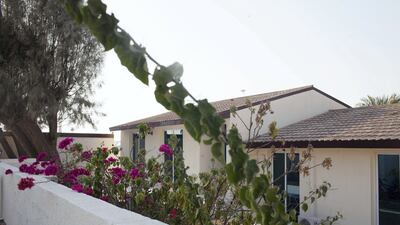
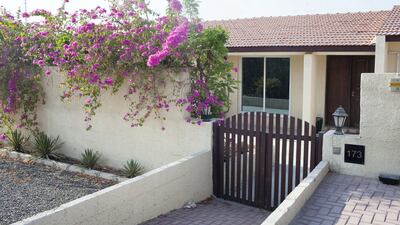
  • Flowers bloom in the much-loved village. Anna Nielsen / The National
    Flowers bloom in the much-loved village. Anna Nielsen / The National
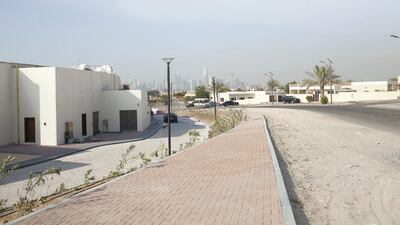
  • Easy access to and from the village is one of the things residents love. Anna Nielsen / The National
    Easy access to and from the village is one of the things residents love. Anna Nielsen / The National
  • Large outdoor space is ideal for young families. Anna Nielsen / The National
    Large outdoor space is ideal for young families. Anna Nielsen / The National
  • Plans to demolish the village has shocked residents, such as Lajo Gupta. Paulo Vecina / The National
    Plans to demolish the village has shocked residents, such as Lajo Gupta. Paulo Vecina / The National
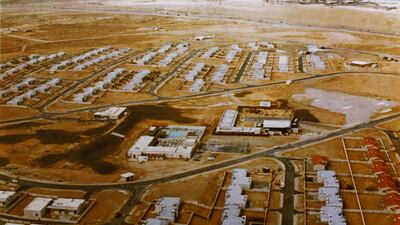
  • How it all began: Jebel Ali in 1979. Photo: Anita van der Krol
    How it all began: Jebel Ali in 1979. Photo: Anita van der Krol

A spokesman for H&S Real Estate apologised.

"We did not intend it to be insensitive," he said.

"We actually wanted to give them the opportunity to get the same plot. The only difference will be that Nakheel will take around three to four years to build the villa."

He said the company has received a good response to the sales advert among tenants.

"We have had many calls saying 'Yes, I am interested. Send us the details and we can have a meeting,'" the spokesman said.

Jebel Ali Village, with about 290 homes, is one of Dubai’s oldest residential communities.

Originally for the British and Dutch staff at the nearby Jebel Ali Port, it was built in the 1970s in a patch of desert, 30 kilometres from the nearest developed area.

Over the years, it became hugely popular with people from other nationalities.

When it opened, six years after the founding of the UAE, the old Abu Dhabi motorway was a two-lane road used by taxis, lorries and cars. Camels walked around the village freely.

It was closed for five years for refurbishment, reopening in 2013.

But some of the houses have fallen into disrepair again, just as they had before the development was refurbished in 2008.

Nakheel said the new village will comprise three clusters, each containing modern villas, swimming pools, parks and sports facilities, including bike trails, jogging tracks, cycle paths and sports courts.

The popular Jebel Ali Recreation Club will remain operational during the redevelopment, and further enhancements are planned by Nakheel as part of the master plan.

The first phase of four- and five-bedroom villas will go on sale on November, 7.

Countries offering golden visas

UK
Innovator Founder Visa is aimed at those who can demonstrate relevant experience in business and sufficient investment funds to set up and scale up a new business in the UK. It offers permanent residence after three years.

Germany
Investing or establishing a business in Germany offers you a residence permit, which eventually leads to citizenship. The investment must meet an economic need and you have to have lived in Germany for five years to become a citizen.

Italy
The scheme is designed for foreign investors committed to making a significant contribution to the economy. Requires a minimum investment of €250,000 which can rise to €2 million.

Switzerland
Residence Programme offers residence to applicants and their families through economic contributions. The applicant must agree to pay an annual lump sum in tax.

Canada
Start-Up Visa Programme allows foreign entrepreneurs the opportunity to create a business in Canada and apply for permanent residence. 

Mercer, the investment consulting arm of US services company Marsh & McLennan, expects its wealth division to at least double its assets under management (AUM) in the Middle East as wealth in the region continues to grow despite economic headwinds, a company official said.

Mercer Wealth, which globally has $160 billion in AUM, plans to boost its AUM in the region to $2-$3bn in the next 2-3 years from the present $1bn, said Yasir AbuShaban, a Dubai-based principal with Mercer Wealth.

Within the next two to three years, we are looking at reaching $2 to $3 billion as a conservative estimate and we do see an opportunity to do so,” said Mr AbuShaban.

Mercer does not directly make investments, but allocates clients’ money they have discretion to, to professional asset managers. They also provide advice to clients.

“We have buying power. We can negotiate on their (client’s) behalf with asset managers to provide them lower fees than they otherwise would have to get on their own,” he added.

Mercer Wealth’s clients include sovereign wealth funds, family offices, and insurance companies among others.

From its office in Dubai, Mercer also looks after Africa, India and Turkey, where they also see opportunity for growth.

Wealth creation in Middle East and Africa (MEA) grew 8.5 per cent to $8.1 trillion last year from $7.5tn in 2015, higher than last year’s global average of 6 per cent and the second-highest growth in a region after Asia-Pacific which grew 9.9 per cent, according to consultancy Boston Consulting Group (BCG). In the region, where wealth grew just 1.9 per cent in 2015 compared with 2014, a pickup in oil prices has helped in wealth generation.

BCG is forecasting MEA wealth will rise to $12tn by 2021, growing at an annual average of 8 per cent.

Drivers of wealth generation in the region will be split evenly between new wealth creation and growth of performance of existing assets, according to BCG.

Another general trend in the region is clients’ looking for a comprehensive approach to investing, according to Mr AbuShaban.

“Institutional investors or some of the families are seeing a slowdown in the available capital they have to invest and in that sense they are looking at optimizing the way they manage their portfolios and making sure they are not investing haphazardly and different parts of their investment are working together,” said Mr AbuShaban.

Some clients also have a higher appetite for risk, given the low interest-rate environment that does not provide enough yield for some institutional investors. These clients are keen to invest in illiquid assets, such as private equity and infrastructure.

“What we have seen is a desire for higher returns in what has been a low-return environment specifically in various fixed income or bonds,” he said.

“In this environment, we have seen a de facto increase in the risk that clients are taking in things like illiquid investments, private equity investments, infrastructure and private debt, those kind of investments were higher illiquidity results in incrementally higher returns.”

The Abu Dhabi Investment Authority, one of the largest sovereign wealth funds, said in its 2016 report that has gradually increased its exposure in direct private equity and private credit transactions, mainly in Asian markets and especially in China and India. The authority’s private equity department focused on structured equities owing to “their defensive characteristics.”

Updated: November 03, 2021, 2:45 AM