


A high-speed aerial race could be on its way to Dubai with the unveiling of Airspeeder drones at Gitex.
The bullet-shaped pods powered by eight independent motors can take off and land vertically, and reach speeds of up to 160 kilometres per hour.
Test events of the electric vertical landing and take off craft (eVTOL) have taken place in Australia watched by Civil Aviation Safety Authority regulators.
Developers of the four-metre long high-speed racing pods have now focused on a series of ‘grand prix’ races they hope will stop off in the UAE.
“Airspeeder is the world’s first flying car race series,” said Jack Withinshaw, chief commercial officer for Airspeeder.
“This is electric motorsports in the sky.
-
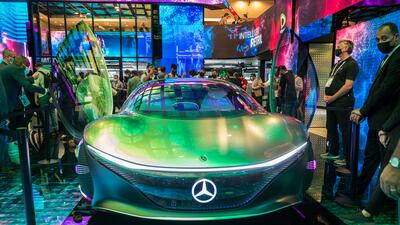
The Mercedes Vision AVTR car. -
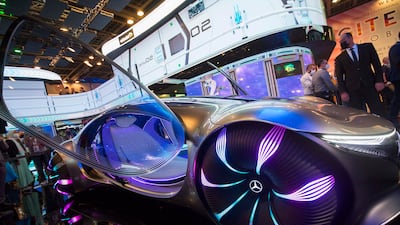
The Mercedes Vision AVTR car on display at Etisalat's stand on the second day of Gitex. -

Visitors at the Huawei stand on the second day of Gitex at Dubai's World Trade Centre. All photos: Leslie Pableo / The National -
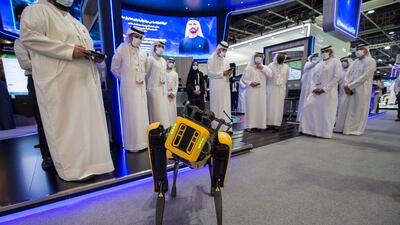
A four-legged robot at a Dubai Government stand on the second day of Gitex. -

The Dell Technology stand at Gitex. -
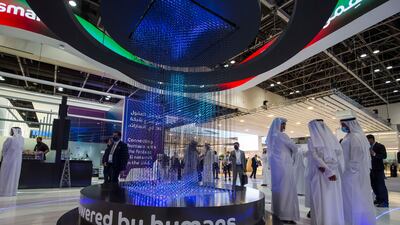
A light and laser display on the second day of Gitex. -

Gitex was busy with visitors and delegates on the second day. -

Fujairah's stand at Gitex Technology, on day two. -
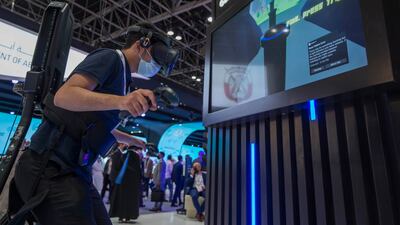
A man using an AR headset at the Du stand on the second day of Gitex. -
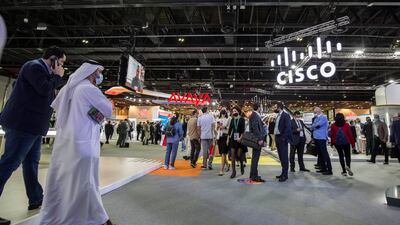
Visitors explore the tech stands in the Dubai World Trade Centre. -
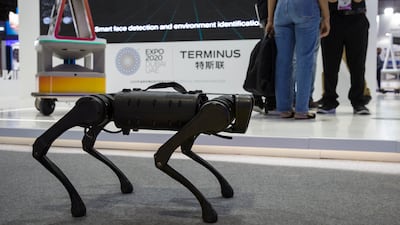
A four-legged robot at the Terminus stand on the second day of Gitex. -

Mercedes' futuristic car on the Etisalat stand. -
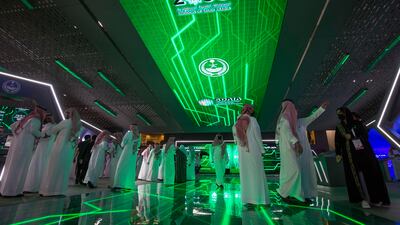
Saudi Arabia's stand.


“We are building out the sport and developing vehicles at the same time.
“Most of the flying cars in production are building flying taxis, but we are the motorsport arm of that industry.”
Although current speeds can reach 120kph, by the end of the year developers expect them to reach 160kph and eventually a mark 4 model is likely to go as fast as 250kph.
Elite pilots and drivers from the worlds of aviation, motorsport and e-sports are training in simulators and in pods on the ground to learn how to handle the high-powered machines.
Initially, races are expected to use unmanned pods before pilots take to the cockpits.
High-octane sprints
Races are expected to be short and sweet, with plenty of pit stops to recharge batteries that only last for around 10 minutes.
Races take place just four metres above the ground and each pod is packed with safety features similar to those seen in Formula One.
Kevlar survival cells are wrapped around pilots who are protected by cockpit crumple zones.
Collision avoidance technology allows several vehicles to be in the sky simultaneously.
Each pod has 22 sensors that surround the vehicle and use lidar, a remote sensing method that uses a pulsed laser to measure distances.
One of the racing pods was on show at the Etisalat stand at Gitex, currently under way at the Dubai World Trade Centre.
“We take pilots from all corners of life and we are training them up on simulators,” said Mr Withinshaw.
“Major issues with flying cars are battery longevity, certification, public acceptance and noise.
“When you are racing these are not a problem as we are racing in remote locations with trained pilots.
“Racing is a great way for people to fall in love with this technology, and as it is a motorsport - the noisier they are, the better," he said.
“Safety is very important.”
Ground control stations monitor individual pods during races and ensure vehicles do not get too close, sending alerts to pilots and then diverting them remotely from potential collisions if no action is taken.
It creates a force field around each pod, similar to two negatively charged magnets.
“They fly low to the ground and there is similar carbon fibre technology used in Formula One cars to keep the pilot safe in the event of a collision,” said Mr Withinshaw.
“We are planning our first race before the end of the year and we hope to bring this racing to the deserts of Dubai very soon.”

