September 11, 20 years on - in pictures
-
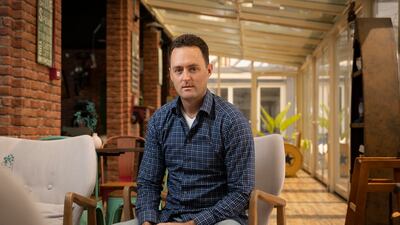
Two decades on from the 9/11 attacks, Americans talk about their experience of that day. Lew Evans, 43, Washington DC. Now lives in Ras Al Khaimah and is chief executive and founder of Nexus Resilience Group: "On that day I was at Quantico doing Marine Corps basic officer training. I was freshly commissioned as a lieutenant. The Marine Corps is quite a vigilant organisation … and when the attacks happened you can imagine things got very real, very quickly. We all got pulled outside on the lawns and an officer came out to tell us: 'We’ve just had the biggest terrorist attack in the history of the United States and you are all going to war. You better get ready, because there is nothing academic about this.' It did get very real for us and we were all involved in some way with everything that happened after that. We were all young back then and obviously not as experienced as we are now. In the 20 years of conflict that followed in Afghanistan and elsewhere, I learnt that terrorism was a tactic – not a nation against which war could be declared. I learnt the source of terrorism was 'angry young men', and that any strategy to defeat it must involve solving those conditions on the ground that cause the anger – economic, social and so on. I learnt that we have a lot to learn about the complexities of the world since the end of the Cold War and that the world is more interconnected than ever before." All photos: Antonie Robertson / The National -
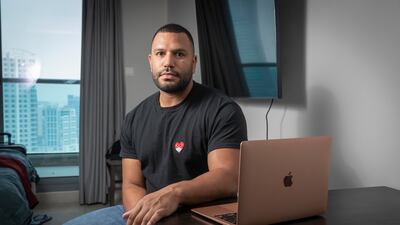
Peter Lopez, 35, San Jose, California. Now lives in Dubai and is a restaurant manager for Pickl: "That day I was in high school. I remember waking up and my nieces were in the kitchen having breakfast and getting ready for school. I saw the towers on TV and I thought it was a movie, so I didn’t pay attention to it. I didn’t even realise it was real until I got to school. I just had no idea but when I got to school it was shut down for the day and we just talked about what had happened while we watched the TVs they had rolled into the classrooms. It was a bit different for us because we were in California and didn’t have any real connection to a person in New York. It was sad and obviously terrible but I think at that age I didn’t understand the impact it would have, even on my life now. We had a guy that was from Pakistan in my class and he got a lot of bullying. That was weird and uncomfortable for me to see. We were in California and the world is a lot bigger than we think. He was from there, he grew up with us. He wasn’t a new person and he was experiencing this the same way we were with shock and confusion. He was also trying to understand how this happened." -
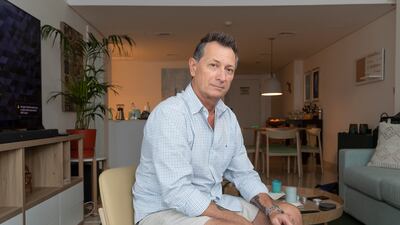
Dino Matarozza, 61, Baltimore, Maryland. Now lives in Dubai and is artistic director for Sim Leisure Gulf Contracting: "We were living in Las Vegas at the time. My wife’s son was working in Manhattan down in the financial district and the World Trade Centre was one of his stops on the subway. With the time difference, I was up and getting ready for work while everyone else was asleep and the phone rang. It was my wife’s sister from Baltimore and she asked if we’d been watching the news. So I woke up my wife and we just sat watching the rest of it unfold as everyone did. I watched the second plane hit the tower. I didn’t make it to work that day; I didn’t make it to work for a couple of days, I think, because we were trying to reach her son. He didn’t typically work that shift time but we had no idea and we couldn’t reach him. In the end, he did get a message to somebody that got a hold of us saying he was safe. Life changed for everybody just because of the sheer magnitude and then the brazenness of what happened was just a shockwave that rippled through everything." -

Kevin N. Montoya, 30, Greenport, Long Island, New York. Now lives in Dubai and is owner and head chef at Mis Amigos food truck: "I was in middle school when it happened. It was around midday in one of my classes and they just started rolling in TVs into the classrooms. We thought it was movie day, but then they announced it over the public address system of the school because a lot of the students had parents who worked in the city. Then we just watched it on the screens for the rest of the day before they sent us home. We have this one highway that runs through us and shoots directly up to the city and I just remember fire trucks and police rushing into the city to go help. The little town I’m from actually created a lot of sculptures from the metal debris that came from the towers. It was very patriotic." -
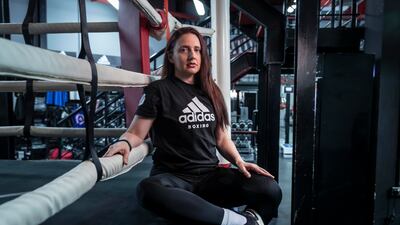
Michelle Kuehn, 40, Nebraska, owner and operator of Real Boxing Only Gym, Dubai: "When the attacks happened I was at the American University of Sharjah. I was a student there in class and I came out into the cafeteria and it was all over the TVs. I didn’t know what was going on and I saw a couple of guys who were on the volleyball team and I went over asked them what was happening while we all stared at the screen. We could see the smoke coming from the buildings and one of the guys said to me: 'Ha ha, look what’s happening to your country!' I’m not even kidding. My gut instinct just took over and I slapped him as hard as I could in front of the whole cafeteria. It created a big scene. We made up afterwards, though, and worked through it. It’s a time I’d never forget – being that young, watching it on TV, and being so far away." -
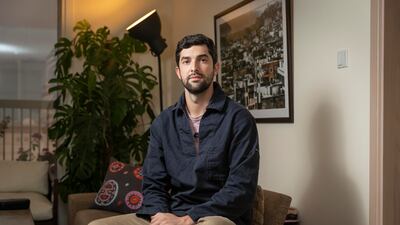
Greg Ohannessian, 35, Dallas, Texas. Now based in Dubai, he is founder at Soma Mater: "I remember the day. I was in the marching band at high school and we had early morning band practice. We had just finished up and we were getting ready for class when someone mentioned that a plane had hit the Trade Centre. Weirdly, my first reaction was that someone had been stupid and flown a private plane into the towers. That was kind of the first bit of news we got, that it was a small, single-engine plane. I was taking flying lessons at the time, so my reaction was how could someone do that -- it was ridiculous! Then, as the morning went on and the second tower got hit, it was kind of when everyone realised: 'This is massive'. The first way I really realised how it was changing America was this idea that everything needed an American flag stuck to it. I felt it change; it felt good. It felt like people were finally coming together and I think over time as people started to see what was happening in the wars that were being waged that the brand of patriotism that was unanimous in 2001 started to define a subsection of American culture and politics that came to a head 20 years later."


Most popular today

