

Today, life in the Emirates moves in the fast lane. In a regular series to mark the 50th anniversary of the UAE, 'The National' takes a trip back in time to examine how much the country has changed.
In a 1978 edition of a local newspaper, there is a report of a “friendly flying saucer” that landed in Sharjah.
“The frustrating thing about UFOs,” the report goes, “is that they don’t stick around for very long … only one has been obliging enough to land in Sharjah,” it said. “Happily, it is on a friendly mission and looks like being around for a long time.”
Sharjah's Flying Saucer was bringing “space age shopping to Sharjah”. It opened in the 1970s and first hosted a French patisserie and restaurant, then Al Maya-Lal’s supermarket, followed by a branch of Sharjah Co-operative Society in the 1990s, and Taza Chicken in the 2000s.
-
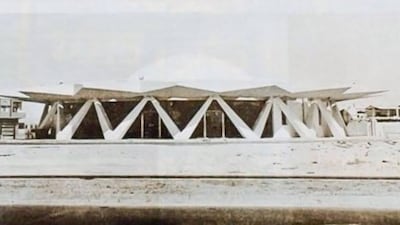
The Flying Saucer in 1979. It first opened as a cafe and restaurant in the late 1970s. -
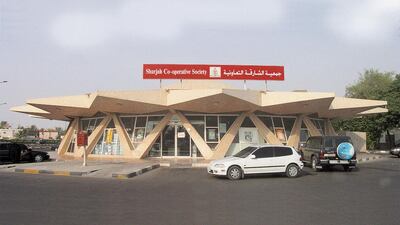
The Flying Saucer hosts a branch of Sharjah Co-operative Society in the 1990s. -

By the 2000s, it hosted a branch of Taza Chicken. -
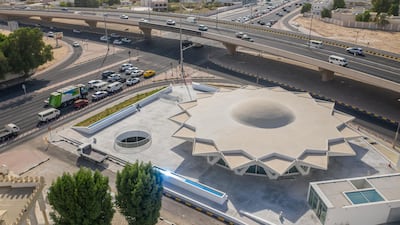
The building was restored by Sharjah Art Foundation and reopened to the public in 2020. -
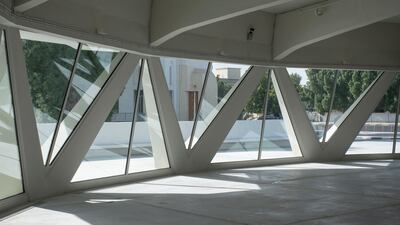
Inside the restored Flying Saucer with its distinctive V-shaped pillars. -
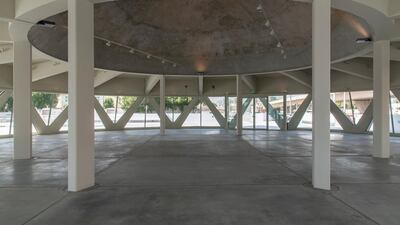
The Flying Saucer is now a community art space. -
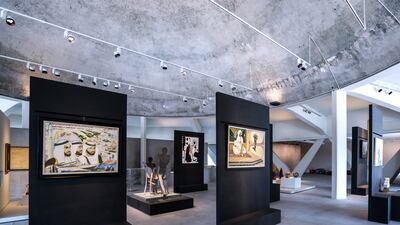
An exhibition at the Flying Saucer. -

A cafe and library have also been added. -
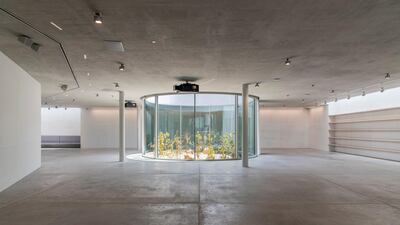
The renovation also included introducing an outdoor public space and an underground community area featuring a cafe, library and sunken courtyard filled with greenery. -
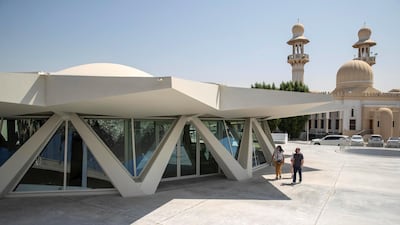
The Flying Saucer takes off again for a bright new future


The building is one of the UAE’s architectural gems. It speaks to an era when the space race and tales of aliens and unidentified flying objects influenced architecture, literature and popular culture.
Its designers were inspired by the Brutalist architecture style that rose in the 1950s and championed the use of concrete. Striking parts of The Flying Saucer include its star canopy, a circular dome and its V-shaped pillars around the outside. But when Taza Chicken opened there in 2008, the building’s dome was hidden with a false ceiling, while the exterior had been covered in cladding.
However, larger plans were in place for the building. Sharjah Art Foundation acquired it in 2012 and six years later began a careful renovation to “restore the building to its original silhouette”. The false ceiling was removed as well as the cladding to allow the original design to breathe. Two new elements: an outdoor space to host events and an underground community area with a library and cafe, were added and it reopened in 2020.
What is striking is how similar the structure looks in the old photograph and again when The National’s Chris Whiteoak reshot the building this year. The only major difference is the new motorway on the left.
The building is now an important art and community hub, free and open to all, with The Flying Saucer taking off on a new adventure.
Remarkable architecture of the UAE from the 1960s to the 1980s – in pictures
-
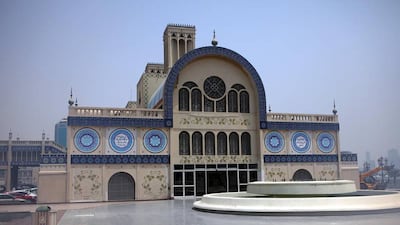
One of the entrances to the Central Market, also known as the Blue Souq, in Sharjah. It was built in 1979 and is adorned with Islamic designs. The market can be seen on the Arabic side of the Dh5 banknote. -
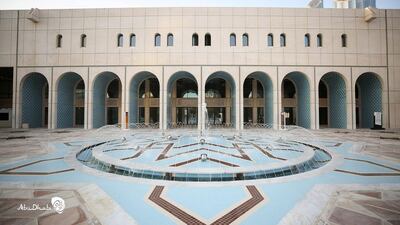
Abu Dhabi’s Cultural Foundation was created in 1981. The building has since been renovated. -

Abu Dhabi Souq, photographed in the late 1970s or early 1980s. -
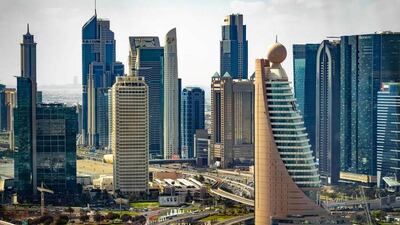
Dubai World Trade Centre – the grey, rectangular building to the middle left – was opened by Queen Elizabeth II in 1979. The tallest building in the UAE until 1999, it appears on the Dh100 banknote. -

Foggy and cold weather at the Deira Clocktower roundabout. Built in the mid-1960s and designed by Ziki Homsi, the tower was reconstructed in 1989 when its steel supports started to corrode. -
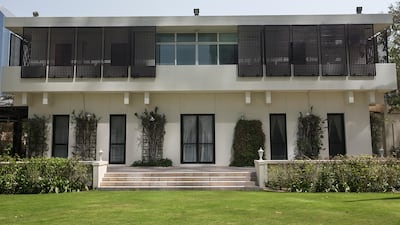
The UK ambassador’s residence was completed in 1981. It was designed by John Harris, the British architect behind Dubai World Trade Centre and Rashid Hospital. -

Dubai International Airport in the 1960s. -
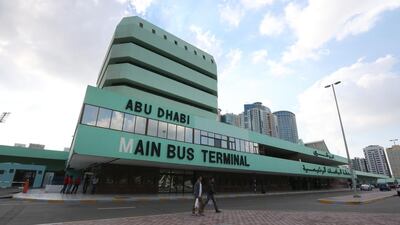
The brutalist Abu Dhabi Bus Terminal, by Bulgarian architect Georgi Kolarov. Also known as Al Wahda station, it opened in 1989. -

Zayed Sports City in Abu Dhabi opened in 1979. -

Electra Street’s Saeed Al Kalili Building opened in 1983. Also known as Al Ibrahimi Building, it was designed by Egyptian architect Farouk El Gohary. -
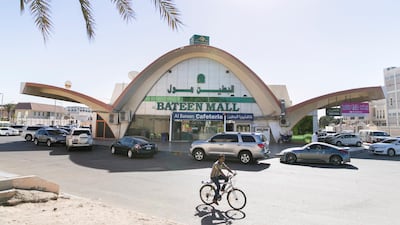
Bateen Mall, with its dramatic flying canopies, was completed in 1986. -
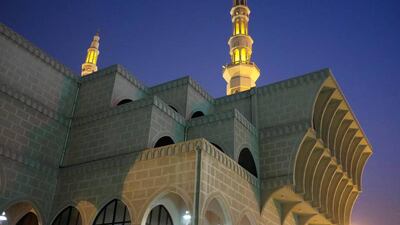
Completed in 1987, King Faisal Mosque in Sharjah was the largest in the country until Sheikh Zayed Grand Mosque opened two decades later. It can accommodate about 16,000 worshippers and was designed by Saudi architect Abdul-Rahman Al Junaidi.



