• Student-built satellite DhabiSat successfully reached its target orbit.
    Student-built satellite DhabiSat successfully reached its target orbit.
  • DhabiSat arrived at the International Space Station on board the Cygnus NG-15 resupply spacecraft.
    DhabiSat arrived at the International Space Station on board the Cygnus NG-15 resupply spacecraft.
  • DhabiSat was carried to the International Space Station on Cygnus on February 20. The spacecraft left the station on June 29, releasing DhabiSat and four other CubeSat into their final orbit.
    DhabiSat was carried to the International Space Station on Cygnus on February 20. The spacecraft left the station on June 29, releasing DhabiSat and four other CubeSat into their final orbit.
  • DhabiSat, formerly called MYSat-2, is an initiative by Khalifa University to help students design, build and test software modules for attitude determination and control systems, which enables satellites to point accurately at specific locations.
    DhabiSat, formerly called MYSat-2, is an initiative by Khalifa University to help students design, build and test software modules for attitude determination and control systems, which enables satellites to point accurately at specific locations.
  • DhabiSat was built by 27 graduate students at Yahsat Space Lab in Abu Dhabi.
    DhabiSat was built by 27 graduate students at Yahsat Space Lab in Abu Dhabi.

UAE in space: Student-built satellite DhabiSat successfully reaches target orbit


Sarwat Nasir
  • English
  • Arabic

A UAE-built miniature satellite that can point in specific directions to take high-resolution images has successfully reached its target orbit in space.

Students at Khalifa University built the advanced Cubesat, called DhabiSat, which was carried to the International Space Station on Cygnus resupply craft on February 20.

Cygnus, which was launched on an Antares rocket from the Wallops Flight Facility in Virginia, left the station on June 29, releasing DhabiSat and four other nanosats into their final orbit.

“With the deployment of DhabiSat into its orbital slot, our students and our partners have once again registered another key milestone for Khalifa University and the UAE,” said Dr Arif Sultan Al Hammadi, the university's executive vice-president.

“We thank our partners Yahsat and Northrop Grumman, who have supported our students throughout the process of designing, developing and launching DhabiSat, the third CubeSat built by Khalifa University students, as well as another CubeSat we are planning to build in the future.

“As the UAE begins to consolidate its status as a space power in the world, we look forward to creating more scientific talent and human capital, especially in the space science sector, along with our academic and industry partners.”

DhabiSat, formerly called MYSat-2, is an initiative by the university to help students design, build and test software modules for attitude determination and control systems, which enables satellites to point accurately at specific locations.

DhabiSat was carried to the International Space Station on Cygnus resupply ship on February 20. The spacecraft recently left the station, releasing DhabiSat and four other CubeSat into their final orbit. Courtesy: Khalifa University

The CubeSat has been designed to use less power while targeting its digital camera. If successful, the algorithms used in this mission will help in developing more advanced CubeSats.

Muna Almheiri, YahSat’s chief human capital officer, said DhabiSat was a significant step in the UAE’s mission to develop home-grown talent in the space field.

“We need future generations of Emirati space leaders and visionaries to fulfil the aspirations of our founding fathers, and the rich potential of our nation,” she said.

“DhabiSat’s successful deployment underscores the aptitude, skills and maturity of our youth to manage multi-pronged programmes and work with the leading lights in the global space industry."

KhalifaSat launched its first nanosat, an Earth observation satellite called MYSat-1, built entirely by its students, into space in 2018.

A growing number of universities in the UAE have introduced the development of CubeSat into their educational programmes. They are versatile satellites that allow students to design, build and create software.

Last year, the MeznSat satellite, which can measure greenhouse gases over the UAE, was launched into space.

It was built by students at the Khalifa University and American University of Ras Al Khaimah, and funded by the UAE Space Agency.

Students use the YahSat Space Lab in Khalifa University to build these nanosatellites.

UAE-built MeznSat miniature satellite launches into space - in pictures

  • UAE's third mini-satellite MeznSat.
    UAE's third mini-satellite MeznSat.
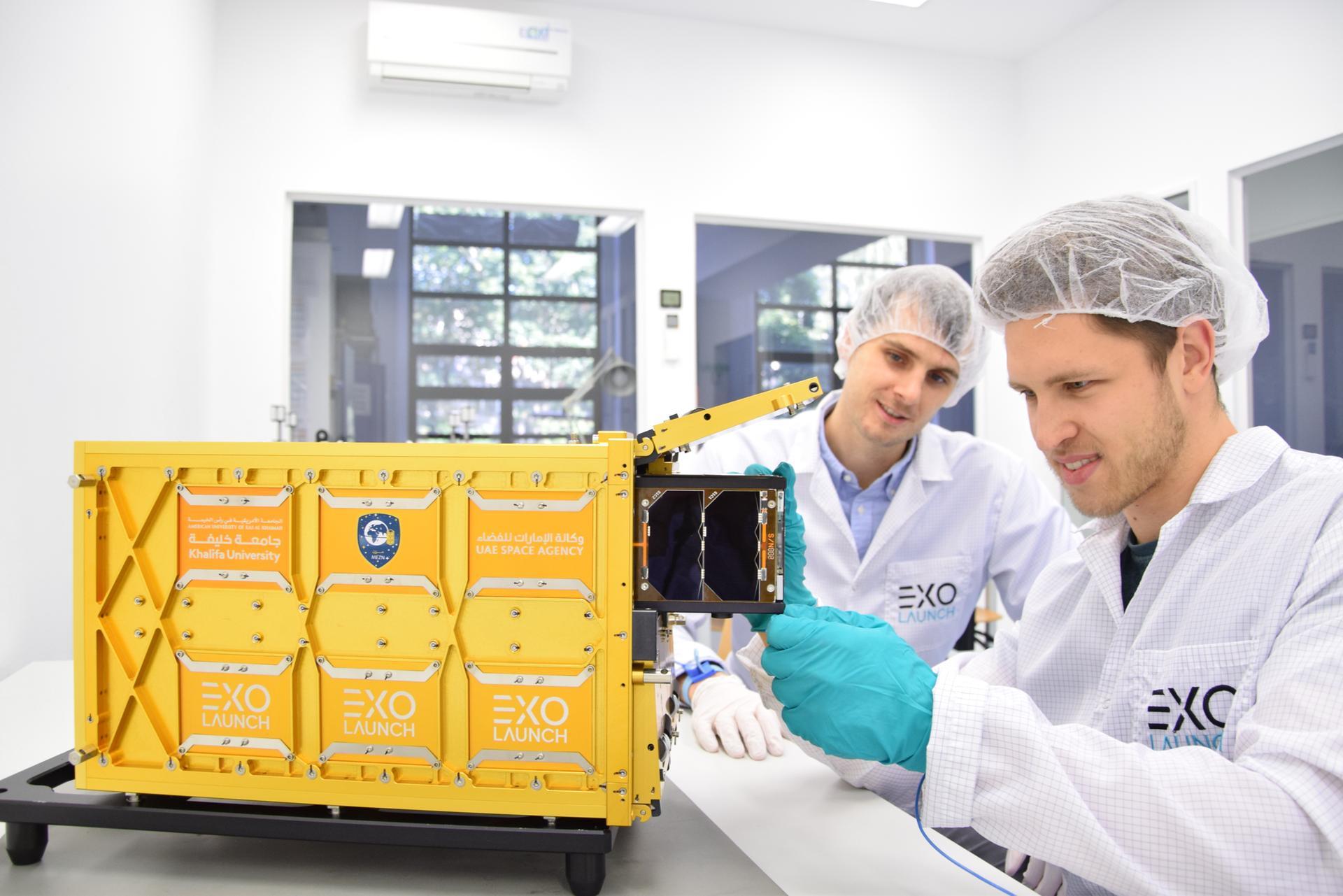
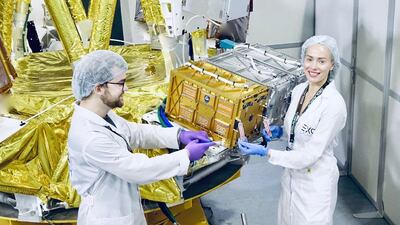
  • MeznSat was placed inside the Exolaunch container, which kept it is safe before its launch into space.
    MeznSat was placed inside the Exolaunch container, which kept it is safe before its launch into space.
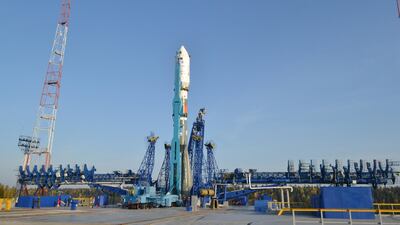
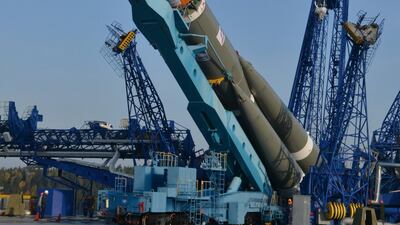
  • The Soyuz 2.1b rocket in position for lift-off at the Plesetsk Cosmodrome in Russia.
    The Soyuz 2.1b rocket in position for lift-off at the Plesetsk Cosmodrome in Russia.
  • MeznSat has 18 other nanosats on board.
    MeznSat has 18 other nanosats on board.
  • The 3-unit CubeSat will study greenhouse gas concentrations over the UAE, specifically carbon dioxide and methane
    The 3-unit CubeSat will study greenhouse gas concentrations over the UAE, specifically carbon dioxide and methane
  • From two ground stations, Khalifa University students will retrieve, process and analyse the data supplied by MeznSat.
    From two ground stations, Khalifa University students will retrieve, process and analyse the data supplied by MeznSat.
How to invest in gold

Investors can tap into the gold price by purchasing physical jewellery, coins and even gold bars, but these need to be stored safely and possibly insured.

A cheaper and more straightforward way to benefit from gold price growth is to buy an exchange-traded fund (ETF).

Most advisers suggest sticking to “physical” ETFs. These hold actual gold bullion, bars and coins in a vault on investors’ behalf. Others do not hold gold but use derivatives to track the price instead, adding an extra layer of risk. The two biggest physical gold ETFs are SPDR Gold Trust and iShares Gold Trust.

Another way to invest in gold’s success is to buy gold mining stocks, but Mr Gravier says this brings added risks and can be more volatile. “They have a serious downside potential should the price consolidate.”

Mr Kyprianou says gold and gold miners are two different asset classes. “One is a commodity and the other is a company stock, which means they behave differently.”

Mining companies are a business, susceptible to other market forces, such as worker availability, health and safety, strikes, debt levels, and so on. “These have nothing to do with gold at all. It means that some companies will survive, others won’t.”

By contrast, when gold is mined, it just sits in a vault. “It doesn’t even rust, which means it retains its value,” Mr Kyprianou says.

You may already have exposure to gold miners in your portfolio, say, through an international ETF or actively managed mutual fund.

You could spread this risk with an actively managed fund that invests in a spread of gold miners, with the best known being BlackRock Gold & General. It is up an incredible 55 per cent over the past year, and 240 per cent over five years. As always, past performance is no guide to the future.

Red flags
  • Promises of high, fixed or 'guaranteed' returns.
  • Unregulated structured products or complex investments often used to bypass traditional safeguards.
  • Lack of clear information, vague language, no access to audited financials.
  • Overseas companies targeting investors in other jurisdictions - this can make legal recovery difficult.
  • Hard-selling tactics - creating urgency, offering 'exclusive' deals.

Courtesy: Carol Glynn, founder of Conscious Finance Coaching

UAE SQUAD

Goalkeepers: Ali Khaseif, Fahad Al Dhanhani, Mohammed Al Shamsi, Adel Al Hosani

Defenders: Bandar Al Ahbabi, Shaheen Abdulrahman, Walid Abbas, Mahmoud Khamis, Mohammed Barghash, Khalifa Al Hammadi, Hassan Al Mahrami, Yousef Jaber, Salem Rashid, Mohammed Al Attas, Alhassan Saleh

Midfielders: Ali Salmeen, Abdullah Ramadan, Abdullah Al Naqbi, Majed Hassan, Yahya Nader, Ahmed Barman, Abdullah Hamad, Khalfan Mubarak, Khalil Al Hammadi, Tahnoun Al Zaabi, Harib Abdallah, Mohammed Jumah, Yahya Al Ghassani

Forwards: Fabio De Lima, Caio Canedo, Ali Saleh, Ali Mabkhout, Sebastian Tagliabue, Zayed Al Ameri

BMW M5 specs

Engine: 4.4-litre twin-turbo V-8 petrol enging with additional electric motor

Power: 727hp

Torque: 1,000Nm

Transmission: 8-speed auto

Fuel consumption: 10.6L/100km

On sale: Now

Price: From Dh650,000

SPECS
%3Cp%3E%3Cstrong%3EEngine%3A%20%3C%2Fstrong%3E2-litre%204-cylinder%20petrol%20(V%20Class)%3B%20electric%20motor%20with%2060kW%20or%2090kW%20powerpack%20(EQV)%0D%3Cbr%3E%3Cstrong%3EPower%3A%3C%2Fstrong%3E%20233hp%20(V%20Class%2C%20best%20option)%3B%20204hp%20(EQV%2C%20best%20option)%0D%3Cbr%3E%3Cstrong%3ETorque%3A%3C%2Fstrong%3E%20350Nm%20(V%20Class%2C%20best%20option)%3B%20TBA%20(EQV)%0D%3Cbr%3E%3Cstrong%3EOn%20sale%3A%20%3C%2Fstrong%3EMid-2024%0D%3Cbr%3E%3Cstrong%3EPrice%3A%20%3C%2Fstrong%3ETBA%0D%3C%2Fp%3E%0A
Our legal consultant

Name: Hassan Mohsen Elhais

Position: legal consultant with Al Rowaad Advocates and Legal Consultants.

Updated: July 13, 2021, 11:43 AM