


Dubai is gearing up for a busy travel period as Ramadan ends and the Eid Al Fitr holiday begins.
More than 1.9 million passengers are expected to fly to or from Dubai International Airport between April 28 and May 9.
The busiest day for travel will be May 7, when more than 200,000 people will transit the airport. Daily traffic will exceed 177,000 over the entire holiday period, said Dubai Airports.

Emirates airline is also getting set for an influx with more than 700,000 people booked to fly via Terminal 3 of Dubai International over the Eid holidays.
The Dubai airline says its busiest period will be the weekend before Eid.
Popular destinations for UAE travellers flying with Emirates include London, Istanbul, Manila, Cairo, Paris, Casablanca, New York and Los Angeles. An additional 23 flights to seven cities across the GCC and Middle East have also been added to the airline's network for the holidays.

The airline expects Terminal 3 to be busy with travellers until May 9 and reminded all passengers to get to the airport at least three hours ahead of their flight departure time to allow for check-in, health document checks and immigration formalities.
Any passengers trying to check in less than 60 minutes before their departure will not be accepted for travel, said Emirates.
And low-cost airline flydubai is also expecting the next few weeks to be busy. The airline plans to operate more than 2,200 flights between April 30 and May 8 to accommodate a surge in demand.
The budget airline has increased capacity on some of its most popular routes for the break, including to Baku, Tbilisi, the Maldives and Sarajevo, and expects capacity to be between 80 and 100 per cent on flights to Almaty, Budapest, Colombo, Kathmandu, Naples and Yerevan.
How to beat the Eid rush at Dubai International Airport

Dubai Airports and Emirates have issued tips for travellers flying over Eid to help people beat the rush.
Passengers should check the latest travel regulations for their destination with their airline, said airport authorities. These can change regularly so its important to find out before leaving for the airport.
Travellers should also plan for extra time to get to the airport over the holiday, with the roads around Dubai International expected to get congested during peak times.
Emirates offers early check-in options, with most travellers able to drop bags off for flights as early as 24 hours before take-off time. Using this option could mean having one less thing to worry about on departure day. US passengers flying Emirates can check in 12 hours before departure.

To cut down on crowds, passengers flying from Terminal 1 at Dubai International should arrive at the airport no earlier than three hours before departure time.
Passengers should also make use of online check-in services whenever airlines offer the facility to help cut-down on queue times.
Once at the airport, registered travellers over the age of 12 can use the Smart Gates to help speed up passport control procedures.
See Emirates new children's lounge at Dubai Airport - in pictures
-
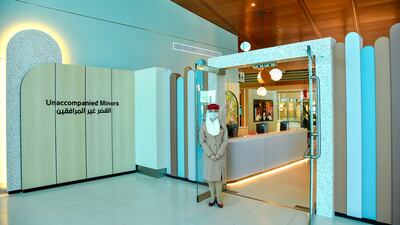
Emirates' Unaccompanied Minors Lounge is now open at Terminal 3 at Dubai International Airport. All photos: Emirates -

Parents or guardians must pre-book access to the space for children flying solo. -
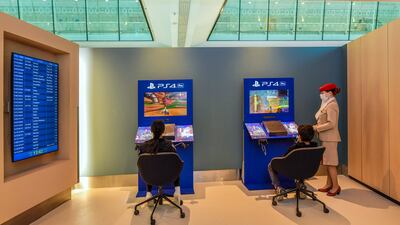
The lounge has plenty to keep children entertained, including PlayStation 4. -
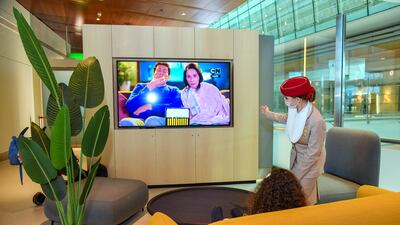
The lounge is supervised by Emirates airport services crew. -

Children can help themselves to snacks and drinks. -

Comfortable sofas, lounge areas and free Wi-Fi are available.



