

The Ritz-Carlton Abu Dhabi, Grand Canal has begun construction of an on-site vertical farm.
The initiative is similar to the eco-friendly farm at its sister property in Jumeirah Beach Residence in Dubai, which was unveiled earlier this year.
"Our first harvest of herbs, vegetables and salads will be in February," says Christian Hoehn, the general manager of the Abu Dhabi hotel.
The farm's produce will be used in the property's restaurants and bars, as part of its attempt to cut its carbon footprint.
"We are hoping to produce 12 kilograms of produce per day," Hoehn tells The National, without giving further details on the exact crops that will be grown.
The vertical farm in the hotel's Dubai premises produces lettuce, kale, basil, rosemary and thyme, among other salad staples. Hoehn says the team in the capital is collaborating with colleagues at The Ritz-Carlton, Dubai to replicate the farm's technology.
Vertical farming allows crops to be cultured in stacks, thus using less land. The hydroponics technique replaces the soil, instead utilising nutrient-rich liquid to grow the plants.
The innovative agricultural method is not new in the region, or in the hotel and travel industries. In the past few months, many companies have built their own farms, including Emirates Group, which in August, unveiled the world's biggest vertical farm that can produce up to 1,000 tonnes of leafy greens each year.
-

Agronomy experts inspect the seeds at Bustanica in Dubai. The 330,000-square-foot farm near Al Maktoum International Airport is a joint venture between Emirates Flight Catering and Crop One, a firm specialising in technology-driven indoor vertical farming. All photos: Bustanica -
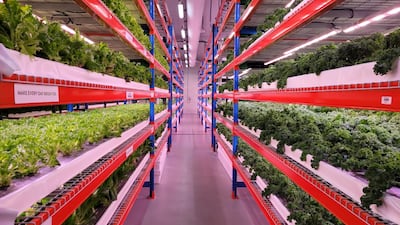
There are 27 rooms in Bustanica where plants are grown before being harvested. -
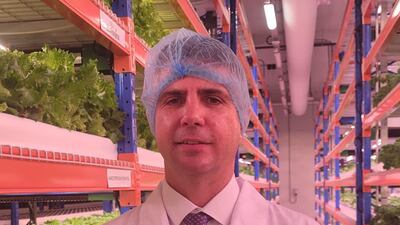
Robert Fellows, production director with Emirates Crop One. -
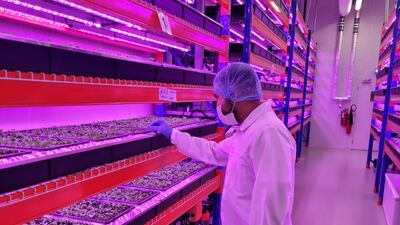
Inspecting the plants inside the Bustanica vertical farm. -
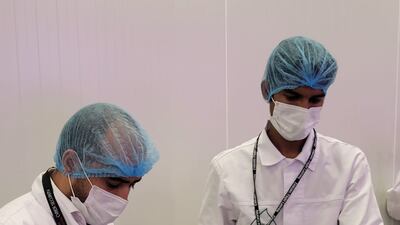
Seeds are planted in membranes without using soil at Bustanica. -
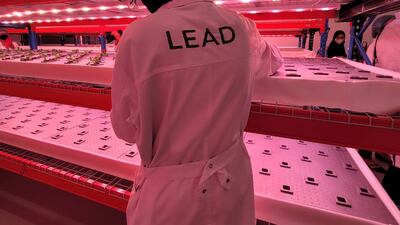
Teams of experts carefully care for the plants in confined conditions to optimise quality. -

Lettuce, kale and spinach are being produced at the vertical farm. -
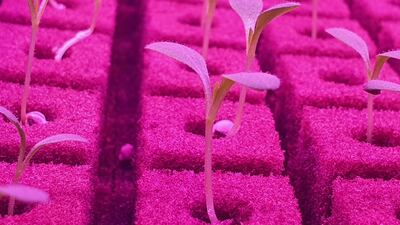
The plants take root at Bustanica vertical farm. It is estimated it is able to produce more than one million kilograms of leafy greens each year, or more than three tonnes per day.


Hilton, another major hotel chain, teamed up with a UAE agritech startup to provide them with lettuce, kale, rosemary and basil. Hygrow operates a four-hectare farm in Sharjah, which includes 13,000 square metres of greenhouses for leafy greens and a 2,000-square-metre vertical farm where herbs are produced.
Sustainability in hotels
The announcement comes as The Ritz-Carlton Abu Dhabi signed a deal with Austrian start-up ElephantSkin to produce eco-friendly gloves for hotel use.
"Sustainability is becoming more and more important for a business like ours," says Hoehn. The Abu Dhabi property has more than 500 keys and "so carbon footprint is a top agenda point for us".
"Our hotel, pre and post-Covid, produces four tonnes of plastic waste purely from plastic gloves."
The partnership particularly targets this concern. Founded by Raphael Reifeltshammer from Salzburg, ElephantSkin manufactures reusable cloth gloves that are also antibacterial and antiviral.

Ritz-Carlton Abu Dhabi has already distributed 400 pairs of the gloves to its staff — from concierge to housekeeping — as part of its pilot phase. By January, the hotel is aiming to launch culinary gloves specific to the needs of the kitchen staff.
The hotel estimates it would save 1.4 million pairs of service gloves annually by using the ElephantSkin product, which can be washed up to 30 times. After use, the gloves will be recycled back into production of new ones.
"A kitchen staff member typically needs around 15 to 30 pairs of disposable gloves per shift — he needs to change frequently, his hands get sweaty and dirty. A pair of ElephantSkin gloves can be used in one whole shift," says Reifeltshammer.
He claims bacteria and viruses are broken down on the glove surface in minutes, and even after a wash, the antibacterial and antiviral efficacy is not compromised.
The gloves were originally marketed for everyday use. However, Reifeltshammer saw a demand for them in the tourism industry, especially after the Covid-19 pandemic put a spotlight on health and safety in hotels and restaurants.
A local hotel in Salzburg has been using the gloves, and with the Ritz-Carlton Abu Dhabi partnership, Reifeltshammer hopes to sign more deals with other hotels in the Middle East and North Africa region. He said they are even looking at setting up a local production line in the UAE.
Scroll through the gallery below to see the vertical farm at the Ritz-Carlton Dubai, JBR
-

The Ritz-Carlton Dubai, JBR teamed up with Green Container Advanced Farming (GCAF) to launch a hyper-local, on-site hydroponic (a method of growing plants without soil) farm, one of the first-ever vertical farms in the city. Executive Chef Tobias Pfister is pictured. All photos by Antonie Robertson / The National -
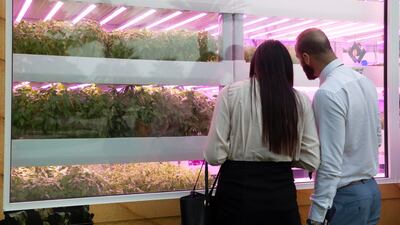
With a focus on food security and regenerative farming practices, the farm is approximately 40 square metres in size and completely sealed to ensure it is pesticide and herbicide-free -
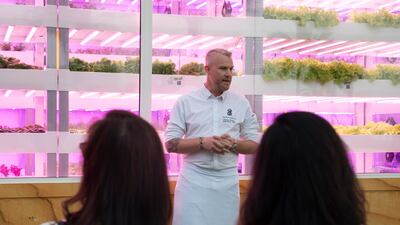
Executive chef Tobias Pfister conducts a tour of the vertical farm, which grows crops year–round with daily harvests of up to 10 kilograms of produce -
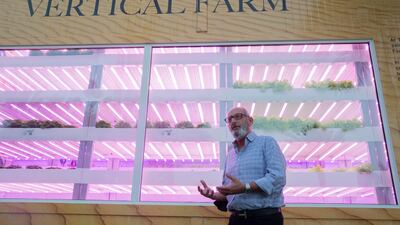
Maan Said, CEO of Crisp, that built the farm. As the first Marriott property in the region to establish a vertical farm, The Ritz-Carlton, Dubai supports the UAE’s ambitious food security goals -
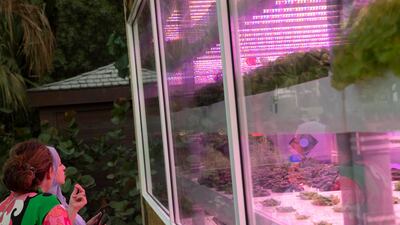
The freshly grown selection of herbs includes Italian basil, Thai basil, and rosemary, among others, while coast-line lettuce, salanova mix and kale is also grown -
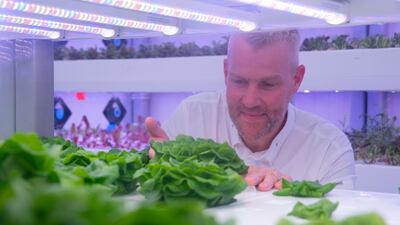
Executive chef Tobias Pfister looks at some of the farm's produce, which will enhance the dishes served at the property’s dining establishments, including Blue Jade, Splendido and Amaseena -
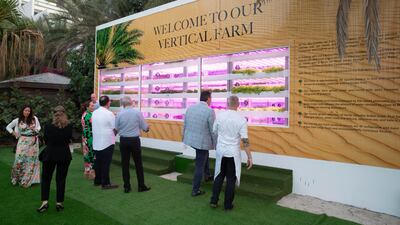
The hydroponic technique employed by the resort eliminates the need for soil to grow crops and reduces the amount of water needed by close to 90 per cent when compared with traditional farming techniques -
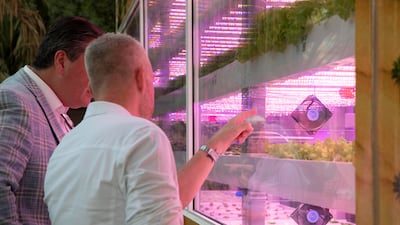
By harvesting a variety of herbs, microgreens, lettuce and other ingredients at the hydroponic centre, the hotel offers daily delivery of local produce



