



The world's first Bear Grylls Explorers Camp opened its doors in Ras Al Khaimah in October, equipping would-be adventurers with all the survival tips and skills they need to make it in the wilderness.
The experience has now expanded to allow intrepid travellers the chance to turn their adventure into an overnight one, with the opening of nine mountain cabins.
The National was among the first to check-in to one of the cabins at the Bear Grylls Explorers Camp.
The welcome
After 20 minutes of winding upward along the narrow roads towards the peak of Jebel Jais, the Bear Grylls Explorers Camp appears almost from nowhere. Nestled in a flat wadi surrounded by the towering giants of the UAE’s tallest mountain range, we arrive as the sun is setting, shrouding the camp in the evening’s golden glow. A firepit sits in the centre of the camp, lit ready for our arrival.
We arrive three days before the official opening of the first Bear Grylls-branded accommodation, and we have the place to ourselves. Leon, the camp manager, offers us our choice of cabin, and explains the site rules: Do not litter, do not leave food outside – oh, and don’t feed the goats.
The neighbourhood
The entire premise of the Bear Grylls Explorers Camp is about switching off and reconnecting with nature, so, naturally, there is little nearby. As the daylight fades, the last of the visitors on Jebel Jais wind their way back down the mountain path, leaving us to soak in the stillness of the camp and its surrounding area, save for the occasional bleat from one of the aforementioned goats.
From the camp, it’s about a 20-minute drive to the summit of Jebel Jais, where you’ll find attractions including the world’s longest zip line, the UAE’s highest restaurant and numerous viewing platforms.
The safety measures
Staff at the camp sport Bear Grylls-branded face masks and our cabin has a sticker on the door, assuring us the space has been sanitised. The back-to-basics nature of this place means that guests bring much of their equipment with them, which, during the pandemic, adds an extra layer of reassurance.
The camp itself is nicely spaced out, so social distancing should not be an issue, even when cabins are full. Each has its own outdoor area and picnic table, so the number of communal touchpoints is kept to a minimum. Be sure to bring enough hand wash and sanitiser for your stay, though, as these are not provided.

The room
We're not expecting a five-star stay from a Bear Grylls-branded camp given the experience is all about survival, so we brace ourselves as we enter our upcycled shipping container cabin. However, we are pleasantly surprised.
Of course, it is basic. The exposed wood walls give it a rustic feel, and there is little in the way of decor. However, it has what it needs: a double bed with a ladder leading to a single bunk above, as well as a fridge, kettle, air-conditioning and ample storage. There are three small windows, each offering a sliver of the picture-perfect mountain view. The bathroom is a welcome surprise; white tiles, a powerful shower and flushing toilet – definitely not the full nature survival experience I had been envisaging.
The beds, however, definitely offer up more of a camping vibe. The thin mattress is hard, so be prepared, although it is not uncomfortable enough to keep me awake. The fluffy pillows offer our heads some five-star comfort, as they would not feel out of place at a hotel.
The service
The staff are more than accommodating, offering to help us with the fire or to light the barbecue, and, when we ask for torches for some extra light, provide us with some handy head torches, which make our evening card games much easier.
Almost all staff on site are trained by the Bear Grylls Survival Academy, save for the security guards and housekeeping, so if there's anything you need to know about the outdoors or the surrounding Jebel Jais area, they’ve got you covered.
The scene
The camp is home to nine converted shipping containers, each offering its own private picnic area and barbecue. They are well spread out and the set-up does not feel intrusive. It's also family and dog-friendly.
A communal fire pit in the centre of the camp is open to everyone, but, because of Covid-19 restrictions, can currently only be used by nine guests at any one time. Each cabin comes with portable camp chairs, which can be set up for an evening around the campfire.
There is a small shop at reception selling snacks, hot drinks and charcoal, should you need them during your stay. There are also mountain bikes available for rent, if you want to explore the site on two wheels.
Guests don't need to take part in one of the Bear Grylls Survival Courses to stay at the camp, but it is set up in the hopes that those checking in will take in the full experience during their stay. The expert-led courses have half-day options, lasting three to four hours, as well as eight, 24 and 48-hour options. They offer basic survival skills, such as how to build fires, tie knots and knife skills, as well as extreme survival techniques necessary to tackle some of the toughest terrain in the wilderness. Guests can also opt to take part in a guided hike, which can be tailored to any ability level.
The food
The camp is self-catered, so guests need to bring their own food to barbecue, although you can purchase coal, some food and firelighters on site. Barbecue utensils are provided and there's a fridge in the room for storing food and drinks. Don't forget the basics such as tea, coffee and something for breakfast.
Oh, and it wouldn’t be a camp trip without marshmallows to toast, so be sure to pack those. We washed ours down with a hot chocolate purchased from the camp’s shop.

Highs and lows
The setting, the firepit and the camp’s outdoor area make you feel a million miles away from the hustle and bustle of the city. The camp is less than two hours from Dubai, but it feels like a real escape.
The bed is a little uncomfortable, so be prepared. If you are particularly sensitive, you might wish to pack a foam mat.
-
The new Bear Grylls Explorers Camp in Ras Al Khaimah. All photos courtesy Ras Al Khaimah Tourism Development Authority -

Base camp at the new Bear Grylls Explorers Camp in Ras Al Khaimah. -
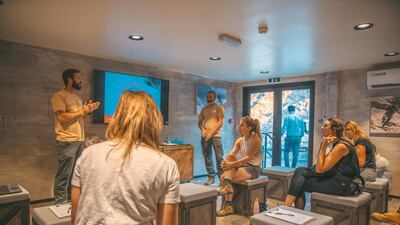
Participants are given an introduction before heading into the outdoors. -
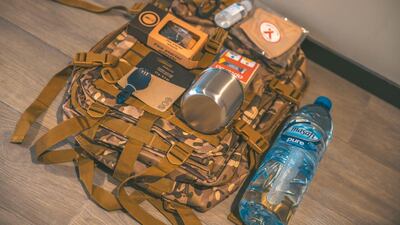
Outdoor essentials for the Bear Grylls Explorers Camp survival course. -
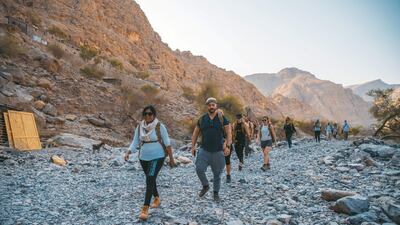
The Bear Grylls Explorers Camp takes participants into the wadis of Jebel Jais. -

Jebel Jais is home to the UAE's highest peak. -
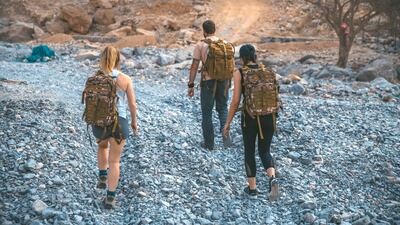
The camp offers four, eight and 24-hour survival courses. -
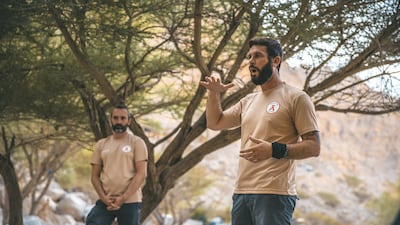
Course leaders Martin Norton and Leon. -

Participants are taught Bear Grylls's essential survival tips. -
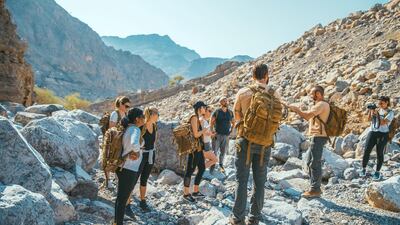
The course's instructors have all been trained at the Bear Grylls Survival Academy, and some have worked closely with the British adventurer. -
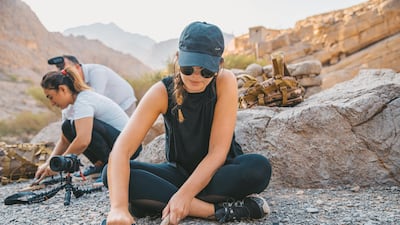
The team learn essential knife skills, such as how to carve a peg from wood. -
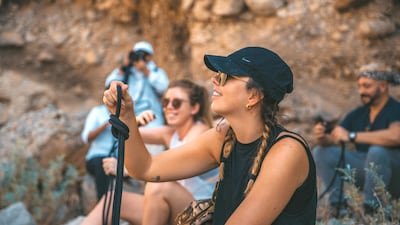
A lesson in knots. -
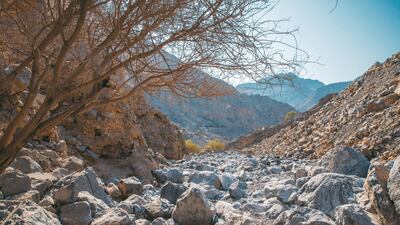
The course will take participants through rocky mountain terrain. -
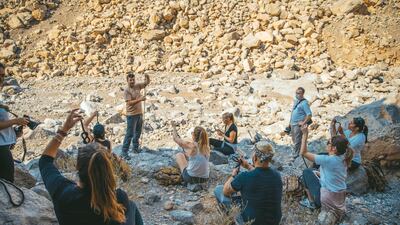
The team learn how to tie different knots and what they are used for. -
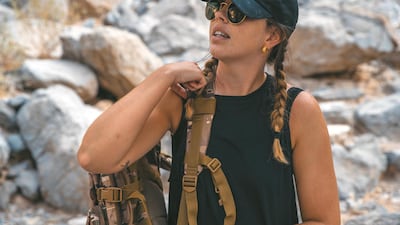
The National's Sophie Prideaux channels her inner Bear Grylls. -

Participants in the survival courses will learn how to make fire. -
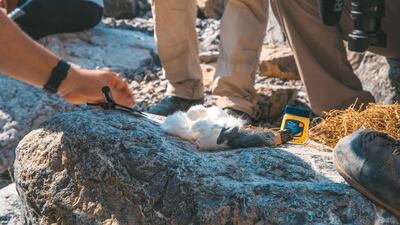
The course teaches essential survival skills, including how to make fire. -
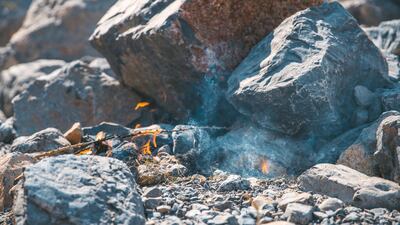
Success! The course will teach you the different ways to start a fire in the wilderness. -

Participants learn how to build a trap for food -

Participants are put through their paces with a number of survival challenges. -
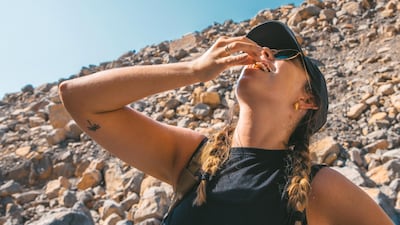
Grubs up: The National's Sophie Prideaux eats meal worms on the Bear Grylls Explorers Camp survival course. -
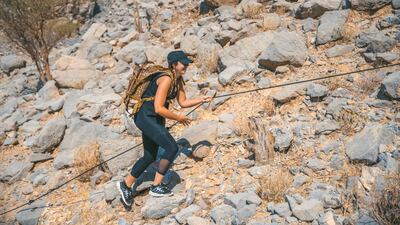
The National's Sophie Prideaux is put through her paces. -
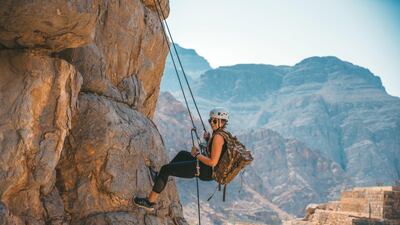
The National's Sophie Prideaux abseils as part of the Bear Grylls Explorers Camp in Jebel Jais. -
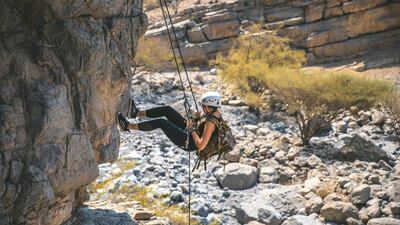
Sophie Prideaux scales the side of a cliff face.


The Insider tip
Remember to check the website carefully for what is and isn’t provided. This is a survival experience, so you really do only get the bare bones in the room. You won’t find things like towels, hand soap, toothpaste, shower gel or teas and coffees waiting for you in your cabin, so ensure you have everything you will need before you set off. Also, definitely think about adding an activity to your stay for the true Bear Grylls experience.
The verdict
If you are looking for an out-of-the city escape without the usual UAE staycation frills, coupled with the chance to take in some of the country’s most breathtaking scenery and learn a few new skills along the way, the Bear Grylls Explorers Camp needs to be on your agenda.
The bottom line
Bookings are open from Wednesday, with rates from Dh450 per night, per cabin on weekdays (camp is closed on Mondays and Tuesdays), and Dh650 on weekends. Check-in is from 3pm and check-out at 11am.
Two dogs are also permitted per cabin, at an extra cost of Dh50 per dog. Pets must be kept on leads at all times in the camp.
Bear Grylls Explorers Camp, Jebel Jais, Ras Al Khaimah; beargryllscamp.ae

