

As Russia continues its attack on Ukraine, flight suspensions have been announced from the UAE.
Flydubai has suspended its services to Krasnodar and Rostov-on-Don, both cities in southern Russia, indefinitely. The flights, along with services to Ukrainian cities and Minsk in Belarus, were suspended in late February, originally for a few days. Now, a flydubai representative has confirmed to The National these are on hold "until further notice".
"We are in touch with our passengers regarding their refund and rebooking options," they said.
"It might open up tomorrow, or take longer, it really depends on the situation itself."
Etihad Airways flights continue to operate as normal to Russia, a representative confirmed.
The National has reached out to Emirates, Wizz Air Abu Dhabi and Air Arabia for comment.
The latest images from the Ukraine-Russia conflict:
-
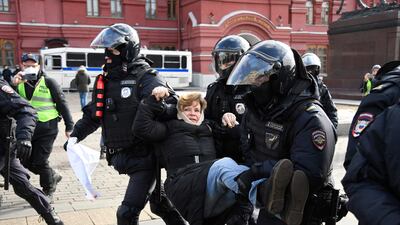
Police officers detain a woman in central Moscow, during a protest against Russian military action in Ukraine. AFP -

Children look at phones as people who fled the conflict in Ukraine wait outside an immigration office in Brussels, Belgium. Reuters -
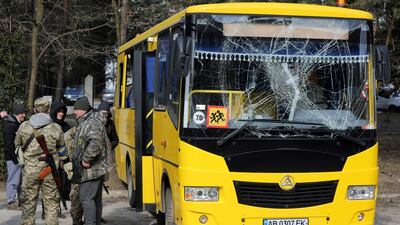
Soldiers stand next to a bus with a damaged windscreen, after an attack on the Yavoriv military base, in Novoyavorivsk, Ukraine. Reuters -

A soldier waits at a hospital after the attack on the Yavoriv military base. Reuters -
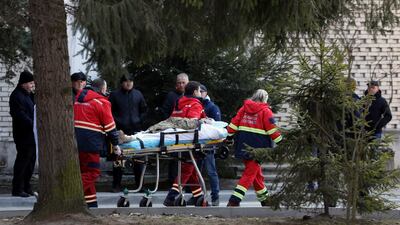
A wounded soldier is transported by medical workers, at a hospital in Novoyavorivsk, after the attack on the Yavoriv military base. Reuters -

Rescuers work at the site of an accident after a bus that was carrying about 50 Ukrainian refugees overturned near Forli, central Italy. One person died in the crash. AFP -
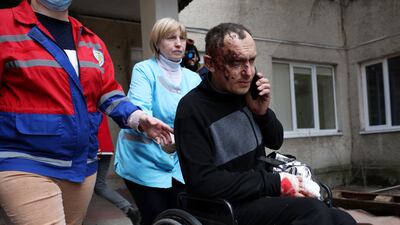
A man wounded in the air strikes at a nearby military complex is assisted by medical staff outside Novoiavorivsk District Hospital. Getty Images -
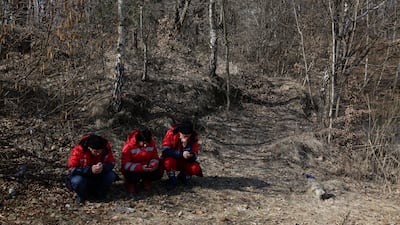
Paramedics find low ground after an air-raid siren sounds on the outskirts of Novoiavorivsk. Getty Images -
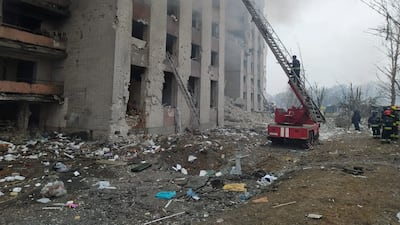
A view of a residential building damaged during an air strike, as Russia's invasion of Ukraine continues, in Chernihiv, Ukraine. Reuters -
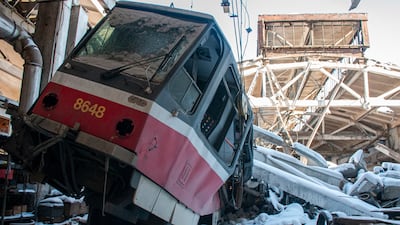
A tram damaged by shelling sits at a depot, in Kharkiv. AP -
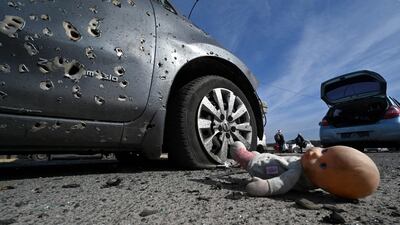
An abandoned doll next to a car riddled with bullets in Irpin, north of Kyiv. AFP -
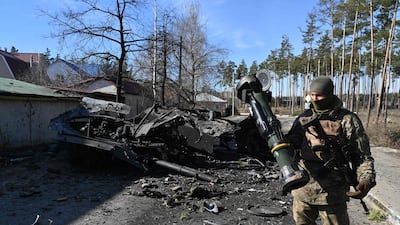
A Ukrainian soldier holds a Next Generation Light Anti-tank Weapon that was used to destroy a Russian armoured personal carrier in Irpin. AFP -
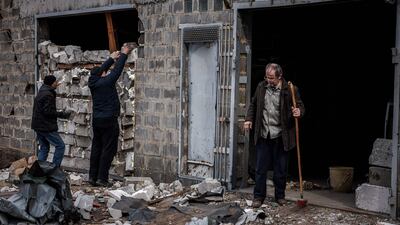
Residents try to strengthen the wall of a house damaged by recent shelling, on the outskirts Kyiv. AFP -
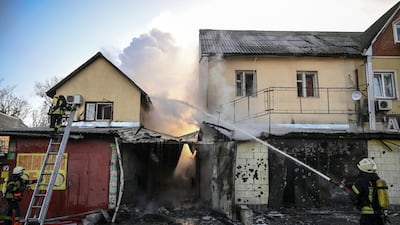
Firefighters extinguish a blaze at a house after shelling in Kyiv. AFP -
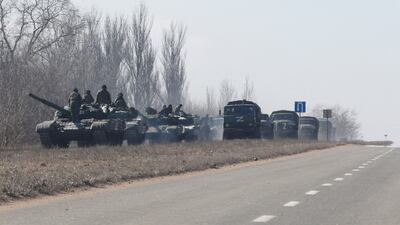
A convoy of pro-Russian troops outside the separatist-controlled town of Volnovakha in the Donetsk region, Ukraine. Reuters -
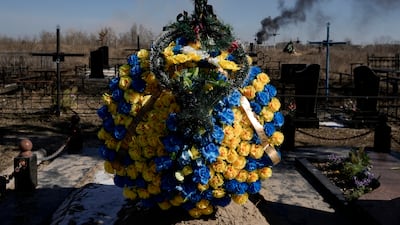
Smoke from shelling rises behind a wreath at a cemetery in Vasylkiv, south-west of Kyiv. AP -
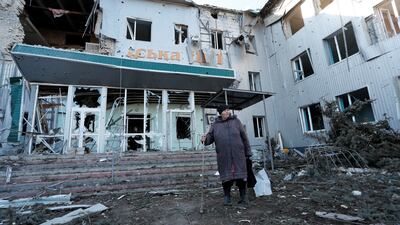
A woman stands outside a local hospital, damaged during fighting in Volnovakha. Reuters -
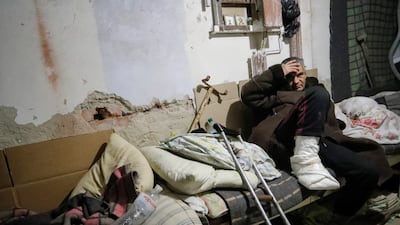
People gather in the basement of a local hospital, which was damaged during clashes in Volnovakha. Reuters -
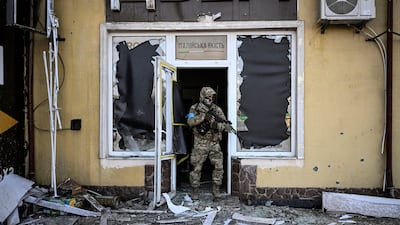
A Ukrainian soldier leaves a damaged building after shelling in Kyiv. AFP -
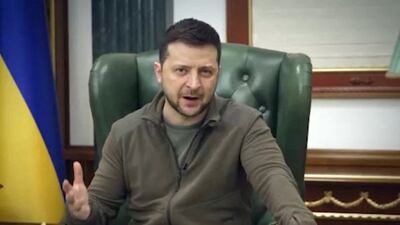
Ukrainian President Volodymyr Zelensky. AFP -

A finance police officer boards Russian billionaire Andrey Igorevich Melnichenko's superyacht, which has been sequestered at the northern port of Trieste, Italy. Reuters -

A Russian KA-52 gunship strikes a Ukrainian military object. AFP -

Bystanders watch what appears to be Russian forces arresting Ivan Fedorov, mayor of Melitopol, a city in south-eastern Ukraine. Reuters -

Firefighters battle a blaze at a warehouse storing frozen products hit by shelling in Kvitneve, Kyiv region. Reuters -
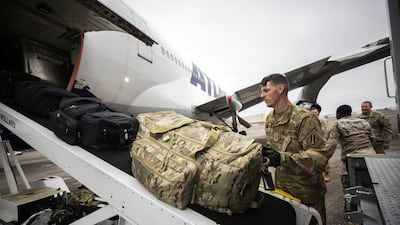
A soldier loads the cargo hold of a chartered Boeing 747 airplane with duffle bags belonging to US soldiers, during their deployment to Europe, at Hunter Army Airfield in Savannah, Georgia. AP -

Two young girls pray for peace in Ukraine at Lisbon's 16th century Jeronimos Monastery. AP Photo -
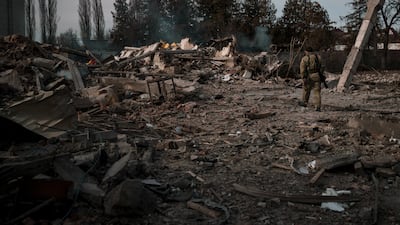
A volunteer of the Ukrainian Territorial Defence Forces walks on the debris of a car wash destroyed by Russian bombing in Baryshivka, east of Kyiv. AP Photo -
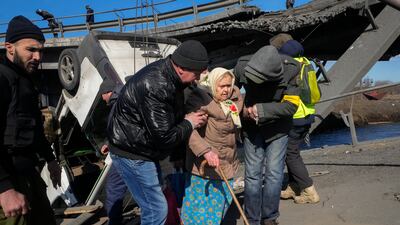
Volunteers pass an improvised path under a destroyed bridge as they help an elderly resident in Irpin, north-west Kyiv. AP Photo -

A woman who was evacuated from Irpin kisses a cat wrapped in a blanket at a triage point in Kyiv. AP Photo -
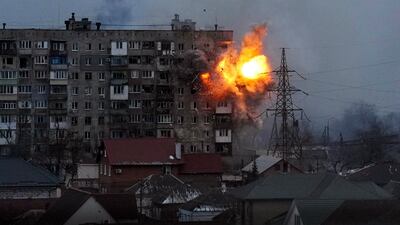
An explosion is seen in an apartment building after a Russian army tank fires in Mariupol. AP Photo -
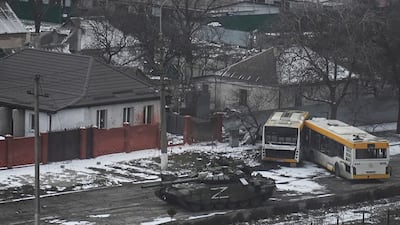
A Russian army tank moves through a street on the outskirts of Mariupol. AP Photo -

Tonya Steyn, office manager and volunteer co-ordinator, sorts through medical supplies at the non-governmental organisation, SOS International headquarters in Louisville, Kentucky. AFP -

An overview of damaged buildings and burning fuel storage tanks at Antonov Airport in Hostomel, north-west of Kyiv. Maxar Technologies / AFP -
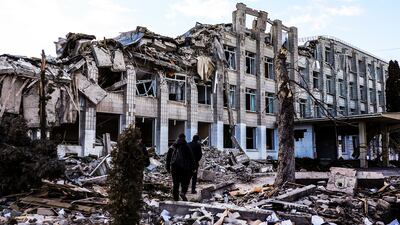
The destroyed main building of school number 25, after being bombed in Zhytomyr. EPA -
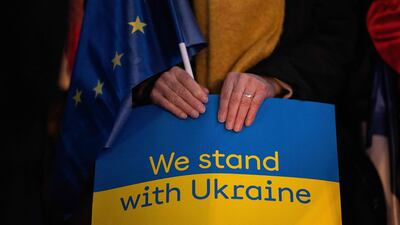
A supporter holds a sign to support Ukraine during Paris' mayor and 'Socialist party' (PS) presidential candidate's campaign meeting in Rennes, western France. AFP


Last week, Russian airlines suspended international flights, with airlines such as S7 and Ural suspending services from the UAE.
The Federal Air Transport Agency (Rosaviatsiya) recommended that Russian airlines with planes registered in foreign destinations suspend international flights from March 6 "amid mass arrests of aircraft abroad", according to local reports, fearing the aircraft could be seized by foreign governments.
Aeroflot, Azur Air and Nordwind Airlines were also among carriers that cancelled operations abroad.
Aeroflot, Russia's flag carrier and largest airline, announced the suspension of overseas services from March 8, but said it would continue domestic operations with the temporary exception on flights to cities in southern Russia. Flights to Minsk, Belarus are also exempt.
Flights to Ukraine were also suspended from the UAE shortly after Russia invaded the country on February 24. Ukraine closed its airspace to civilian flights, citing a high risk to safety.
Flydubai, Wizz Air, Air Arabia and Etihad Airways suspended its services. Emirates does not operate flights to Ukraine.

